

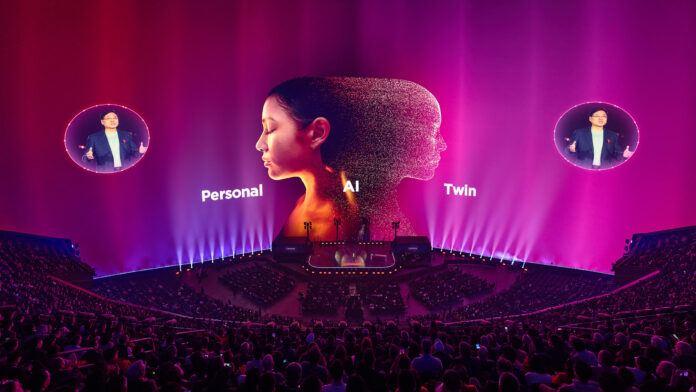

For several years, artificial intelligence at CES followed a predictable script. Products talked more than they listened. Demos emphasized clever responses over useful outcomes. AI was presented as a personality rather than a capability, something meant to impress in a booth rather than quietly improve life after purchase.
CES 2026 marked a turning point.
AI was everywhere on the show floor, embedded in televisions, cars, laptops, robots, appliances, wearables, and infrastructure. But the energy around it felt different. Less performative. Less breathless. More deliberate.
This was the first CES where AI felt less like a promise and more like a responsibility.
The industry did not abandon ambition. If anything, the technical goals on display were larger than ever. What changed was the framing. Companies talked less about what AI could say and more about what it could reliably do. Less about disruption and more about integration. Less about magic and more about systems.
That shift is what made CES 2026 feel like the moment AI started to grow up.
From features to foundations
One of the clearest signs of maturity was how companies described their technology. AI was no longer introduced as a feature that could be added or removed. It was described as a foundational layer that shaped how the entire product was designed.
Instead of highlighting a single assistant or model, companies emphasized full stacks. Hardware designed alongside software. Networking, security, and power considerations treated as first order concerns. Lifecycle management discussed alongside user experience.
This reflects a deeper truth the industry is now forced to confront. Advanced AI is expensive, complex, and fragile when treated casually. Making it useful requires engineering discipline, not just model capability.
At CES, that discipline finally took center stage.
The message from chipmakers, device manufacturers, and platform providers converged on the same idea. The future of AI depends less on surprise breakthroughs and more on sustainable execution. Compute, energy efficiency, thermal limits, supply chains, and reliability now define what is possible.
That is not a downgrade of ambition. It is a sign that the industry understands the scale of what it is building.
Interface restraint as a design principle
Another sign of AI growing up was restraint.
In previous years, many products seemed determined to prove their intelligence by speaking often. Notifications, suggestions, summaries, and alerts piled up, each one technically impressive and practically exhausting.
At CES 2026, the tone shifted. More companies talked about ambient intelligence. Less about constant conversation and more about context that persists quietly in the background.
The idea is simple but powerful. AI should reduce cognitive load, not add to it. It should remove steps rather than introduce new interactions. It should wait until it is confident, relevant, and genuinely helpful.
This philosophy showed up across categories. In personal computing, AI was framed as continuity rather than commentary. In the home, it appeared as automation that anticipates without announcing itself. In wearables, it became assistance that activates only when needed.
The industry appears to have learned a hard lesson. Intelligence that demands attention does not feel intelligent for long.
Growing up meant learning when not to speak.
Trust became central, not optional
As AI moves deeper into physical spaces, trust becomes inseparable from functionality. Devices that see, hear, and act cannot rely on novelty to earn acceptance. They must prove restraint, transparency, and respect for boundaries.
CES 2026 reflected this reality. Privacy, security, and data control were no longer treated as legal necessities buried in documentation. They were part of the product story.
More companies emphasized on device processing. More described hybrid approaches that limit what data leaves the device. More acknowledged that not every insight needs to be uploaded, stored, or shared.
This shift signals a broader recognition. The success of AI depends not just on what is technically possible, but on what users are willing to tolerate. If AI feels invasive, adoption slows regardless of capability.
Growing up meant understanding that trust is not a marketing claim. It is an operational requirement.
AI that acts in the real world
Another defining theme of CES 2026 was the rise of AI that acts rather than merely responds.
Robotics, smart home systems, vehicles, and appliances were all presented through the same conceptual lens. Sense, reason, act. AI was positioned as the control system that connects perception to execution.
This matters because action introduces consequences. When AI controls movement, energy use, safety systems, or household routines, errors are no longer abstract. Reliability becomes more important than cleverness.
The focus on physical AI suggests the industry is ready to accept that responsibility. The conversation shifted away from general conversation ability and toward task specific competence. Systems designed for narrow domains. Models trained to operate under constraints. Failures anticipated and managed.
That is what maturity looks like when intelligence leaves the screen and enters the environment.
Wearables learned the value of normalcy
Wearables offered one of the most revealing windows into this shift.
For years, smart glasses and similar devices struggled to balance ambition with social reality. Many failed not because the technology was weak, but because the experience felt awkward, distracting, or intrusive.
At CES 2026, the emphasis changed. New designs focused on looking normal. Features were limited to tasks that genuinely benefit from hands free access. Translation, brief note capture, contextual reference, and simple queries replaced constant streams of information.
The goal was not to replace smartphones or dominate attention. It was to assist quietly in moments where doing so makes sense.
That restraint signals confidence. Products no longer needed to prove they were futuristic. They focused instead on being wearable.
AI as infrastructure, not spectacle
The most important takeaway from CES 2026 was not any single announcement. It was the overall direction.
AI is becoming infrastructure.
It is settling into the background work that makes systems function better without drawing attention to itself. It appears in rack scale compute, device level intelligence, hybrid architectures, and automation that users notice only when it is missing.
This does not mean the excitement is gone. CES will always celebrate ambition. But the nature of that ambition has changed.
The industry is moving from exploration to execution. From novelty to necessity. From promises to practices.
AI growing up does not mean it becomes boring. It means it becomes dependable.
And that is a far more important milestone.
