




Meta held its Connect 2026 keynote to detail a broad set of updates across artificial intelligence, smart glasses, and virtual reality hardware. CEO Mark Zuckerberg presented new capabilities for Muse, the company’s personal AI agent, along with several wearable device announcements, including a new standalone VR headset called Meta VR Glasses, an updated Ray Ban Meta Gen 3 smart glasses lineup, and feature additions to Meta Ray Ban Display glasses.
Muse AI Agent Update: Smart Glasses Integration, Voice Mode, and New Shopping Connectors
Muse, Meta’s personal AI agent that launched earlier this year, received several updates aimed at expanding its functionality across Meta’s device ecosystem. Meta confirmed that Muse will be integrated into its AI glasses in the coming months, allowing users to activate the assistant by voice while it references what the camera sees. This is intended to let users ask about a product on a store shelf, a posted flyer, or a written list without needing to describe the item themselves.
Meta also introduced a new voice mode for Muse, positioning it as a more advanced alternative to typical voice assistant interactions. According to Meta, users will be able to hold extended conversations with Muse while the agent continues working on requested tasks in the background.
Muse’s connector list, which allows the AI agent to interact with third party services, was significantly expanded. In addition to existing partners and full access to the Shopify product catalog, Meta announced new shopping integrations with Walmart, Best Buy, American Eagle Outfitters, DICK’S Sporting Goods, Fanatics, Gap, Michael Kors, Sephora, Ulta, and Wayfair, along with payment support through Shop Pay and PayPal. Expedia is expected to join for travel planning, and Instacart was added for grocery ordering. For productivity use cases, Meta added connectors for Notion, Granola, GitHub, and Box.
Meta also announced that Muse will have its own dedicated email address, giving users an additional way to communicate with or delegate tasks to the AI agent.
Meta VR Glasses: Specs, Features, Release Date, and Price
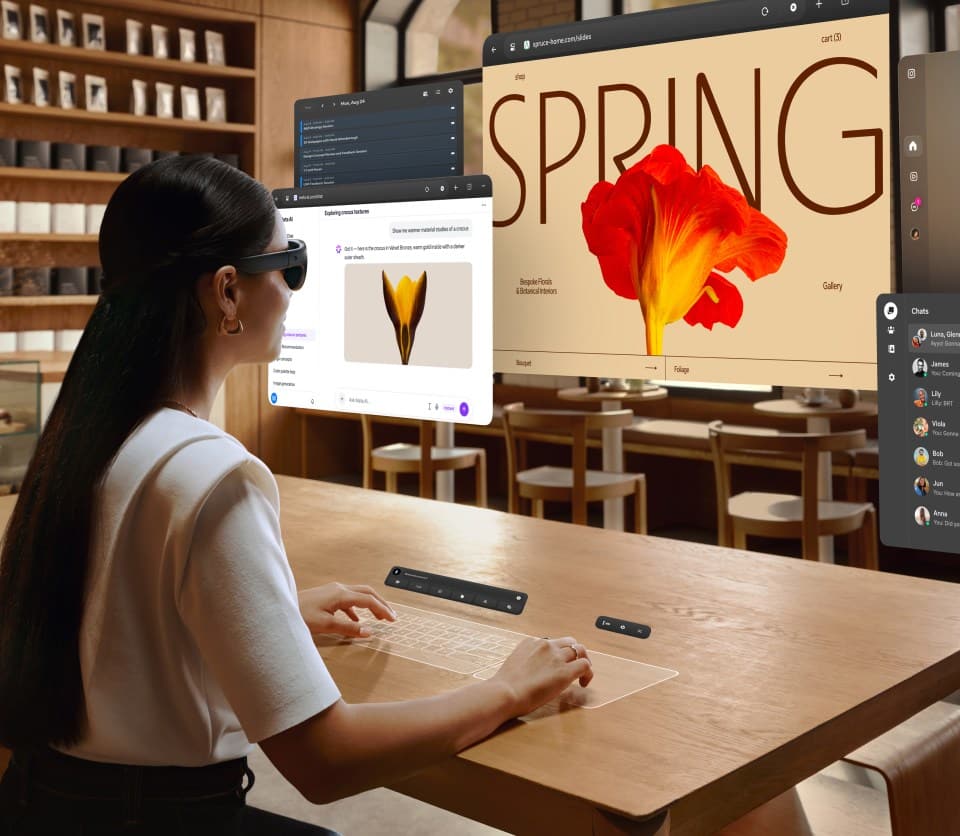
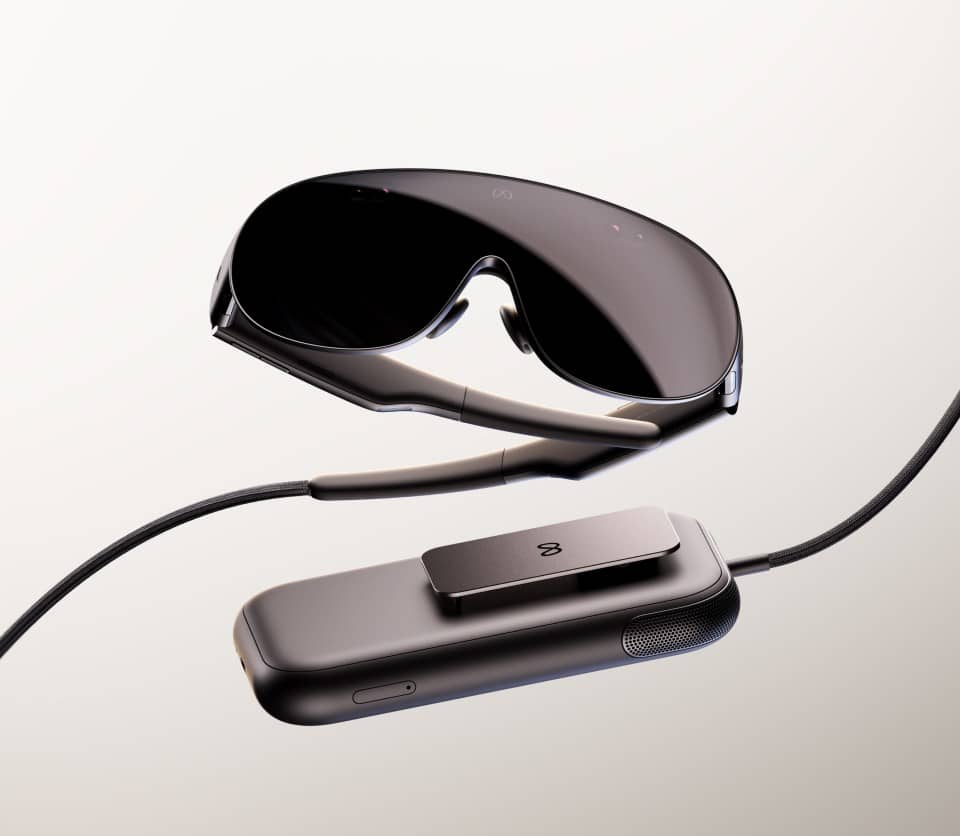
One of the most significant hardware announcements at Meta Connect 2026 was Meta VR Glasses, described by the company as its most advanced mixed reality device to date. The headset weighs approximately 100 grams, comparable to a deck of cards, which Meta attributes to a two part hardware design. The glasses themselves contain the display and sensors, while a separate puck accessory, connected through an optical tether, houses the battery, storage, and computing hardware, and can be clipped to a pocket or bag.
According to Meta, this design makes the glasses roughly five times lighter than the Meta Quest 3. The device features a 5K Infinite Display built on micro OLED panels with a pixel density of 37 pixels per degree, which the company says improves text clarity in addition to video and gaming visuals. The glasses use custom pancake lenses to support this resolution in a compact form factor, along with Dolby Vision support for color and contrast, and integrated Dolby Atmos spatial audio built into the frame.
Meta VR Glasses run on Qualcomm’s new Snapdragon Reality Elite chipset, which Meta says offers improved performance efficiency and faster load times compared to previous processors used in its VR devices. The battery, housed in the connected puck, supports up to three hours of continuous high resolution media playback and includes 45W fast charging.
The headset integrates Meta’s AI assistant directly into its operating system, enabling voice commands, eye tracking, and hand gesture controls for tasks such as opening applications, adjusting a virtual workspace, or launching media, without requiring physical controllers.
On the entertainment side, Meta VR Glasses is the first VR headset to receive IMAX Enhanced certification. Meta said the device will support IMAX’s expanded aspect ratio for select films. Starting in November, Disney Plus subscribers in select regions will be able to stream titles including Marvel’s The Avengers and Black Panther in 3D through themed virtual viewing environments. A separate app, Disney Immersive Cinema by ILM, will offer VR enhanced versions of films such as Avengers: Infinity War and Star Wars: A New Hope with added visual and audio effects.
The headset also functions as a mobile workstation, allowing users to open multiple large virtual displays and convert any flat surface into a virtual keyboard and trackpad. Full color passthrough allows users to see their physical surroundings while working.
Meta additionally introduced hologram technology for the device, generating a real time, photorealistic digital representation of a user’s face and expressions for video calls. The feature works across calling platforms including WhatsApp and Zoom, with spatial audio positioning the caller’s voice to match their hologram’s location.
Meta VR Glasses is scheduled for release in spring 2027, priced at $1,299.99 USD.
Ray Ban Meta Audio Glasses and Ray Ban Meta Gen 3: What’s New
Meta introduced Ray Ban Meta Audio glasses, a new lightweight AI glasses model focused on audio functionality. The glasses allow users to stream music and podcasts, take phone calls, and interact with Meta AI hands free, positioned as Meta’s slimmest AI glasses to date.
The company also announced Ray Ban Meta Gen 3, the newest version of its best selling AI glasses line. The updated model includes a slimmer design, extended battery life, and a new customizable action button for quick access to Meta AI features.
Meta expanded its glasses collection with new colorways, including an Ivory option from its Kylie Jenner collaboration and a new partnership with musician LISA. The company also introduced a lower priced entry level model alongside additional colorway options across its existing product lines.
Hearing Enhancement Software and Audio Accessibility Features
Meta announced hearing enhancement, FDA cleared software designed to assist adults with mild to moderate hearing loss using supported AI glasses. Meta said the feature can be set up at home without a clinical visit or prescription. Hearing enhancement is set to launch in the United States later this year, priced at $149.99 and eligible for HSA and FSA reimbursement, or available through a Meta One subscription.
Additional audio accessibility updates include an audio balance feature that lets users adjust sound distribution between ears, and a mono audio option that routes all audio to a single side.
Meta Ray Ban Display Updates: Hands Free Navigation, Hologram Calling, and International Expansion
Meta Ray Ban Display, the company’s smart glasses with an integrated display, received several feature updates. New hands free navigation options include cycling directions and real time public transit information, displayed directly on the lens. Meta said this feature will roll out in the United States and Canada later this month. The company also updated its walking navigation system to reference visible landmarks instead of street names.
Hologram calling, also introduced for Meta VR Glasses, is coming to Meta Ray Ban Display as well. After a brief facial scan through the Meta AI app, users can generate a photorealistic digital likeness for video calls, with the hologram’s expressions driven by voice input. The feature begins rolling out in early access on WhatsApp for United States based users later this fall.
Meta also introduced Explore, a new on device application offering additional experiences for Meta Ray Ban Display, covering categories such as education, discovery, and gaming.
The glasses are gaining native Dolby Atmos video capture, which Meta describes as the first spatial surround sound recording capability on a consumer wearable device. Additional productivity features include an updated calendar view for viewing attendees, responding to invitations, and joining meetings directly from the glasses, currently available in English in the United States. Mirrored phone notifications and Threads integration for following Community Feeds are also being added.
Meta Ray Ban Display availability is expanding to the United Kingdom, Canada, France, Italy, and Germany, with online ordering launching in the United States and these five new markets. Sales and online ordering began immediately in Canada and the United Kingdom, including retail locations in Vancouver, Toronto, and London. Preorders in France, Italy, and Germany began rolling out gradually, with full online ordering and retail availability in Paris, Milan, Rome, Frankfurt, Hamburg, and Munich starting October 13. Prescription lens availability through Essilor Luxottica retail partners in France and Italy is also set for October 13, with Germany expected to follow later in the year.