

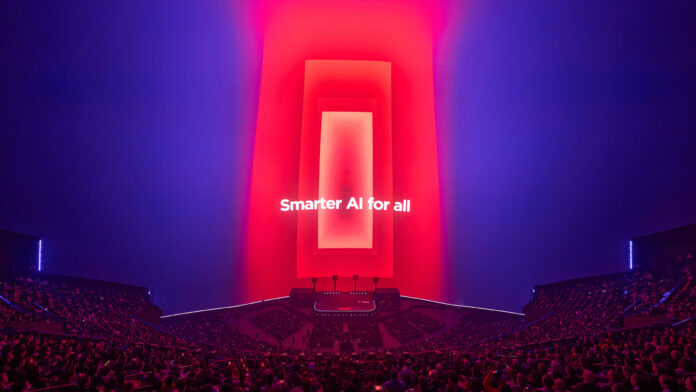

CES has always been a festival of more: bigger screens, brighter panels, louder demos, and—this year—more AI than any human should have to make eye contact with before their first coffee.
CES 2026 (Jan 6–9 in Las Vegas) was officially framed as a week of “the future is here” optimism, with Media Days kicking off Jan 4–5. And sure, the future showed up—often wearing a badge, holding a microphone, and explaining that your fridge has “agentic reasoning” now.
But the most convincing AI story at CES 2026 wasn’t the one that talked the most.
It was the one that didn’t talk—until it truly mattered.
We finally noticed the problem: AI that won’t stop performing
The last two years trained companies to treat AI like a stage act. Put a chatbot in the product. Give it a name. Have it crack a joke. Add a wake word. Let it narrate your life back to you, whether you asked or not.
CES is where that impulse goes to die… or, at least, where it’s forced to compete with reality. A convention floor is noisy, rushed, and overstimulating. If your “assistant” requires attention, it loses. If it interrupts, it loses faster.
That’s why the most important shift at CES 2026 wasn’t “more intelligence.” It was better restraint.
“Physical AI” is getting real—so the interface has to disappear
On the big-chip side, this was a CES about scale and ambition. Nvidia’s Jensen Huang called this a “ChatGPT moment for physical AI” as the company rolled out models and chips aimed at machines operating in the real world, not just on screens. AMD’s Lisa Su used CES to argue we’re entering a “YottaScale era,” with AI compute needs ballooning toward yottaFLOPS by decade’s end.
Those claims point in the same direction: AI is moving out of the browser and into devices that see, hear, move, and act.
And the moment AI becomes physical, the old UI logic breaks. You can’t have a talking head narrating every step a device takes. You need something calmer:
- present, but not needy
- powerful, but not pushy
- contextual, but not creepy
In other words: the best AI has to learn when to shut up.
The quiet revolution showed up in “ambient” AI
A telling example: Lenovo previewed Lenovo Qira, described as a “Personal Ambient Intelligence System” designed to maintain continuity and context across Lenovo and Motorola devices. The notable phrase isn’t “super agent.” It’s ambient. The pitch is about helping you move between devices “with minimal effort,” supported by a “privacy-first hybrid AI architecture.”
That’s the new CES AI ideal: not a chatbot begging for prompts, but a system that does more of the boring glue work in the background—without turning your day into an ongoing conversation with your gadgets.
Wearables got the memo: be useful, look normal, don’t hijack the moment
The clearest “quiet AI” trend was in glasses—devices trying to become the least intrusive screen you own.
Consider what stood out:
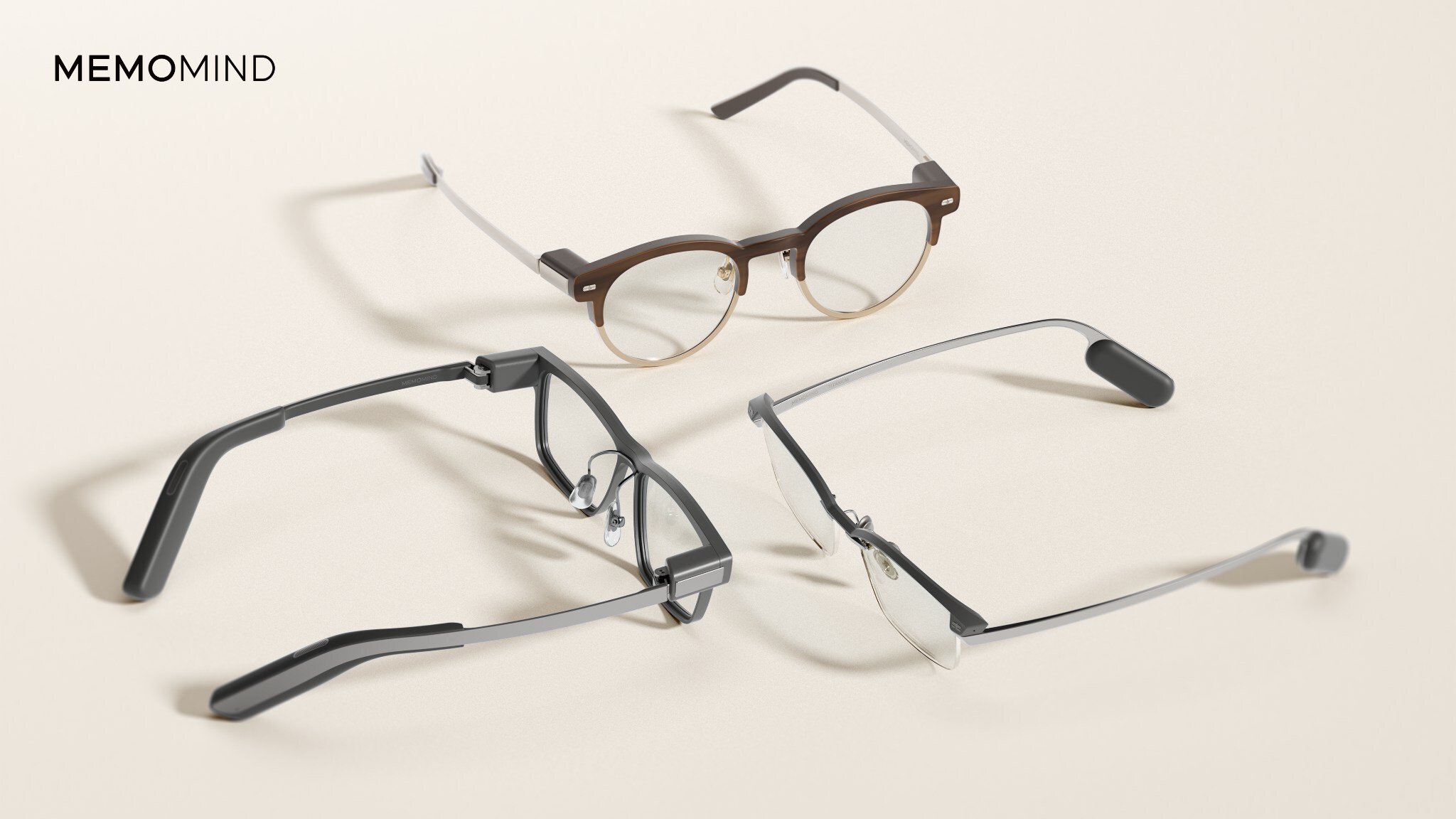
- MemoMind (XGIMI’s smart-glasses brand) explicitly leaned into “non-intrusive assistance” and designs meant to “pass as normal eyewear,” with features centered on translation, note-taking, and summarization rather than constant interaction.
Solos AirGo V2 pushed multimodal capability (image/video/audio/text) and hands-free querying across multiple model providers—useful, yes, but only if it’s not shouting for attention.
This category is learning something smartphones already taught us: the most valuable interface is the one you don’t notice. Not because it’s hidden—because it’s respectful.
Even the biggest screens tried to sound… less loud
Samsung’s CES messaging leaned hard into “AI companion” framing for the living room, including its Vision AI Companion layer.
The interesting part isn’t that TVs are getting conversational. They’ve flirted with that for years. It’s that “companion” is slowly being redefined away from “talkative buddy” and toward “helpful background system”—translation when you need it, summaries when you ask, and ideally a lot of silence the rest of the time.
A companion that constantly chats is not a companion. It’s a roommate who never leaves the room.
The most important AI feature is “do nothing” (most of the time)
Here’s the CES 2026 inversion:
- In 2024, “AI” meant your device could talk.
- In 2025, “AI” meant your device could plan.
- In 2026, the best AI is the one that can wait.
Wait for the right moment. Wait for clear intent. Wait until it has enough context to be correct. Wait until it can help without making you manage it.
This isn’t just a UX preference. It’s a trust strategy.
Because every unnecessary interruption teaches the user: this thing is about itself, not about me.
Quiet AI is also privacy AI—because discretion is the product
There’s another reason “stay quiet” won: privacy.
A system that is constantly listening, constantly summarizing, constantly surfacing insights has to earn a level of trust most consumer tech companies simply don’t have right now. So the winners shifted their value proposition:
- more on-device processing
- more “only when needed” behavior
- more explicit user control
- more emphasis on continuity rather than commentary
Lenovo’s “privacy-first hybrid” language fits that story directly. And glasses that “pass as normal eyewear” are implicitly admitting the social cost of tech that’s too visible, too eager, too always-on.
The lesson: if your AI feels like surveillance, it doesn’t matter how smart it is.
So what was the best AI at CES 2026?
Not a single product. A behavior.
The best AI at CES 2026 was the one that treated attention like a scarce resource.
The one that did the work quietly, in the background, and surfaced only what you needed—when you needed it.
That’s the bar now. And it’s higher than “can you answer questions?”
It’s: can you improve my day without becoming the main character in it?
