


Siemens President and CEO Roland Busch stepped off the keynote stage at CES having delivered a clear message to industry leaders and technologists alike. Industrial AI, he argued, represents a once in a generation shift in technology, comparable in scale to the introduction of electricity. Unlike earlier waves of artificial intelligence that remained largely confined to the digital realm, this new phase is moving decisively into the physical world of factories, infrastructure, energy systems, and transportation.
In his address, Busch emphasized that industrial AI is no longer a future promise or a collection of isolated pilots. It is already operating at scale and reshaping how products are designed, built, and run. The implications are concrete and measurable, touching productivity, resilience, cost efficiency, and sustainability across the global economy.
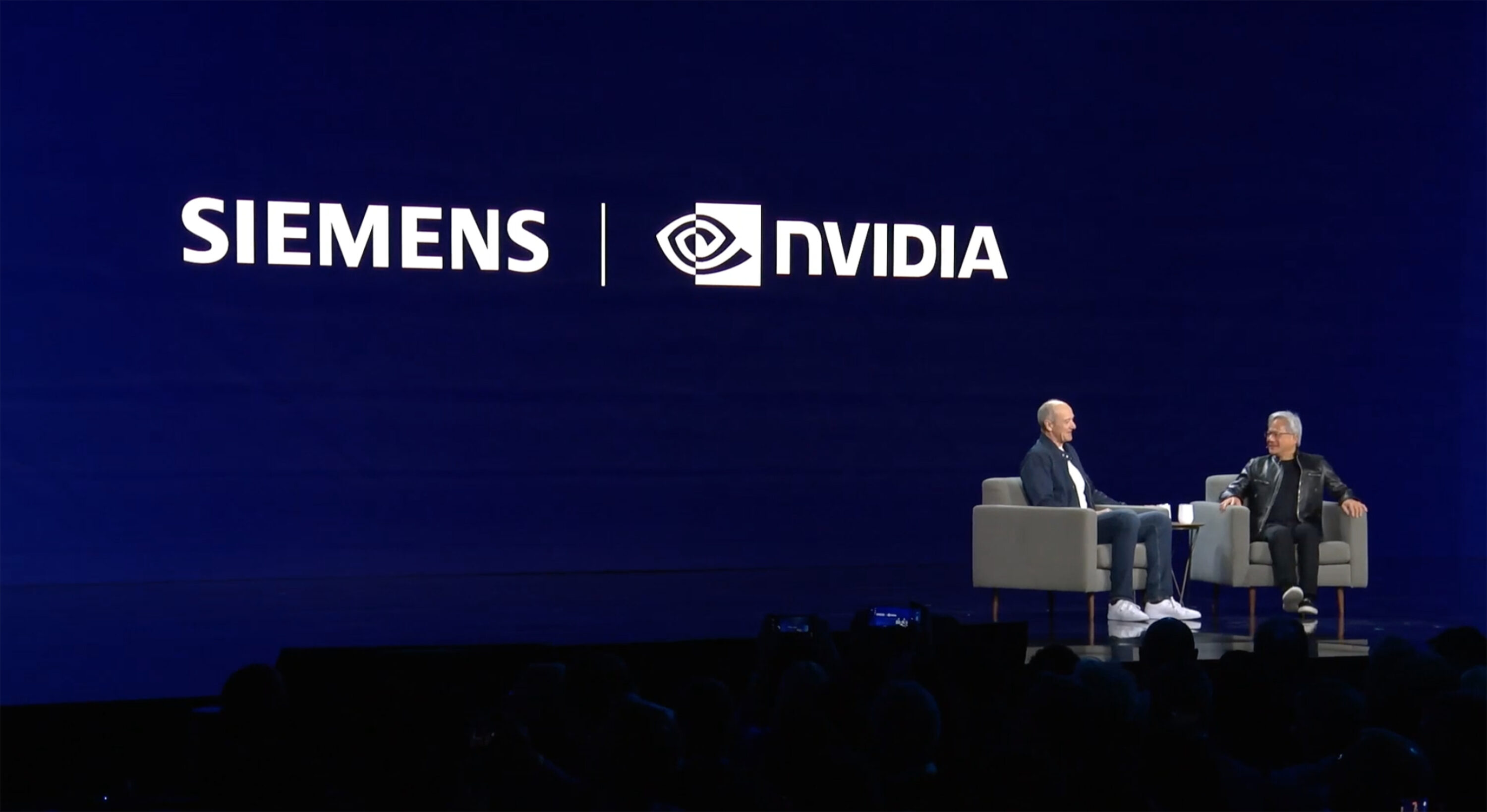
That vision framed a series of major announcements Siemens unveiled at CES. Central among them is an expanded partnership with NVIDIA to build what the companies describe as an Industrial AI Operating System. The goal is to reinvent the full industrial value chain, spanning design and engineering, manufacturing, operations, and supply chains. Siemens also introduced Digital Twin Composer, a new platform that connects real time data, simulation, and AI to power what the company calls the industrial metaverse at scale. The technology is already delivering results in the field. PepsiCo, for example, is using Siemens tools to increase throughput by 20 percent while reducing capital expenditures by up to 15 percent. Siemens also announced nine new industrial AI copilots designed to bring intelligence directly to engineers, operators, and shop floor teams, alongside new technologies aimed at accelerating drug discovery, autonomous driving, and manufacturing efficiency. Additional initiatives include bringing industrial AI capabilities to Meta Ray Ban AI Glasses and expanding the Siemens NVIDIA partnership across the entire end to end industrial lifecycle.
Taken together, the announcements underscored Siemens’ ambition to translate AI advances into operational impact. At CES 2026, the company positioned itself as a bridge between cutting edge artificial intelligence and the practical realities of industry and infrastructure. By combining AI enabled technologies with deep domain expertise and long standing partnerships, Siemens is aiming to convert this technological leap into measurable benefits for customers, partners, and society.
Busch framed the moment in historical terms. Just as electricity once transformed economies and daily life, he said, industry is now shifting toward a future in which AI powers products, factories, buildings, grids, and transportation systems. In this context, industrial AI is not a feature layered onto existing systems but a foundational force that will shape the next century. Siemens, he said, is delivering AI native capabilities with intelligence embedded end to end across design, engineering, and operations, enabling customers to anticipate problems, accelerate innovation, and reduce costs. From comprehensive digital twins and AI powered hardware to copilots on the shop floor, Siemens is focused on scaling intelligence across the physical world so businesses can achieve speed, quality, and efficiency simultaneously.
A cornerstone of this strategy is Siemens’ long standing relationship with NVIDIA. At CES 2026, the two companies detailed plans to expand their collaboration around the Industrial AI Operating System. The partnership is intended to help customers fundamentally change how they design, engineer, and operate physical systems. Together, Siemens and NVIDIA plan to deliver AI accelerated industrial solutions across the full lifecycle of products and production, supporting faster innovation, continuous optimization, and more resilient and sustainable manufacturing. One of the most ambitious goals is the creation of the world’s first fully AI driven, adaptive manufacturing sites, beginning in 2026 with the Siemens Electronics Factory in Erlangen, Germany, serving as the initial blueprint.
Under the agreement, NVIDIA will supply AI infrastructure, simulation libraries, models, frameworks, and reference blueprints, while Siemens will commit hundreds of industrial AI experts along with its hardware and software portfolio. The companies have identified several focus areas, including AI native electronic design automation, AI native simulation, AI driven adaptive manufacturing and supply chains, and AI factories.
Siemens also announced plans to integrate NVIDIA NIM and NVIDIA Nemotron open AI models into its electronic design automation offerings. The move is designed to advance generative and agentic workflows for semiconductor and printed circuit board design, improving accuracy through domain specific models while lowering operational costs by matching each task with the most efficient AI model.
NVIDIA founder and CEO Jensen Huang described the partnership as a catalyst for a new industrial revolution. Generative AI and accelerated computing, he said, are transforming digital twins from passive simulations into active intelligence that operates alongside the physical world. By combining Siemens’ industrial software with NVIDIA’s full stack AI platform, the companies aim to close the gap between ideas and execution, enabling industries to simulate complex systems in software and then seamlessly automate and operate them in reality.
One of Siemens’ most significant product launches at CES 2026 is Digital Twin Composer, which will be available on the Siemens Xcelerator Marketplace in mid 2026. The platform brings together Siemens’ digital twin technology, simulations built with NVIDIA Omniverse libraries, and real time engineering data from the physical world.
Digital Twin Composer allows companies to create detailed 3D models of products, processes, or entire plants, place them into configurable 3D environments, and move backward and forward through time to visualize the impact of changes. These can range from weather conditions to engineering modifications. With Siemens software serving as the data backbone, the platform enables industrial metaverse environments at scale, allowing organizations to apply industrial AI, simulation, and live operational data to decision making at speed. Digital Twin Composer is part of Siemens Xcelerator, a portfolio of industrial software already used globally to develop and operate digital twins.
PepsiCo’s deployment illustrates the approach in practice. The company is digitally transforming select manufacturing and warehouse facilities in the United States by converting them into high fidelity 3D digital twins that simulate both plant operations and the end to end supply chain. Within weeks, teams were able to optimize and validate new configurations that increased capacity and throughput. The result is a unified, real time view of operations with the flexibility to integrate AI driven capabilities over time.
By combining Digital Twin Composer with NVIDIA Omniverse libraries and computer vision, PepsiCo can recreate every machine, conveyor, pallet route, and operator path with physics level accuracy. AI agents can then simulate, test, and refine system changes, identifying up to 90 percent of potential issues before any physical modifications are made. Early deployments have delivered a 20 percent increase in throughput, faster design cycles, near complete design validation, and capital expenditure reductions of 10 to 15 percent by uncovering hidden capacity and validating investments virtually.
Beyond digital twins, Siemens highlighted progress in industrial copilots during a CES conversation with Microsoft executive vice president Jay Parikh. Siemens and Microsoft are working to bridge information technology and operational technology, using AI to help organizations improve productivity, resilience, and innovation. One outcome of this collaboration is an award winning industrial copilot.
Siemens announced that it is expanding its lineup of AI powered copilots across the industrial value chain, embedding intelligence from design and simulation through product lifecycle management, manufacturing, and operations. Nine new copilots are being introduced across Siemens software offerings, including Teamcenter, Polarion, and Opcenter. These tools are designed to streamline product data navigation, automate compliance and regulatory processes, and transform manufacturing operations to drive cost savings and efficiency. All are available through the Siemens Xcelerator Marketplace, making industrial AI accessible to organizations of every size.
The company also showcased AI driven innovation across life sciences, energy, and manufacturing. In life sciences, Siemens’ acquisition of Dotmatics has enabled the integration of vast volumes of research data to accelerate drug discovery and development. Using the Dotmatics Luma platform, scientists can unify billions of data points from instruments and laboratories into a single foundation for AI driven exploration. When combined with Siemens Simcenter simulation and digital twins, research teams can test molecules more rapidly, identify promising candidates, and virtually scale production, potentially bringing therapies to patients up to 50 percent faster and at lower cost.
In energy, Commonwealth Fusion Systems described how it uses Siemens technologies to advance commercial fusion. By relying on advanced design software and a strong data backbone, the company is accelerating the development of fusion machines aimed at delivering clean, virtually limitless energy.
In manufacturing, Siemens announced a collaboration to bring industrial AI to Meta Ray Ban AI Glasses. The solution provides hands free, real time audio guidance, safety insights, and feedback, enabling shop floor workers to solve problems more efficiently and confidently.
At its booth in the North Hall of the Las Vegas Convention Center, Siemens is demonstrating how these technologies come together to transform everyday industrial operations. Exhibits highlight how design, simulation, automation, AI, and digital twins are being applied by customers such as PepsiCo, Commonwealth Fusion Systems, and Haddy to address challenges ranging from supply chain disruption to sustainability and production agility.
Siemens is also introducing new ways to experience industrial automation, including its eXplore tour mobile experience housed in an 18 wheel vehicle. The tour offers an interactive showcase of how Siemens technologies converge to drive continuous optimization and efficiency. Following CES, the tour will travel across the United States, stopping at events including Realize LIVE in Detroit and Automate in Chicago.
In parallel, Siemens is livestreaming from a broadcast studio in North Hall in collaboration with AWS, featuring conversations with industry leaders shaping the future of industrial AI. For the first time, the company is also hosting an autonomous vehicle experience in West Hall, demonstrating its PAVE360 Automotive system level digital twin. The exhibit features a real vehicle operating autonomously within a fully virtual environment, illustrating how software defined vehicles can be developed and validated faster through comprehensive digital twins.
Together, the announcements and demonstrations at CES signal Siemens’ intent to define the next phase of industrial transformation, one in which artificial intelligence is deeply embedded in the physical systems that power the global economy.
