

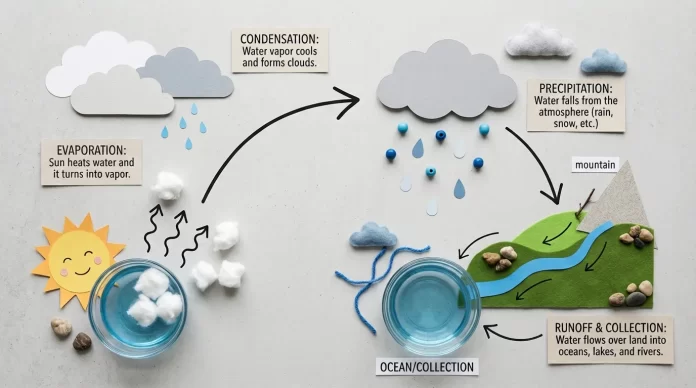

Google is making a significant move in the AI image generation space, rolling out Nano Banana 2, also known as Gemini 3.1 Flash Image, across its product ecosystem. The launch marks a meaningful step forward from where the company started just months ago, when its original Nano Banana model went viral in August for reshaping what people expected from AI-generated imagery. A follow-up, Nano Banana Pro, arrived in November with more sophisticated intelligence and studio-grade creative tools. Now, with Nano Banana 2, Google is attempting something more ambitious: delivering that Pro-level capability at a speed that makes it practical for everyday use.
The core promise of Nano Banana 2 is that users no longer have to choose between quality and responsiveness. Built on the Gemini Flash architecture, the model is designed for rapid iteration, making it well suited for the kind of back-and-forth editing that creative work actually requires. But speed is only part of the story. The model also inherits the advanced world knowledge that made Nano Banana Pro stand out, drawing from Gemini’s real-world knowledge base and grounding its outputs in real-time information and images pulled from web search. That grounding has practical implications: the model can render specific subjects more accurately, generate data visualizations, turn rough notes into clean diagrams, and produce infographics that reflect how things actually look, not just how a model imagines they might.
Text handling is another area where Nano Banana 2 distinguishes itself. Generating readable, accurate text inside an image has historically been one of the more frustrating limitations of AI image tools, but the new model addresses this directly with precision text rendering that holds up in real use cases like marketing mockups and greeting cards. It also supports in-image translation, allowing users to localize content across languages without rebuilding assets from scratch, a feature that opens up meaningful possibilities for creators and businesses working across global audiences.
On the creative control side, Nano Banana 2 closes much of the gap that previously separated Flash-tier models from their more powerful counterparts. The model can now maintain consistent character appearance across up to five subjects and preserve the visual fidelity of up to 14 objects within a single workflow, which is a significant upgrade for anyone using AI tools to storyboard or build sequential visual narratives. Instruction following has also improved considerably: the model interprets complex prompts more precisely, reducing the gap between what a user describes and what the model actually produces. Output specs now scale from 512px up to 4K, with support for multiple aspect ratios, giving creators the flexibility to build assets for everything from mobile social content to large-format display.
Visually, the results are noticeably sharper. Lighting feels more dynamic, textures read with greater depth, and fine details hold up at higher resolutions. Google positions Nano Banana 2 as the right tool for rapid generation and precise prompting, while Nano Banana Pro remains available for tasks that demand the highest degree of factual accuracy and visual fidelity. Rather than replacing one with the other, the company is offering both as part of a tiered toolkit designed to match different creative and professional needs.
The rollout is broad. In the Gemini app, Nano Banana 2 becomes the default image model across Fast, Thinking, and Pro tiers, though Google AI Pro and Ultra subscribers retain access to Nano Banana Pro for specialized tasks through a regeneration option in the menu. In Search, it is available through AI Mode and Lens across the Google app and both mobile and desktop browsers, with expanded availability spanning 141 new countries and territories and eight additional languages. Developers can access it in preview through AI Studio and the Gemini API, and it is also available via Google Antigravity and in preview on Google Cloud through the Gemini API in Vertex AI. In Flow, it becomes the new default image generation model at no credit cost for all users, and in Google Ads it is already live, powering creative suggestions during campaign setup.
