




Midjourney has spent four years training the public to think of it as a company that turns text prompts into pictures. This week the company asked the world to think of it differently. At an event in San Francisco, founder and chief executive David Holz introduced Midjourney Medical, a new division of the company, and unveiled its first hardware product: the Midjourney Scanner, a full body ultrasound device the company calls “Ultrasonic CT.” Holz framed the unveiling in characteristically bold terms, telling the audience that no comparable device had ever been built before and arguing that the new system could in many respects outperform magnetic resonance imaging, the gold standard for soft tissue diagnostics, while taking a fraction of the time. The announcement, paired with plans for a flagship “Midjourney Spa” in San Francisco, marks one of the more unusual pivots in recent technology history: an AI image generator turning itself into a medical device company.
What was announced
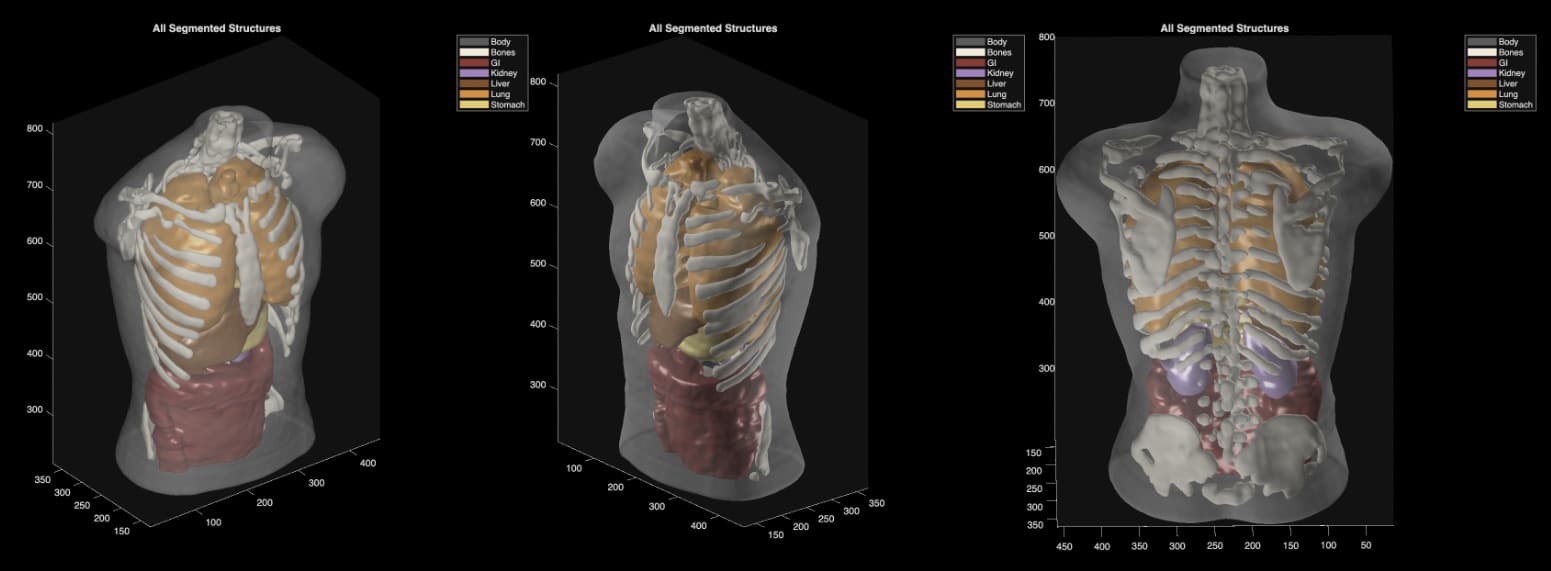
The centerpiece of the announcement is the scanner itself, a device designed to image the entire human body using sound rather than radiation or magnetism. According to Midjourney’s own description, the system relies entirely on ultrasonic waves traveling through water, eliminating the ionizing radiation associated with CT scans and the powerful magnets required by MRI machines. The company’s stated goal is to complete a full body scan in as little as sixty seconds, a dramatic compression of a process that traditionally takes thirty minutes to an hour with conventional MRI.

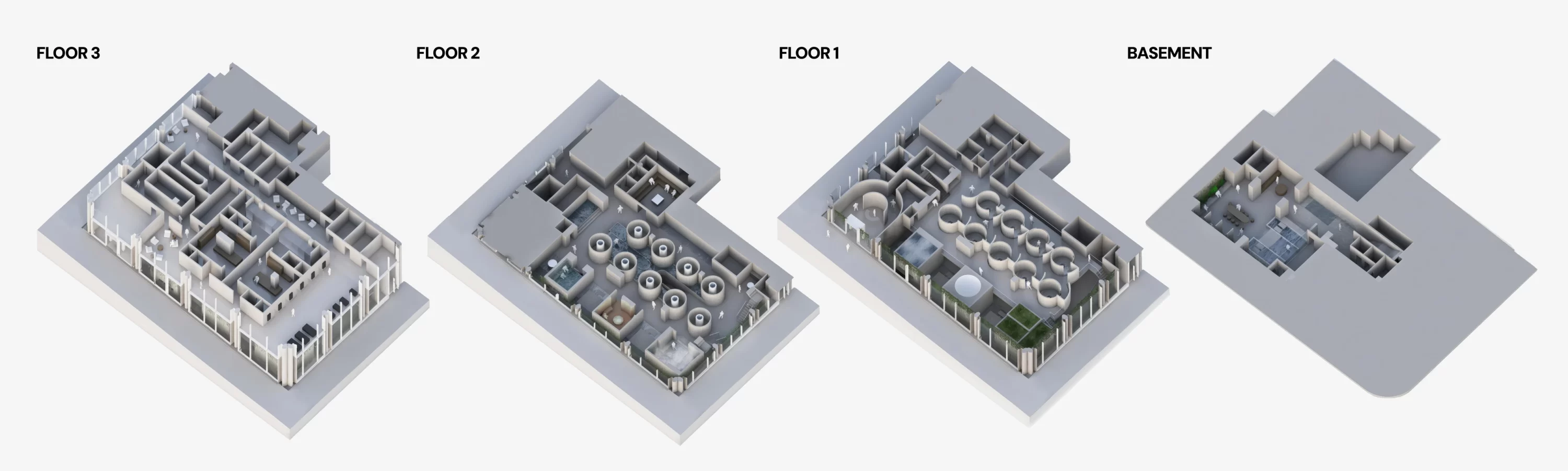
Rather than presenting the device as clinical equipment, Midjourney wrapped it in the language and aesthetics of wellness. The first installation will not be a hospital or a diagnostic clinic but a spa. The company says its flagship location, opening in San Francisco at the end of 2027, will include hot tubs, saunas, cold plunge pools, and roughly ten scanning rooms bathed in soft golden light. Holz has described the philosophy behind this choice plainly: the scans are meant to be a side effect of an experience people already want to have, not the primary reason for showing up. Visitors would be able to use the spa socially or alone, around the clock, and would walk away with a continuously growing personal archive of internal imaging data without ever feeling like they had undergone a medical procedure.
How the scanner actually works
The mechanics described by Midjourney are genuinely unusual for a consumer facing device. A person steps into a shallow pool lit from below and is slowly lowered into the water on a platform descending at roughly two inches, or five centimeters, per second. As the body descends, it passes through a ring lined with roughly half a million tiny elements, each about the size of a grain of sand, each capable of acting as a miniature speaker and a miniature microphone simultaneously. Every one of those elements emits ultrasonic pulses and listens for the echoes that bounce back, cycling millions of times per second. Multiply that across the full ring and the system is generating an extraordinary volume of raw acoustic data, which Midjourney says would take roughly 500 hours of high definition video to represent for every single second of actual scanning time.

Turning that torrent of echo data into a usable image is the harder half of the problem. As sound waves pass through water and human tissue, their shape and timing change in ways that encode information about what they passed through. Midjourney says the elements in the ring take turns emitting and listening, compress what they capture, and stream it to a large compute cluster where thousands of machines work in parallel to reconstruct three dimensional images from the wave patterns. It is essentially a computational imaging problem, similar in spirit to how computational photography reconstructs a sharp image from imperfect sensor data, except applied to soundwaves moving through a human body rather than light moving through a lens.
Numbers describing the hardware more granularly, including a claim of nearly nine thousand individual transducers arranged around the body and resolution at the picometer scale, have circulated widely on social media and in aggregated coverage since the announcement. Those figures did not appear directly on Midjourney’s own product pages, and independent verification from outside engineers or test labs has not yet surfaced. The confirmed technical claim, reported separately by outlets covering the unveiling, is that each scanner houses forty ultrasound on chip imaging modules supplied by Butterfly Network, the medical device company that makes the underlying chips.
The Butterfly Network partnership
Midjourney did not build this hardware entirely on its own. The relationship with Butterfly Network, a publicly traded medical device company known for shrinking ultrasound hardware onto a single chip, dates back to November 2025, when the two companies signed a five year co development and licensing agreement. Under the terms disclosed in securities filings, Midjourney paid Butterfly fifteen million dollars upfront, agreed to ten million dollars in annual licensing fees, and committed to additional milestone payments that could reach nine million dollars, alongside a revenue sharing arrangement tied to any hardware that eventually ships commercially. Butterfly’s own later disclosures put the full value of the arrangement at roughly seventy four million dollars across its various components.
For Butterfly, a company that has struggled for years to turn its chip based ultrasound technology into sustained profitability, the deal has been a meaningful catalyst. Its fourth quarter 2025 earnings report credited the Midjourney partnership with 6.8 million dollars of revenue and said upfront payments from the agreement helped the company post its first quarter of positive operating cash flow since going public. Butterfly’s stock rose sharply on the news of the deal and again after its earnings call, even as analysts cautioned that the company remains unprofitable overall and that the partnership, while financially helpful, has not yet been proven out as a commercial product. Butterfly executives have described their side of the arrangement as “pre commercial,” meaning the current payments reflect licensing and development work rather than revenue from an established product line.
The plan to scale, and the regulatory path
Midjourney has laid out an unusually specific, multi year roadmap for the new division, one that reads more like a hardware company’s product cycle than a typical software release schedule. The next twelve months are described as a research phase, focused on refining the algorithms and hardware on a near daily basis, running trials intended to demonstrate the system’s raw imaging capability, and beginning work on a second generation hardware design. That period is also meant to culminate in the construction of what the company calls a “research spa,” intended as the proof point that mass scale scanning is achievable before the public facing flagship opens.
Regulation is the explicit next hurdle the company has acknowledged. Diagnostic medical devices in the United States generally require approval from the Food and Drug Administration, a process Midjourney has said it intends to pursue incrementally. Initially, the company says it will offer users body composition mapping rather than diagnostic results, a category that does not carry the same regulatory burden as disease detection. From there, Midjourney says it plans to submit test results to the FDA on a rolling basis in pursuit of expanded, more clinically meaningful capabilities over time.
The longer term roadmap extends years beyond the 2027 spa opening. Midjourney has said it intends to begin expanding to additional cities in 2028, alongside an upgrade to a third generation scanner built around fully custom silicon, which the company claims will mark a substantial jump in both image quality and scan speed compared to the initial hardware. The most ambitious target sits at 2031, by which point Midjourney says it wants a global fleet exceeding fifty thousand scanners capable of performing a combined billion full body scans every month, a volume the company argues would be enough to offer regular monthly scanning to roughly a billion people worldwide.
An unusual company to be building this
Part of what has made the announcement so widely discussed is the identity of the company behind it. Midjourney built its reputation entirely within the world of generative art, launching in 2022 as a small, Discord based image generation tool with a team that numbered in the single digits. It became profitable within weeks of launching, has never raised outside venture capital, and by most public reporting crossed roughly five hundred million dollars in annual recurring revenue during 2025 with a headcount still well under two hundred employees, an efficiency level that places it far above most software companies on a revenue per employee basis. Holz has spoken repeatedly about wanting to avoid the pressures that come with venture funding, describing Midjourney instead as a self funded research lab answerable mainly to its own community of users.
Holz’s background is itself relevant context. Before founding Midjourney, he spent twelve years running Leap Motion, a venture backed hardware company that built gesture based hand tracking sensors and raised more than one hundred million dollars from investors before eventually being sold for a fraction of its peak valuation. That experience appears to have shaped his approach to Midjourney’s funding structure, and it also means the current pivot into medical hardware is, in a sense, a return to territory Holz has worked in before, building physical sensing devices, rather than a complete departure from his background.
A crowded and contested market for body scanning
Midjourney is not entering an empty field. A small but growing set of companies has spent recent years trying to turn preventive whole body imaging into a consumer product, often borrowing exactly the spa like framing Midjourney is now using. Prenuvo and Ezra offer whole body MRI scans marketed directly to consumers willing to pay out of pocket, generally targeting people seeking early cancer detection or general peace of mind, since insurance typically does not cover scans performed outside of a specific clinical indication. Neko Health, co founded by Spotify’s Daniel Ek, has taken a different technical approach, combining external imaging such as full body skin photography with a battery of blood and cardiovascular tests delivered in a clinic setting designed to feel more like a luxury checkup than a hospital visit.
What distinguishes Midjourney’s pitch from these existing players is mainly speed and intended scale. Where Prenuvo’s MRI sessions take the better part of an hour and existing scanning clinics operate on the order of dozens of locations, Midjourney is promising a sixty second scan and a global fleet measured in the tens of thousands of machines. Whether the underlying ultrasonic imaging can match MRI’s diagnostic detail across the kinds of soft tissue and deep organ pathology MRI is typically used for remains an open, unverified question, since Midjourney has not yet published independent clinical validation of its imaging quality.
Skepticism and open questions
Reaction to the announcement has split fairly cleanly along two lines. Online communities focused on the announcement’s spectacle have responded with enthusiasm, treating the unveiling as a remarkable feat of hardware engineering from a company nobody expected to build physical devices, let alone medical ones. More skeptical observers, including many commenting in technical forums in the hours after the unveiling, have raised pointed questions about who this is actually for and what scanning the entire global population on a recurring basis would accomplish, particularly given that screening at this scale runs into well documented problems in medical literature around overdiagnosis, the detection and treatment of abnormalities that would never have caused harm if left alone. Public health researchers have long noted that more sensitive screening tends to surface more incidental findings, and that turning those findings into actionable, beneficial treatment rather than unnecessary anxiety and intervention is one of the hardest unsolved problems in preventive medicine, a tension that predates Midjourney by decades and will not be resolved by faster scanning alone.
There are also more basic, near term unknowns. No regulatory clearance has been granted for any diagnostic use of the device. No independent party has validated Midjourney’s image quality claims relative to MRI. No pricing has been announced for either the spa membership or the scans themselves. And the company’s own roadmap places its first real world deployment more than a year away, with its most ambitious scaling targets not expected until the early 2030s. For a company whose entire public track record up to this point involves shipping software updates to a Discord bot, building and operating a global fleet of complex medical hardware, navigating FDA approval, and convincing a skeptical medical establishment of the device’s reliability represents a fundamentally different and much slower kind of challenge than anything Midjourney has previously attempted.
What happens next
For now, the Midjourney Scanner exists primarily as a set of renders, a working prototype demonstrated on stage, and a detailed but unverified roadmap. The next concrete milestone the company has committed to is the construction of its research spa over the coming year, followed by the opening of the public flagship location in San Francisco at the end of 2027. Whether the underlying ultrasonic imaging technology can deliver on its promise of MRI like detail at a fraction of the time and cost will likely only become clear once that first site is operating and its results face scrutiny from the medical and scientific community. Until then, the Midjourney Scanner remains one of the more striking bets in recent memory: a company built entirely on generative pixels staking part of its future on a claim that it can also build the machine that looks inside the human body.