


There is a particular alchemy that occurs on certain Parisian squares at dusk, when the stone still holds the day’s warmth and the first candles are lit on outdoor tables, and Place de Valois has always possessed this quality in abundance. Tucked just behind the Palais Royal, within an unhurried walk of the Louvre, the square has the hushed grandeur of a stage set that somehow still functions as a neighbourhood. It is fitting, then, that this is where Michel Puech, the restaurateur behind Biche, Margaux, Blandine, Pastis and Clos, chose to open his newest bistrot, taking over the space long known as Bistrot de Valois and giving it a second life under the name Le Gratin.
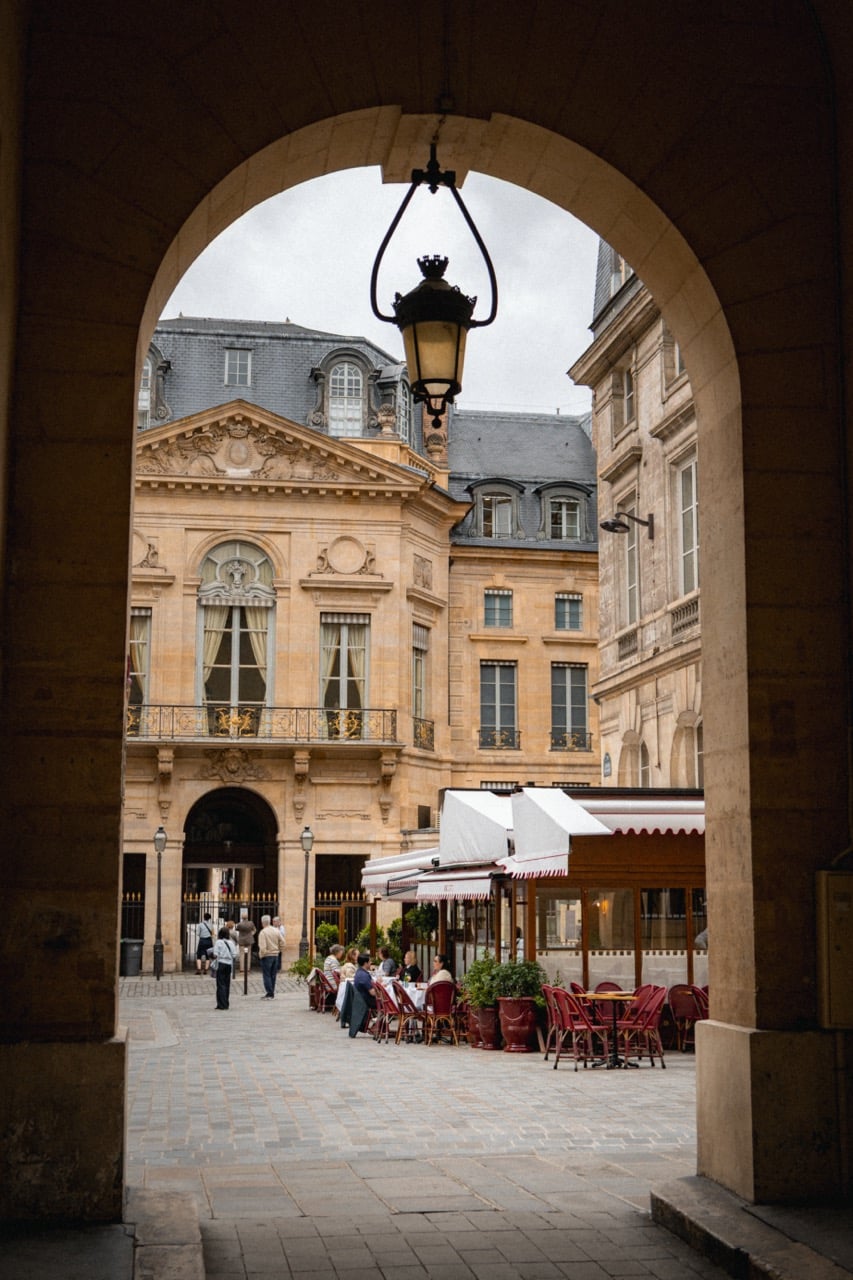
To sit here is to understand immediately why the address has drawn attention beyond the culinary press. The square has entered the popular imagination as a setting from the series Emily in Paris, and Le Gratin leans gently into that mythology, positioning itself within the same romantic vision of the city, all golden light and effortless style. But the restaurant is not merely borrowing atmosphere from its surroundings. It is contributing to it, with white tablecloths that seem to glow under the evening light, red banquettes worn into softness, and a general air of unforced, lived in elegance.
An interior built from memory
Le Gratin is the shared project of two longtime friends, Michel Puech and Adrien Villalba, and their intimacy with one another seems to have translated directly into the room itself, which feels less designed than remembered. Warm wood panelling, red gingham textiles, and lighting pitched somewhere between a family kitchen and a grand café combine to produce something that reads as vintage without ever feeling like a museum piece. The effect is deliberate. This is a space conceived to summon a kind of collective nostalgia, the sense memory of a Sunday lunch or a childhood dinner, filtered through a design sensibility that keeps everything just contemporary enough to avoid sentimentality.
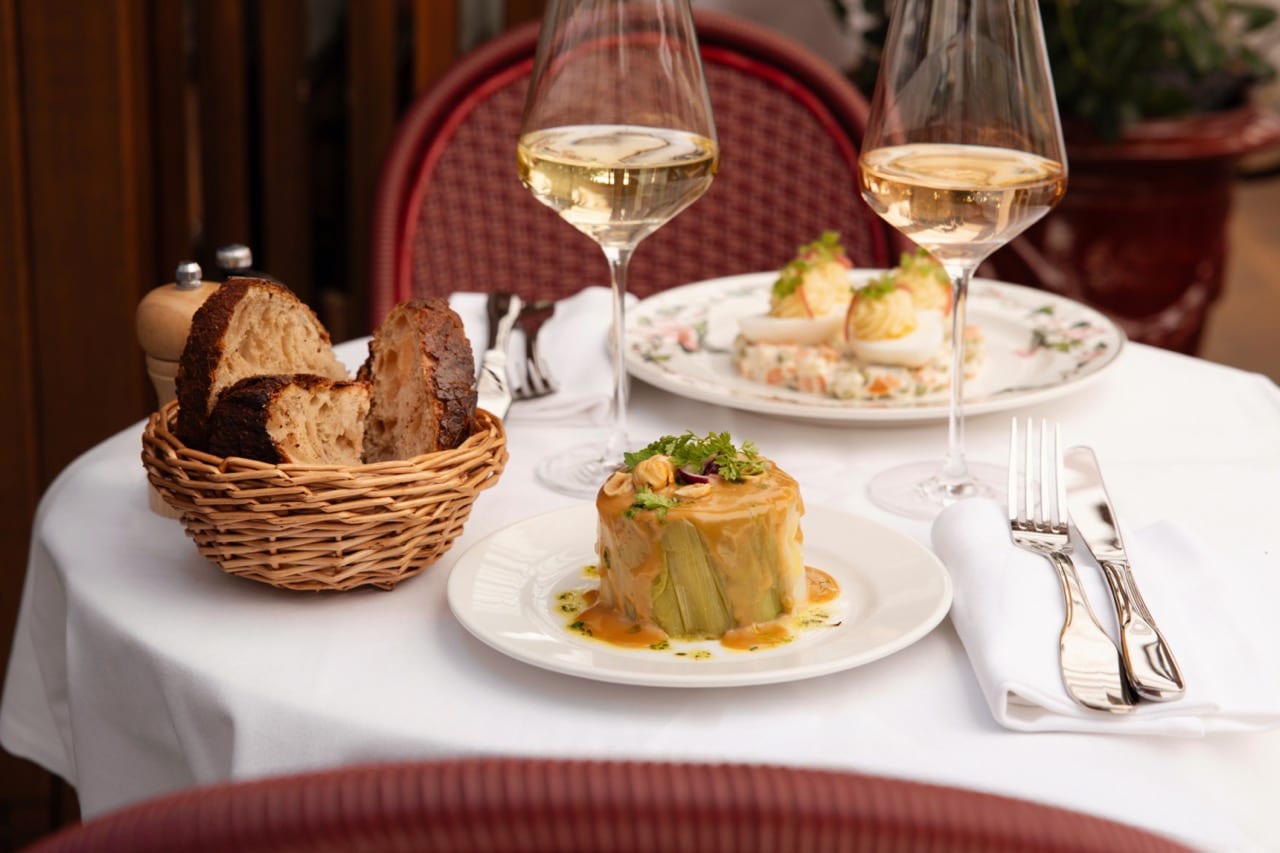
The restaurant unfolds across several distinct moods rather than a single room. There is the main dining space, anchored by a traditional zinc bar that catches the light and gives the whole address its sense of gravity. Beyond it sits a veranda, more porous and adaptable, suited to long lunches or looser evenings. And tucked away is a private room, reserved for gatherings that want a touch more intimacy, all of it capable of holding as many as two hundred and fifty guests when the occasion calls for scale. One local chronicler, visiting not long after opening, described the terrace unfurling at the foot of a handsome classical facade, the zinc counter gleaming, and called the whole enterprise a chic bistrot that refuses to take itself too seriously, a bistrot playing its own game with wit rather than solemnity.
A menu written in a familiar hand
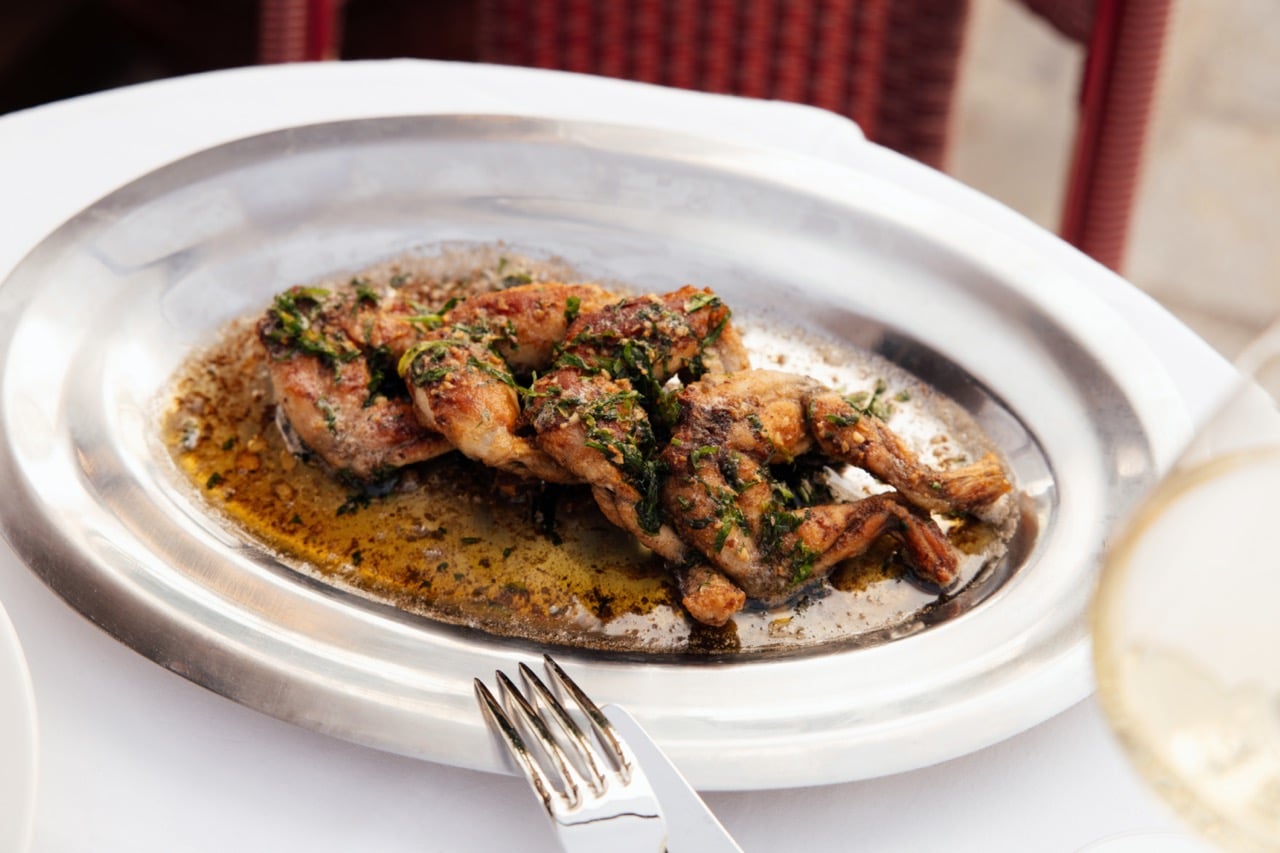
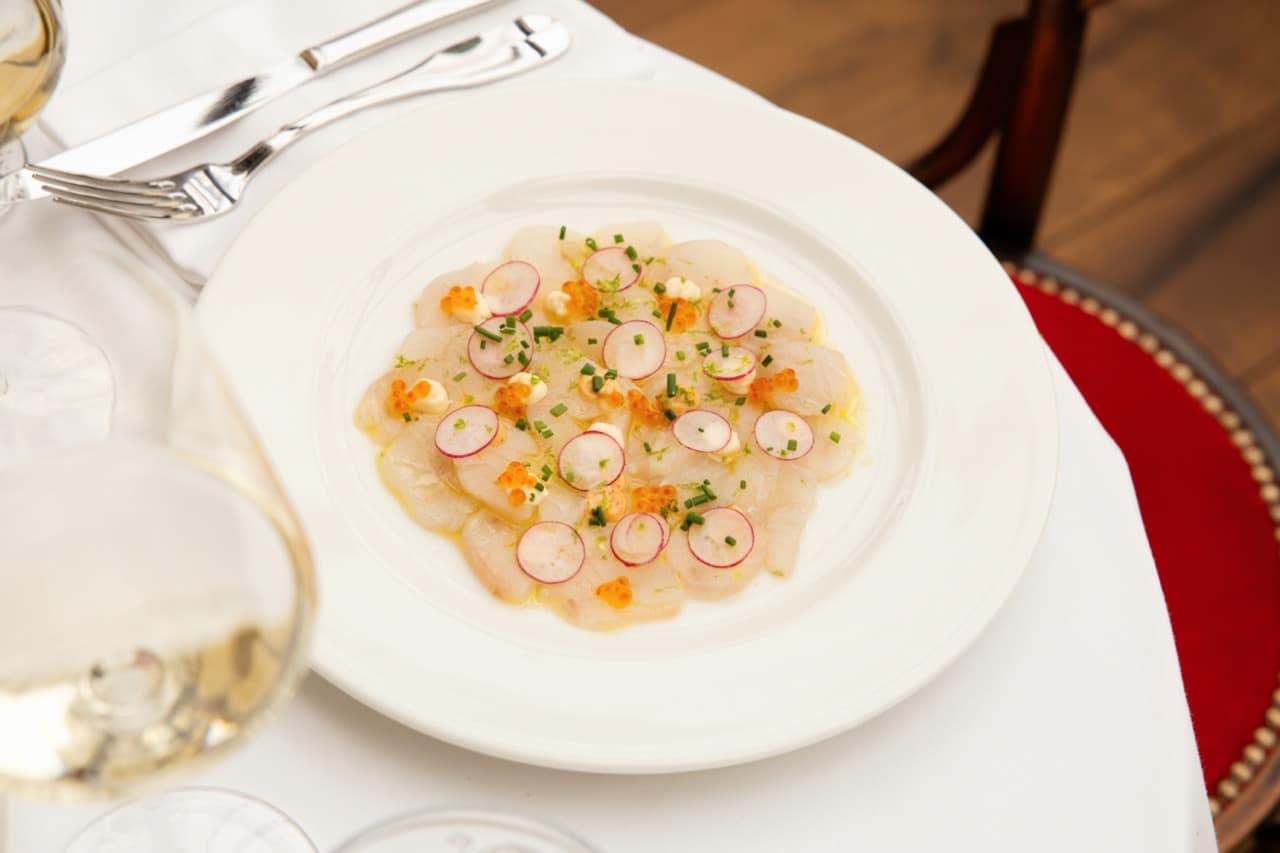
The kitchen at Le Gratin does not attempt reinvention. Its ambitions lie elsewhere, in the faithful, generous execution of dishes that have long defined the genre of the Parisian bistrot, prepared with enough care that familiarity becomes its own kind of pleasure. Devilled eggs arrive glossed in mayonnaise, garlic parsley frog legs recall an older, more theatrical era of French dining, and a sole meunière is finished with the kind of unhurried attention that this dish has always demanded and too rarely receives. Diners looking to begin more communally can share a beef tartare set on brioche toast or prawns dressed in herb mayonnaise, dishes that invite conversation as much as consumption.
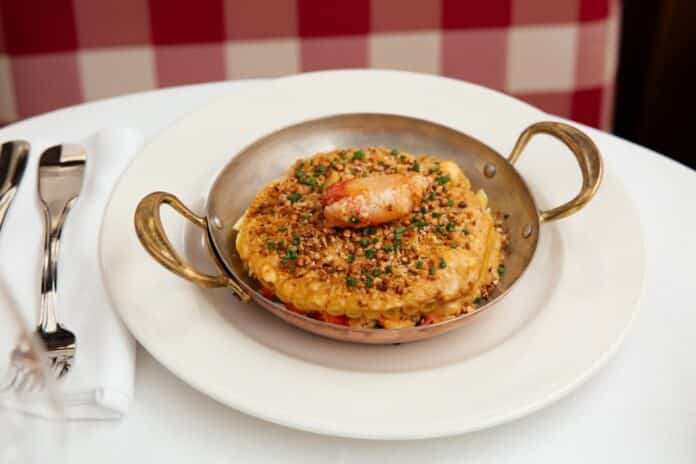
The main courses carry the restaurant’s clearest signature. A cordon bleu, meltingly tender and golden at the edges, has already been named the best in Paris, a claim the restaurant wears with evident, if understated, pride. There is a lobster gratin so indulgent it seems to justify the restaurant’s very name, and beside it sits a tagliatelle with morels that local critics have singled out as one of the menu’s quiet triumphs. For those seeking something more theatrical still, a one kilogram côte de boeuf can be ordered for the table, alongside a Chateaubriand built for sharing. Vegetarian appetites are not an afterthought either, with a croque monsieur and a baked aubergine gratin offering their own comforts. Every main arrives with a side already included, though further temptations wait on a separate list of accompaniments, from a proper gratin dauphinois to a simple green salad, each one a small study in bistrot fundamentals.
Dessert closes the meal on a note of pure sentiment. The chocolate mousse is aerated and deeply cocoa forward, served tableside by the spoon in a gesture that feels almost ceremonial, while a warm apple gratin, sweetened with salted caramel and scattered with pine nuts, offers something softer and more perfumed. A crème brûlée, choux à la crème, and a simple cup of strawberries or mixed red fruit round out the list, and at lunchtime a coffee or tea gourmand allows for a final, smaller indulgence.
The wine list runs past one hundred labels, gathered from across the diversity of French terroir, and the bar has clearly been given equal thought, offering cocktails built with real technique alongside alcohol free compositions crafted with the same seriousness rather than treated as an obligatory footnote.
A place that resists nostalgia even as it evokes it
What distinguishes Le Gratin, ultimately, is its refusal to let comfort curdle into cliché. It borrows the vocabulary of an older Paris, the zinc counter, the checked fabric, the mousse served by the spoon, but assembles these elements with a lightness that keeps the whole experience feeling present tense rather than preserved in amber. It is a place built for return visits rather than singular pilgrimages, which is perhaps the truest measure of a good bistrot.
Le Gratin sits at 1 Place de Valois in the first arrondissement, open every day of the week from noon until midnight, without pause. Starters begin around nine euros, mains from nineteen, desserts from ten, and a full evening tends to land somewhere between fifty five and seventy five euros a head before wine enters the equation. But numbers, here, feel almost beside the point. What lingers instead is the particular sensation of a room that seems to have always existed, quietly waiting behind the Palais Royal for someone to remember it was there.
