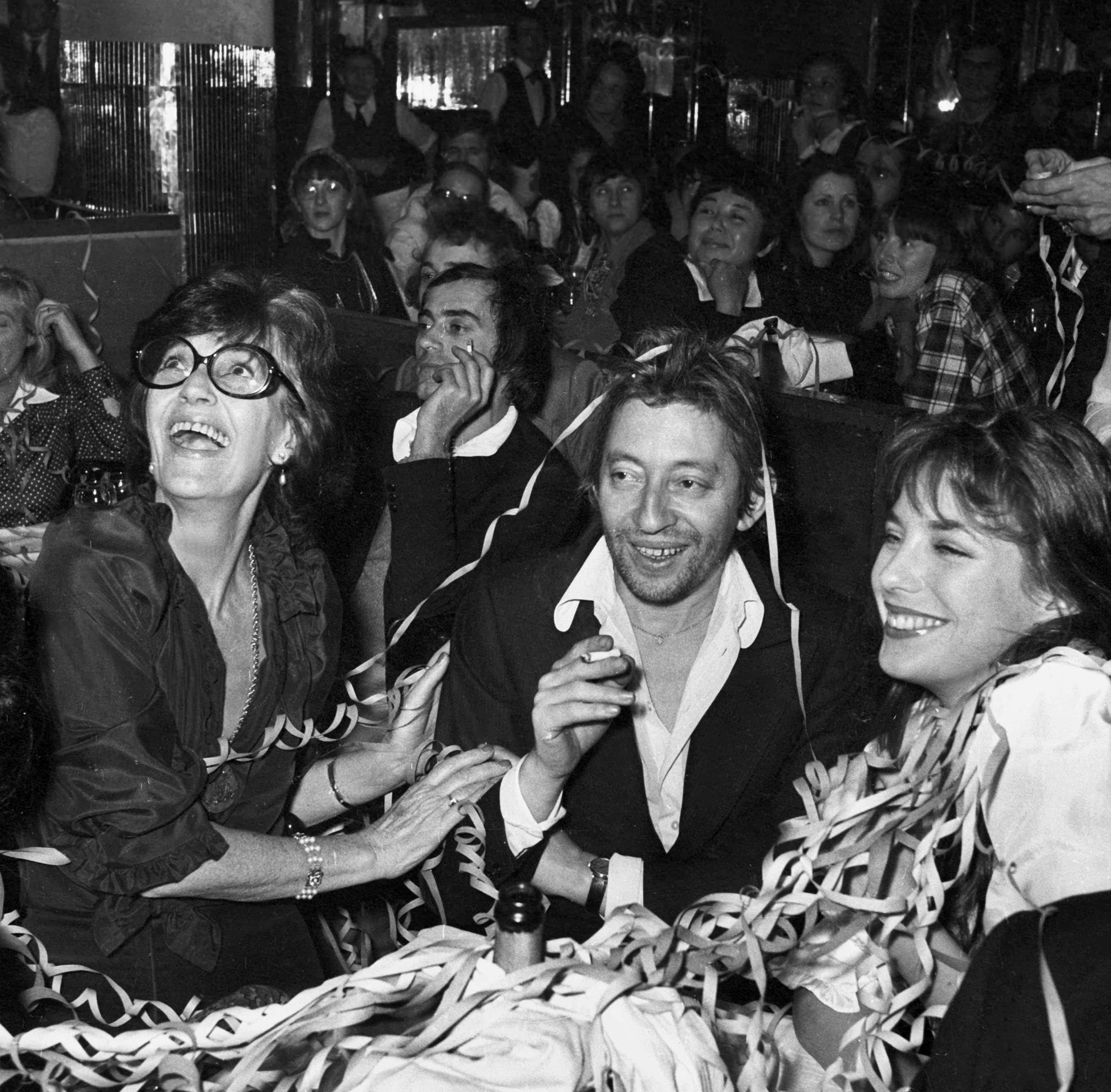
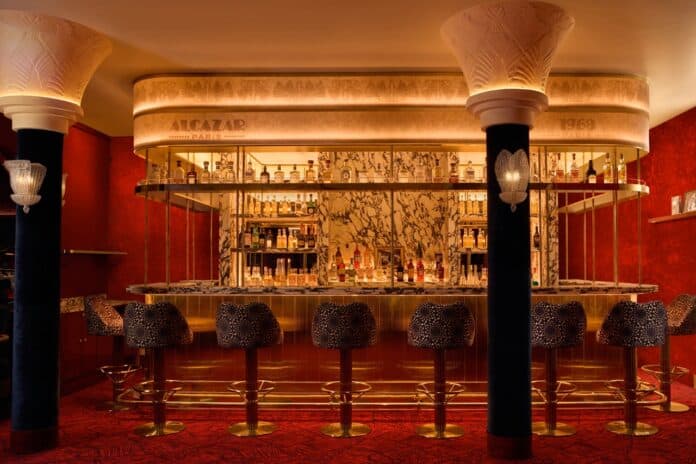

The chandeliers have not yet dimmed when the first note of brass slides through the room, and already the velvet seems to hold its breath. Beneath a glass roof eight meters high, gold catches candlelight and throws it back in fragments across marble, across bare shoulders, across the rim of a coupe glass lifted halfway to a mouth that has forgotten, for a moment, to drink. Somewhere above, a performer begins to climb, and the whole room tilts its face upward, the way sunflowers do, without quite deciding to. This is rue Mazarine on any given night now, in the sixth arrondissement of Paris, where a building that has been a tennis court, a printing press and a cabaret is once again, after everything, a cabaret.
It is called L’Alcazar, and it does not so much welcome guests as absorb them.
Paris in the late 1960s was a city learning to unclench. May had cracked something open that would not close again. The miniskirt shortened, the guitars turned electric, and on the terraces of the Café de Flore, Jean Paul Sartre and Simone de Beauvoir argued into the small hours while, a few streets away, a different kind of argument was taking shape in feathers and light. Saint Germain des Prés, long the address of thought, was becoming the address of appetite. Juliette Gréco sang in rooms thick with cigarette smoke. Boris Vian, Georges Brassens and Léo Ferré were still young enough to be discovered rather than remembered. The neighborhood did not choose between the intellect and the body that night, it simply let them share a table.
Into that hunger walked Jean Marie Rivière, in 1968, in a white tailcoat and a top hat that made him instantly, theatrically recognizable, and he took a building that had already lived several lives and gave it one more. Under his hand it became a nightly spectacle, up to seven hundred and fifty covers a service, drag performers moving through smoke and sequins while Duke Ellington celebrated his seventieth birthday somewhere among the tables, while David Bowie and Liza Minnelli and Serge Gainsbourg watched, laughing, from the dark. A teenager named Marie France arrived that same year, barely eighteen, and spent the better part of two decades perfecting a single silhouette there, wearing Chanel No. 5 like armor, until she had become, nightly, a kind of Marilyn Monroe built from will alone. Rainer Werner Fassbinder shot scenes of a film about the collapse of reality inside these walls in 1973, unaware, perhaps, that the building itself had always specialized in exactly that collapse. And there is a corridor, connecting L’Alcazar to a neighboring club, down which legend still insists a rock star once stumbled toward an ending that history prefers to place elsewhere, in a bathtub, in 1971.
Grand things exhaust themselves eventually, even this one. By the century’s end the cabaret model had gone quiet, and the building waited, the way old theaters wait, for someone to remember what the stage was for. Terence Conran arrived in 1998 and stripped the spectacle down to something more contemporary, a brasserie of clean lines beneath that same glass roof, where in 2001 a cake fight is rumored to have left frosting on the walls for years afterward. In 2015 Laura Gonzalez returned warmth to the room, velvet banquettes and a curtain of greenery, a balcony gone lush enough to feel like a garden suspended indoors.
But a building born to perform does not stay still for long, and now, nearing sixty, L’Alcazar has turned again, this time under Walter Butler, who also holds the Paradis Latin and understood, perhaps better than anyone, what this address was always meant to do.
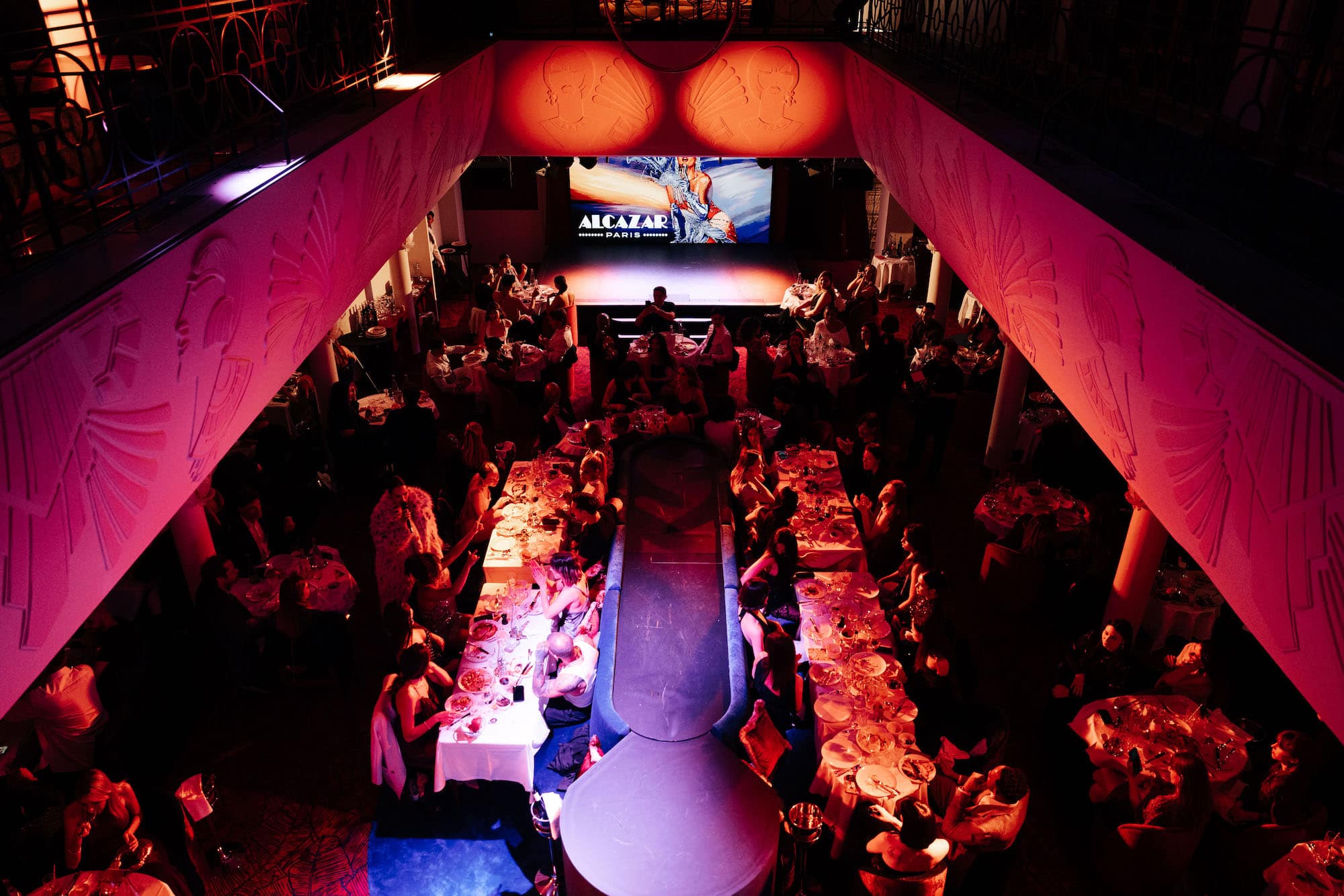
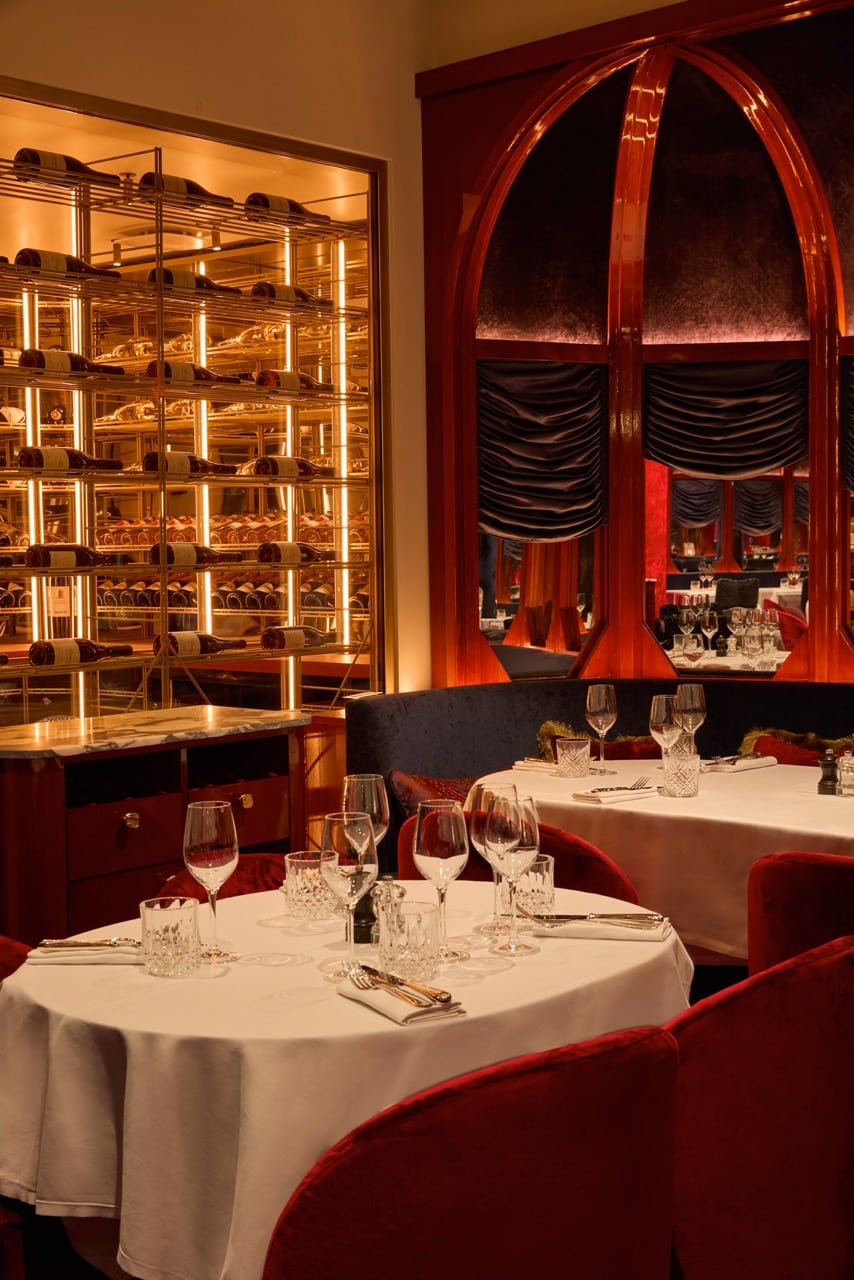
Walk in tonight and the theater starts before the maître d’ says a word. The entrance is staged like a held breath, dim and close, before the room opens into gold and marble and distance, the bar rising monumental at its center, mirrors multiplying every flame in the room until the space feels larger than the building that contains it. Red announces itself first, the red of velvet and want and Parisian nights that refuse to end at a reasonable hour. Blue arrives later, upstairs, where the noise falls away and midnight colored banquettes curve beneath de Gournay wallpaper and gold embroidery, where a mosaic by the Italian house Sicis, a woman in a bicorne hat rendered tessera by hand laid tessera, watches over a staircase lined in silvered mirror like something between a warning and an invitation.
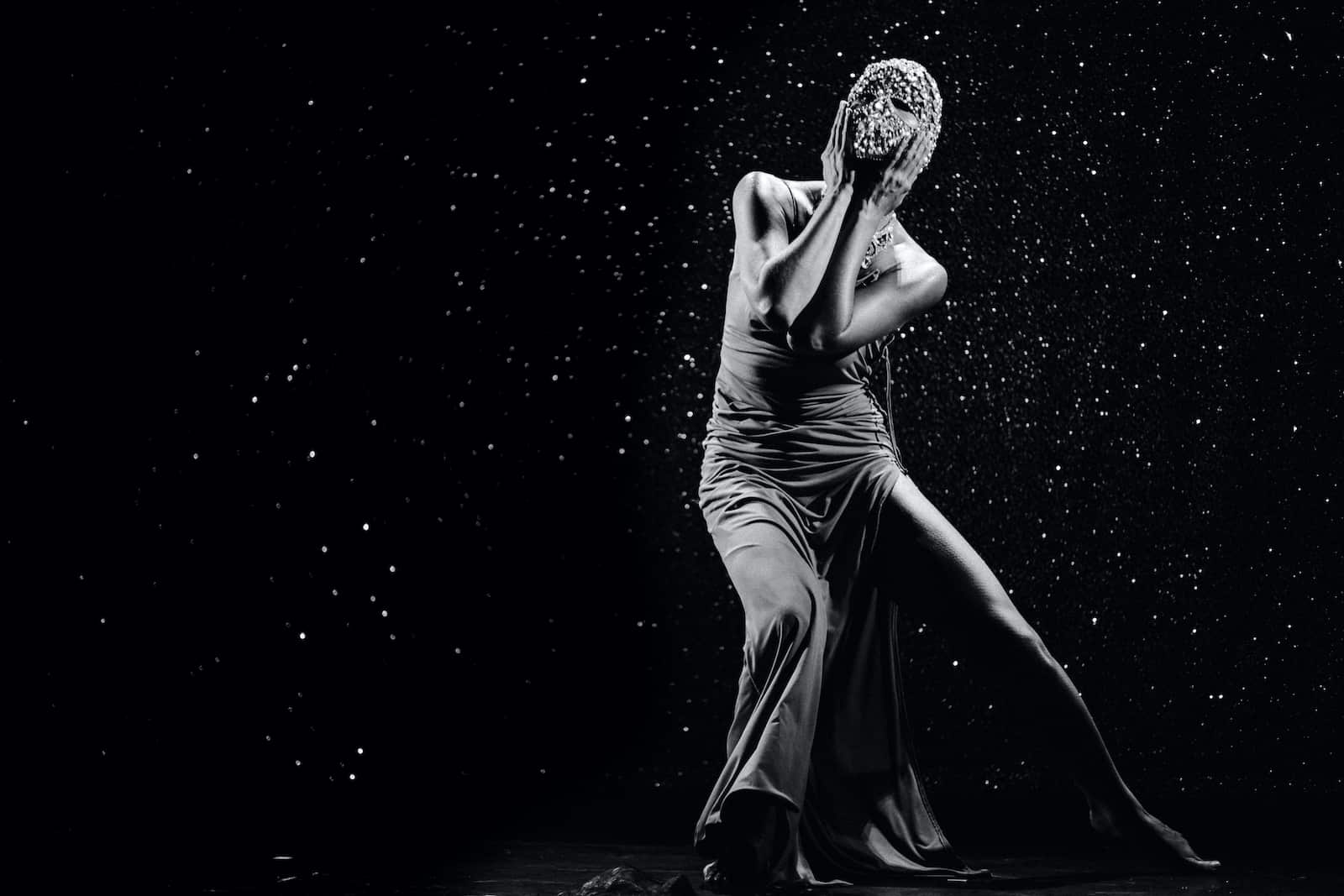
The stage itself sits at the center of everything, as it always has, but now it refuses to stay in one place. It climbs into the Eiffel style ironwork of the glass roof, where aerial performers turn slowly above diners who may or may not notice, distracted as they are by a central banquette that can convert, without warning, into a podium. Dinner becomes performance becomes party without anyone marking the exact moment of the crossing. The program moves through decades of French song, Brigitte Bardot’s cool shadow beside Céline Dion’s soaring one, and reaches outward too, toward Madonna, toward anything that understands glamour as a form of courage.
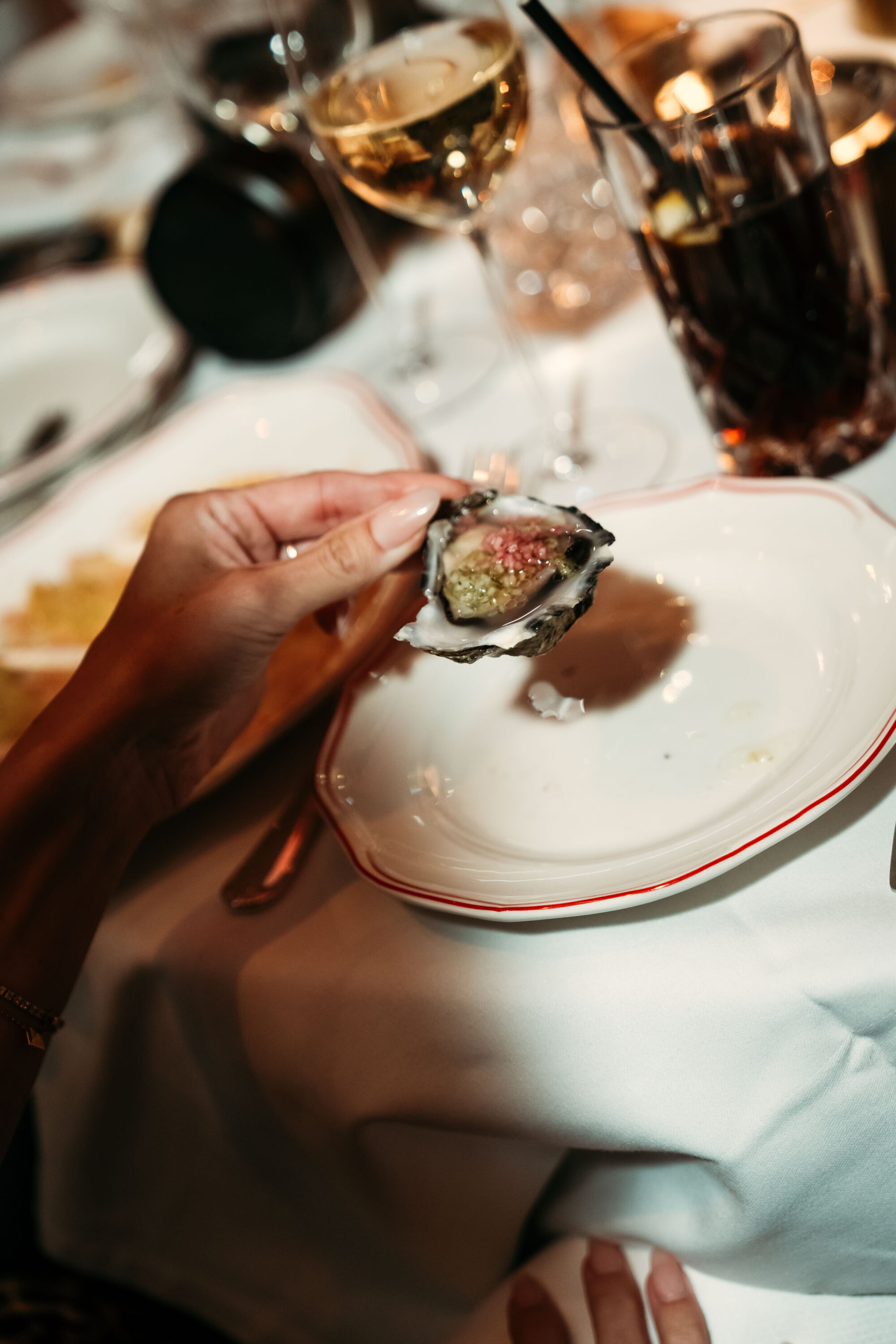
And through all of it, the food keeps its own quiet promise. Burrata beside confit tomatoes warmed in olive oil from Baux de Provence. A slow cooked egg drowned gently in morel and vin jaune, foie gras melting at its edge. Sea bass with artichoke barigoule, lamb touched with lemon and rosemary, and at the end, Pierre Hermé’s tarte of vanilla, infinite in name and nearly so in taste. Nothing here reaches for revolution. It reaches instead for the kind of excellence that never needs to raise its voice over the music, the kind that simply waits, steady, beneath the spectacle, for anyone who thinks to notice it.
Above, the aerialist finishes her turn and the room exhales as one. Somewhere beneath the glass roof, a curtain that has risen and fallen for nearly sixty years prepares, unhurried, to rise again.
Address: 62, rue Mazarine, 75006 Paris, Saint-Germain-des-Prés