


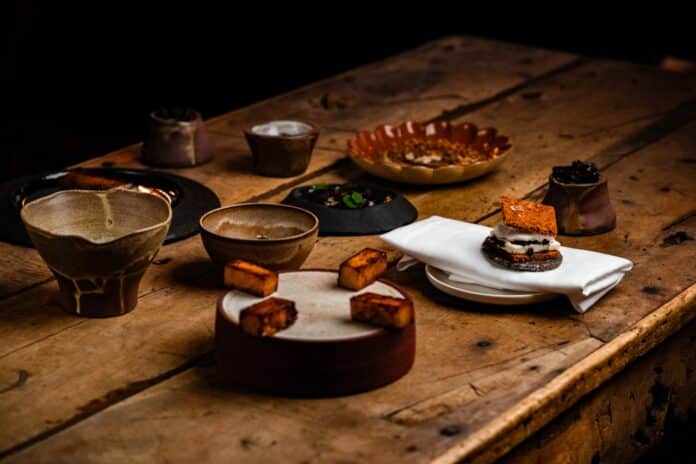

In the 9th arrondissement, tucked onto a quiet residential street, a small new restaurant is making a big case for tension as a flavor. Double Impact, opened in April 2026 at 57 rue Claude Rodier, is the work of two longtime friends, chef Étienne Dupuy and host Mickaël Robinault, who met on the benches of hospitality school and always knew they would eventually open a place together. What they’ve built is not a conventional fine dining room but a sensory experiment where opposing forces, raw and refined, precise and instinctive, are the entire point.
Cooking Built Around Contrast
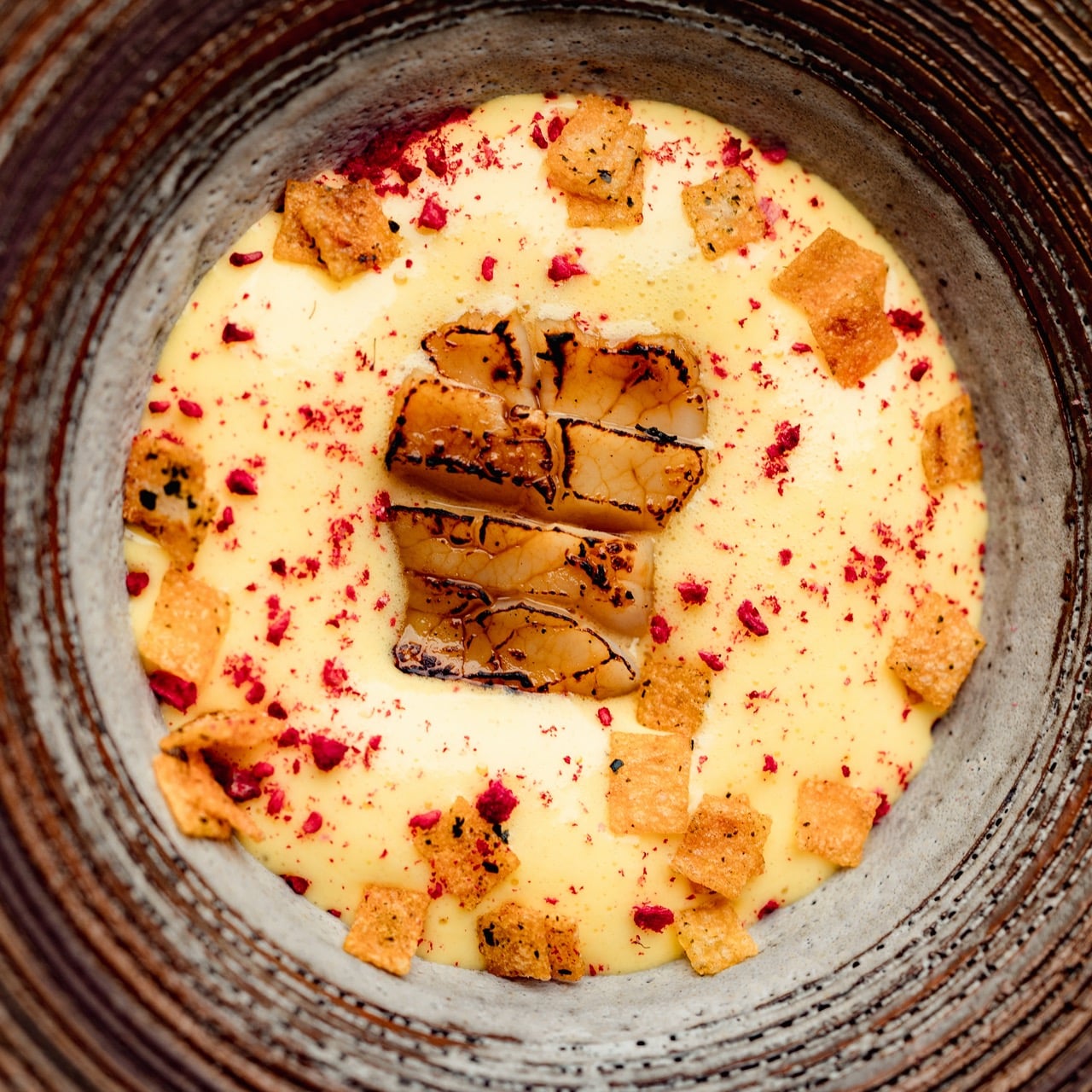
Ask Dupuy and Robinault what defines Double Impact and they will tell you it comes down to a single word: contrast. The kitchen’s signature style pits the intensity of a raw, unfiltered flavor against the purity of a single great ingredient, while a plate that looks surgically composed might arrive built on a completely spontaneous, instinctive gesture.
That philosophy plays out through a mix of classic and contemporary techniques, fermentation, slow cooking, confit, open flame grilling, reduction, and dry aging, all in service of French, seasonal, carefully sourced ingredients. Expect dry aged meats, sustainably caught fish, ancient grains, and humble or overlooked vegetables treated with the same seriousness as luxury products.
With only 30 seats and doors open exclusively for dinner Tuesday through Saturday, Double Impact functions less like a typical restaurant and more like an intimate theater, one where the tension between technical precision and effortless spontaneity, both in the kitchen and in the dining room, is what makes the evening feel alive.
A Menu Told in Chapters
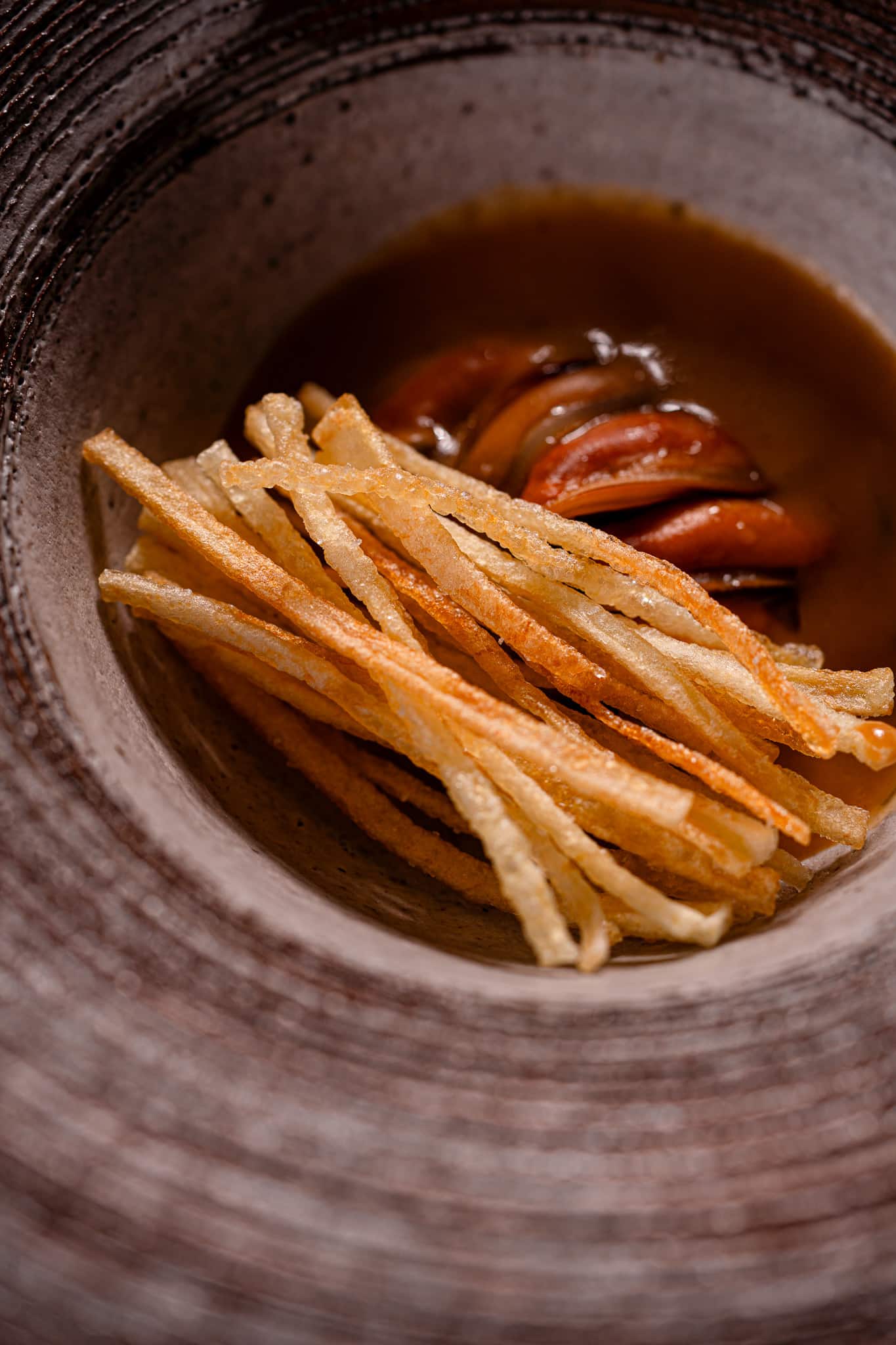
Rather than rotating a seasonal menu the way most restaurants do, Double Impact organizes its cooking into what the founders call Chapters, a narrative format that changes several times a year and reflects the personalities and lived experiences of its two creators.
Each Chapter functions as a complete creative statement. It is not just a new set of dishes, it reshapes the pacing of service, the wine list, and even the music playing in the room. Built from real memories and imagined ones alike, each cycle lets the restaurant evolve with the seasons and tell an entirely new story rather than simply updating a menu.
As Dupuy and Robinault put it, contrast is their language, the place where two forces meet, clash, and then find harmony. That dialogue between precision and freedom, movement and stillness, is what they say gives the experience its richness. The relationships built with small, passionate producers along the way are just as central to that story, with each partner’s craft showing up directly on the plate.
Meet the Chef: Étienne Dupuy
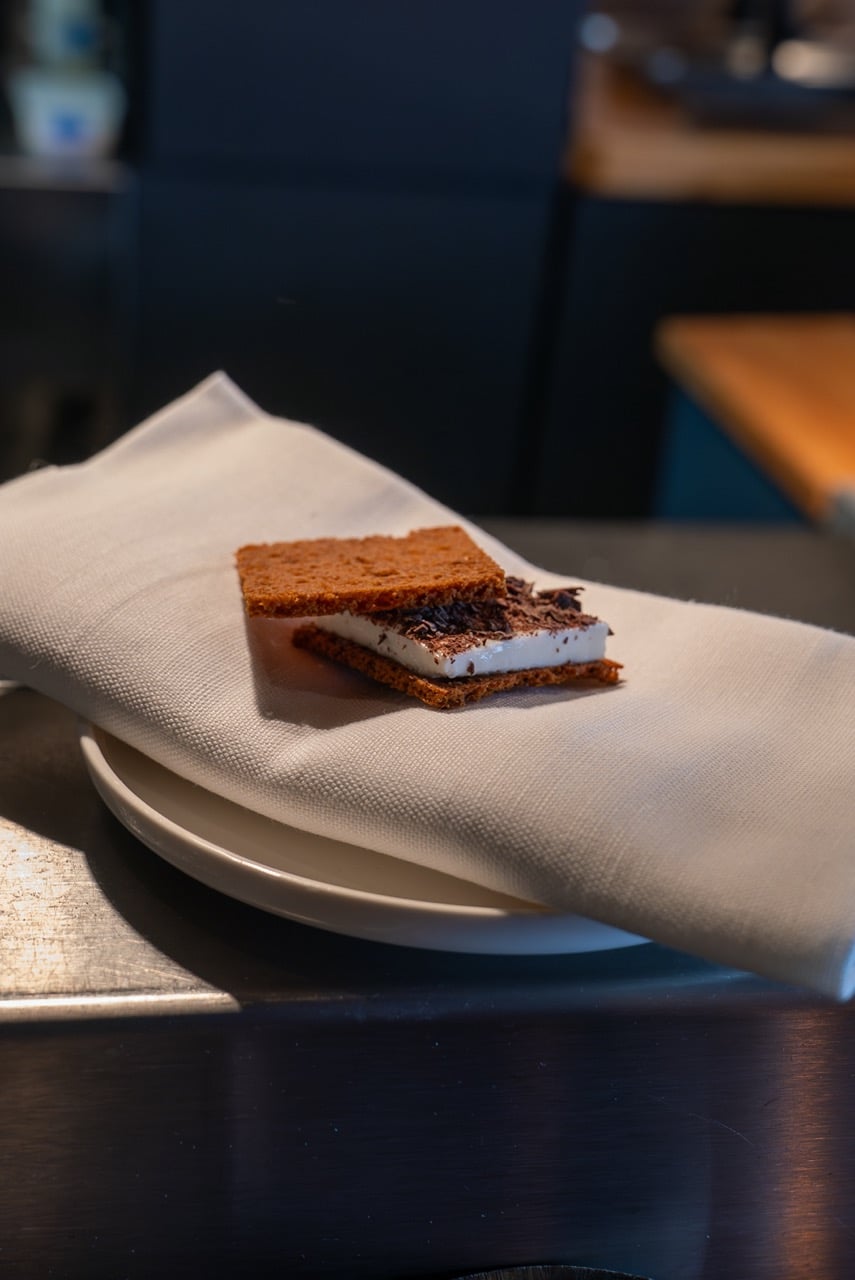
Chef Étienne Dupuy grew up in Brittany, shaped early by the region’s briny coastline and its unpretentious markets. That upbringing gave him a restless curiosity that eventually pulled him away from home to train under some of the biggest names in the culinary world.
He started in the demanding kitchens of Georges Blanc, where he learned the discipline and elegance of classic French gastronomy. From there he crossed the Atlantic to Chicago to join Alinea, one of the world’s foremost temples of culinary innovation, sharpening his creativity and obsessive attention to detail. His path then led to Noma in Copenhagen, where he immersed himself in the Nordic approach of fermentation, hyper local foraging, and expressive minimalism. Finally, back in Paris, he trained under Yannick Alléno, absorbing the precision that defines top tier French technique.
That global education, spanning classic French cuisine and some of the boldest international kitchens working today, gave Dupuy an instinctive understanding of flavor, texture, and timing. His cooking is technical and sensitive at once, built to play deliberately with contrast.
A Partnership Built on Balance
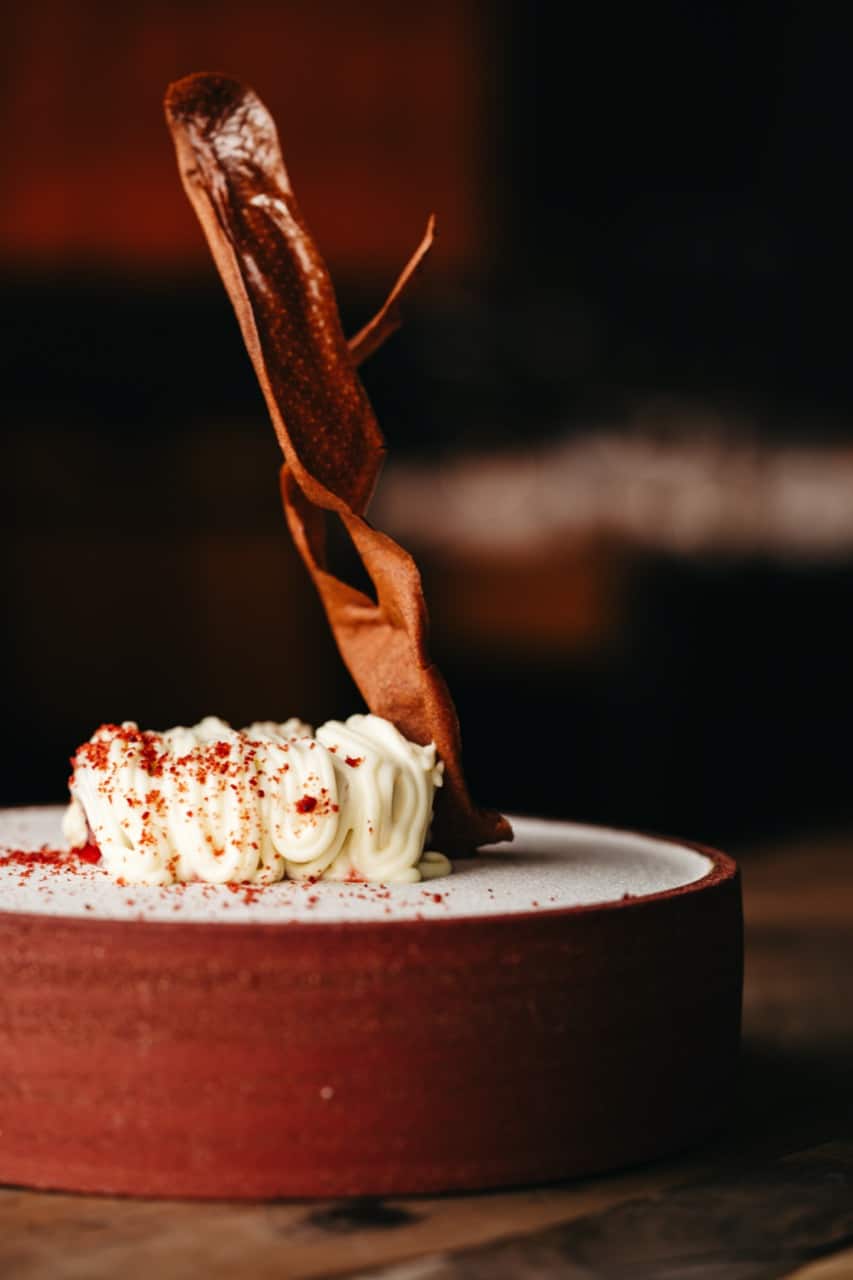
If Dupuy shapes the backbone of flavor in the kitchen, Mickaël Robinault orchestrates everything that happens beyond it, pacing, clarity, and the rhythm of hospitality. For Robinault, hospitality is a living material he shapes with the same precision a chef applies to a raw ingredient.
Together the two built a restaurant that mirrors their own dynamic: precise, free, and constantly in motion. The open kitchen lets guests watch the choreography of the cooking unfold in real time, creating an immediate closeness that pulls diners straight into the restaurant’s world.
Industrial Edges, Domestic Warmth
The room itself, at 57 rue Claude Rodier, plays out the same push and pull found on the plate. A brushed steel counter erases the line between where food is prepared and where it’s eaten, putting guests close enough to the kitchen’s raw energy to feel every movement of the chef’s hands.
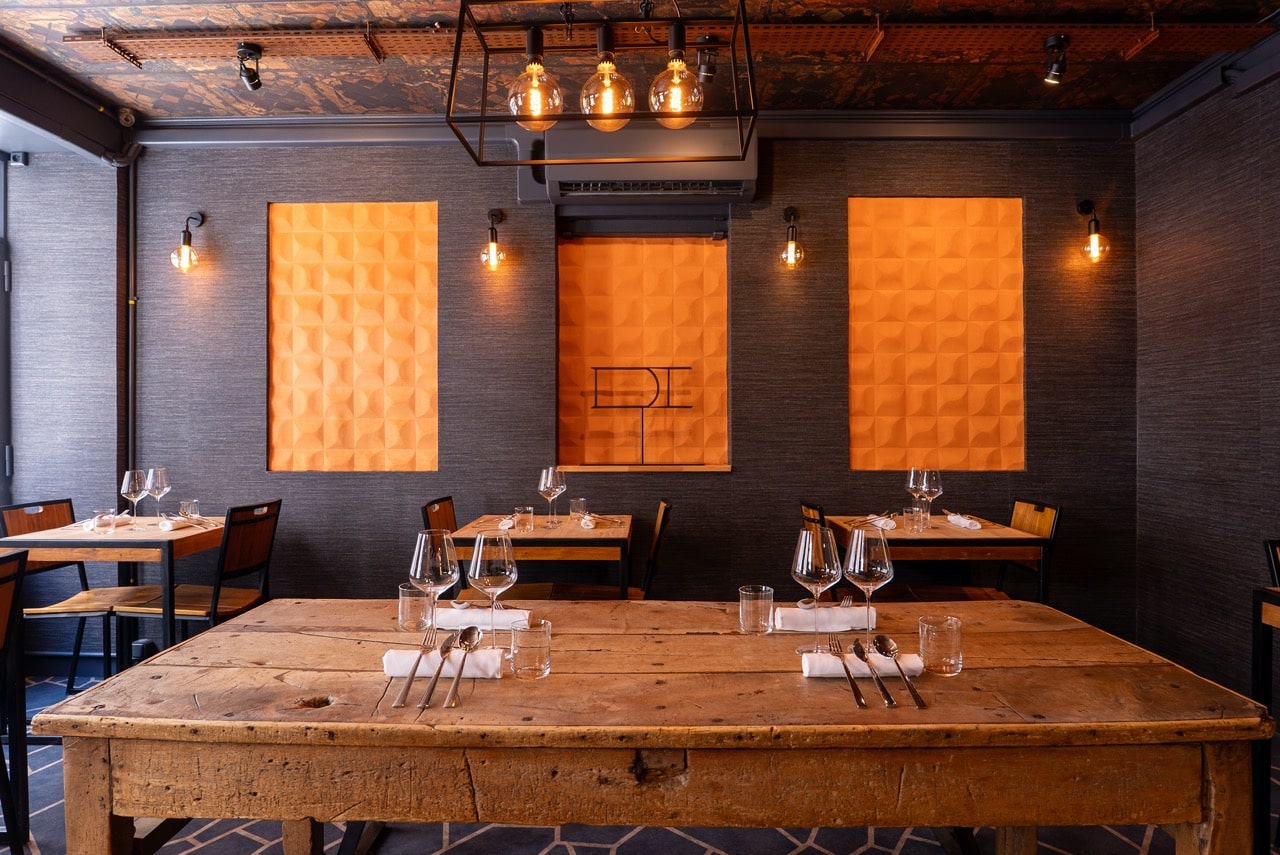
Materials are chosen to create quiet friction: the roughness of metal and wood set against soft textiles. Marble topped tables and banquettes sit alongside one large, raw wood communal table that feels spontaneous and almost domestic, more like a shared table at home than a restaurant fixture. Lighting shifts the mood room to room, minimalist pendant fixtures and opaline globes glow softly over the dining room while brighter, more direct light sharpens the energy above the kitchen counter.
Overhead, an ornate original ceiling, uncovered during renovation, presides over the otherwise modern, stripped back space, a quiet reminder of the building’s history sitting above its thoroughly contemporary reinvention. The layout keeps sightlines open between the dining room and the kitchen, so glances, conversations, and energy move freely between the two.
The Details
Double Impact is open for dinner only, Tuesday through Saturday, with two tasting menu options: a five course menu at 75 euros and a seven course menu at 95 euros, with optional wine pairings at 45 and 55 euros respectively. The restaurant seats just 30 guests, making reservations well worth planning ahead for anyone eager to experience Dupuy and Robinault’s ever evolving culinary chapters.