

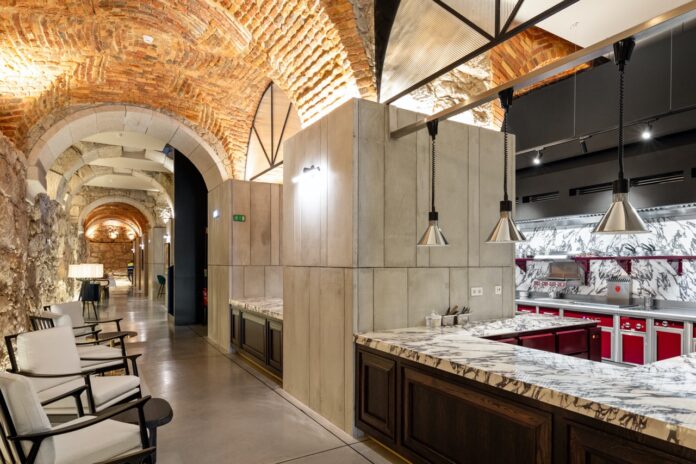

You arrive at Oculto by going down. Below The Lince Santa Clara Historic Hotel, the restaurant rises out of the centuries old stones of a former monastery, and the first thing you register is the shape of the room: ancestral walls, ceilings vaulted in brick, Gothic lines that draw the eye upward and then hold it there. The architecture asks you to slow down before anyone has said a word. By the time you sit, the pace of the evening has already been set.
The monastery is Santa Clara, standing above the town of Vila do Conde on the Ave River, a short distance north of Porto. The hotel occupies the old convent, and the restaurant sits in its lower level at Largo Dom Afonso Sanches. The room has a story of its own. It was hidden for a long time, and it had to be excavated to bring the original stone walls and brick vaults back into view. The name follows from that. Oculto comes from the Latin occultus: hidden, concealed, known only by its effects. It suits a kitchen that prefers to reveal itself gradually, and the Michelin Guide has recognised it with a star.
Chefs Vítor Matos and Hugo Rocha cook in the manner the house calls cozinha de autor, authored cooking, built on seasonal products and on the gastronomic traditions of the region, with the sea and the land given equal weight. Their intention is stated plainly: from plating to tasting, the secrets are meant to be disclosed moment by moment, and the team means to walk beside you through it. It is a gentle promise, and the structure of the menus bears it out. Each of the tasting menus is a sequence of moments, and each moment is named for what is at its center.
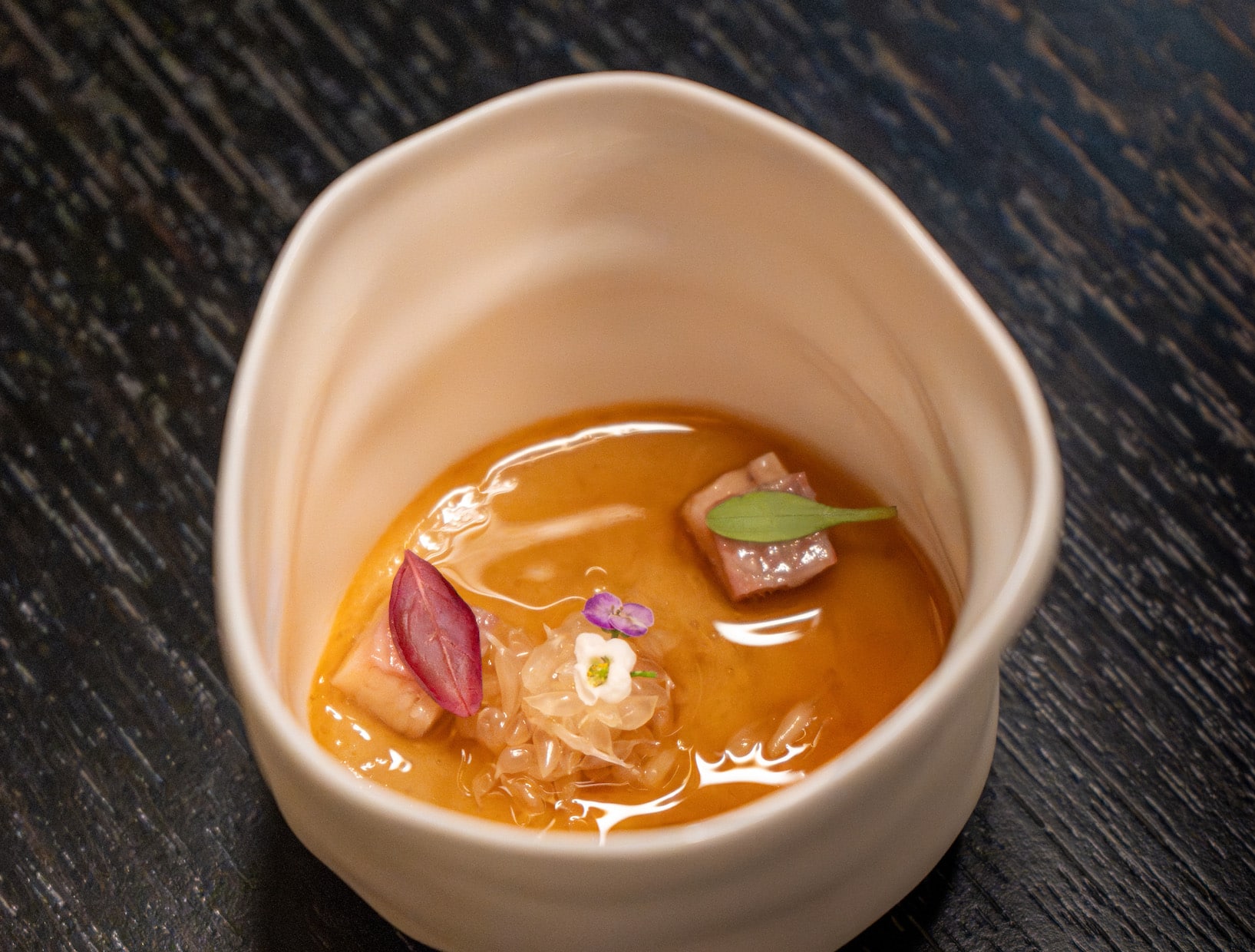
Begin with the sea, in the nine moment Imersão, at 140 euros per person. The opening course pairs turbot with massa mãe, the sourdough starter, an unusual partner for a prized fish and a clear sign that this kitchen thinks in layers. Lily and young onion follow, a quiet, green interlude, and then cod, one of Portugal’s most beloved ingredients, given its own place in the line. The fourth moment is chawanmushi, the Japanese steamed egg custard, which tells you the chefs look beyond the Iberian coast for ideas. Langoustine arrives with citrus, and red prawn with sea urchin, two ingredients prized for their sweetness and their brine. Sea bass is paired with dashi, the Japanese stock built on the savor of the sea, so that fish and broth speak the same language. Then the meal turns toward something gentler: quince with goat cheese, a pairing of fruit and cheese with deep roots on Portuguese tables. It closes with sapateira, the brown crab, and the menu offers its own line in place of a conclusion: the vastness of the ocean as a point of departure, the immensity of the ocean as a port of arrival.
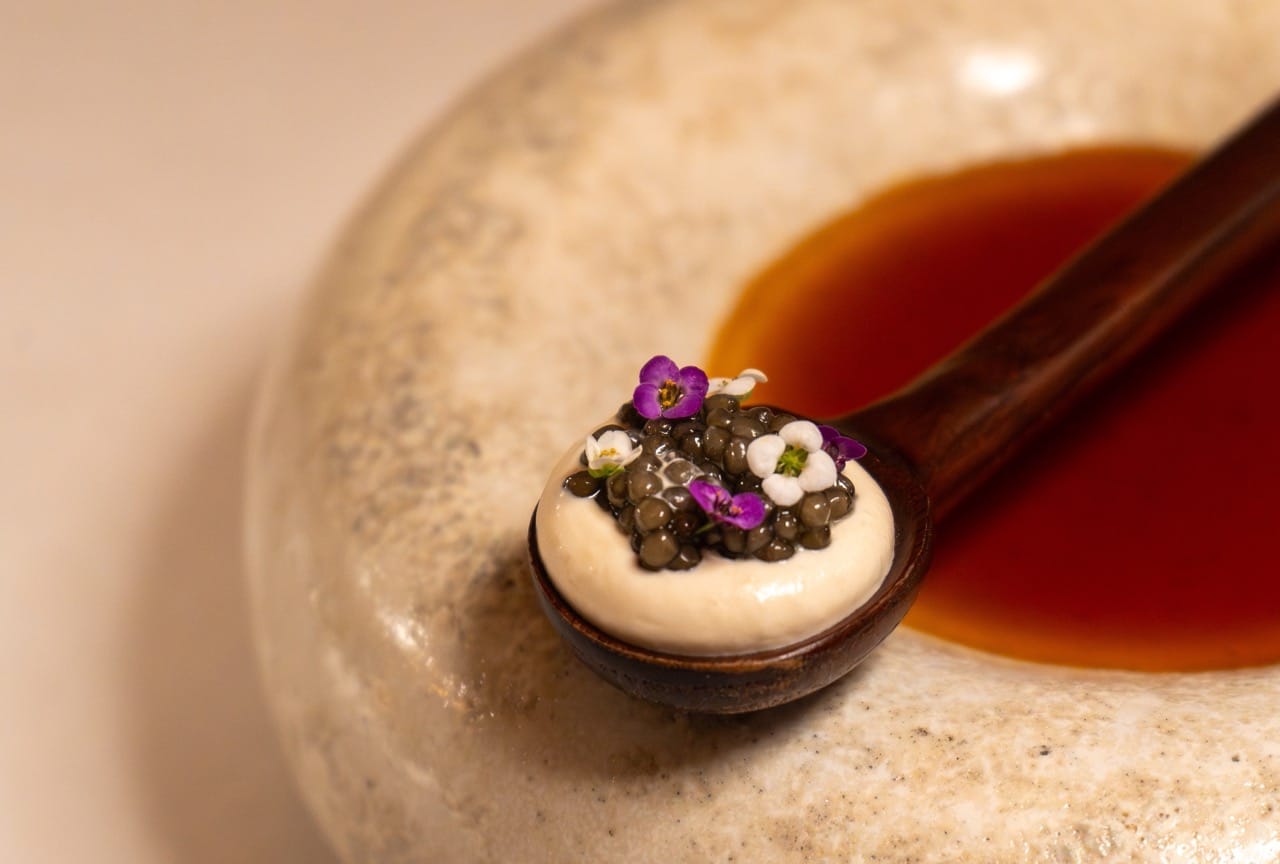
For an evening with more room to wander, there is the eleven moment Imersão, at 180 euros. It reorders the journey and widens it. The red prawn and sea urchin move to the opening position, so the meal begins in the briny, the sweet, the immediate. Lily and young onion, cod, chawanmushi, langoustine with citrus, and sea bass with dashi follow in sequence. Then comes a course the shorter menu does not have: lobster with sheep’s butter, which sets the shellfish beside a dairy fat from the pastures rather than the tide, a meeting of sea and land on a single plate. The turbot with sourdough starter appears later here, in the eighth position, so the dish that opens the shorter menu arrives as a deepening in this one. A course of pudim with caviar slips in before the quince and goat cheese, and the sapateira closes the meal as it does in the nine moment version. The accompanying line reads like a description of the room itself: in the meeting between the visible and the Oculto, the discovery of the senses that cross at the table.
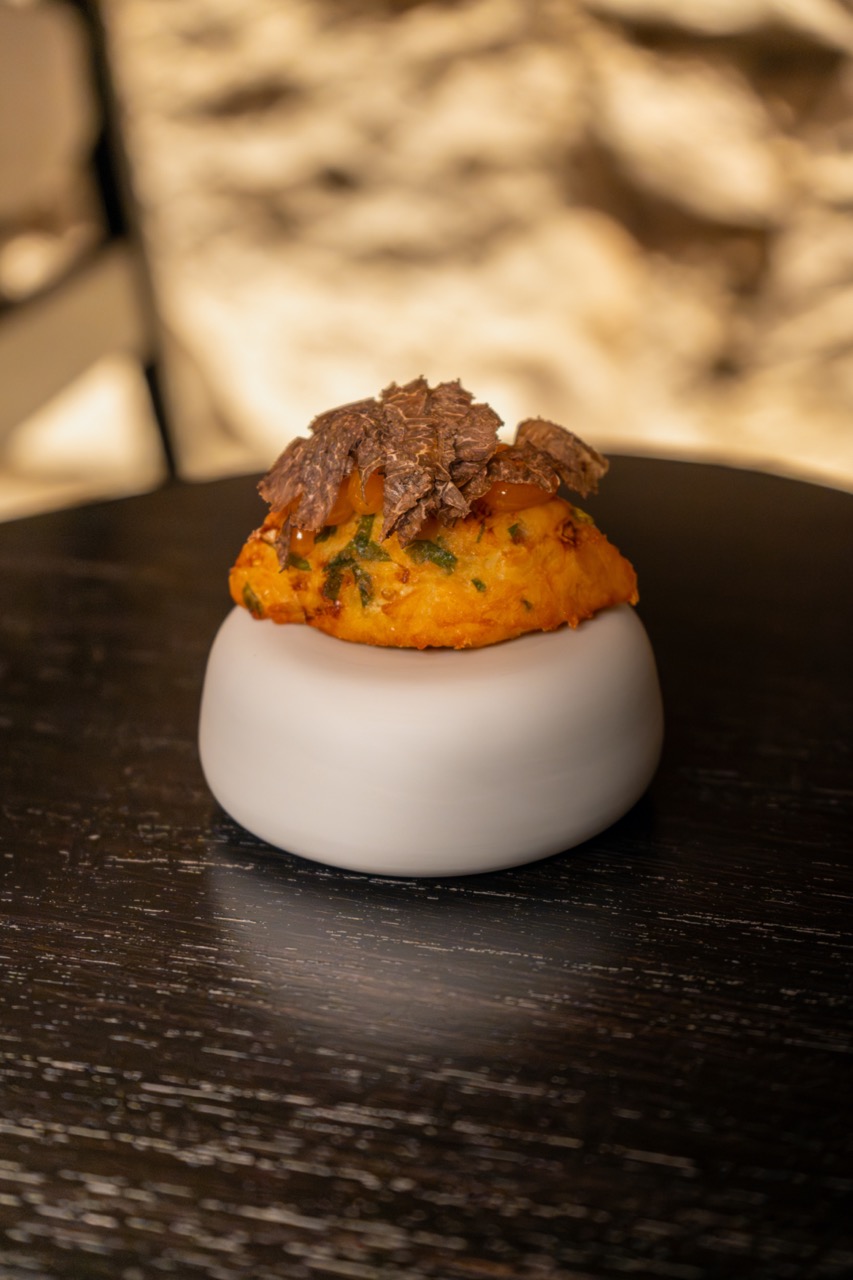
Flora, nine moments at 110 euros, turns the attention from the water to the soil, and it is written as a complete menu rather than an alternative. It opens with aubergine and massa mãe, then green tomato with young onion, and gives beetroot and broccoli each a course of their own, an elegant way of letting single vegetables carry the weight. Pumpkin is served with escabeche, the vinegared marinade that is a staple of Portuguese cooking, and new potato with roots. The seventh moment brings wild mushrooms with cuscos transmontanos, the couscous of the Trás os Montes region in the north, which anchors the menu in a specific place. Rice with pine nuts follows, and the final course is simply mushroom. The menu’s own words describe it as a root that awakens beneath the earth, from which a journey of flavors blossoms.
Each menu can be paired. Nine moments with six wines is 80 euros, eleven moments with seven wines is 90 euros, and a non alcoholic pairing of five drinks is 50 euros, a considered option for guests who prefer to dine without wine. All prices are per person and include VAT at the current legal rate, and nothing, including the couvert, is charged unless you have asked for it. Should you have an allergy or a dietary restriction, the restaurant asks that you say so ahead of time so the kitchen can prepare your menu with care, and any question about what a dish contains is welcome at the table.
What stays with you, in the end, is the sense of having been led. The stones around you are older than anyone in the room, the dishes arrive in an order someone has thought about with great patience, and the last of them, the crab, is a reminder that you began at the water and have come back to it. Above you, the hotel goes on, and the Ave carries on toward the Atlantic. Here, for a few hours, there is only the vault, the table, and the next moment still to be revealed.
