
The future of ride hailing is starting to look a lot more like a premium living room on wheels.
At CES 2026, Lucid Group, Inc., Nuro, Inc., and Uber Technologies, Inc. pulled back the curtain on what they describe as the most luxurious robotaxi yet, offering a glimpse at how autonomy, electric vehicles, and platform scale are converging into a new mobility experience. Alongside the reveal, the companies confirmed that autonomous on road testing quietly began in December, signaling that this is no longer a concept exercise but a service actively moving toward real world launch.
The production intent robotaxi and its Uber designed in cabin experience made their public debut at the Consumer Electronics Show 2026, positioning the partnership as a serious contender in the increasingly crowded autonomous mobility landscape. Rather than leading with raw specs, the companies focused on how autonomy might actually feel to riders, emphasizing comfort, clarity, and trust as core features rather than afterthoughts.
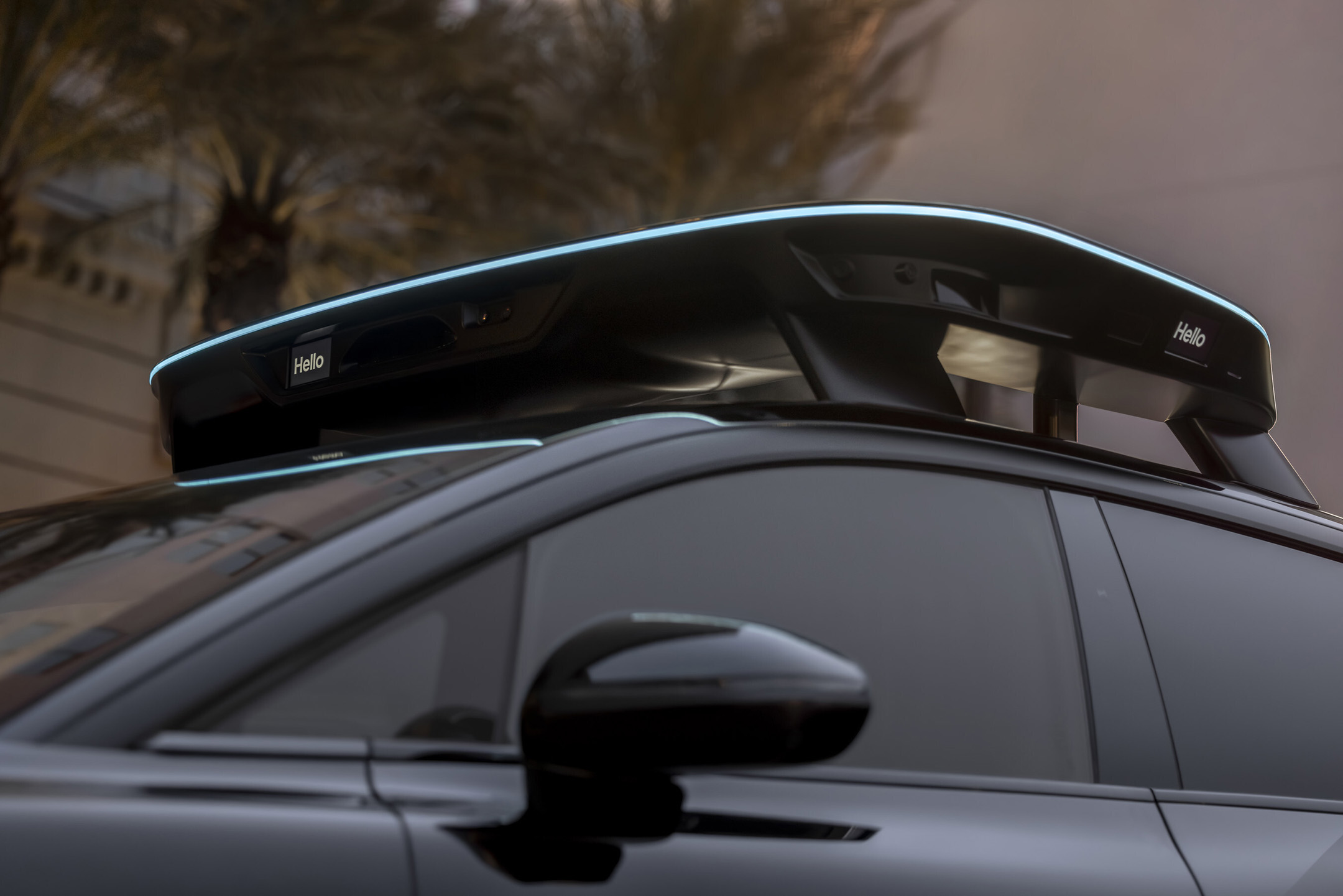
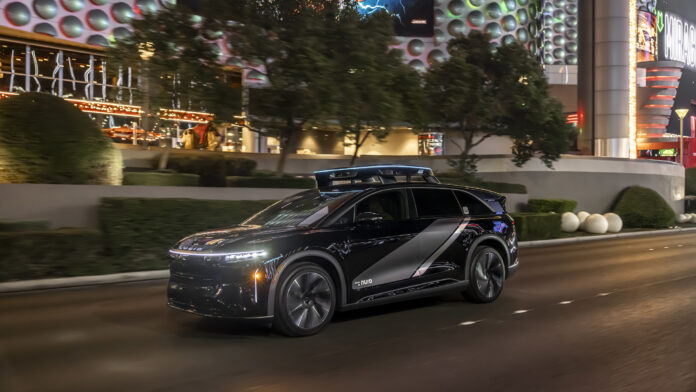
Built on the all electric Lucid Gravity, the robotaxi leans heavily into Lucid’s reputation for refined interiors and long range engineering. The exterior integrates a next generation sensor suite that blends high resolution cameras, solid state lidar, and radar into both the vehicle body and a low profile roof mounted halo. The design manages to signal advanced autonomy without drifting into sci fi excess, preserving Lucid’s clean visual identity while delivering full three hundred sixty degree perception.
That halo does more than house sensors. Integrated LED lighting helps riders quickly identify their vehicle, displays rider initials, and communicates ride status clearly from pickup to dropoff. It is a small detail, but one that speaks to a broader shift in autonomous design thinking, where transparency and human readability matter just as much as machine intelligence.
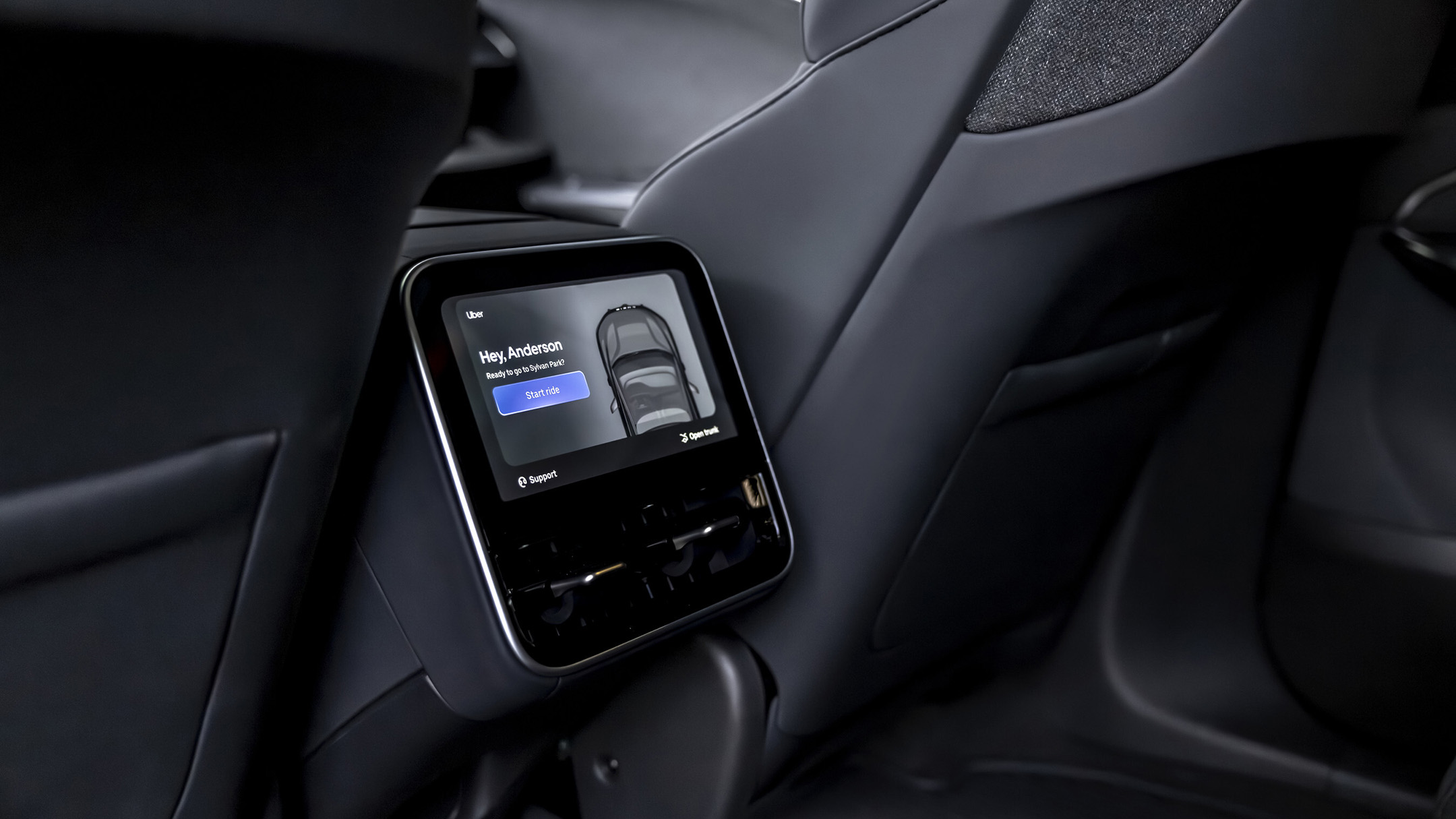
Inside, the cabin is where the Verge style future really comes into focus. Interactive displays give riders meaningful control over their journey, from climate and heated seats to music and lighting. Riders can contact support at any time or request the vehicle to pull over, reinforcing the idea that autonomy does not mean surrendering agency. A real time visualization shows what the robotaxi sees and how it plans to move through the world, including lane changes, traffic light interactions, pedestrian yielding, and dropoff maneuvers. It is a subtle but powerful way of making AI legible to humans.
The layout is flexible and spacious, comfortably seating up to six passengers with generous room for luggage. That makes the robotaxi feel less like a novelty pod and more like a practical option for families, groups, and airport runs, hinting at how autonomous vehicles might quietly slot into everyday life rather than radically disrupting it.
Under the hood, the autonomous stack is powered by NVIDIA DRIVE AGX Thor, part of the NVIDIA DRIVE Hyperion platform. The high performance compute enables the real time AI processing required for level four autonomy, supporting Nuro’s end to end AI foundation model. This system blends advanced machine learning with clearly defined safety logic, aiming to deliver driving behavior that feels smooth, predictable, and trustworthy.
Nuro is leading the autonomous on road testing effort in the San Francisco Bay Area, using engineering prototypes supervised by autonomous vehicle operators. The testing program is part of a broader safety and validation framework refined through years of commercial autonomous deployments. Beyond public road testing, the process includes closed course evaluations and large scale simulation designed to stress the system across a wide range of edge cases and real world scenarios.
Executives from all three companies framed the collaboration as a deliberate convergence of strengths. Nuro brings mature level four autonomy, Lucid contributes an advanced electric vehicle platform built around comfort and efficiency, and Uber provides the global ride hailing ecosystem needed to scale quickly once the service is ready. Together, they are betting that autonomy succeeds not just by working, but by feeling right to the people inside the vehicle.
Pending final validation, the production intent robotaxi is expected to begin production at Lucid’s Arizona factory later this year. CES attendees can see the vehicle in person at NVIDIA’s showcase at the Fontainebleau Hotel from Monday January five through Thursday January eight.
If the promise holds, this robotaxi signals a future where autonomous rides are not just cheaper or more efficient, but genuinely better places to spend time. Less science experiment, more everyday luxury.