



There is a particular quality of light in the eastern Algarve in late afternoon, when the sun has begun its long descent toward the Atlantic and the orchards take on the color of something lit from within. It falls differently here than it does further west, in the glossy resort towns where the coast performs itself for cameras. Here, past Faro, past the crowds thinning into salt marsh and cork oak, the light seems to know it is not being watched, and so it behaves honestly. This is the light that falls on Conversas de Alpendre and Colégio Charm House, two of the Algarve’s most distinctive boutique hotels, belonging to the same family and separated by a short drive, united by something harder to name than decor or service, though both have plenty of each. Call it an instinct for hospitality as a form of memory, the kind that has now earned both properties a renewed MICHELIN Key.
Conversas de Alpendre announces itself quietly. There is no grand gate, no procession of staff. There is a porch, an alpendre, which gave the property its name and once served as the gathering point where the family who owns it now sat through long dinners that stretched into longer conversations, the kind that outlast the meal that prompted them. That porch still exists, structurally and spiritually, at the center of two buildings, one original farmhouse and one modern extension so sympathetically built that visitors often cannot say where one ends and the other begins. The seam is invisible because the intention was never to modernize the past but to let it keep speaking in its own voice, just with better plumbing.
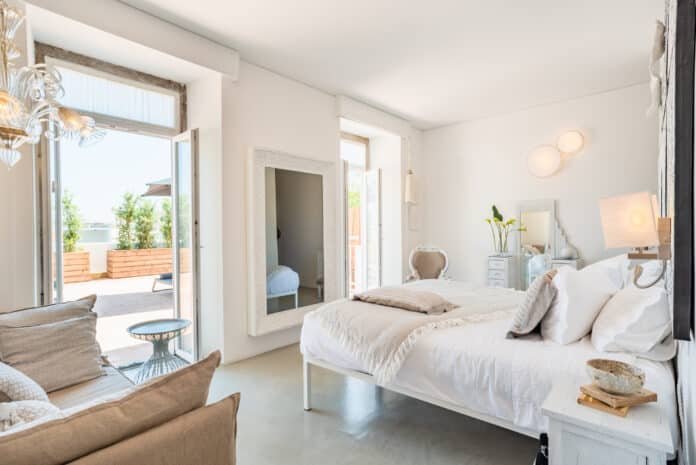
Inside, the twelve rooms and the single larger apartment were furnished, by most accounts, by the owner and her mother, working room by room rather than from a single master plan, and the effect is of a house assembled through affection rather than procurement. Macrame lampshades. Mirrors with slightly eccentric frames. Reed wall hangings that catch the afternoon light and throw soft shadow patterns across whitewashed plaster. Polished concrete floors, cool underfoot even in August, when the stone walls do their quiet work of keeping the heat outside where it belongs. The beds are dressed properly, the showers run with real pressure, and none of it announces itself as luxury, because it does not need to. It simply functions, beautifully, the way a well-run kitchen functions, with nothing wasted and nothing performing for an audience.
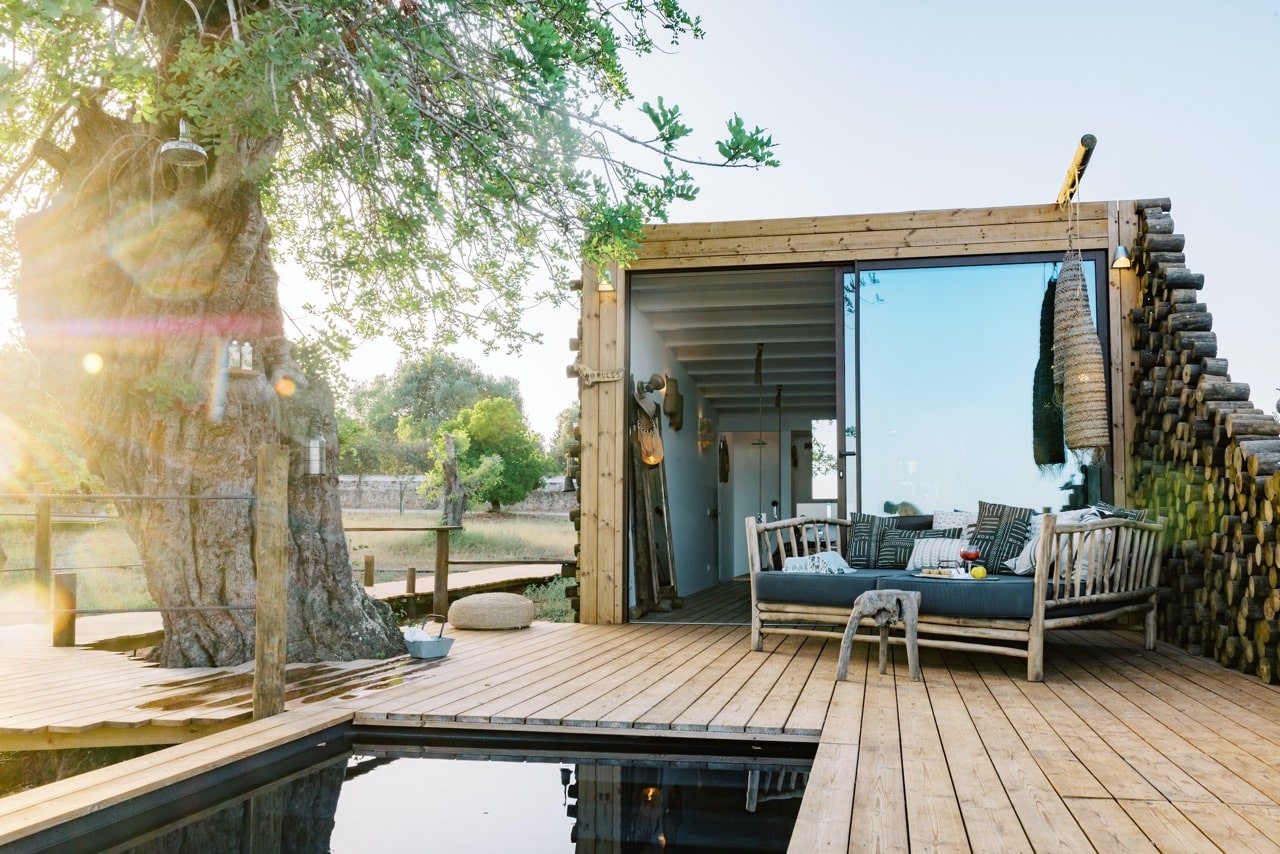
Then there is the tree house, which sounds like a gimmick until a guest is standing inside it. Lifted into the canopy of a carob tree, wrapped in glass on its exposed side, it offers a view across orange groves toward a sea that seems, from that height, close enough to touch and far enough to feel like a rumor. Mornings there arrive with the scent of citrus blossom on whatever breeze moves through the branches, the kind of waking that quietly reorganizes a person’s sense of scale.
Meals happen around a communal table, when they happen formally at all, built the day before from whatever the market offered that morning. This is not a restaurant with a printed menu and a wine list optimized for margin. It is closer to being fed by someone who has decided the guest is worth feeding well, a different transaction entirely, and one that most hotels have forgotten how to offer. Breakfast draws on the property’s own orchard: bread still warm, honey darker and more particular than the export version, juice pressed from fruit that was hanging on a branch the previous evening.
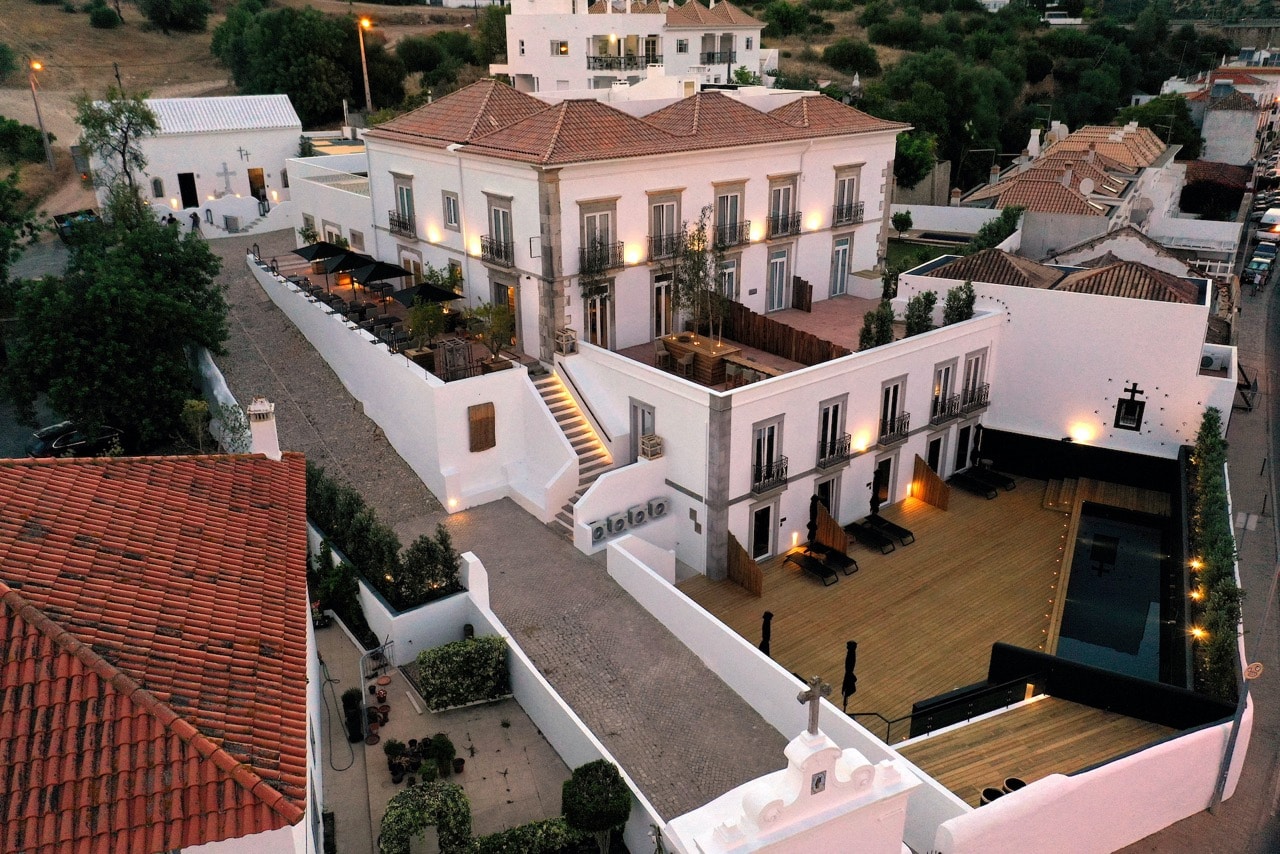
Tavira, twenty minutes away, is a different register of the same sensibility, translated into an urban key. Colégio Charm House occupies a building with a biography almost too rich for a hotel: an eighteenth century aristocratic palace, later a Catholic boys’ school, left empty and quietly decaying for more than thirty years before the same family took it on and spent what must have been considerable patience turning it into something between a private house and a small luxury hotel. Twenty rooms, no two alike, because the old architecture simply would not allow uniformity, and the family chose to work with the building’s stubbornness rather than against it. The result reads as contemporary and eclectic, faintly bohemian, sun-washed in a way that photographs cannot quite capture, because so much of it is temperature and air rather than surface.
A central pool anchors the courtyard, ringed by smaller private pools tucked into corners the original architects never intended for bathing, and there is a persuasive case to be made for staying close to home despite the beaches lying just a mile off. Five nights a week, dinner arrives as a surprise, quite literally, a three course menu built that day from the market and revealed only at the table, an old fashioned kind of trust between kitchen and guest that most modern hospitality has engineered out of existence in favor of choice and control. Here, choice is beside the point. The guest is being cooked for, not merely served.
Step outside and Tavira does the rest of the work unassisted. The hotel sits close enough to the Gilão River and the old Roman bridge that the walk there barely counts as one, past cafes where the conversation is in Portuguese and nobody is translating the menu for visitors, because the town has not yet decided it needs to.
What connects these two properties is not a shared palette or a repeated gesture, though there are echoes, the tiles, the textiles, a certain confidence about leaving old walls exactly as time made them. It is something closer to a philosophy passed down rather than designed: that a stay should feel less like a transaction and more like being welcomed into a family’s particular way of seeing the world, one that trusts silence as much as conversation, and comfort as much as beauty, and rarely mistakes one for the other. Marta Guevara, who owns Conversas de Alpendre, has spoken of the two properties as different chapters of the same story, one born from a wish to make people feel at home, the other carrying that same instinct into a new generation and a different setting, while holding onto the same insistence on authenticity and genuine connection.
Two houses, then. One rural and unhurried, built around a porch and a tree and an orchard that still feeds its guests. The other urban and layered, built inside the bones of a palace that refused to disappear. Both, in their own registers, make the same argument on behalf of Algarve hospitality at its most considered: that the smallest details, a linen chosen with care, a menu withheld until it arrives, a wall left slightly imperfect because imperfection was honest, are what a traveler actually remembers, long after the flight home and the photographs have faded into something less vivid than the memory itself.