


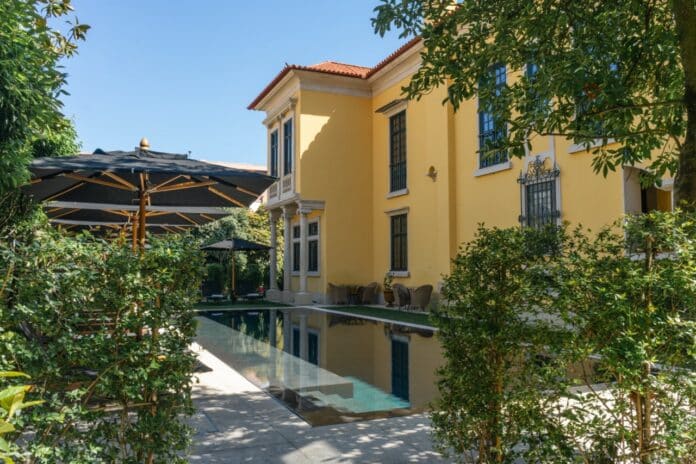

Late afternoon light finds the stained glass first, and the rooms below take on its colors, vivid and softened at once, as though seen through water. On Rua de Ricardo Severo, a yellow house holds the last of the day against its façade, and inside, carved staircases curve upward with a kind of ceremonial patience.
The house was built in 1902 for a homecoming. Ricardo Severo, architect, engineer and archaeologist, had returned to Porto from political exile in Brazil, and he brought a Brazilian bride, Francisca. For her he gathered the country into a single home: carved wood, tiled eaves, a stone staircase, a loggia from which to watch the garden. For decades the house slipped toward neglect, until a French couple with a love of heritage and art undertook its slow restoration. What they have made is small, still residential in spirit, with hand painted ceilings, azulejos, stained glass by the Catalan artist Antoni Rigalt, and paintings and sculpture waiting around corners. This September, the Michelin Guide awarded it a first Key, a distinction for hotels whose character and sense of place make them worth a journey in themselves.
To arrive at Rua de Ricardo Severo 21, in the Cedofeita quarter of Porto, is to step off a street of ordinary afternoons and into a hush. Rooms are ready from three, and there is the small pleasure of being expected. It is a house for adults, sixteen and over, and it keeps the calm that implies.
The neighborhood rewards the unhurried. The galleries of Rua de Miguel Bombarda are a short walk away, and the Soares dos Reis National Museum keeps its quiet vigil nearby. The domed Crystal Palace Gardens are about fifteen minutes on foot, where peacocks cross the lawns with the confidence of those who have never been told no. Casa da Música, all angles and glass, stands ten minutes off, and the metro at Carolina Michaelis is close enough that the rest of Porto never feels far. Livraria Lello, with its crimson staircase, waits a little farther on, best visited early.
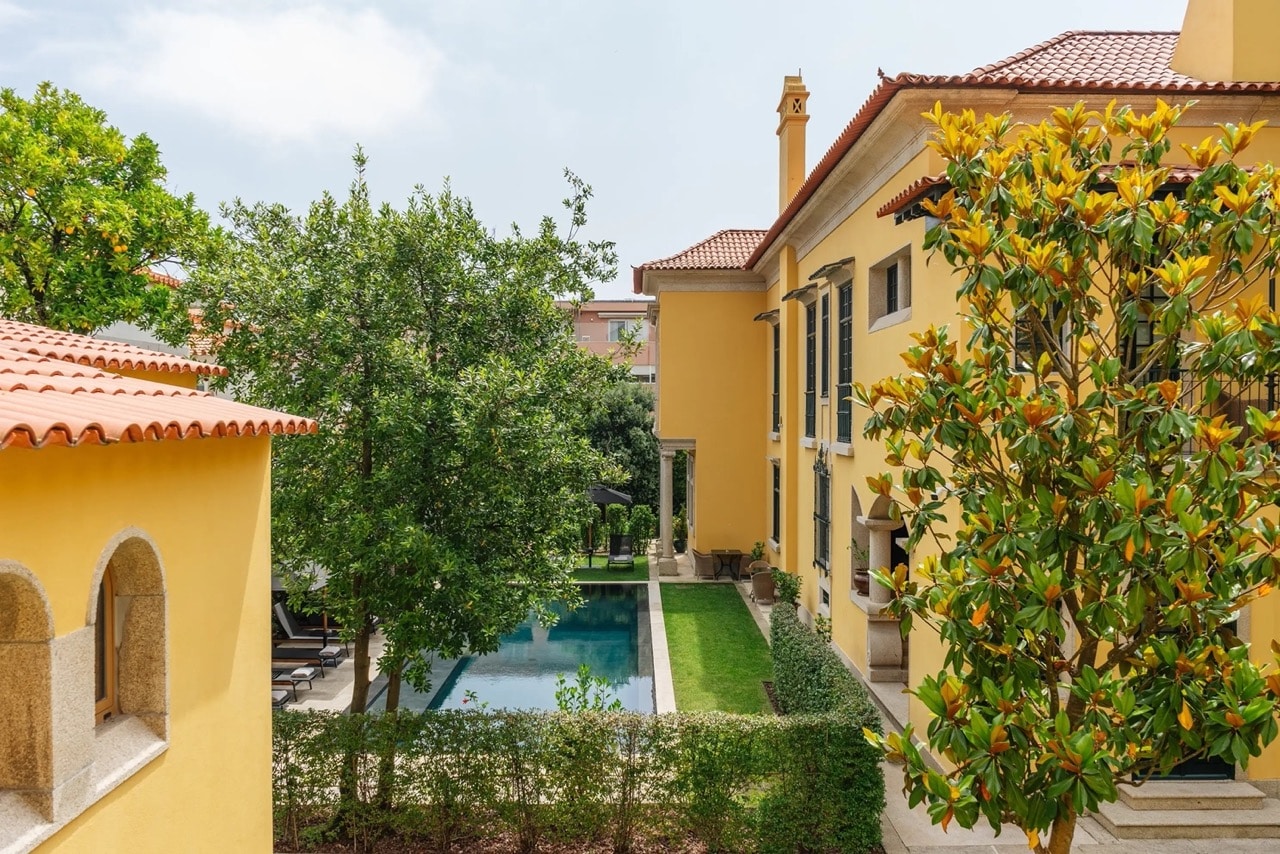
Yet the day’s most persuasive argument is often the one that keeps you at home. Breakfast is cooked to order and arrives without fuss. In the spa, treatments draw on Ayurvedic tradition, and a deep tissue massage undoes, one knot at a time, the wear of the cobbles. Perspective Galerie changes what hangs on its walls, so the house is never quite the same twice. Near the hour when the light turns honey colored, the manager receives guests for a daily reception, a small ritual that feels less like hospitality than like a conversation carried over from an earlier era. Beside the outdoor pool, the water holds the sky in its plain blue palm.
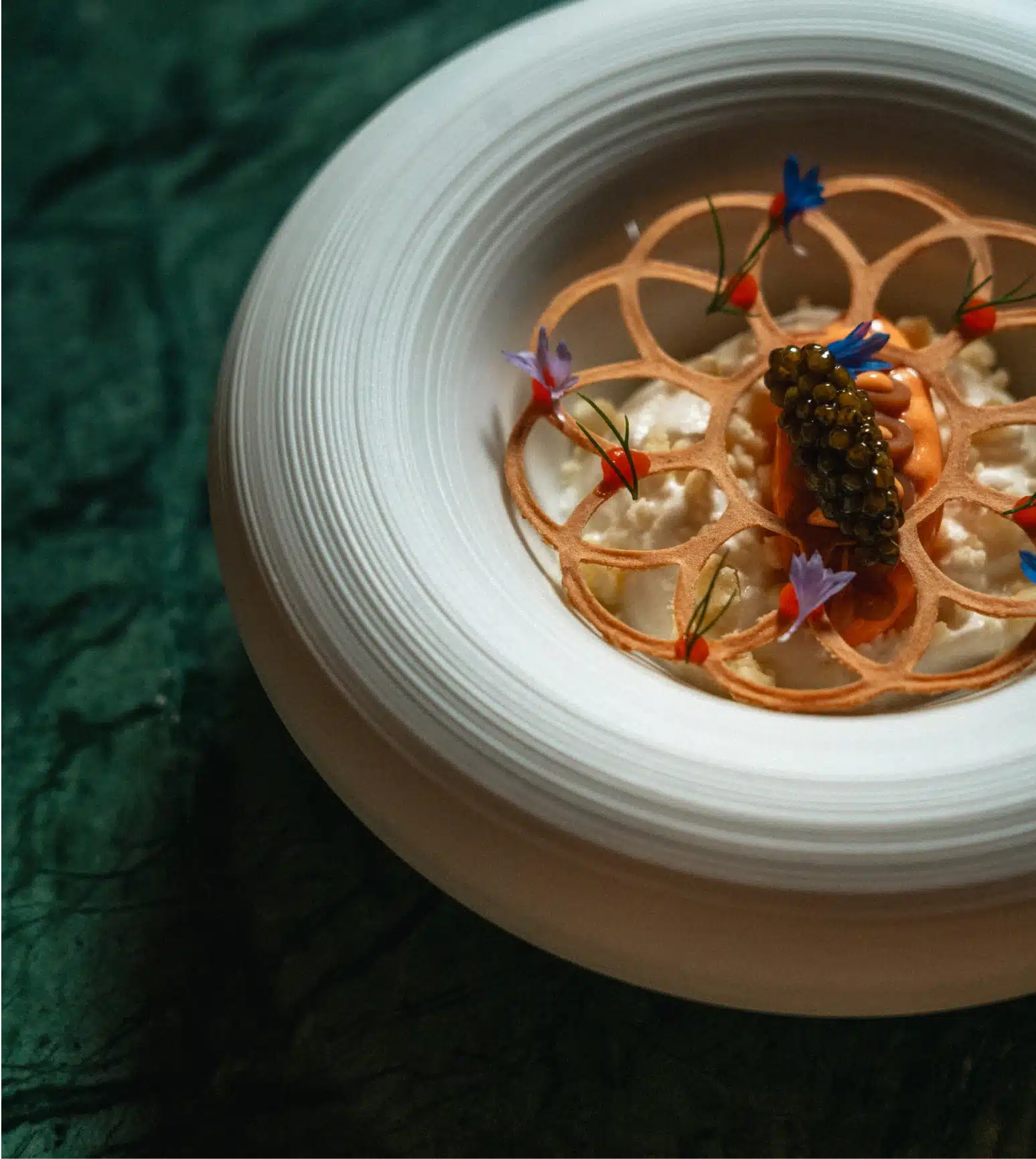
Evening returns you to the table. In Éon, under a wood panelled ceiling, chef Tiago Bonito cooks from memory, his own and a country’s. The tasting menu, Lés a Lés, unfolds in nine or fourteen courses, and dishes as humble in name as bread and brioche raised with natural yeast, or line caught hake, arrive carrying modern texture and a depth of flavor that suggests a kitchen listening closely to its past. The room earned its first Michelin star this year. Bistrô Severo, recommended by the Michelin Guide, is looser and warmer, a Mediterranean table where burrata and king prawns arrive with little ceremony and a good deal of pleasure. Both fill quickly, and the evenings seem to know it.
Then comes the walk back up the staircase, one hand on the carved rail worn smooth by a century of palms. The stained glass is dark now, and the house has settled into its own breathing, creaking a little, as old houses do when they are content. Checkout is at noon, but the house does not press. In the library, the oak panels still hold two entwined initials, and the lamps are low.