

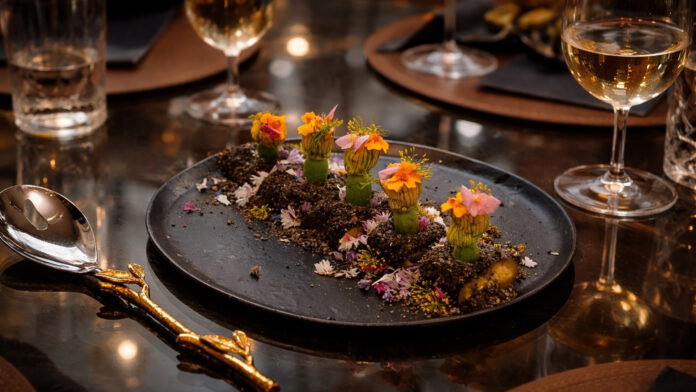

In the hushed rooms of contemporary fine dining, something subtle has begun to change. The choreography remains precise, the sourcing obsessive, the technique uncompromising. Yet the atmosphere has softened. Silence is no longer the default aspiration. Laughter drifts more freely. Plates move laterally across the table, not just forward from kitchen to guest. The experience feels less like a performance to be witnessed and more like a gathering to be inhabited.
This shift is not accidental, nor is it a retreat from ambition. It reflects a deeper recalibration among some of the world’s most serious chefs, a reconsideration of what fine dining is meant to offer at this cultural moment. After years in which excellence was often equated with distance, mystery, and reverence, a growing number of chefs are designing menus that prioritize connection. Not connection as a gimmick, but as an emotional architecture, something engineered quietly through pacing, proximity, and ritual.
The classic fine dining tasting menu has long borrowed its logic from theater. A sequence of acts. A controlled narrative. Applause, if not literal, was implied in the form of awe. Diners were invited to admire complexity, to decode references, to submit themselves to the tempo of the kitchen. Conversation often became secondary, a low murmur beneath the spectacle. For many, this model still holds power. But for others, especially those fluent in the language of luxury, it has begun to feel emotionally thin.
The chefs now redesigning for connection seem acutely aware of this fatigue. Their question is not how to astonish, but how to attune. How to create a room that feels alive rather than hushed, intimate rather than intimidating. How to let the table breathe.
One of the most eloquent expressions of this philosophy is the chef’s counter. Once a symbol of exclusivity, it has been reimagined as a social instrument. At Atomix, the counter curves inward, a quiet but consequential choice. Diners face one another as much as they face the kitchen, creating a shared focal point rather than a row of isolated vantage points. The open kitchen dissolves hierarchy. Craft is visible, humanized. The chefs are not hidden auteurs but present hosts, and the guests, seated shoulder to shoulder, begin to mirror one another’s curiosity.
The effect is cumulative. A question asked aloud becomes communal. A reaction to a dish ripples across the counter. Conversation, once tentative, gathers confidence. The tasting menu still unfolds with rigor, but its emotional center shifts outward, toward the group.
Elsewhere, chefs have taken the logic of connection even further, structuring fine dining explicitly around communal experience. At Class Act, the meal unfolds around a shared table, borrowing the cadence of a dinner party rather than a formal procession. Early in the evening, bread is torn by hand, an almost disarmingly simple gesture that resets the room. Hands move. Plates are passed. The physicality of eating together becomes a form of introduction. Strangers soften into companions, if only for the duration of the meal.
This kind of design is deceptively complex. It requires chefs to think not only about flavor and progression, but about social psychology. Shared rituals must feel natural, never forced. The pacing must accommodate conversation, not interrupt it. The room must offer intimacy without claustrophobia. When it works, the result feels effortless, but the effort behind it is considerable.
Even at the highest echelon of global fine dining, where myth and mystique have long been carefully guarded, this impulse toward connection has found expression. Noma has experimented with shared table formats that reframe exclusivity. Rather than separating diners into private bubbles, the experience invites a measured togetherness. The shared table does not demand interaction, but it makes it possible, offering a series of gentle openings through which conversation can emerge or recede at will.
Here, luxury is redefined not as isolation, but as access to a rare social configuration. To dine among strangers who are equally invested, equally attentive, equally present. The experience becomes less about being served something extraordinary and more about being part of something fleeting and unrepeatable.
Connection, in these rooms, is also a matter of time. Chefs designing for it pay extraordinary attention to pacing. Courses arrive with sensitivity to the table’s energy rather than strict adherence to the kitchen clock. Explanations are concise, offered when welcomed, withheld when conversation is in full bloom. Silence, when it occurs, feels chosen rather than imposed.
Menus themselves reflect this philosophy. They are written with clarity and restraint, guiding without instructing, suggesting without prescribing. Decision fatigue is minimized. Guests are freed from the anxiety of ordering correctly and invited instead to trust the arc of the meal. In this trust, a different kind of pleasure emerges, one rooted not in mastery but in ease.
There is, too, a greater tolerance for imperfection. In performance driven dining, a delay or deviation can feel like a crack in the facade. In connection driven fine dining, these moments often become connective tissue. A pause allows a story to finish. A brief exchange with a server becomes a human encounter rather than a transaction. The room feels inhabited, not managed.
Not every restaurant can or should adopt this approach. Communal fine dining is demanding, emotionally and economically. It requires more space, more attentiveness, more intuition. It asks chefs and teams to perform a kind of hospitality that cannot be automated or standardized. But for those who pursue it, the reward is profound.
When connection is the guiding principle, the success of the meal is no longer measured solely in precision or novelty. It is measured in the way the room sounds as the evening deepens. In how long guests linger after the final course. In the subtle reluctance to leave.
Fine dining, at its most resonant, has always been about more than food. What is changing now is the clarity with which chefs are embracing that truth. By designing menus not as stages for performance but as frameworks for human connection, they are restoring something elemental to the experience of eating together. In doing so, they remind us that the most enduring luxury is not spectacle, but presence.
