

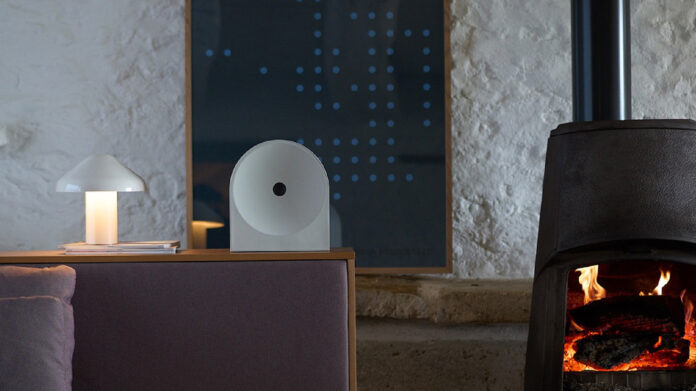

Samsung’s CES 2026 press conference made one thing clear: audio is no longer a peripheral category inside the company’s ecosystem strategy. Announced today in Las Vegas, Samsung’s 2026 sound device lineup reframes soundbars and speakers as software-driven platforms designed to scale across rooms, screens, and use cases, not just as isolated hardware upgrades.
The new lineup, which will be on display throughout CES 2026 from January 6 to 9, leans heavily on computational audio, adaptive tuning, and multi-device orchestration. Samsung is effectively treating sound as another intelligent surface in the home, one that responds to layout, content type, and user behavior in real time.
Hun Lee, Executive Vice President of the Visual Display Business at Samsung Electronics, positioned the announcement as the next phase of Samsung’s long-running audio roadmap. After more than a decade at the top of the global soundbar market, the focus is now on expressiveness and system-level intelligence rather than brute force volume or channel counts alone.
A computational take on home theater sound
Samsung’s 2026 Q-Series soundbars push further into software-defined audio. The flagship HW-Q990H introduces Sound Elevation, a processing layer that dynamically repositions dialogue toward the perceived center of the display. Instead of relying purely on speaker placement, the system uses signal analysis to anchor voices more convincingly to on-screen action.
Auto Volume adds another layer of automation, smoothing dynamic range shifts across inputs, apps, and channels. The underlying hardware remains ambitious: an 11.1.4-channel architecture composed of a 7.0.2 main bar, 4.0.2 rear speakers, and a compact active subwoofer with dual eight-inch drivers. What differentiates the system is how aggressively Samsung is using AI tuning to stretch that physical layout into a broader, taller sound field.
Up-firing channels and next-generation spatial processing extend audio vertically, aiming to recreate the sense of scale typically associated with custom-installed home theater systems. The emphasis here is less on maximum output and more on perceptual realism, a theme that runs across the entire lineup.
The new HW-QS90H All-in-One Soundbar takes a different approach. Built as a single-unit solution, it integrates a 7.1.2-channel system with 13 drivers and a Quad Bass Woofer array. A built-in gyro sensor detects whether the soundbar is wall-mounted or placed horizontally, then recalibrates channel mapping automatically. It is a small detail, but one that reflects Samsung’s push to reduce friction through sensing and automation.
Wi-Fi speakers as modular audio nodes
Samsung’s new Music Studio speakers signal a more modular view of home audio. Rather than positioning Wi-Fi speakers as secondary accessories, the Music Studio 5 and Music Studio 7 are designed to operate as standalone endpoints or as part of a broader, synchronized sound system.
Both models feature a dot-inspired industrial design created by Erwan Bouroullec, but the technical story is where Samsung leans in. Music Studio 7 functions as a 3.1.1-channel spatial audio speaker, with top-firing drivers enabling vertical sound cues. Audio Lab Pattern Control Technology minimizes signal interference between channels, improving spatial accuracy, while AI Dynamic Bass Control manages low frequencies to prevent distortion at higher volumes.
Support for Hi-Resolution Audio up to 24-bit/96kHz and a super tweeter extending frequency response to 35kHz position the Music Studio 7 squarely in enthusiast territory. It can run independently or integrate with Samsung TVs and soundbars via Q-Symphony, effectively acting as an additional spatial node in a larger system.
Music Studio 5 targets a different use case, prioritizing size and visual integration without abandoning performance. Its four-inch woofer, dual tweeters, and waveguide architecture are tuned for balance rather than scale, with AI Dynamic Bass Control filling in low-end presence. Connectivity is fully modern, with Wi-Fi casting, Bluetooth via Samsung Seamless Codec, streaming services, and voice control built in.
Q-Symphony moves toward true system orchestration
The most telling shift in Samsung’s 2026 audio strategy is the evolution of Q-Symphony. What began as a TV-plus-soundbar feature is now moving toward full system orchestration. In 2026, Q-Symphony can coordinate up to five sound devices simultaneously, dynamically assigning channels based on room layout and speaker placement.
This turns Samsung TVs into spatial audio controllers, using onboard processing to distribute sound intelligently across soundbars, rear speakers, and Wi-Fi speakers. The result is cleaner dialogue, more precise directional effects, and a soundstage that adapts to real-world constraints rather than idealized setups.
SmartThings plays a supporting role by unifying control across devices. From a single interface, users can manage playback, adjust sound profiles, group speakers, and access streaming and voice assistant features. Instant music controls allow quick interaction from any connected mobile device, reinforcing Samsung’s push toward frictionless control.
Samsung also highlighted its Sound Tower lineup, introduced in late 2025, as part of a broader audio portfolio that spans private listening, shared spaces, and outdoor environments.
Taken together, the announcements from Samsung’s CES 2026 press conference point to a clear trajectory. Audio is becoming increasingly software-defined, context-aware, and modular. Samsung is betting that the next leap in home sound will not come from adding more speakers alone, but from smarter coordination between them.
