
HomeNewsTechnologyPorsche Leverages Cutting-Edge Mixed Reality in Product Demonstrations

Porsche Leverages Cutting-Edge Mixed Reality in Product Demonstrations

Follow the journey on Google: Follow us on Google News Preferred Source Google Discover

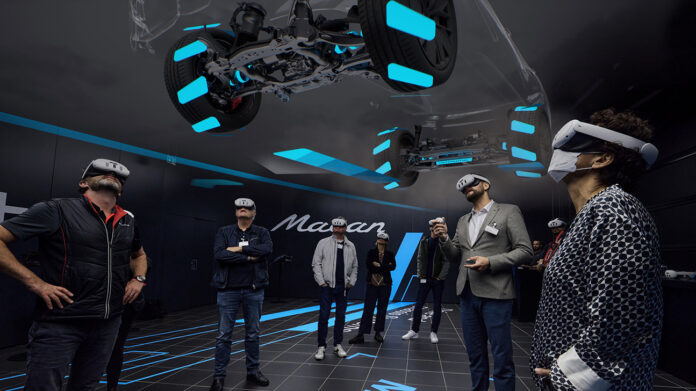
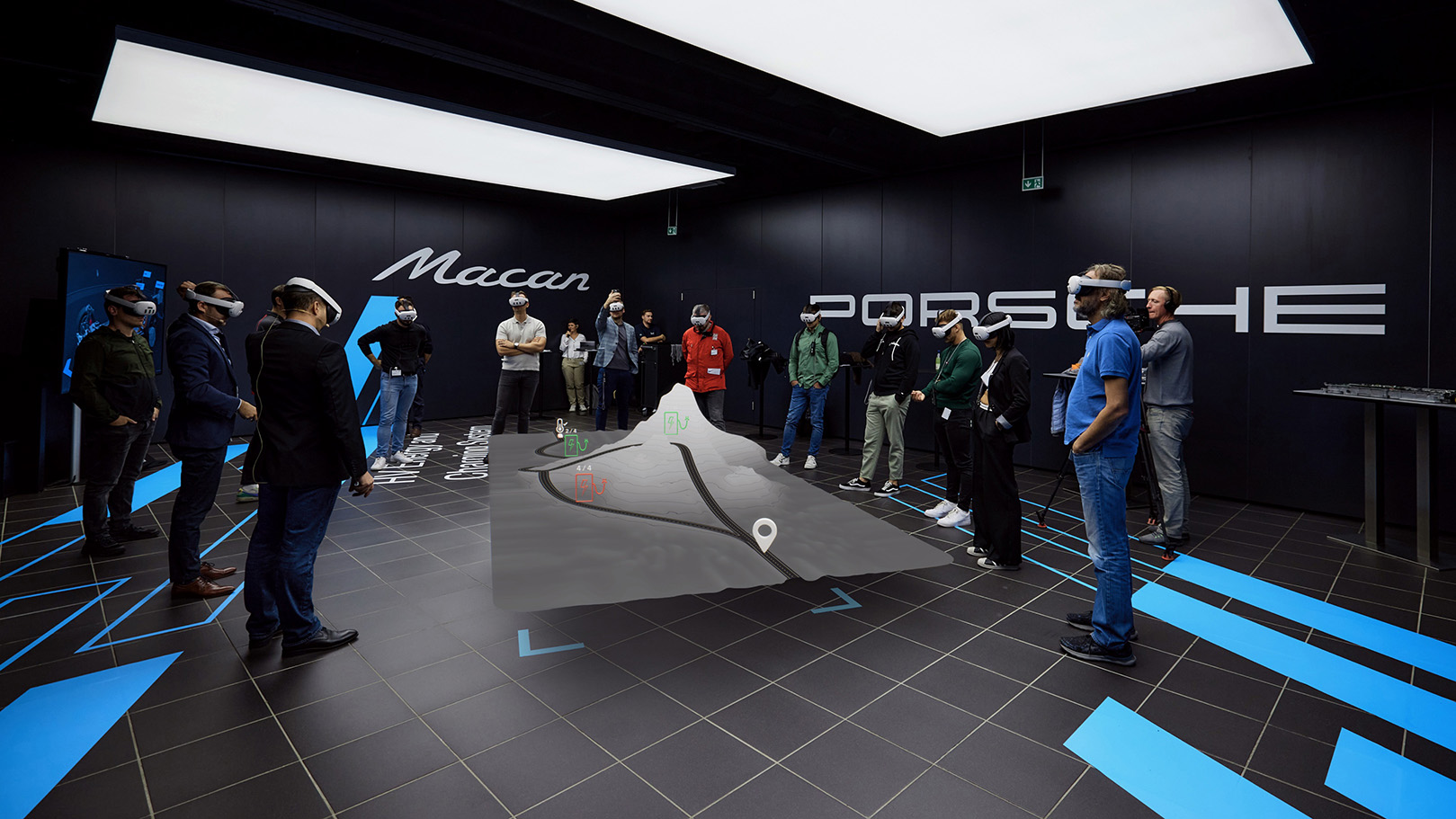
Porsche is embracing cutting-edge mixed-reality and spatial computing technology to bring a new kind of immersive experience to product demonstrations and technical briefings for the media. Attendees at a recent Technology Workshop focused on the new all-electric Macan found themselves in what seemed like a sci-fi movie set or futuristic art installation. Wearing the latest Meta Quest 3 headsets, groups of engineers and media moved with unexpected grace, engaging in activities that resembled a tai chi group doing an improv class.
Porsche Leverages Cutting-Edge Mixed Reality in Product Demonstrations

In the past, media event presentations typically involved journalists taking notes while engineers clicked through numerous PowerPoint slides. This traditional format is now being challenged by Porsche’s use of mixed-reality (MR) technology. A few years ago, the Taycan AR Event App showcased how augmented reality could reveal the in-depth engineering details of the Taycan using just an iPhone.

Now, Porsche is taking it a step further with mixed-reality technology, creating a three-dimensional environment where users can move around and interact with virtual objects. This technology allows users to see their real surroundings while also interacting with virtual 3D assets, providing VR levels of immersion while maintaining awareness of the physical space around them.
- Advertisement -
Porsche Leverages Cutting-Edge Mixed Reality in Product Demonstrations

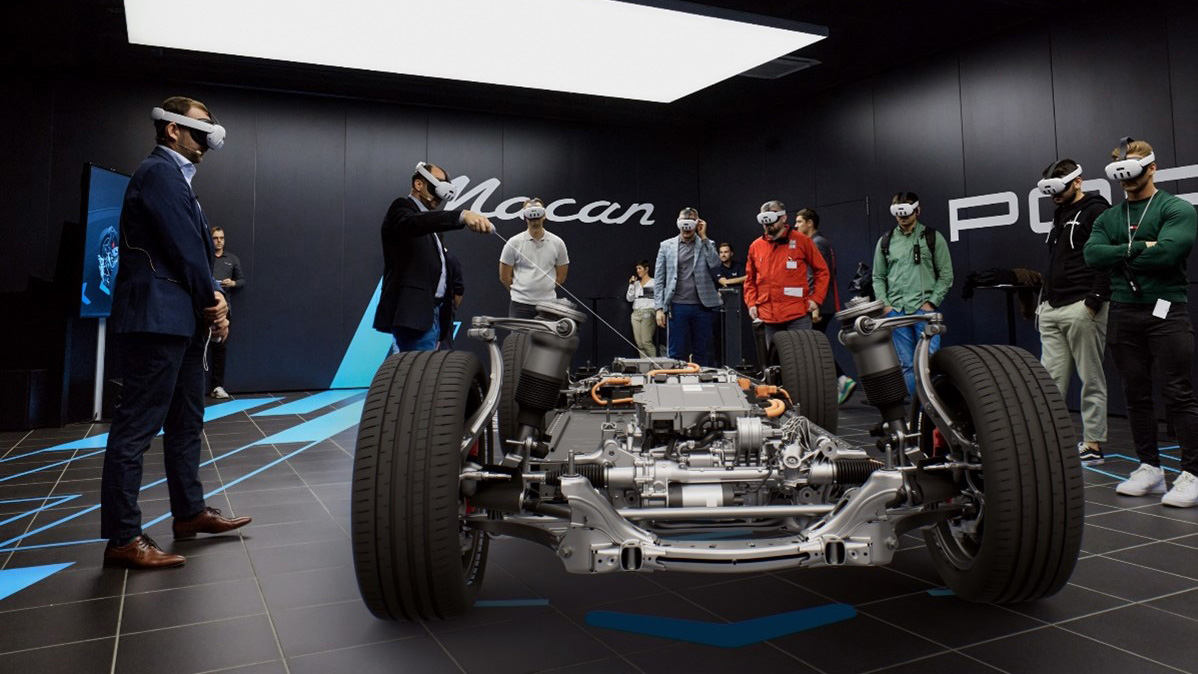
This application of MR is particularly advantageous as it eliminates the need for physical cut-away models or other assets to be manufactured and shipped globally, potentially saving costs and resources. While physical props are valuable tools for explaining technical features, 3D models in MR offer greater maneuverability within the viewing space. Users can view virtual models from different angles, gaining a deeper understanding more quickly than traditional methods. This approach combines the detail of a technical slideshow with the impact of a physical exhibit, providing a more meaningful and insightful experience for the viewer.

Leave a Reply

More to Explore

Cinema 4D Gets Its Own AI Hotline: What Maxon’s New MCP Server Means for Artists

Maxon has added built in Model Context Protocol (MCP) support to Cinema 4D, and it changes how artists can work with AI assistants such...

Googlebook Is Google’s Big Bet on Turning Your Android Phone Into a Laptop

Googlebook is Google's answer to a question nobody quite knew how to ask: what happens when a phone operating system grows up and starts...

Meta Connect 2026: Muse AI and New VR Glasses Revealed

Meta held its Connect 2026 keynote to detail a broad set of updates across artificial intelligence, smart glasses, and virtual reality hardware. CEO Mark...

iPhone Duo: Everything You Need to Know About Apple’s First Foldable iPhone

Apple has officially entered the foldable phone market. At its Cupertino event, the company introduced iPhone Duo, its first foldable iPhone and, by Apple's...

AI Won’t Replace the 3D Artist, But It Will Change How They Work

For years, 3D artists have carried the same quiet burden: the gap between an idea and the finished model is long, tedious, and full...

Inside IFA Berlin 2026: AI Moves From Feature to Foundation of the Smart Home

IFA Berlin, one of the largest events in the world for consumer electronics, home appliances, and future tech, spent its opening days making one...

Google’s Gemini 3.8 Flash arrives with a cybersecurity sibling built for autonomous patching

Google is not slowing down. On September 2, 2026, the company rolled out Gemini 3.8 Flash, a new entry in its Flash lineup that...

Closed-Loop Cooling Explained: How Meta, Google, and Microsoft Are Solving AI’s Water Problem

The rack that used to need a wall of fans now needs plumbing. That is the short version of what has happened inside Meta's...

Google Flow gets a serious upgrade with Gemini Omni 1.1 Flash

Google is giving its AI filmmaking tool another major push forward. At its I/O developer conference earlier this year, the company introduced Gemini Omni...

Apple’s New Mac Mini Gets a Major AI Upgrade With M6 and M5 Pro Chips

Apple has unveiled a refreshed Mac mini, and the headline story is a big one for anyone who cares about on device AI performance....

Mac Studio Gets M5 Ultra, Thunderbolt 5, and Up to 512GB of Memory for Local AI

Apple's latest Mac Studio refresh lands as one of the more substantial internal updates the machine has seen since it first launched, and the...

Blender 5.2 LTS Features Guide: Node Editor, Outliner, and Interface Changes Explained

Blender 5.2 LTS shipped on July 14th, 2026, and it is not the modest interface polish pass the original document made it out to...

Blender Basics: The Beginner Guide Nobody Handed You

Okay, so you downloaded Blender. Good. That already puts you ahead of most people who talk about wanting to make 3D art and then...

Unity 7 Is Coming, and It’s Rethinking How Games Get Made

Game development has quietly become a team sport that includes AI. Studios of every size are now mixing human designers, artists, and producers with...

Red Dot Names Its 2026 Best of the Best: What the Winners Say About Where Design Is Headed

Essen doesn't usually make headlines, but for one night every year, the German city becomes ground zero for the design world. On July 7,...

Recommended for You

You Might Also Like