


At CES 2026, Hisense is making a clear statement about where display technology and the connected home are headed. The future it is pitching is not just bigger or brighter, but more expressive, more flexible, and more attuned to how people actually live. From a groundbreaking MicroLED display to laser projectors, smart appliances, and mobile screens, Hisense is framing its latest lineup as a single ecosystem built around color, scale, and intelligence.
Color takes center stage with RGBY MicroLED
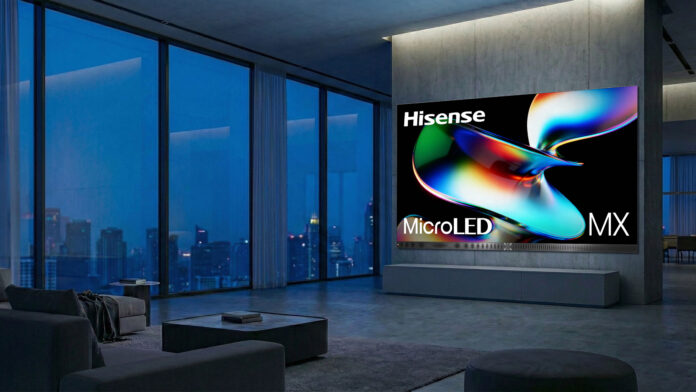
The most eye catching debut in Hisense’s CES showcase is the 163MX RGBY MicroLED Display, a massive, ultra premium screen that offers a glimpse of what the next era of large format displays could look like. The display earned a CES 2026 Innovation Award for introducing the industry’s first four primary MicroLED color architecture, adding yellow to the traditional red, green, and blue structure.
That extra yellow subpixel is not just a technical flex. It fills a long standing spectral gap between 500 and 600 nanometers, a range where conventional MicroLED displays often struggle. By restoring this missing portion of the spectrum, the 163MX dramatically improves color fidelity and allows content to look closer to how it was intended to be seen.
Under the hood, Hisense pairs this new color architecture with advanced color management to maintain consistency across 33.17 million subpixels. The result is a display capable of reaching up to 100 percent of the BT.2020 color space, setting a new benchmark for color range and accuracy in true MicroLED technology.
Despite its sheer scale, the 163MX is designed to fit into premium living spaces rather than dominate them. An ultra slim 32 millimeter profile and a precision zero gap wall mount allow it to sit cleanly against a wall, blending architectural restraint with cinematic impact. It feels less like a prototype and more like a signal of where ultra large displays are actually going.
Laser displays continue to scale up and out
MicroLED may be the headline grabber, but Hisense’s confidence in laser display technology runs just as deep. More than a decade after launching its first laser projector in 2014, the company continues to push the category it helped define.
In 2019, Hisense introduced TriChroma laser technology, raising the bar for color performance in projection. At CES 2026, it builds on that legacy with the XR10 and PX4 PRO, reinforcing its position as a global leader in laser displays that scale from 65 inches all the way up to 300 inches.
Wood Bi, Chief Technology Officer of Hisense USA, framed the moment as the payoff of an early bet on multi primary color and laser projection, long before those ideas became mainstream. The XR10, he said, represents the next chapter in that story.
XR10 brings theater grade performance home
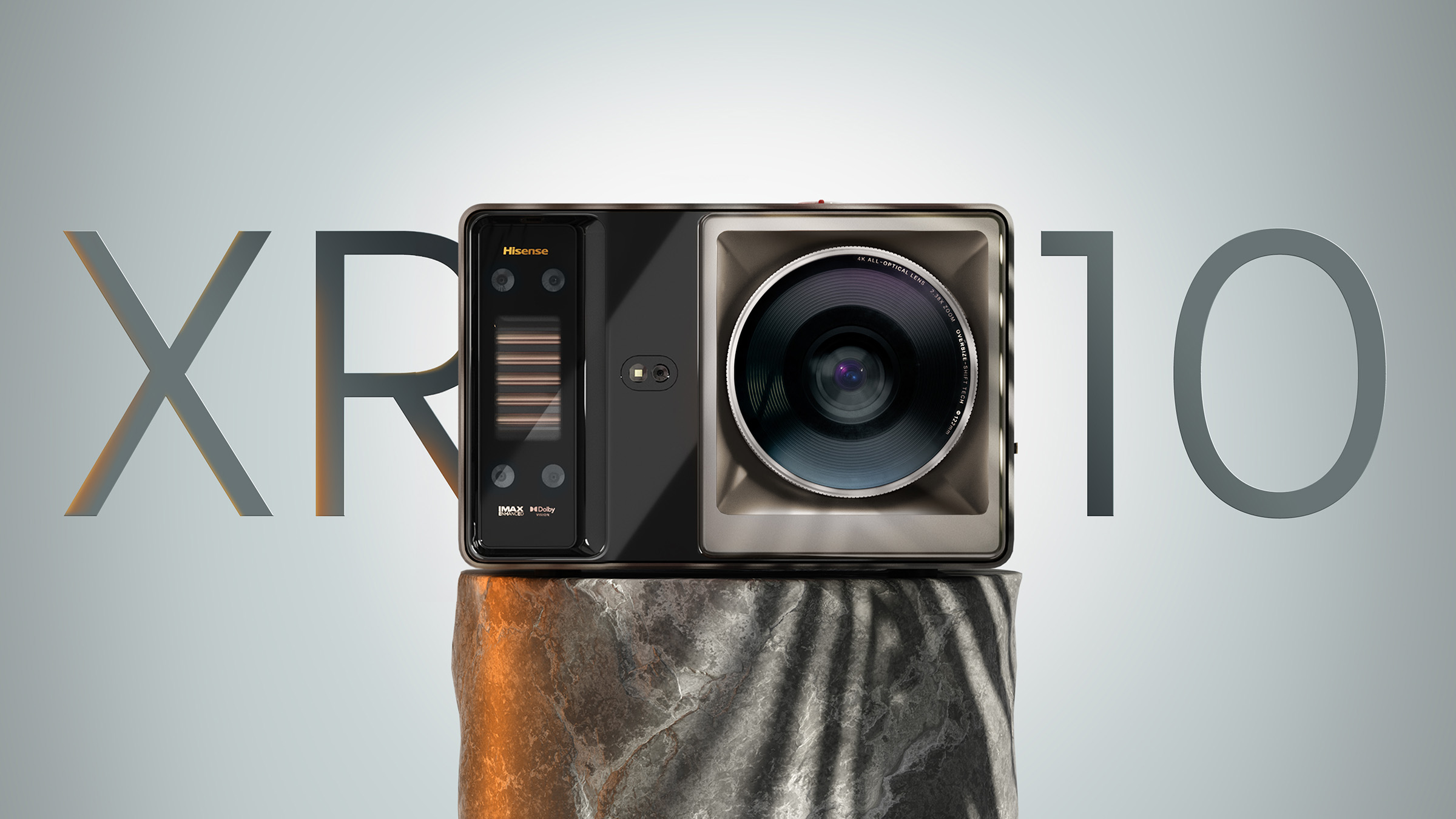
The XR10 is positioned squarely at cinephiles who want a true big screen experience without locking themselves into a dedicated theater room. Powered by the LPU 3.0 Digital Laser Engine, a pure RGB triple laser light source, and a fully upgraded chipset, the projector delivers up to 6,000 ANSI lumens of brightness with impressive efficiency, making it usable even in brighter rooms.
A 16 element all glass lens system improves light transmission and temperature stability, while minimizing light loss and discoloration over time. Hisense’s new IRIS system dynamically adjusts aperture and exposure based on ambient lighting, delivering contrast up to 6000 to 1 and preserving detail from highlights to deep shadows.
All of this performance is packed into a surprisingly compact chassis thanks to a fully sealed microchannel liquid cooling system that enhances heat dissipation while maintaining long term reliability. Color performance is equally strong, with an expanded BT.2020 color gamut and a speckle suppression rate as low as six percent for a clean, artifact free image.
Setup is designed to be flexible rather than finicky. An optical zoom range from 0.84x to 2.0x maintains clarity across screen sizes from 65 to 300 inches. An industry first four camera plus dual time of flight sensing system, paired with AI auto adjustments, enables lossless correction of side projected images up to plus or minus 15 degrees. Lens shift allows precise vertical and horizontal positioning without physically moving the projector.
PX4 PRO brings cinematic scale to everyday rooms
The PX4 PRO takes a more living room friendly approach to projection. Building on the popularity of the PX3 PRO, the ultra short throw projector delivers up to 200 inches of screen size with 3,500 ANSI lumens of brightness, 4K resolution, and contrast up to 6000 to 1 enabled by the IRIS lens system.
TriChroma laser technology and IMAX Enhanced certification ensure accurate color and rich contrast, while ultra low latency makes it viable for gaming as well as movies and sports. The design is sleek and space conscious, aiming to feel like a natural part of modern interiors rather than a specialized piece of gear.
A smarter home, stitched together by ConnectLife
Displays may be the most visible part of Hisense’s CES story, but the company is equally focused on what happens around them. At the center of its smart home strategy is the ConnectLife platform, which is being expanded with task specific AI agents designed to coordinate across devices and reduce everyday friction.
These agents learn user habits and manage routines automatically. Air conditioners adjust based on presence and air quality. Cooking agents suggest recipes and wine pairings. Laundry agents detect fabric types and optimize cycles. Hisense is also expanding ConnectLife support for third party products, including Google Home and Matter compatible devices, allowing its appliances to slot into broader smart home ecosystems.
Kitchen appliances that actually talk to each other
In the kitchen, Hisense introduced a new suite of ConnectLife Hub Refrigerators featuring dual displays. A 21 inch screen handles content and home applications, while a 3.5 inch display focuses on core refrigerator controls. Features include antibacterial guard coating, metal tech cooling, metal glide drawers, adjustable humidity zones, and deep freeze capabilities.
When paired with the ConnectLife AI Cooking Agent, the refrigerator can coordinate with Hisense’s new slide in smart induction range. That range features a high resolution touch display, a 5.8 cubic foot oven with rapid preheat driven by a tri element algorithm, and an induction cooktop with bridge capable zones and a durable anti scratch surface.
The S7 Smart Dishwasher extends this coordination. AI Super Wash technology automatically adjusts detergent, water, temperature, and cycle time based on load conditions. The dishwasher can even recommend wash cycles based on how cookware was used, while Smart Dry technology and a triple spray arm system ensure consistently clean, dry results.
The PureFit Refrigerator Series focuses on maximizing capacity in a slim 24 inch design. Metal tech cooling, adjustable humidity crispers, antibacterial protection that eliminates 99.9 percent of bacteria, and a Deep Freeze Zone support long term food storage. Compartments can switch between fridge and freezer modes, multiple units can be combined for added capacity, and a new wine cabinet expands the lineup with smart inventory tracking and pairing recommendations.
Laundry that adapts to real life
Hisense’s laundry lineup leans heavily into flexibility. The U7 Smart Washer and Dryer introduces the company’s first 5 cubic foot washer designed for North American households, paired with a 7 inch touch display powered by the AI Laundry Agent. The system automatically adjusts cycles based on fabric type, offers time to ready predictions, and includes Steam Sanitize and HiBubble detergent technology for deeper cleaning.
The Roman Holiday All in One Washer Dryer takes a more design forward approach. With a slim 20.5 inch depth and retro inspired styling, it is built for apartments and compact spaces. It washes, dries, sanitizes, and deodorizes in a single cycle, using AI Wash technology to balance efficiency and performance.
X Zone Master may be the most ambitious concept of the group. Described as the world’s first infinitely scalable modular washer dryer system, it allows users to start with a main unit and add mini modules as needs grow. Separate loads can run simultaneously, heat pump drying and fresh air condensation keep energy use efficient, and the entire system operates under 46 decibels.
Home comfort and a screen that follows you
On the home comfort side, Hisense introduced the TopLift Dehumidifier, the world’s first to feature a top lift water collection system. An 18 pint top mounted cartridge eliminates bending and spills, while a patented internal pump delivers 38 percent more capacity than traditional designs. The unit operates at 45 decibels and supports ConnectLife and Matter certified connectivity.
Rounding out the showcase is the S6 FollowMe, a 32 inch 4K UHD touchscreen designed to move with users throughout the home. The display tilts, rotates, lifts, and rolls, transitioning from floor to table height via an adjustable pedestal base and easel stand. With up to 10 hours of battery life, Wi Fi 6 connectivity, an anti glare panel, built in camera, far field voice control, and DTS Virtual X audio, the S6 is positioned as a more human take on screens, one that adapts to daily routines rather than anchoring people to a single spot.
A cohesive vision at CES 2026
Across CES 2026, Hisense is not just launching products. It is outlining a worldview. One where color is more expressive, screens are more flexible, appliances are more collaborative, and technology feels less like a collection of gadgets and more like a coordinated system. Whether it is a wall sized MicroLED display, a laser projector, or a washer that grows with your household, Hisense is betting that the next phase of consumer tech will be defined by how seamlessly it fits into everyday life.
