


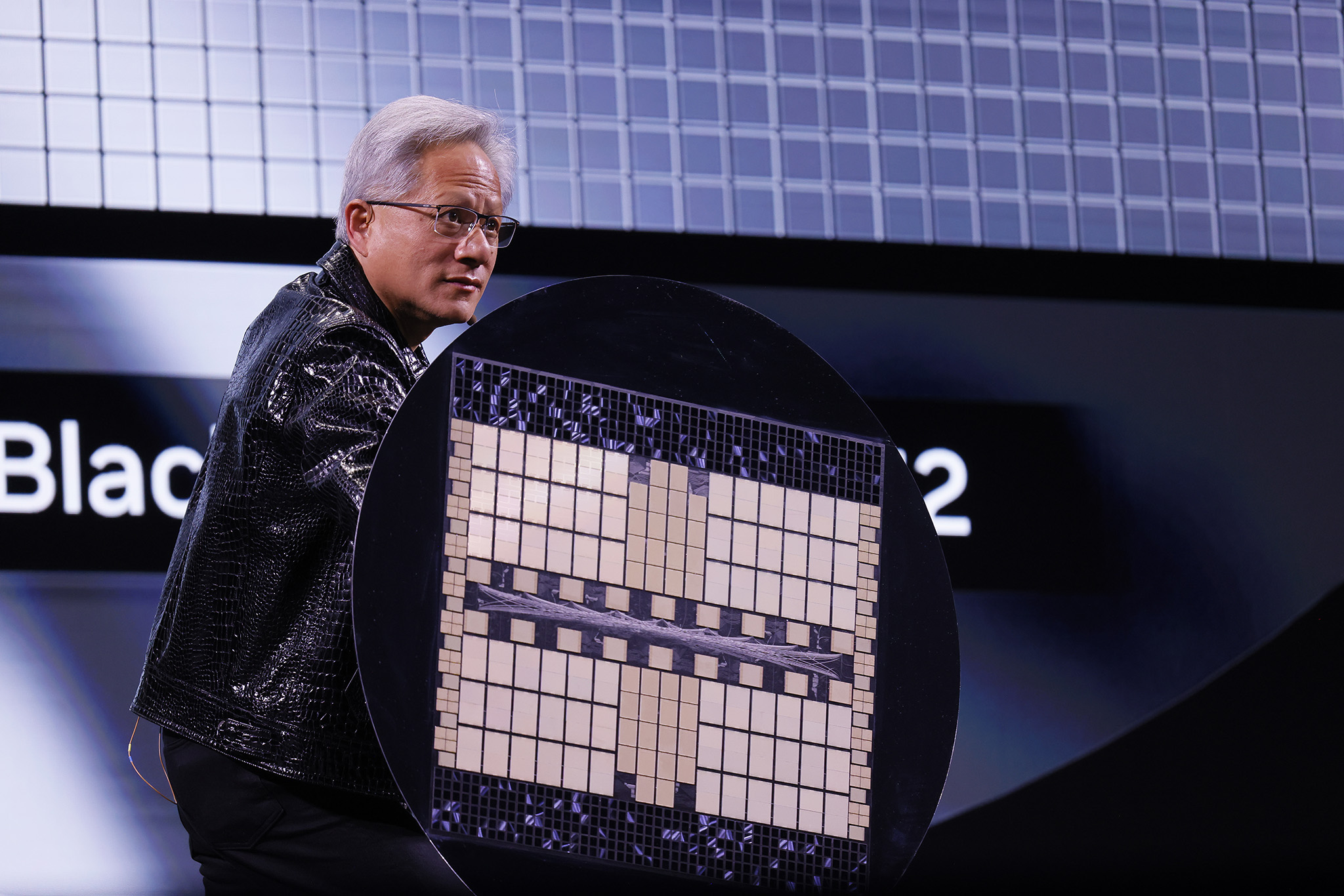

On November 12, 2026, Nvidia’s board announced that Jensen Huang had resigned as president, CEO and director, effective immediately. He had co-founded the company 33 years earlier. Chief Financial Officer Colette Kress became interim CEO, and director Harvey C. Jones became the board’s first-ever chair. Nvidia said its third-quarter fiscal 2027 results would still be released on Tuesday, November 17, as scheduled.
The resignation came after about two weeks of escalating disclosures. This piece covers the whole arc: an immigrant kid sent to a Kentucky boarding school, a startup that nearly died in the 1990s, one of the great long-term bets in modern technology, and the sudden ending.
Part I: The Founder’s Early Life
Jensen Huang, born Jen-Hsun Huang, was born in Tainan, Taiwan, on February 17, 1963. His family moved to Thailand when he was five, and he emigrated to the United States around 1973. His uncle enrolled him and his brother at the Oneida Baptist Institute in rural Kentucky, mistakenly believing it was a prestigious boarding school. It was in fact partly a reform school for troubled youth. At ten, Huang lived in the boys’ dormitory there while attending the local public elementary school. Their parents later joined them in the U.S. and settled in Oregon.
He graduated from Aloha High School outside Portland, reportedly at 16 after skipping grades. Like many immigrant teenagers, he worked restaurant jobs, including at Denny’s. That detail would come back around when the company he founded was born in another Denny’s.
He chose Oregon State University for its low in-state tuition. He earned a bachelor’s degree in electrical engineering there in 1984 and a master’s from Stanford in 1992, the latter by taking night classes while working. At Oregon State he met his future wife, Lori, who was his engineering lab partner. TechCrunch reports they have been married 40 years.
His early career was at AMD, where he designed microprocessors, and then at LSI Logic. German reference profiles date these stints to roughly 1984–85 at AMD and 1985–93 at LSI. At LSI he was director of CoreWare, a business built around reusable chip design blocks. It was there that he met Chris Malachowsky and Curtis Priem, engineers from Sun Microsystems working on graphics.
Part II: Founding the Company (1993)
Company lore holds that the three met on April 5, 1993, at a Denny’s on Berryessa Road in East San Jose. The founders’ thesis was that 3D graphics would become central to personal computing, and that a dedicated processor would do the job far better than a CPU. Their bet was early: Huang later described the intersection of technology that was hard to commercialize and a market that didn’t yet exist as the founding of the company.
The details of the early funding differ a little by source. The company began with $40,000 and then raised $20 million in venture capital in total from Sequoia Capital, Sutter Hill Ventures and others. Another account says the first $2 million came from Sequoia and Sutter Hill at a valuation of about $6 million, after LSI Logic CEO Wilf Corrigan introduced Huang to Sequoia’s Don Valentine. Huang has joked that the first meeting with Valentine went badly. Two investors from that round, Mark Stevens of Sequoia and Harvey Jones, became directors early on. Jones is still on the board, and he is the one who took the new chair role this week.
The name came from “NV,” for “next version,” combined with invidia, the Latin word for envy.
Part III: Near-Death in the 1990s
Nvidia’s first chip was a miss. The NV1 used a rendering approach that diverged from where the industry, and Microsoft’s DirectX, was heading. Huang has said the company made three major technology choices and all three turned out to be wrong.
What kept Nvidia alive was Sega. Huang and Priem flew to Tokyo in December 1994 to pitch a chip-development deal. The relationship with Sega’s Shoichiro Irimajiri proved crucial. When it became clear Nvidia couldn’t deliver what Sega needed, Huang told the Sega executive that the right thing was to end the contract. Irimajiri persuaded Sega’s management to invest $5 million anyway. Huang has called that money the lifeline. Sega later sold its Nvidia stake for about $15 million after Irimajiri left.
By 1996 the situation was dire. Huang laid off more than half the staff, cutting headcount from 100 to 40, and put the remaining resources into the RIVA 128. By the time it shipped in August 1997, Nvidia had only enough cash for about a month of payroll. The company’s unofficial motto, in the engineers’ telling, was a grim joke about being thirty days from going out of business.
Part IV: RIVA 128, the IPO and the GPU
The RIVA 128 saved the company. It sold a million units in its first four months, and Nvidia posted its first profitable quarter at the end of 1997. A manufacturing relationship with TSMC, formed in 1998, set up the fabless model that Nvidia still uses: it designs chips and others fabricate them. The RIVA TNT followed in 1998.
Nvidia went public on January 22, 1999, at $12 a share, valuing it at around $600 million. That year it launched the GeForce 256. It was the company’s first product marketed as a GPU, and its key feature was onboard transformation and lighting. The label stuck and became a product category.
The next few years cemented Nvidia’s lead. Microsoft chose Nvidia for the original Xbox, which brought a $200 million advance, and Nvidia acquired the intellectual assets of its rival 3dfx in December 2000. The old guard of 1990s graphics collapsed, and Nvidia was one of the two survivors alongside ATI.
Part V: The Platform Years
The 2000s were a mix of triumph and turbulence. Nvidia battled ATI, later absorbed by AMD, for PC graphics supremacy. It lost some console business: in May 2005 Microsoft chose an ATI design for the Xbox 360. It won the PlayStation 3 graphics chip. It fought a legal dispute with Intel over chipset licensing, which ended in 2011 with an agreement under which Intel paid Nvidia $1.5 billion. A push into mobile with Tegra chips, first released in 2011, found modest success in cars and devices but never in mainstream smartphones.
The most important decision of the era came in 2006 with CUDA. It was a programming platform that let developers use GPUs for general computation, not just graphics. Nvidia built the G80 chip to support it and spent roughly $475 million developing it, plus heavy investment in making its GPUs compatible. The cost was real: it added expense to every chip, and the payoff was speculative. Wall Street was skeptical, and the 2008 financial crisis made things worse. Huang stayed with it for years.
What CUDA created was an ecosystem: libraries, tools, university courses and a generation of researchers who learned to program on Nvidia hardware. Competitors could build comparable silicon, but replicating that software base proved far harder. Analysts have called it Nvidia’s deepest moat ever since.
Part VI: The AI Turn
In 2012, a neural network called AlexNet, built by Alex Krizhevsky, Ilya Sutskever and Geoffrey Hinton, won the ImageNet competition by a wide margin. It was trained on two Nvidia gaming GPUs. Huang recognized what the result meant, and over the next decade he turned the whole company toward deep learning.
The milestones followed. Nvidia built the DGX line of AI systems, with an early unit famously hand-delivered to OpenAI in 2016. It added specialized tensor cores starting with the Volta generation in 2017. It bought the networking company Mellanox for about $6.9 billion, a deal announced in 2019 and closed in 2020. Nvidia’s networking business later exceeded $31 billion in annual revenue, more than ten times its level in the year the company acquired Mellanox.
One big deal failed. Nvidia announced a plan on September 13, 2020 to buy Arm from SoftBank for $40 billion, then dropped it on February 7, 2022 under regulatory pressure; the deal’s value had grown to $66 billion by then.
Part VII: The Boom (2022–2026)
ChatGPT’s release in late 2022 set off a global race for computing power, and Nvidia’s H100 and then Blackwell chips became some of the most sought-after hardware on earth. Nvidia’s market value followed. Sources disagree on exact crossing dates (see the notes below), but the broad timeline is clear: $1 trillion in mid-2023, $2 trillion in early 2024, $3 trillion in June 2024, $4 trillion in July 2025, and then $5 trillion on October 29, 2025, making it the first public company to reach that level. The last trillion took only about three months.
The financials matched. For fiscal 2026, ended in January 2026, revenue was $215.9 billion, up 65% from a year earlier, with the final quarter at $68.1 billion, up 73%. Data center revenue was $193.7 billion for the year, which was the overwhelming bulk of the business. Nvidia guided to $78 billion for the first quarter of fiscal 2027. At GTC in March 2026, Huang said Nvidia saw at least $1 trillion in purchase orders for its Blackwell and Vera Rubin platforms through the end of 2027, double the $500 billion he had cited a year earlier. Vera Rubin, a six-chip platform, shipped its first samples in early 2026 ahead of a second-half production ramp.
Nvidia also became a deal-maker across the AI industry. It announced plans to invest up to $100 billion in OpenAI, though Nvidia itself warned that there was no assurance of a definitive agreement. It committed $5 billion to Intel for a stake of roughly 4%. It agreed to invest up to $10 billion in Anthropic alongside Microsoft. It also licensed technology from the chip startup Groq and hired its CEO, in what CNBC reported as a $20 billion deal for Groq’s assets. Critics argued that investing in customers made the boom partly circular. Supporters said it was simply securing demand and supply in a capacity-constrained market.
Part VIII: China and the Politics of Chips
No part of Nvidia’s business was more politically charged than China. U.S. export controls repeatedly forced the company to design cut-down chips, such as the H20, and to negotiate licenses. Huang said in October 2025 that Nvidia’s share of China’s market had fallen from 95% to zero. In 2026 the picture shifted back and forth: at GTC 2026, Nvidia said it would resume making H200 chips for the Chinese market after receiving U.S. export licenses, yet the CFO said in February that the company had not yet generated revenue from those approvals and didn’t know whether imports would be allowed into China. Nvidia also excluded China data center revenue from its guidance.
Huang lobbied hard to keep that market open, arguing that American companies should serve every developer. That stance became central to the controversy that followed.
Part IX: How Nvidia Was Run
Huang’s management style was unusual for a company this large. He had a very large number of direct reports, favored flat structures, and was known for critiquing ideas openly instead of in private. Nvidia had no board chair and no president under him, and he was the only non-independent member of the board, holding about 3.6% of the stock according to Techaeris. Entrepreneur, citing a filing, put it at around 3.5%.
That concentration of authority was a source of speed and coherence, and it left the company without a public succession plan. Coverage of the board’s investigation noted that Nvidia had a lead independent director instead of a chair, and that the proxy describes this arrangement as giving each member an equal voice.
Part X: The Crisis (October–November 2026)
This section relies on press reporting and company statements. Many allegations come from anonymous U.S. officials and remain unproven, and the investigation is ongoing.
Background. In October 2025, the U.S. and Singapore were reported to be investigating Megaspeed, a Singapore-based AI infrastructure company and Nvidia customer, over suspicions that it helped Chinese firms get around chip export restrictions. TechCrunch’s timeline says Huang had been seen socializing with a Megaspeed executive, Alice Huang, as early as 2024 in Taiwan. She is unrelated to him. Megaspeed had reportedly bought about $4.8 billion of Nvidia chips over two years.
October 29. The New York Times reported that U.S. officials had been investigating Alice Huang and Megaspeed for over a year, and that Huang had a close relationship with her. The Times reported that officials suspected she worked for China’s Ministry of State Security, and later reports described a memo circulated within the administration in spring 2026. An Nvidia spokesperson said at the time that Huang’s interactions with her were not unusual, as CEOs meet many customer executives. China has denied the espionage claims.
November 5. Three Republican House committee chairmen asked Huang for a closed-door briefing on the national security concerns.
November 8. Huang published a letter to employees admitting he had been unfaithful to his wife. He did not name Alice Huang but tied the matter to the national security concerns in the news reports. His letter apologized to his wife and children, said there was no excuse, supported the board’s investigation, and asked for his family’s privacy. The same day, the board announced an independent investigation, framing Huang as the reported target of a foreign intelligence effort, and said it had no reason to believe national security or Nvidia secrets were compromised. Huang remained CEO at that point. President Trump said he didn’t know the details but called Huang a fine person, and said he thought Huang should stay.
November 9–10. Huang pulled out of speaking engagements. Reports detailed a web of Alice Huang’s business ties that allegedly helped route Nvidia chips, and Bloomberg reported that Nvidia’s top lawyer had intervened in a 2025 U.S. probe of Megaspeed. The independent directors hired Joon H. Kim, a former acting U.S. Attorney for the Southern District of New York, and his firm Wachtell, Lipton, Rosen & Katz. A shareholder class action was filed in San Jose, and Trump was reported to have said the FBI was looking into the matter. I couldn’t verify that last item beyond secondary reports.
November 11. Further reports alleged a second relationship, with a senior Nvidia executive who reported to Huang. Shares fell about 8% after hours. The Wall Street Journal reported the board was preparing to remove him.
Part XI: The Resignation
After meeting overnight, the board announced the resignation on the morning of November 12. In Nvidia’s statement, Harvey Jones said the board had full confidence in Kress and the leadership team and expected operations, customer commitments and the product roadmap to continue uninterrupted. Kress, who joined Nvidia as CFO in September 2013 after nearly 25 years in finance at Cisco and Microsoft, said she was committed to building on the foundation Huang created. She will keep her CFO role while serving as interim CEO. The board said it will consider internal and external candidates for the permanent role.
Markets reacted sharply. Shares fell roughly 12% after the open, and about $600 billion in value was lost over the week; a forward earnings multiple of 12.2 was the lowest since 2012, per LSEG. A BBC figure cited elsewhere put the loss at about $500 billion as of the day before. The exact number depends on the measurement window.
Part XII: What Comes Next
- The investigation. Its findings will decide whether this stays a story about a CEO’s personal conduct or becomes one about national security and export-control compliance. The board has said it saw no evidence of compromise, but that was before its investigation began.
- The November 17 earnings call. It will be Kress’s first as the company’s top executive, and investors will look for continuity in supply, customer commitments and the Rubin ramp.
- Succession. Press reports have floated several names, but Nvidia has announced nothing.
- Legal exposure. The shareholder suit is one front; congressional interest and regulators are others.
- China policy. Huang was Nvidia’s chief advocate for selling into China. How his successor handles that question may matter as much as any product decision.
Legacy
Few founders have a career with such extreme swings. Huang took a company within weeks of insolvency in 1997 and built the central hardware supplier of the AI era. His signature strengths were long-horizon bets like CUDA, relentless execution and a willingness to cannibalize his own products. His weakness, visible now, was a company so dependent on one person that his exit raises basic questions about its structure.
His own words in the November 8 letter, that leading Nvidia was the privilege of his life and that he had fallen short, will be read alongside the investigation’s eventual findings. Nothing in the public record yet establishes what, if anything, was compromised. Until it does, the fairest summary is that his technological legacy is secure, his personal legacy is unsettled, and the company’s next chapter is wide open.

