

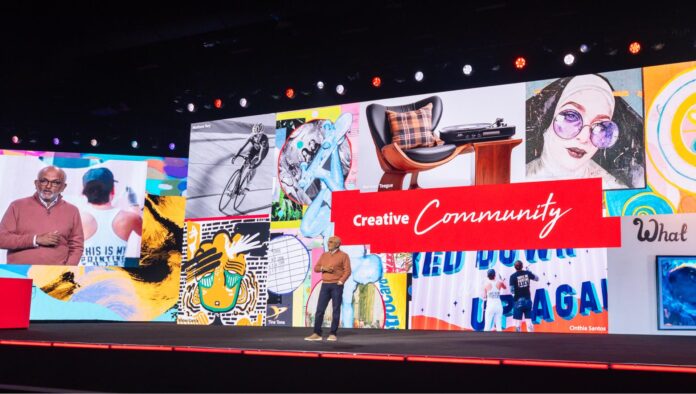

As artificial intelligence reshapes creative production, digital platforms redefine distribution, and independent professionals build businesses around their expertise, Adobe MAX reveals a broader transformation underway. Creativity is no longer confined to the production of art, design, or content. It is becoming an economic asset, a strategic capability, and the foundation of a new generation of businesses.
Creativity has always been a source of cultural influence, commercial value, and innovation. What is changing is the scale at which creative ideas can be developed, distributed, monetized, and transformed into businesses. The tools once reserved for specialized studios, established agencies, production companies, and large organizations are becoming increasingly accessible to individuals and small teams. At the same time, artificial intelligence is changing the relationship between imagination and execution, challenging established definitions of creative expertise while expanding what one person or a small team can accomplish.
This transformation is reflected in the growing importance of the Creative Economy, an expansive ecosystem in which ideas, design, culture, storytelling, technology, knowledge, and intellectual property generate economic value. Within this landscape, the creative professional is no longer defined exclusively by a technical discipline. Designers, photographers, writers, filmmakers, marketers, illustrators, educators, and entrepreneurs are increasingly moving between creative practice, strategic thinking, content development, audience building, and business creation.
Adobe MAX, Adobe’s annual creativity conference, provides a revealing perspective on this evolution. Held in Miami Beach from November 10 to 12, 2026, the conference brought together creative professionals, designers, photographers, marketers, entrepreneurs, educators, filmmakers, and technology innovators for an extensive program of learning, inspiration, experimentation, and networking. Its programming explored not only the newest creative technologies but also the changing nature of creative work, the expanding Creator Economy, and the opportunities emerging at the intersection of creativity and business.
The significance of Adobe MAX extends beyond software announcements. It reflects a moment in which creativity is becoming more closely connected to entrepreneurship, digital distribution, technological fluency, and the ability to build sustainable professional and commercial opportunities around original ideas.
A Global Gathering at the Intersection of Creativity and Technology
Adobe MAX has evolved into one of the industry’s major gatherings for creative professionals. Its program combines product announcements, keynote presentations, demonstrations, educational sessions, workshops, experimental technology showcases, networking, and community experiences.
The 2026 conference took place at the Miami Beach Convention Center, with preconference activities held November 8 and 9, followed by the main conference from November 10 through 12. The online program ran November 10 and 11, offering virtual audiences access to keynotes, Sneaks, featured presentations, Adobe Live programming, and additional educational sessions.
With more than 200 sessions and learning opportunities across seven major content tracks, the conference was designed to serve a broad spectrum of creative disciplines and experience levels. Its audience included graphic designers, art directors, photographers, video professionals, motion designers, marketers, content creators, creative technologists, web developers, educators, entrepreneurs, and business leaders.
The event’s structure reflects the increasingly interconnected nature of the creative industries. A photographer may be interested in AI assisted image production. A designer may be exploring brand strategy and digital publishing. A marketing professional may be learning video production and automation. An entrepreneur may be developing a personal brand, digital product, or independent creative business.
The boundaries between these disciplines have become more fluid, creating an environment in which creative professionals can expand their expertise beyond a single specialty.
Keynotes introduced new technologies and broader industry perspectives. Educational sessions provided practical instruction across creative disciplines. Hands on labs allowed attendees to experiment directly with tools and workflows. Creative Park offered demonstrations, interactive experiences, conversations with experts, and opportunities to discover products and services. Networking events brought together professionals from different industries, backgrounds, and stages of their careers.
The conference also featured Adobe Sneaks, a presentation of experimental technologies developed through Adobe research and innovation. These demonstrations offered a glimpse into ideas that may eventually influence future creative software, introducing new possibilities in imaging, video, audio, design, and creative automation.
Together, these experiences positioned Adobe MAX as more than a technology event. It became a meeting point for the creative community to consider how the profession is evolving, what new opportunities are emerging, and how technology may influence the next generation of creative work.
Seven Tracks Reflecting the Expanding Creative Landscape
The seven content tracks at Adobe MAX 2026 offered a framework for understanding the breadth of the contemporary creative profession. Each addressed a different aspect of creative practice, yet their themes increasingly overlapped.
Accelerating Creativity with AI
Artificial intelligence was among the most prominent themes of the conference, reflecting its growing influence across design, photography, illustration, video, advertising, and digital production.
Sessions explored AI assisted ideation, image generation, video creation, creative experimentation, editing, workflow integration, and the practical application of emerging technologies. The emphasis was not simply on generating content more quickly but on understanding how AI could become part of a more sophisticated creative process.
The growing accessibility of generative technology has changed the early stages of creative development. Concepts that once required extensive production resources can now be explored through rapid experimentation. Visual references can be generated, ideas can be refined, compositions can be tested, and alternative approaches can be considered before committing to a final direction.
The creative professional increasingly becomes the person who defines the objective, establishes the visual or conceptual framework, directs the tools, evaluates the results, and determines which ideas deserve further development.
AI may accelerate experimentation, but the value of that experimentation depends on the creative judgment guiding it.
Branding
Branding remains one of the most important disciplines within the Creative Economy because it connects visual identity, strategic positioning, storytelling, audience perception, and commercial differentiation.
The branding track explored the ways creative professionals can develop identities that communicate meaning, establish recognition, and create stronger relationships with audiences. As businesses compete within increasingly crowded digital environments, brand identity extends beyond logos and visual systems into the total experience of a company or publication.
Branding encompasses tone of voice, imagery, design, messaging, digital presence, customer experience, and the consistency with which an organization communicates its values and personality.
The growing volume of content makes this consistency particularly important. Businesses may publish across websites, social platforms, advertising, email, video, and digital commerce. Maintaining a recognizable identity across these channels requires creative direction, thoughtful systems, and a clear understanding of the brand’s position.
Creative Leadership and Innovation
The creative leadership track examined the relationship between creativity, organizational change, technology adoption, and professional development.
Creative leaders increasingly manage environments in which traditional production processes are being reconsidered. Teams may be expected to produce more content, respond to changing platforms, integrate AI tools, maintain brand standards, and collaborate across disciplines.
Leadership in these environments requires more than creative expertise. It involves establishing clear objectives, supporting experimentation, guiding teams through change, evaluating new technologies, and ensuring that innovation remains aligned with organizational priorities.
The challenge is not simply introducing new tools. It is helping people understand how those tools can improve their work without compromising creative quality, professional standards, or the value of human contribution.
Creator Economy
The Creator Economy track reflected the growing professionalization of independent creative work. Its programming addressed audience development, personal branding, content strategy, monetization, business development, sustainable creative careers, and the opportunities available to professionals building independent ventures.
The Creator Economy is no longer limited to social media personalities or entertainment focused influencers. Designers, photographers, writers, educators, marketers, illustrators, and other creative professionals are building brands, launching products, developing audiences, and generating income through digital platforms.
The track explored how creative expertise can be translated into scalable opportunities, whether through freelance services, agency careers, independent publishing, consulting, digital products, education, partnerships, or entrepreneurial ventures.
Its significance lies in recognizing that a creative career can take many forms. The traditional employment model remains relevant, but independent and hybrid career structures are becoming increasingly viable.
Design, Imaging, and Illustration
Design, imaging, and illustration remain foundational to creative communication. This track explored the technical and conceptual disciplines involved in creating visual work, from graphic design and image editing to illustration, digital composition, editorial design, and visual storytelling.
The continued importance of these disciplines reflects the enduring value of visual communication across industries. Businesses require compelling imagery and design to communicate products, establish identity, convey information, and differentiate themselves within crowded markets.
As AI introduces new ways to generate and manipulate visual content, design expertise becomes increasingly important in determining how images are used, how concepts are translated into visual language, and how creative work maintains coherence and originality.
Photography
Photography continues to occupy an important position within the Creative Economy, serving commercial, editorial, advertising, fashion, travel, lifestyle, product, and personal storytelling markets.
The photography track explored technical approaches, image making, editing, visual storytelling, and creative workflows. The continued evolution of photography reflects changes in both production and distribution, as images are increasingly created for multiple platforms and formats.
Photographers now frequently work across traditional commissioned projects, digital content, social media, commercial campaigns, licensing, personal publishing, and independent creative businesses.
The value of photography is therefore not limited to the image itself. It may also reside in the photographer’s aesthetic, professional reputation, ability to tell stories, relationships with clients, and ownership of an original visual archive.
Video, Audio, and Motion
Video, audio, and motion have become increasingly central to digital communication. Businesses, publishers, creators, and brands rely on moving imagery to tell stories, explain ideas, engage audiences, and support marketing objectives.
The track explored video production, editing, motion graphics, animation, sound, visual effects, storytelling, and emerging production workflows.
The expansion of short form video has created additional demand for creative professionals who can adapt storytelling to different platforms while maintaining quality and consistency. Video production is increasingly connected to marketing, editorial, advertising, education, entertainment, and brand communication.
AI assisted video workflows are also changing how creative professionals approach ideation, production, editing, and experimentation. As technology becomes more capable, creative direction and narrative understanding remain essential to creating work that feels intentional rather than simply generated.
Together, the seven tracks illustrate the expanding scope of the creative profession. Technical disciplines remain important, but they increasingly intersect with strategy, business, technology, leadership, and audience development.
Artificial Intelligence and the Evolution of Creative Tools
One of the defining developments at Adobe MAX 2026 was Adobe’s continued expansion of artificial intelligence across its creative ecosystem. The announcements reflected a broader shift toward integrated AI capabilities designed to assist with complex creative workflows rather than isolated production tasks.
Adobe expanded Creative Agent across Creative Cloud and Firefly, introduced new agentic workflows, announced local integrations involving the Model Context Protocol for several Creative Cloud applications, and expanded Firefly as an AI creative studio bringing image, video, audio, design, tools, and multiple AI models into a more integrated environment.
The direction suggests a significant evolution in the relationship between creative professionals and software. Rather than navigating every individual function manually, users can increasingly describe objectives, request assistance, organize tasks, and delegate portions of a workflow to AI systems.
The human role remains central to the process. Creative professionals establish the intention, define the requirements, provide direction, evaluate results, refine the work, and approve the final outcome. AI assists with execution and coordination, potentially reducing friction across repetitive or complex tasks.
This transition may alter the economics of creative production. Work that previously required multiple tools, extended production time, or specialized technical assistance may become more accessible to individuals and small teams.
However, the availability of more powerful tools does not automatically produce better creative outcomes. Effective AI assisted production requires clear direction, thoughtful evaluation, an understanding of visual and narrative principles, and the ability to distinguish useful results from generic or unsuitable output.
The increasingly valuable professional may not necessarily be the person who generates the most content. It may be the person who can direct AI toward a compelling concept, maintain creative standards, and deliver work that serves a specific audience or business objective.
Firefly and the Emergence of an Integrated Creative Environment
Adobe Firefly’s expansion reflects the company’s broader effort to create a more integrated environment for creative experimentation and production.
The new direction combines creative tools with AI models, agents, design experiences, workflow capabilities, and options for developing reusable processes. The intention is to support a more continuous journey from initial idea to finished creative work.
Firefly’s expanded capabilities include Creative Agent, Quick Actions, Firefly Graph, new design experiences, video and image editing capabilities, and a design to code tool intended to help users develop apps and websites.
Firefly Design introduces a more unified environment for working across different forms of creative material, including raster, vector, motion, three dimensional, and print content. This broader canvas reflects the growing complexity of creative projects, which increasingly require assets to move across multiple formats and disciplines.
Firefly Graph introduces the potential for custom and repeatable workflows. Rather than treating each creative task as an isolated activity, professionals can begin developing processes that can be reused, adapted, and refined.
Quick Actions address commonly performed tasks, while agentic capabilities allow users to direct AI assistance through natural language and more complex instructions.
The broader implication is that creative software is moving toward environments in which production, ideation, organization, experimentation, and delivery can become more closely connected.
For individual creators, this may reduce technical barriers and increase the range of projects they can undertake. For creative teams, it may offer new possibilities for collaboration, consistency, and workflow efficiency. For businesses, it may create opportunities to scale content production while maintaining greater control over brand standards and creative quality.
The challenge will be determining how these capabilities are integrated into actual professional practice. Technology alone does not create an effective workflow. The most valuable systems are those that solve meaningful problems, support creative objectives, and improve the quality or efficiency of the work.
Creative Cloud and the Professional Standard
While Firefly reflects the growing accessibility of AI assisted creativity, Adobe’s Creative Cloud announcements also addressed the needs of established creative professionals.
New capabilities across Photoshop, Premiere, Illustrator, InDesign, and other tools were designed to accelerate workflows while preserving the precision and control required for professional production.
The announcements included developments such as Relight and Generative Restyle in Photoshop, Color Mode in Premiere, and coediting capabilities in InDesign. These improvements reflect the continued importance of specialized creative tools even as AI introduces new ways to automate and coordinate work.
For experienced professionals, speed is valuable only when it does not compromise quality. Commercial design, editorial production, advertising, branding, and photography often require careful control over composition, color, typography, image treatment, detail, and consistency.
AI can support these processes, but professional standards remain dependent on the ability to evaluate and refine the work.
The evolving creative environment therefore does not eliminate the importance of technical expertise. Instead, it changes how expertise is applied. Creative professionals may spend less time performing certain repetitive actions and more time directing projects, evaluating alternatives, making decisions, and refining outcomes.
This distinction is particularly important for professionals who work in high quality commercial and editorial environments, where the final product must communicate a specific aesthetic, meet client expectations, and maintain a recognizable standard.
The Creative Economy: From Artistic Expression to Economic Value
The Creative Economy encompasses industries, businesses, professionals, and organizations that generate economic value through creativity, culture, knowledge, design, storytelling, innovation, and intellectual property.
It includes traditional creative industries such as fashion, film, photography, music, advertising, publishing, architecture, and the arts. It also includes digital businesses, creative technology, content publishing, educational platforms, independent studios, digital products, creative consulting, and entrepreneurial ventures.
The Creative Economy is broader than the Creator Economy. It includes professionals who work within established organizations, agencies, studios, corporations, institutions, and independent businesses, whether or not they have a personal audience.
A graphic designer working within a corporation participates in the Creative Economy. A photographer producing commercial campaigns participates in it. A marketing strategist developing brand positioning, a filmmaker producing content, a publisher creating editorial work, and an entrepreneur developing a creative product are all contributing to this broader ecosystem.
The economic value of creative work can emerge through services, products, intellectual property, reputation, innovation, audience relationships, and the ability to communicate meaning.
As digital distribution expands, the Creative Economy increasingly supports business models that do not require traditional physical infrastructure. Creative professionals can publish, sell, license, teach, collaborate, and distribute work across international markets through digital channels.
This accessibility creates opportunities for independent businesses and smaller organizations to compete in markets that were once dominated by larger institutions. At the same time, it increases competition and makes differentiation, quality, visibility, and business strategy more important.
The Creative Economy is therefore not simply an expansion of artistic participation. It represents a change in how creative capability is organized, commercialized, and sustained.
The Creator Economy: Building a Business Around Creative Identity
Within the broader Creative Economy, the Creator Economy focuses more specifically on individuals and small teams who build audiences, publish content, develop personal brands, and monetize their creative work, expertise, or influence.
Its growth has been supported by digital platforms that allow creators to reach audiences directly. Social networks, video platforms, search engines, newsletters, websites, digital marketplaces, and online communities have created new distribution channels for creative work.
The creator is no longer necessarily dependent on a traditional publisher, agency, media company, or employer to establish visibility. An individual can develop a publication, build a community, sell a product, offer a service, or create educational content independently.
The Creator Economy has also expanded beyond entertainment and influencer culture. Designers, photographers, fashion professionals, writers, consultants, educators, marketers, and entrepreneurs are increasingly building businesses around their expertise and creative identity.
A designer may publish educational content and sell templates. A photographer may develop a licensing business while offering commissioned work. A fashion writer may operate an editorial publication supported by affiliate marketing and brand partnerships. A creative strategist may build a consulting practice through articles, workshops, and professional content.
The distinction between creator and creative professional has become increasingly fluid. The same individual may work for a company, operate a freelance business, publish original content, develop digital products, and build a personal brand.
This flexibility is one of the defining characteristics of the modern Creative Economy.
The New Creative Business Model
The traditional creative business model often relied primarily on commissioned work, employment, or project based services. While these models remain important, digital distribution and the Creator Economy have expanded the range of opportunities available to creative professionals.
Increasingly, creative businesses are developing multiple revenue streams that complement one another.
Client services may include design, marketing, photography, consulting, brand strategy, creative direction, writing, or video production. Digital products may include templates, guides, courses, presets, educational resources, e books, and downloadable assets. Brand partnerships may generate revenue through sponsorships, collaborations, commissioned campaigns, and ambassador programs.
Publishing may support advertising, affiliate income, subscriptions, sponsored content, and paid editorial opportunities. Licensing may generate income through original photography, artwork, design, intellectual property, or other creative assets. Education may include workshops, online courses, consulting, coaching, and professional training.
The combination of these revenue streams creates a more diversified business structure.
A creative professional who depends entirely on a single client may experience significant financial uncertainty if that relationship ends. A creator who depends entirely on one platform may be vulnerable to changes in algorithms, distribution policies, or audience behavior.
Diversification can reduce some of these risks by creating multiple pathways through which creative work generates value.
The strongest creative businesses increasingly combine immediate income with assets that can continue to generate opportunities over time. Client services may provide recurring revenue. Content may attract new audiences. Digital products may generate sales beyond the original production period. Licensing may allow creative work to reach new markets. Professional expertise may support consulting and education.
The result is a business model in which creative work becomes part of a larger commercial ecosystem rather than a series of isolated projects.
From Content Production to Content Infrastructure
The increasing demand for digital content has created new pressures for businesses, publishers, brands, and creative teams. Content is required across websites, search, social media, email, digital advertising, video, mobile applications, e commerce, and customer experiences.
The volume and variety of content required by modern organizations have made production systems increasingly important.
A creative professional may be responsible for developing an original concept and then adapting it into multiple formats, sizes, versions, languages, and platform requirements. The process can involve photography, design, copywriting, editing, approvals, distribution, performance analysis, and ongoing refinement.
This has elevated the importance of content infrastructure.
Reusable templates, creative libraries, brand guidelines, editorial calendars, production frameworks, automation, asset management, and repeatable workflows can support more efficient creative operations.
Artificial intelligence may assist with certain production tasks, but the system surrounding the technology determines whether the output is useful. Clear creative direction, organized assets, established standards, and quality control remain important.
The emerging advantage is not simply the ability to produce more content. It is the ability to produce relevant, high quality work consistently while adapting to changing audiences, platforms, and business needs.
Creative systems can help professionals move from reactive production toward a more strategic approach in which content is planned, developed, distributed, evaluated, and improved as part of an ongoing process.
The Relationship Between Creativity, Marketing, and Discovery
The growing importance of digital distribution has made creativity and marketing increasingly interconnected.
Creative work may serve several functions simultaneously. It can communicate a brand identity, attract attention, explain a product, establish credibility, generate search visibility, support a campaign, and create an emotional connection with an audience.
The distribution environment has also become more complex. Search engines, social platforms, visual discovery networks, newsletters, websites, video platforms, and AI powered search experiences each influence how audiences encounter information.
Creative professionals must increasingly consider the entire journey of a piece of content, from its initial concept and production to its distribution, discovery, engagement, and potential commercial value.
Search optimization, audience research, brand strategy, storytelling, visual communication, analytics, and digital advertising can all influence the performance of creative work.
This does not mean creativity should be reduced to metrics. Performance data can provide useful information about audience behavior, but creative value may also emerge through cultural relevance, reputation, emotional impact, originality, and long term brand recognition.
The strongest creative and marketing strategies combine quantitative understanding with qualitative judgment. Data can reveal patterns and opportunities. Creative thinking can interpret those patterns and develop ideas that resonate beyond the numbers.
As digital platforms and AI powered discovery continue to evolve, the ability to create work that is both distinctive and discoverable may become an increasingly important professional advantage.
Fashion, Editorial, and Lifestyle in the Creator Economy
Fashion, editorial, travel, lifestyle, and culture are particularly well positioned within the evolving Creative Economy because they combine visual storytelling, publishing, brand identity, audience development, and commercial partnerships.
Traditional fashion media has historically relied on editorial content, advertising, print distribution, subscriptions, photography, and relationships with brands and designers. Digital platforms have expanded those models by introducing search driven publishing, social distribution, video, affiliate commerce, newsletters, digital communities, and creator partnerships.
An independent fashion or lifestyle publication may now operate across multiple channels while developing its own editorial identity and commercial opportunities.
A runway review can establish editorial authority and attract search traffic. A trend report can become a visual discovery asset on Pinterest. A designer profile can generate social engagement and establish cultural relevance. A destination guide can support affiliate partnerships. A seasonal shopping article can generate product referrals. A photography portfolio can attract commissioned projects or licensing opportunities.
The content becomes more valuable when it is part of an interconnected strategy.
Rather than treating each article, image, or social post as a separate assignment, an editorial business can develop a coordinated publishing ecosystem in which content supports discovery, audience growth, brand positioning, and monetization.
This approach also changes how creative assets are viewed. A photograph may serve an editorial story, a social campaign, a Pinterest pin, a portfolio, a newsletter, and a commercial partnership. A written article may generate search visibility long after its publication date. A visual guide may become a reusable resource or digital product.
The opportunity lies in developing content that retains value beyond its original publication.
For fashion and lifestyle businesses, this can create a more sustainable relationship between creative production and commercial activity. Editorial integrity, visual quality, and distinctive storytelling remain central, while strategic distribution and monetization provide additional pathways for growth.
Audience, Trust, and the Value of Personal Brand
The Creator Economy has placed greater emphasis on the relationship between creative professionals and their audiences.
Visibility can attract attention, but trust is what often determines whether an audience returns, engages, recommends, purchases, or develops a lasting relationship with a creator or publication.
Personal brand is therefore more than a visual identity or social media profile. It reflects the combination of expertise, reputation, perspective, consistency, communication, and the value a professional provides.
A recognizable point of view can differentiate creative work within a crowded environment. Consistent publishing can establish familiarity. Expertise can build credibility. Authentic communication can strengthen relationships. A clear editorial or creative identity can help audiences understand what to expect and why a particular creator or publication is worth following.
The value of audience relationships extends beyond platform metrics. A large following does not necessarily translate into a sustainable business, and a smaller audience may be commercially valuable when it is engaged, relevant, and aligned with a specific area of expertise.
For independent creative businesses, audience development can support opportunities in consulting, services, digital products, partnerships, education, publishing, and commerce.
The ability to build and maintain trust may become increasingly important as the volume of AI generated content expands. Audiences may place greater value on recognizable expertise, credible sources, distinctive editorial judgment, and authentic human perspective.
The Creative Professional as Strategist, Entrepreneur, and Director
The evolution of the Creative Economy is changing the skills associated with professional success.
Technical expertise remains important. Designers still require an understanding of typography, composition, color, layout, and visual communication. Photographers require technical and artistic knowledge. Writers require narrative ability, research, and language skills. Video professionals require editing, production, sound, and storytelling expertise.
However, these capabilities are increasingly complemented by strategic thinking, business literacy, technology fluency, communication, project management, and adaptability.
Creative professionals may increasingly need to understand the audience they serve, the business objectives behind a project, the distribution channels through which work reaches people, the technologies available for production, and the opportunities to develop their expertise into additional revenue streams.
Creative direction becomes a particularly important capability. It connects ideas, aesthetic decisions, audience understanding, brand objectives, production, and quality control.
The professional advantage may increasingly come from the ability to define a problem, develop a compelling concept, direct the process, coordinate resources, evaluate the results, and translate creative work into meaningful outcomes.
This represents a shift from execution alone toward a more integrated role in which creativity, strategy, technology, and business operate together.
The shift does not diminish the value of craft. Rather, it places craft within a larger framework of decision making and creative leadership.
The Five Layers of a Modern Creative Business
The emerging creative business can be understood through five interconnected layers.
The first is creative expertise. This includes the technical and artistic capabilities that establish the professional foundation, whether in design, photography, writing, video, illustration, marketing, art direction, or another discipline.
The second is technology and AI. Creative tools, automation, workflow optimization, digital production, and AI assisted processes can expand the range of projects a professional can undertake and improve efficiency.
The third is brand and visibility. A portfolio, website, personal brand, publication, social presence, reputation, and consistent communication help establish recognition and create opportunities for discovery.
The fourth is the business model. Client services, products, partnerships, consulting, licensing, education, advertising, and publishing can transform creative expertise into revenue.
The fifth is scale and sustainability. Reusable systems, recurring revenue, intellectual property, audience relationships, diversified income, and repeatable workflows can help create a business that is less dependent on individual projects or temporary opportunities.
These layers are interconnected. Creative expertise supports the quality of the work. Technology can improve production. Brand and visibility help audiences discover the work. Business models convert expertise and attention into revenue. Systems and diversification support long term sustainability.
The model illustrates why creative entrepreneurship increasingly requires a combination of artistic capability and commercial understanding.
The Future of Creative Careers
The traditional creative career often followed a relatively linear path. An individual developed a skill, entered an organization or studio, completed assignments, built a portfolio, gained experience, and advanced through professional roles.
The expanding Creative Economy offers more varied career structures.
A professional may develop expertise, establish a distinctive identity, publish original work, build visibility, develop relationships, create digital products, monetize knowledge, and expand through systems or partnerships.
Employment, independent work, consulting, publishing, education, entrepreneurship, and creative leadership can coexist within a single career.
Some professionals may build businesses around specialized services. Others may develop independent publications, digital products, educational platforms, creative studios, or personal brands. Some may remain within organizations while developing new capabilities that allow them to lead creative transformation, manage AI enabled workflows, or expand their strategic contribution.
The modern creative career is increasingly defined by adaptability and the ability to move between disciplines.
A designer may become a creative strategist. A photographer may become an educator or publisher. A marketing professional may become a consultant or entrepreneur. A writer may develop a digital publication or educational business. A creative director may build a studio while maintaining a personal platform.
The ability to continually learn, experiment, communicate, and recognize opportunities becomes a valuable professional asset.
Creativity as an Economic Asset
The growing importance of intellectual property is another defining feature of the Creative Economy.
Creative work can generate value long after its initial production. Photography may be licensed. Artwork may become a product. Design expertise may be transformed into templates. Educational material may become a course. Editorial content may attract audiences through search over time. A recognizable creative identity may lead to partnerships, consulting opportunities, or commercial collaborations.
This creates a distinction between creative work that generates immediate income and creative assets that may continue to produce value.
The concept of intellectual property extends beyond traditional copyright ownership. It can include original concepts, proprietary methods, educational resources, creative frameworks, brand assets, content libraries, design systems, and other forms of original work that contribute to a business’s differentiation.
The ability to develop, protect, organize, distribute, and monetize these assets may become increasingly important for creative entrepreneurs.
AI introduces additional considerations around ownership, licensing, authorship, attribution, commercial usage, and the relationship between original creative work and generated content. As technology evolves, creative professionals and businesses will need to understand the legal and ethical considerations associated with their tools, assets, and distribution practices.
The value of creativity may increasingly reside not only in the production of an individual piece of work but also in the systems, relationships, knowledge, and intellectual property surrounding it.
The Human Dimension of Creative Innovation
The rapid development of creative technology raises questions about the future of artistic expression, professional identity, and the value of human contribution.
As AI becomes more capable of generating images, video, text, designs, and other forms of content, the creative process may become increasingly accessible. More people will be able to experiment with ideas and produce work that previously required specialized tools or technical knowledge.
Yet the abundance of creative output may also make originality, meaning, and discernment more valuable.
Human creativity is shaped by experience, culture, emotion, memory, curiosity, observation, and perspective. These qualities influence how individuals interpret the world, identify opportunities, communicate ideas, and create work that resonates with others.
Technology can assist with production, but the creative vision guiding the work remains important. The ability to understand an audience, recognize cultural context, communicate emotion, make aesthetic decisions, and determine what is meaningful continues to distinguish creative practice.
The future of creative innovation may therefore depend not on replacing human judgment but on developing new ways for technology to support it.
Beyond Adobe MAX: A New Creative Landscape
Adobe MAX 2026 offered a glimpse into an industry undergoing significant transformation. Artificial intelligence is changing production. Digital platforms are changing distribution. Independent business models are changing monetization. Creative systems are changing how work is organized. Audience relationships are changing how reputation and commercial opportunity are established.
The conference reflected a broader movement toward a more integrated creative profession in which design, storytelling, technology, marketing, business, and entrepreneurship increasingly intersect.
The opportunities are expanding, but so are the expectations. Creative professionals are being asked to adapt to new tools, develop new skills, understand changing platforms, maintain quality, build visibility, and consider the commercial value of their work.
The most significant advantage may belong to those who can combine creative excellence with strategic thinking, technology fluency, business understanding, and a distinctive point of view.
The Creative Economy is not simply creating new jobs or expanding existing industries. It is redefining how creativity can be applied, how professional careers can develop, and how individuals can build businesses around ideas, expertise, and original work.
The future of creativity may be less about a single discipline or a traditional career path and more about the ability to connect multiple capabilities into a coherent and sustainable practice.
In this new landscape, imagination remains the starting point. Technology expands the possibilities. Strategy determines direction. Business models create opportunity. Human judgment gives the work meaning.
The creative professional is no longer simply producing the work. Increasingly, the professional is building the ecosystem around it.
