



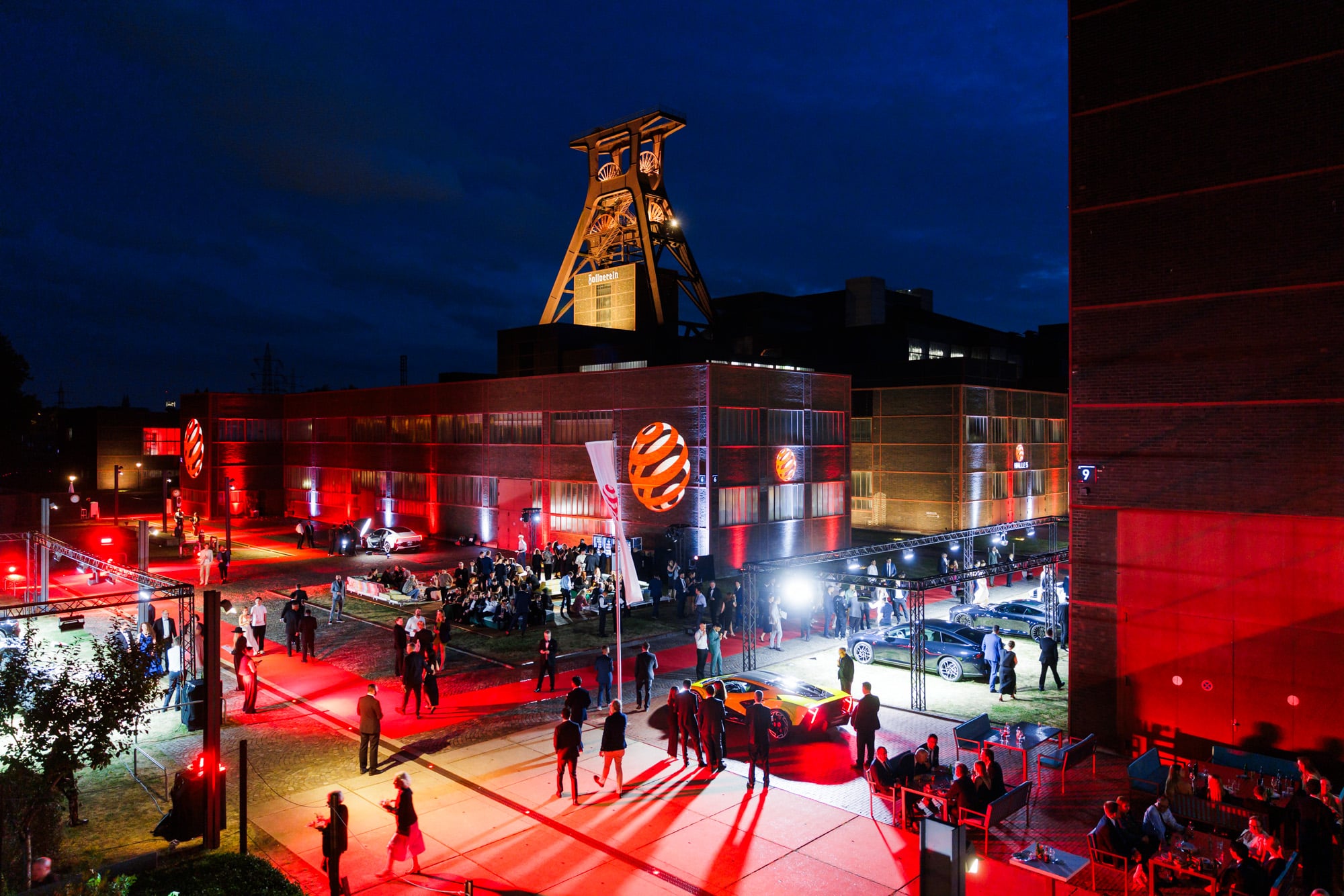
Essen doesn’t usually make headlines, but for one night every year, the German city becomes ground zero for the design world. On July 7, 2026, the winners of the Red Dot Award: Product Design 2026 gathered there for a celebration that spanned a UNESCO World Heritage industrial site, a historic opera house, and an after-party that doubled as a live showroom for some of the most talked-about vehicles in the world. The takeaway for anyone paying attention to product design right now: precision, sustainability, and quietly smart AI integration are no longer nice-to-haves. They’re the baseline.
The night began at the Red Dot Design Museum on the Zollverein site, where top honorees and press got an early look at the museum’s new exhibitions before the public opening. From there, the action moved to the Aalto Theater for the Red Dot Gala, where designers, executives, and media from 39 countries filled the seats. Red Dot founder and CEO Professor Dr. Peter Zec opened the evening by pointing out just how global the competition has become, noting that entering is itself a bit of a leap of faith. You’re putting your work in front of a notoriously tough jury with no guarantee it’ll land. Essen’s Lord Mayor, Thomas Kufen, followed with a welcome that framed design as something bigger than any single product: a shared language that pulls creative people together across borders.
Zec, alongside jury members Prof. Lutz Fügener (Germany), Venia Giota (Greece), and Norio Fujikawa (USA), handed out the night’s top prize, the Red Dot: Best of the Best trophy, to a lineup of products that ranged from mainframe computers to turntables to a one-off Ferrari. A livestream hosted by Red Dot Vice President Jova Zec and journalist Freddie Schürheck carried the ceremony to design fans well beyond the theater’s walls, and a performance by the Aalto Ballet, a reworking of Ravel’s Boléro called “Walking Mad”, gave the evening an unexpectedly emotional center.
Epson Design takes the year’s top honor
The biggest moment of the night wasn’t a product at all. It was a team. Epson Design walked away with the “Red Dot: Design Team of the Year 2026” title, an honor that recognizes not one winning product but a sustained track record of good design decisions across a company’s entire portfolio.
Epson’s Chief Marketing Officer, Maria Eagling, used her speech to make the case for why the win matters, and she did it by going back decades. She pointed to Epson’s timing systems clocking split-second results at major athletics events in the 1960s, printers engineered to work in microgravity aboard the space shuttles Atlantis, Discovery, and Endeavour, and a flying camera robot currently helping stabilize shots and assist with docking on the International Space Station. Her point landed: the best design work is often the kind nobody notices, because it’s just quietly doing its job.
Epson’s own projection tech powered the stage presentation itself, turning the moment into a live demo of the company’s design philosophy. Denys Lapointe, Chief Design Officer at BRP and last year’s award recipient, handed off the traveling “Radius” trophy to Takaaki Ishikawa (Head of Product & UX Design, Visual Products) and Hideki Kato (Head of Product Design, Printing Products), who called the recognition a reminder that design carries real responsibility, and real potential to shape what comes next.
Designers’ Night: where the party doubles as a showroom
Once the formal ceremony wrapped, the celebration shifted to “Designers’ Night” back at Zollverein, with the illuminated industrial site as a backdrop. Winners picked up their Red Dot Certificates, hit the photo stations, and wandered through the museum’s new exhibits while the conversations from the ceremony kept going late into the night.
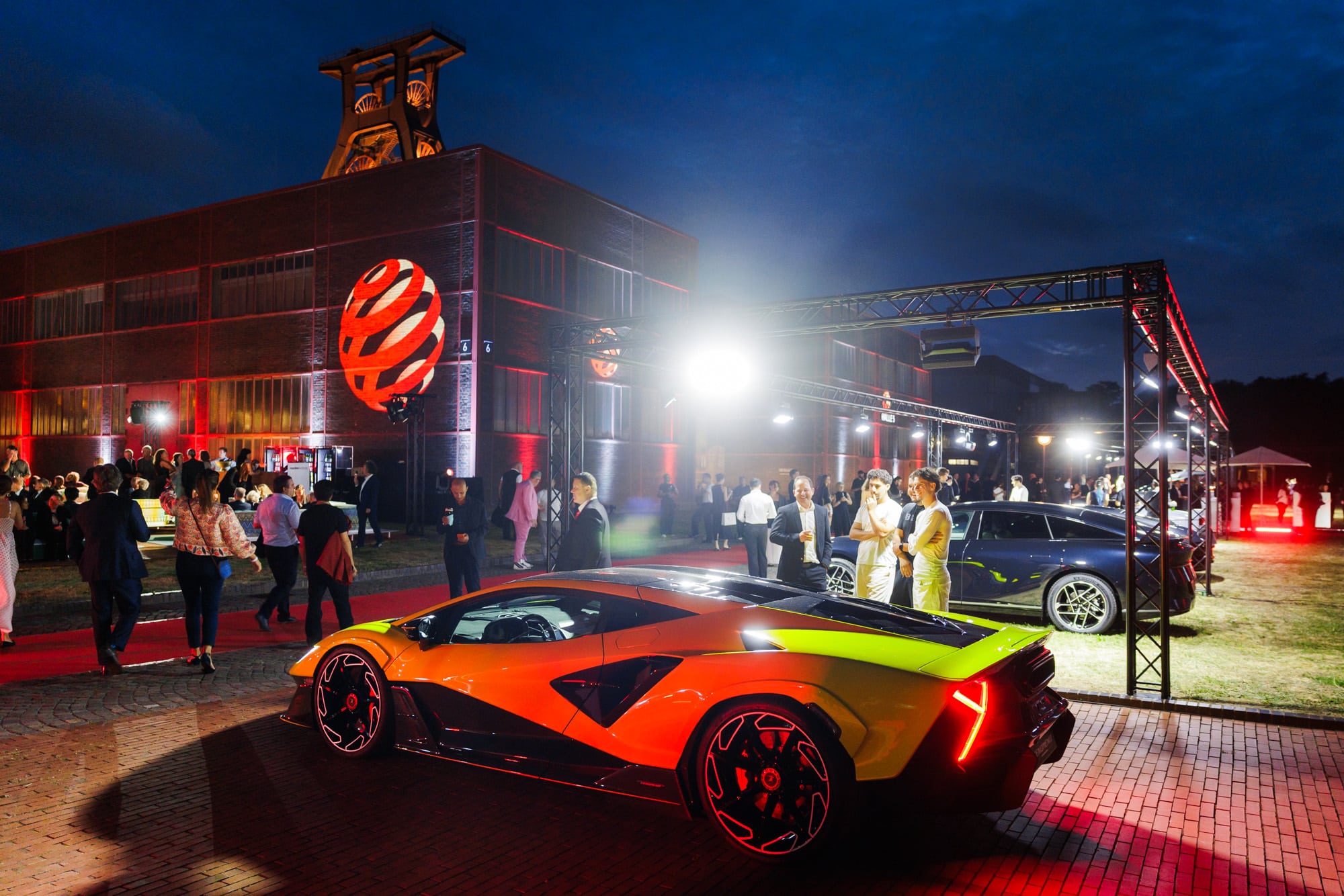
The real draw for a lot of attendees, though, was the vehicle lineup. Guests got up-close time with award-winning cars and motorcycles from Ferrari, Lamborghini, BRABUS, and CUPRA, a rare chance to see, in one place, where automotive design is actually headed on things like electrification, brand identity, and aerodynamics. The Ferrari SC40, a one-off out of the brand’s Special Projects program, and the Lamborghini Fenomeno, limited to just 29 units, both signal how far the boundaries of “production design” can stretch when a manufacturer wants to test an idea before it goes mainstream.
New exhibitions worth planning a trip around
For anyone who wants to see this year’s winners in person, the museum has two exhibitions running through June 1, 2027: “Design on Stage 2026,” a five-floor tour through the trends and qualities defining good design right now, and “Red Dot Milestones 2026,” which pulls the best submissions out of a pool of thousands from around the world. Together they’re less a trophy case and more a snapshot of how designers are actually responding to the technological, social, and environmental pressures shaping their industries.
There’s also a shorter-run exhibition worth catching before it closes: “Epson Design: Value through Precision,” open through August 16, 2026, and curated entirely by Epson Design in honor of its Design Team of the Year win. It’s built around the company’s guiding principle of “Sho-Sho-Sei”, Japanese for “efficient, compact, and precise”, and digs into how Epson balances technical precision with user-centered, sustainable design.
The 2026 Best of the Best Winners
Desktop PC Series: Lenovo ThinkCentre X-series Family
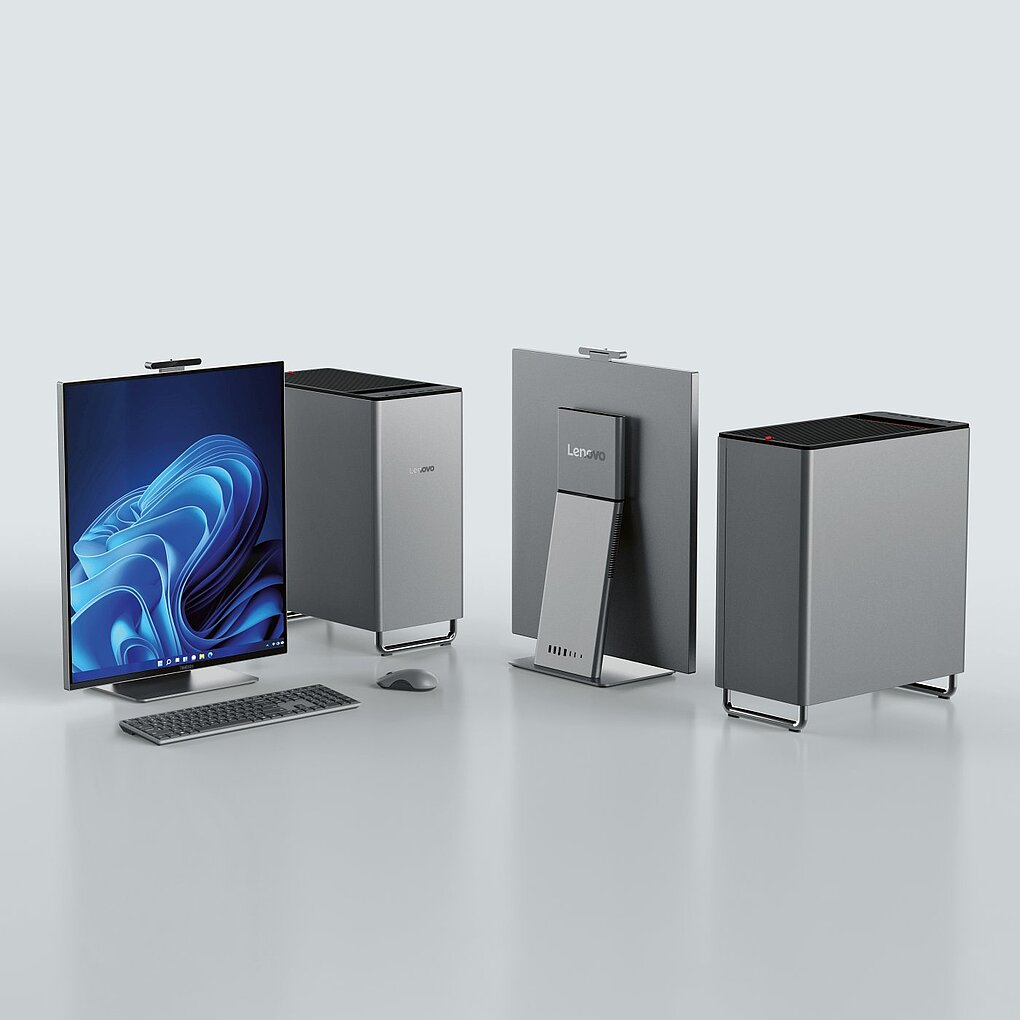
Most desktop PCs still play by the same unwritten rules: screen goes upright, ports go around back. Lenovo’s ThinkCentre X family doesn’t tear up that rulebook so much as quietly rewrite parts of it where it actually helps people. The lineup includes a high-resolution all-in-one and a 34-liter tower built for AI-heavy business workflows, with security and customization baked in for demanding setups. The standout move is architectural: the tower appears to “float” on curved steel-tube feet, with its main connectors and slots relocated from the back to the bottom. That single change cleans up cable management, gives the machine a more seamless look, and makes it realistic to line up several units side by side in an office without the usual tangle. Cooling comes from quiet, biomimetic multi-zone fans venting through the open base, and a tool-free side panel makes upgrades painless.
The AIO version takes its own swing at convention with a 27.6-inch display in a 16:18 aspect ratio, slightly taller than wide, which turns out to be genuinely useful for anyone regularly viewing two full pages or a dense spreadsheet side by side. The screen adjusts for lift, tilt, swivel, and rotation. The jury called the whole family “as innovative as it is coherent,” pointing to a new hardware experience paired with elegant aesthetics that could meaningfully shift how modern offices actually work.
Conference System: DICENTIS Multimedia Device
Anyone who’s sat through a meeting fumbling with a clunky AV panel knows the problem this product is solving. The DICENTIS Multimedia Device was built directly from customer feedback, with one goal: give people in high-stakes meetings the tech support they need without adding friction or distraction. That shows up in large, easily adjustable displays optimized for viewing angles, intuitive controls, and accessibility features for users with visual or hearing impairments, a detail the jury specifically called out as thoughtful rather than performative.
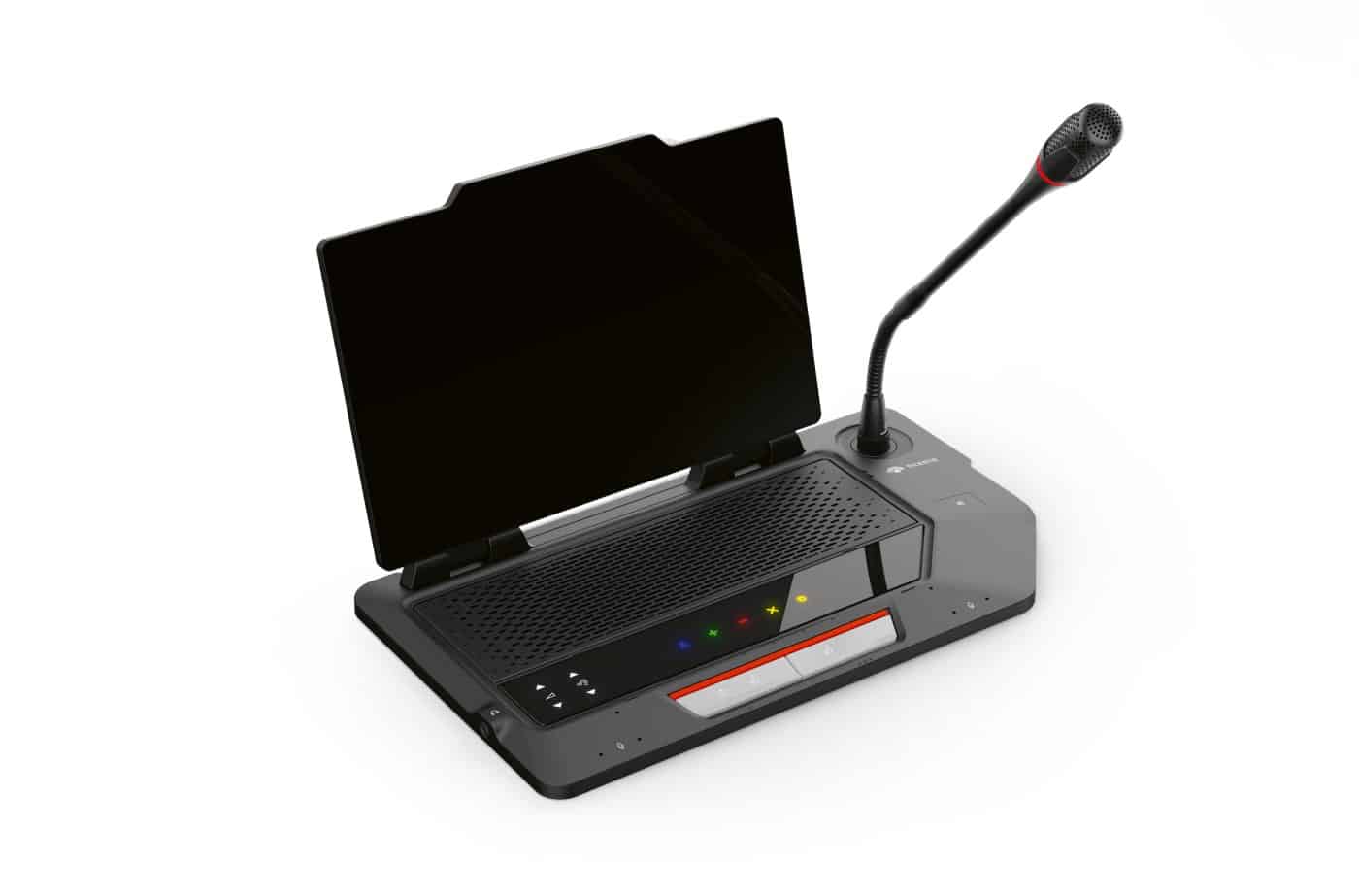
Under the hood, it’s a serious piece of hardware: a high-resolution touchscreen with tactile feedback, built-in voting and language selection tools, and a microphone array backed by AI algorithms that can be expanded with a gooseneck mic. The system’s open architecture supports third-party apps and easy tablet swaps, while end-to-end encryption and regular security updates keep meeting data locked down. What impressed the jury most wasn’t any single feature. It was how all of that complexity got folded into something that still feels approachable and calm to actually use.
Mainframe Computer: IBM z17
Mainframes rarely get design attention, but they arguably matter more than almost any other category on this list. They’re the quiet backbone of global finance and logistics. IBM built the z17 in direct collaboration with customers and internal teams spanning engineering, service, logistics, and sustainability, and the performance numbers back up the effort: a 50 percent jump in AI inference operations thanks to the new Telum II processor.
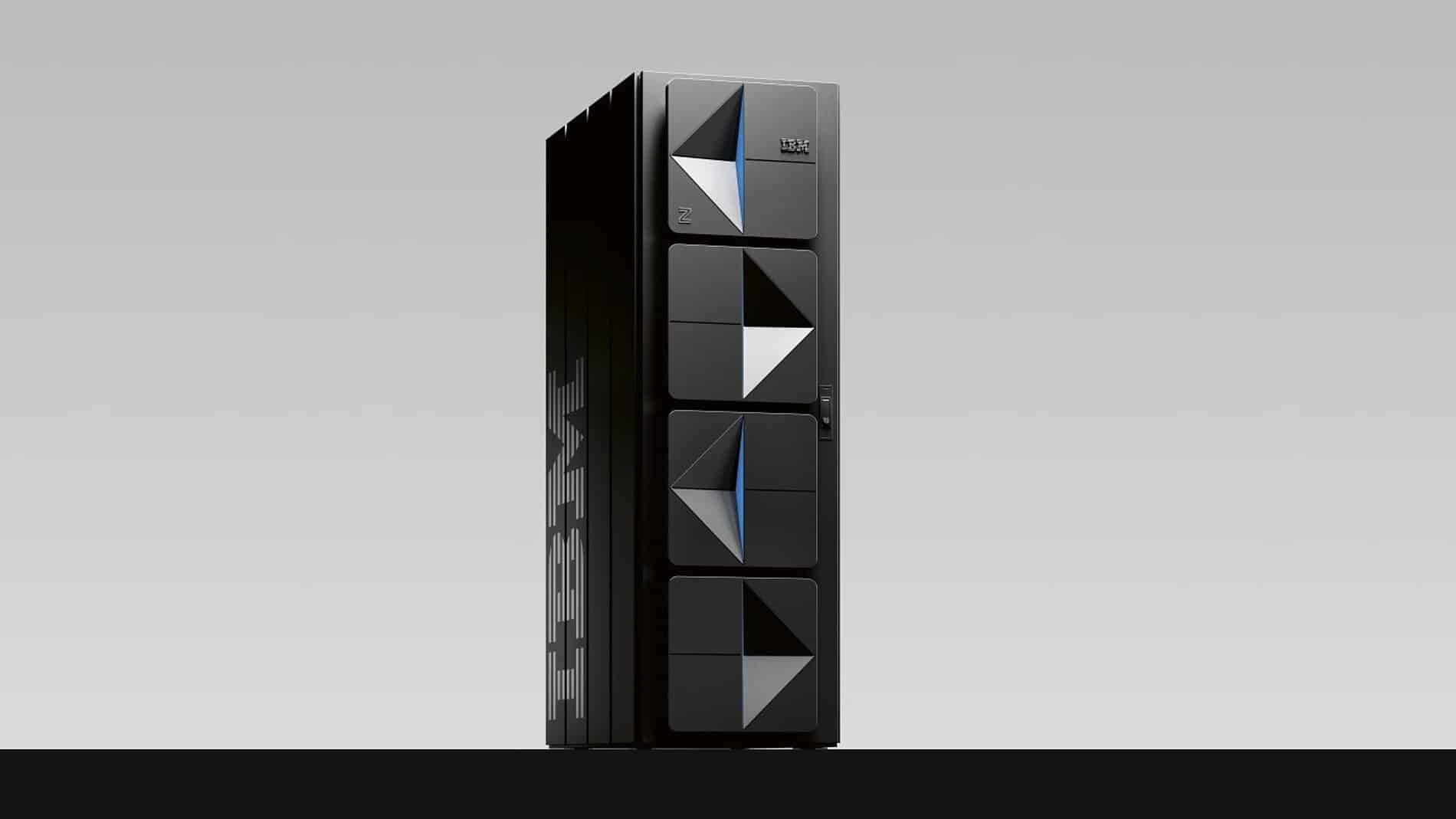
More power means more heat and more noise, so IBM enlarged the air outlets and tucked them behind resource-efficient acoustic panels with an embossed finish that doubles as a brand statement. The jury singled out these front-facing elements as a case study in balancing function, sustainability, and brand identity in one move. Serviceability got a real upgrade too: a Top Exit Enclosure routes all cabling upward, improving airflow, doubling fiber density, and making maintenance dramatically easier, every component is tool-free and color-coded. On the sustainability side, IBM cut packaging materials by 90 percent and reduced the carbon footprint of shipping from the US to Europe by 70 percent. As the jury put it, this is a mainframe built for the AI era, with a design language centered on clarity and responsibility.
Laptop: New Lenovo Chromebook Family
Digital classrooms need hardware that can survive actual kids, and Lenovo’s new Chromebook lineup is built around that reality without sacrificing performance. The Chromebook Plus (14-inch) targets teachers and power users with up to 17 hours of battery life, a sleek metal chassis, four-speaker audio, and built-in generative AI. The Chromebook Education models (11.6-inch and 12.2-inch) are the ones designed to take a beating: the casing withstands 60 kilograms of pressure, a TPU bumper absorbs drops, and integrated drainage plus oversized rubber feet mean a spilled drink doesn’t mean a dead laptop. A top-loaded sliding keyboard can be serviced with a single screw.
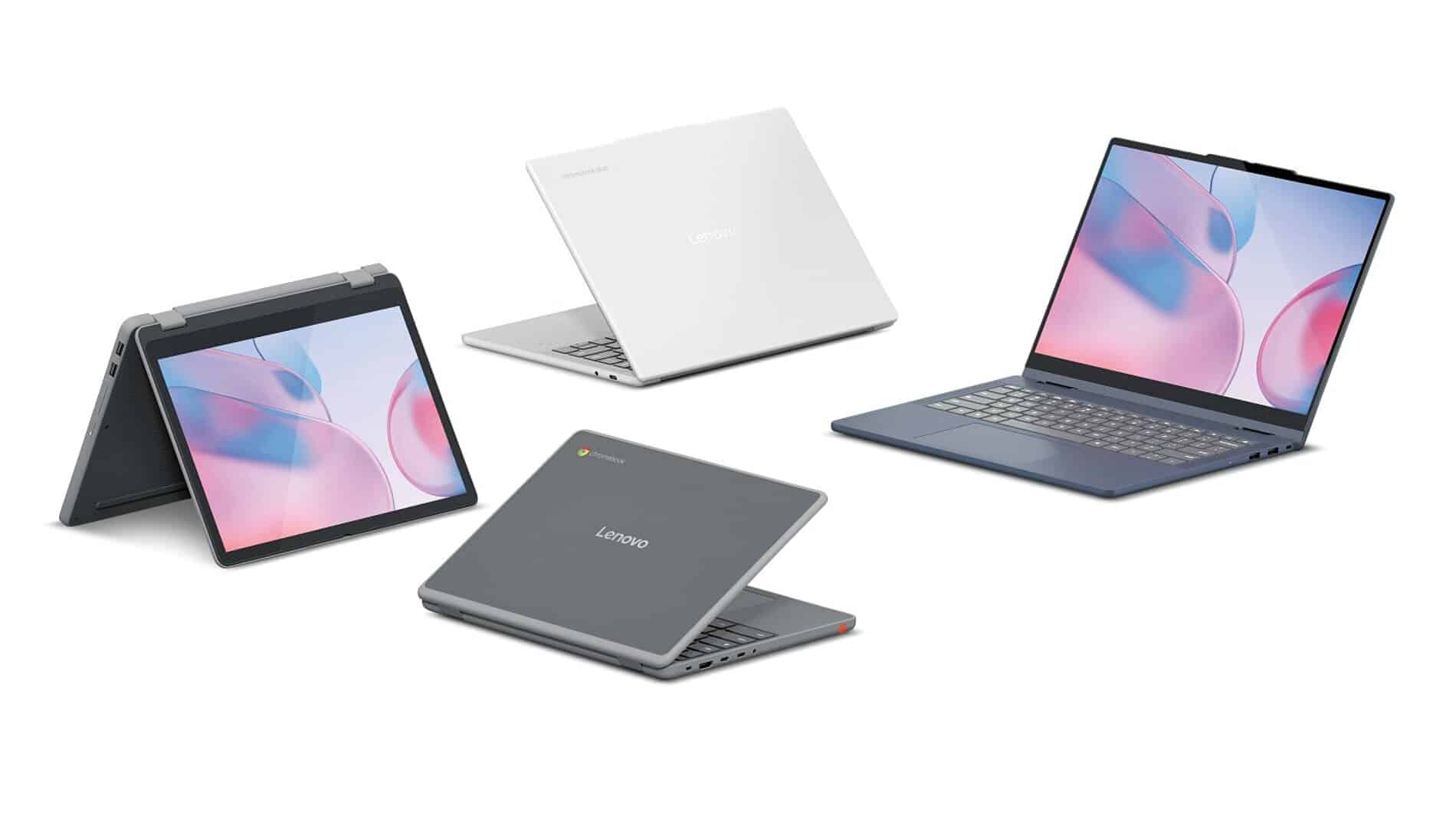
The jury praised the Education line for offering what it called “a completely new user experience,” built specifically around the demands of student life. Both models support Wi-Fi 7, come in 2-in-1 convertible versions, and use scratch-resistant touch displays with an optional stylus. At under 1.5 kilograms, they’re genuinely portable, and a wavy texture on the bottom cover improves grip while doubling as a recognizable design signature. Replaceable batteries round out the sustainability case.
Camera: Sigma BF
The Sigma BF is a deliberate throwback to photography’s most basic idea, light entering a dark space to form an image, reimagined for a moment when most photos get taken without a second thought. Carved from a single block of aluminum, the BF has a monolithic, almost sculptural presence, with controls pared down to the essentials and a seamless transition from lens to body. Even the interface follows the same logic: a separate status display keeps the main screen free of clutter, so the image itself stays the focus. The only control on top of the camera is the shutter button.
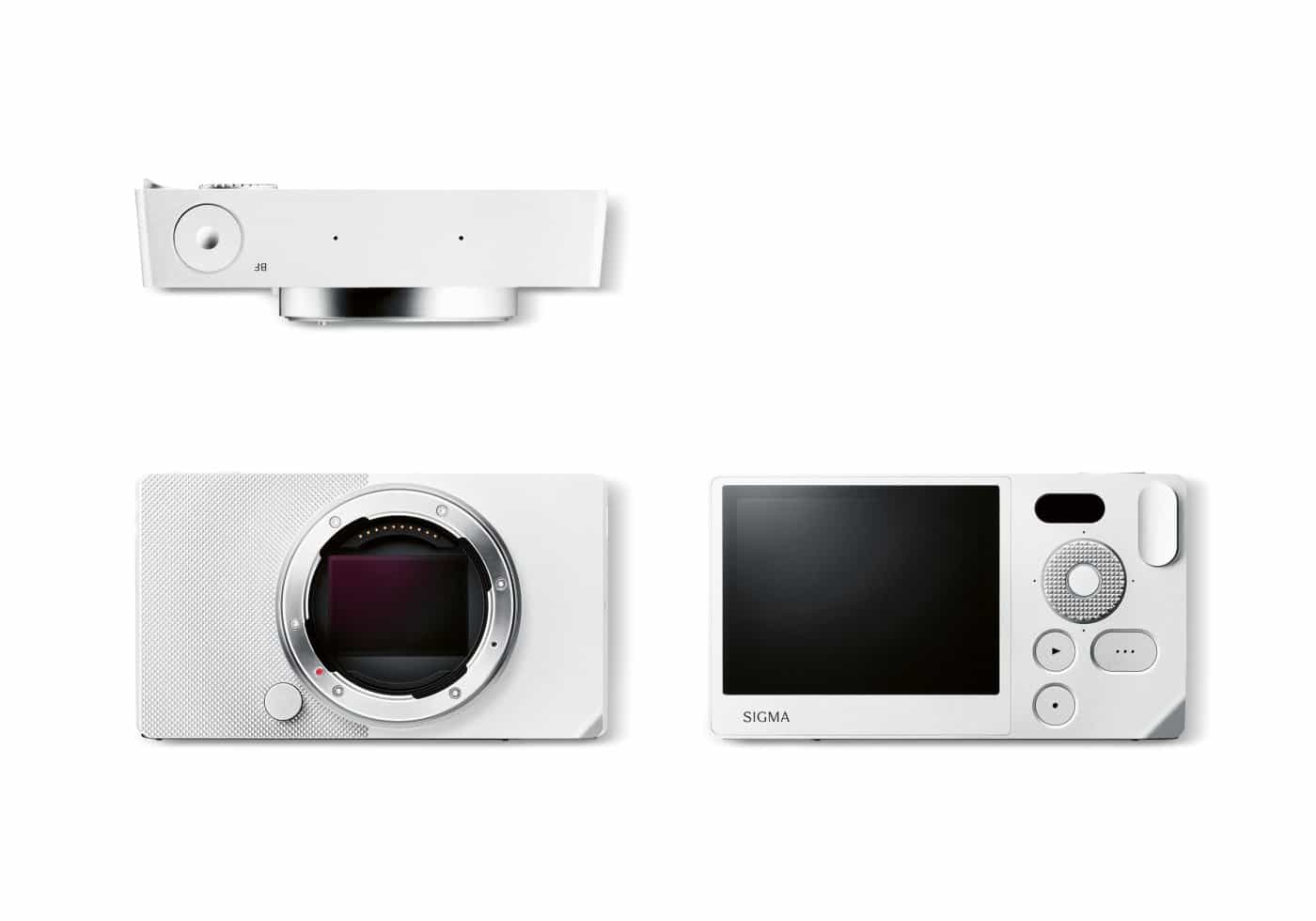
The jury called it “an embodiment of perfectionism,” praising the machined precision of a body milled from one piece of aluminum and the radical simplicity of the overall concept. It’s a camera that makes its own materiality part of the experience, proof that stripping things down can be its own kind of technical achievement.
Record Player: Panasonic Technics SL-40CBT/40C/50C
Vinyl isn’t about efficiency. It’s a ritual, and Technics built the SL series to preserve that feeling while quietly modernizing what’s underneath. The turntables keep the coreless direct drive and S-shaped tonearm that have defined Technics’ rotational accuracy for decades, but now integrate Bluetooth and a built-in phono preamp into a compact housing, which meant solving a real engineering problem: keeping analog and digital signal paths from interfering with each other.
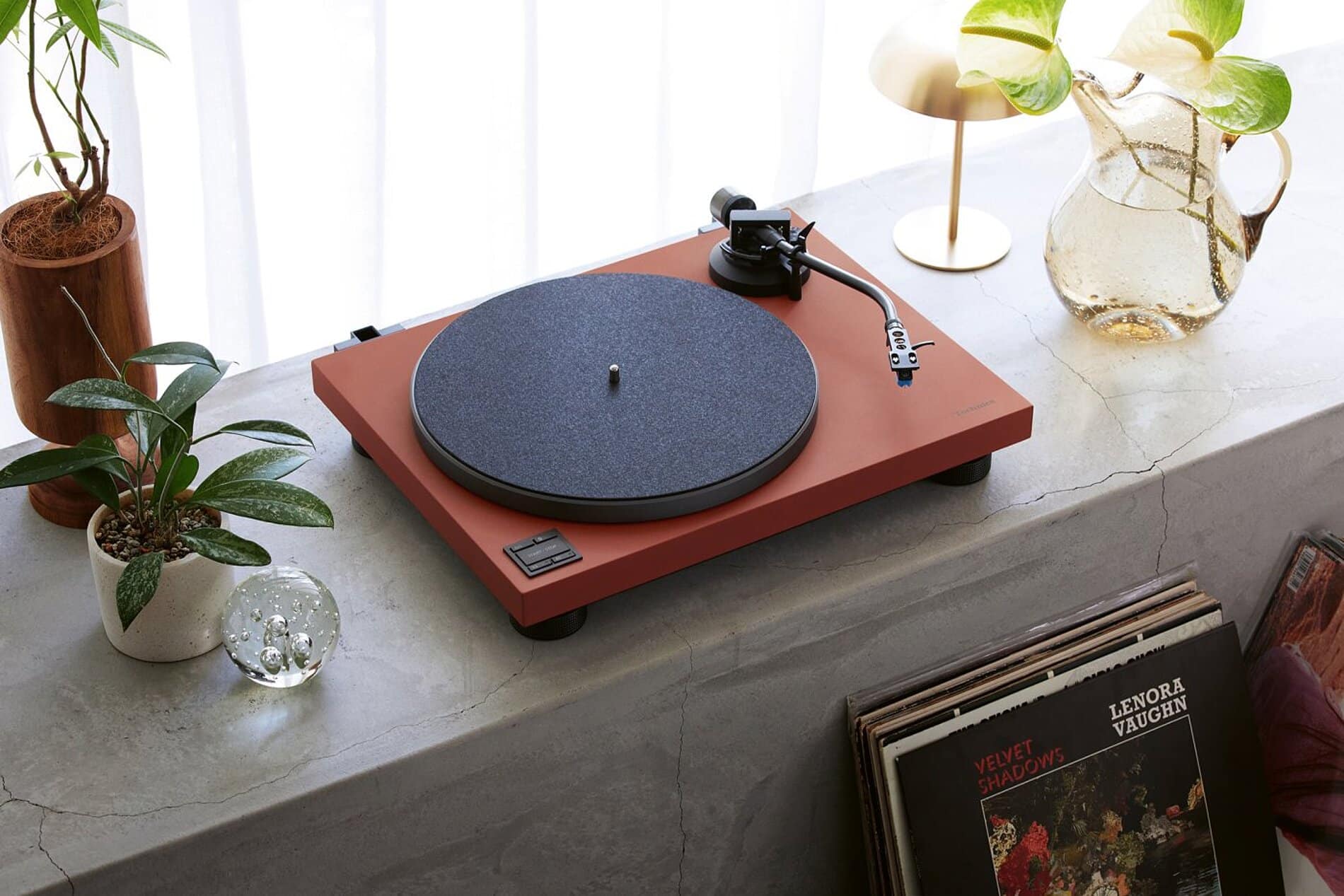
Visually, the design goes the opposite direction of the internal complexity, strict horizontal lines, a clean circular platter, and a simple tonearm silhouette that reads as instantly familiar. Designer Yosuke Nakamura described the core challenge as merging technology and expectations from entirely different eras into one intuitive experience, and that shows in details like the motion from lifting the tonearm to lowering the stylus, which has been tuned to feel smooth and unhurried rather than automated. The jury praised the “consistent reduction to a few, clearly legible elements,” calling it a compelling answer to how analog culture translates into the present.
Sports Car: Ferrari SC40
Some cars exist purely to test an idea, and the SC40 is exactly that. As a one-off from Ferrari’s Special Projects program, it gave chief design officer Flavio Manzoni a rare kind of freedom: no production constraints, no marketing committee, just a direct collaboration with a single client who effectively stepped into the role usually held by Ferrari’s senior leadership. Mechanically, it’s built on the 296 GTB, sharing its engine, chassis, and powertrain, but visually it’s been pushed toward a tauter, more angular silhouette with an almost industrial-design edge that partially disguises its origins.
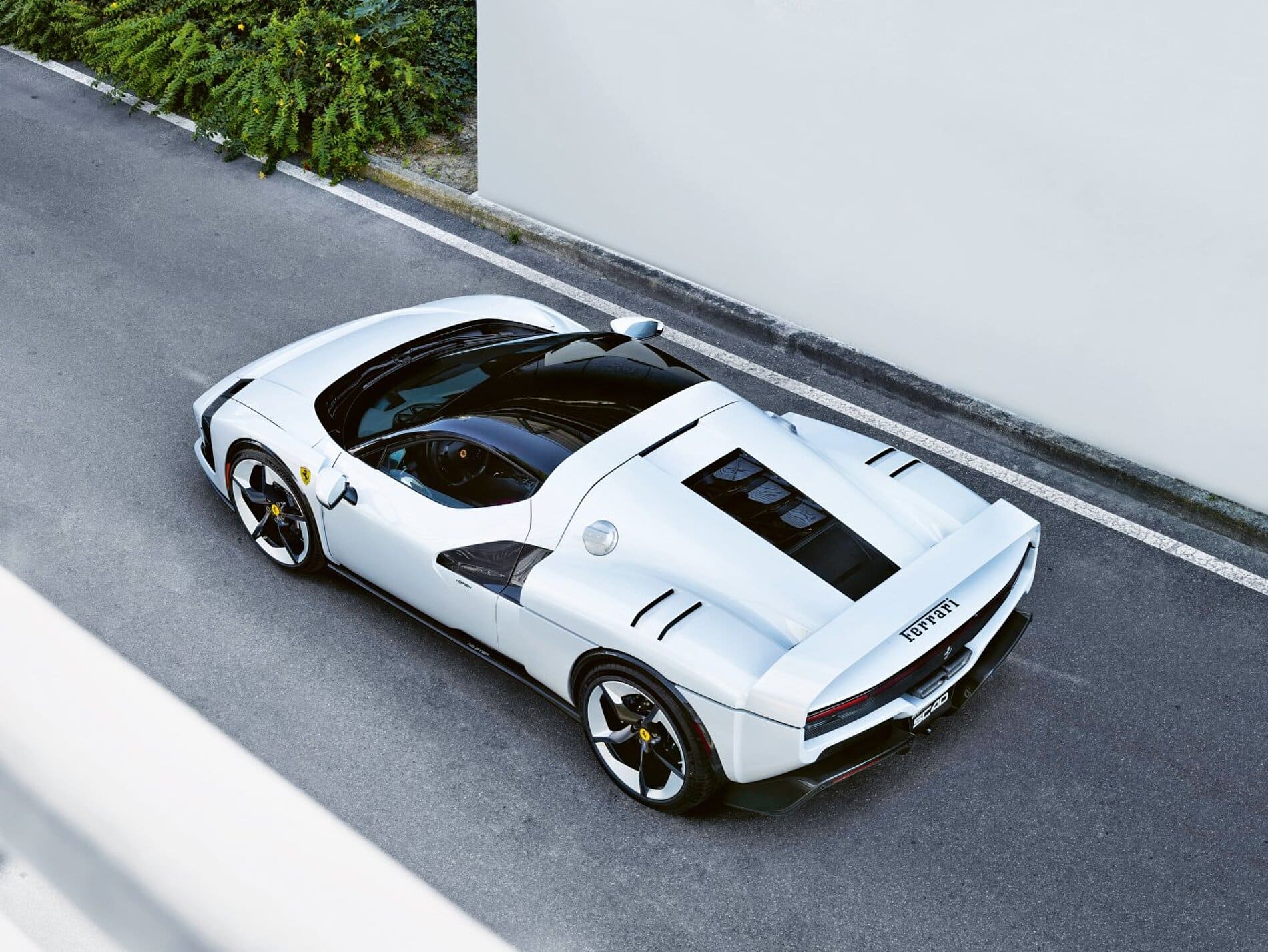
The design draws on Italian product design from the 1960s through the ’80s, think Adriano Olivetti, Mario Bellini, Alessandro Mendini, layered with subtle nods to Ferrari’s own history, including the 308 and F40 (hence the name, though the reference is intentionally understated). The result reads as sharp and graphic from a distance, then reveals smoother, more calibrated surfacing up close. Manzoni put it simply: every detail needs to feel like a nod to the past without being too literal, so it comes across as both new and familiar. The jury agreed, calling the SC40 “unmistakably Ferrari”, rooted in the brand’s history while clearly pointing forward.
Folding Table: AICHI Fino
Flexible spaces need flexible furniture, and the Fino folding table is a refinement of a concept the same designer introduced back in 2000. Its defining trait is consistency, every frame angle follows the same visual logic, and that discipline holds up especially well when multiple tables are lined up together. A hollow-profile lever handles the folding mechanism, and when the table isn’t in use, it becomes a distinct object in its own right rather than disappearing into storage.
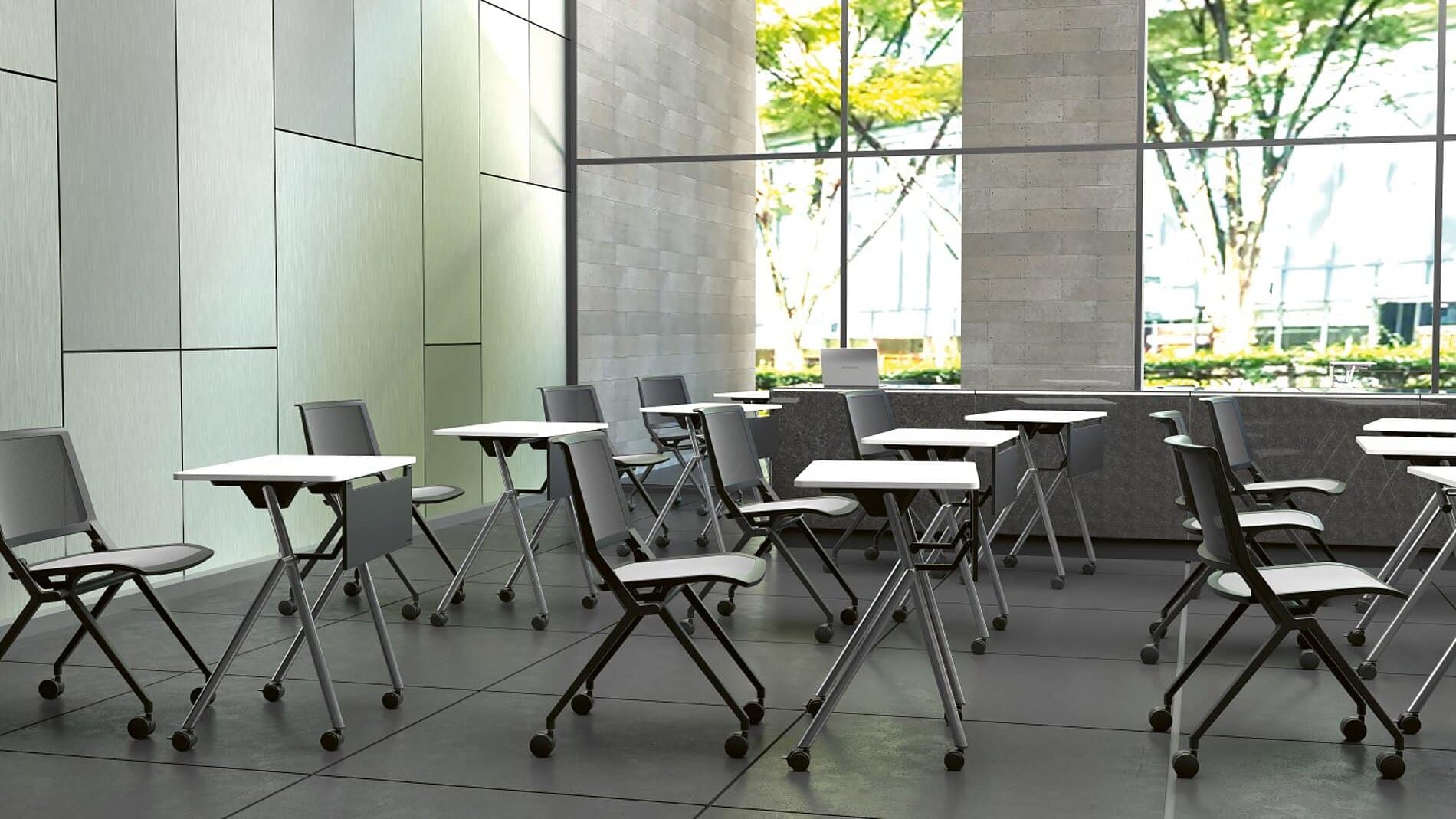
The jury highlighted how well the structural clarity translates into ease of use, noting that the absence of curves and the consistency of angles make the design both rational and visually distinct. Practical variants matter here too: a four-caster version maximizes maneuverability, while a two-caster model suits spaces that don’t get rearranged often. On the sustainability side, the tabletop core is built largely from waste material generated during timber house construction, with any plastic components incorporating recycled content, a smart use of what would otherwise be scrap.
Smart Passport Control: AUO INVISERA
Border checkpoints are rarely designed with the traveler’s experience in mind, which is exactly the gap INVISERA tries to close. The system uses a transparent display embedded in a clear hierarchy of partitions, so travelers instinctively understand what to do next without needing to be told. Context-aware instructions, including translation, appear exactly when needed, while integrated AI handles identity matching and document verification behind the scenes, freeing staff to focus on the parts of the job that actually require human judgment.
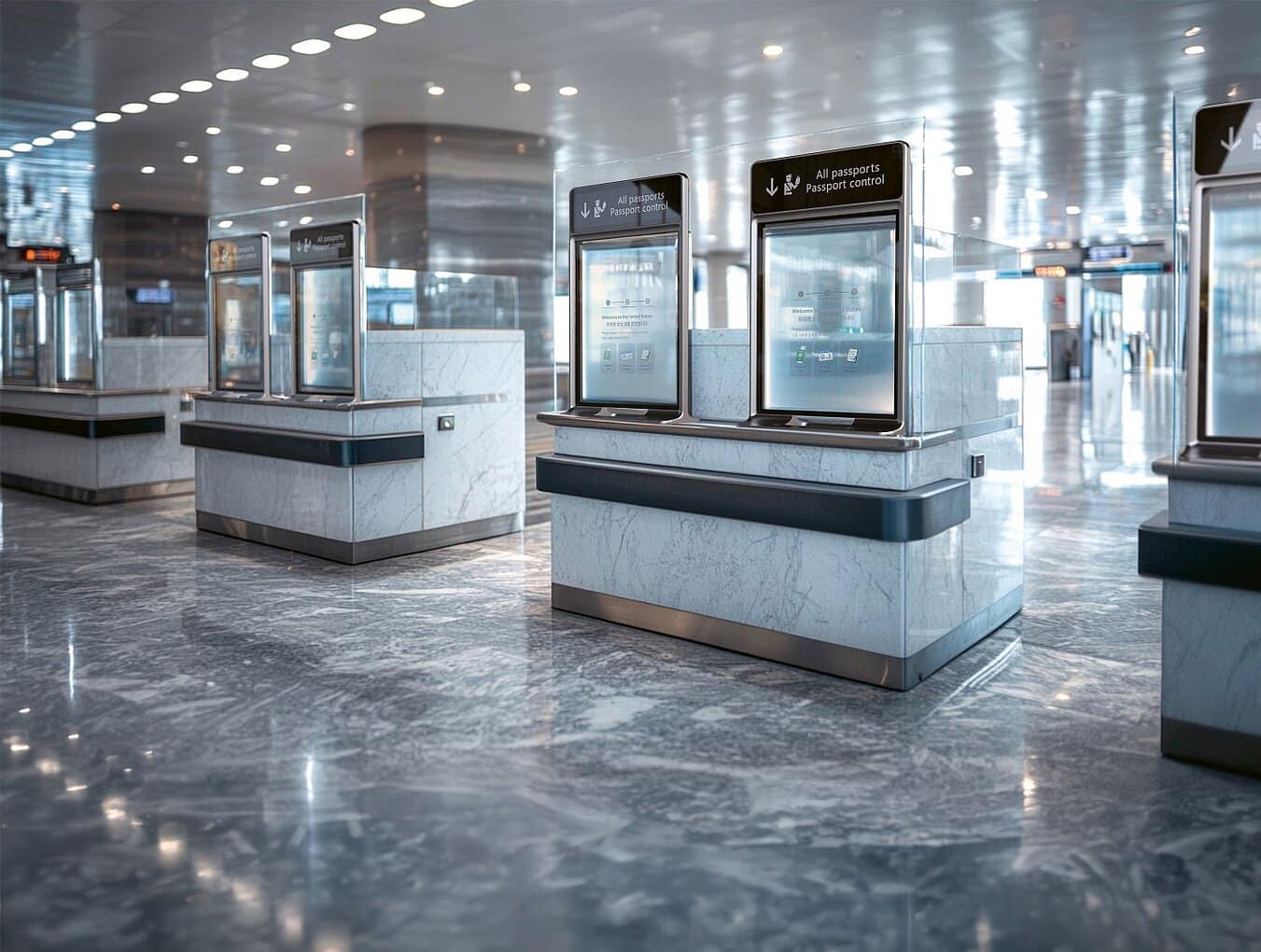
The modular setup means individual airports can configure sensors, displays, and document interfaces around their own space and passenger volume, and can update the system easily as regulations change. The trickiest design problem was displaying complex information clearly on a transparent surface without blocking sightlines to border staff, a balance the team achieved through careful attention to sensor placement, camera alignment, and viewing angles. The jury praised the build quality specifically, noting the precise fit between castings and profiles and the confidence that level of craftsmanship conveys.
Bicycle: Canyon Roadlite:ON CF
City bikes and race bikes have traditionally lived in separate lanes, one built for durability, the other for speed. The Roadlite:ON CF refuses to pick a side. Canyon calls it an “urban performance bike,” and the proportions back that up: even with a motor and battery integrated, the bike keeps the lean geometry of a road racer instead of the bulkier stance typical of e-bikes. Team manager design Marco Dose described how the frame’s volume appears visually “supported” by the fork, creating a sense of speed even when the bike is standing still, and a distinctive kink in the top tube both reinforces Canyon’s design language and doubles as a natural carrying point.
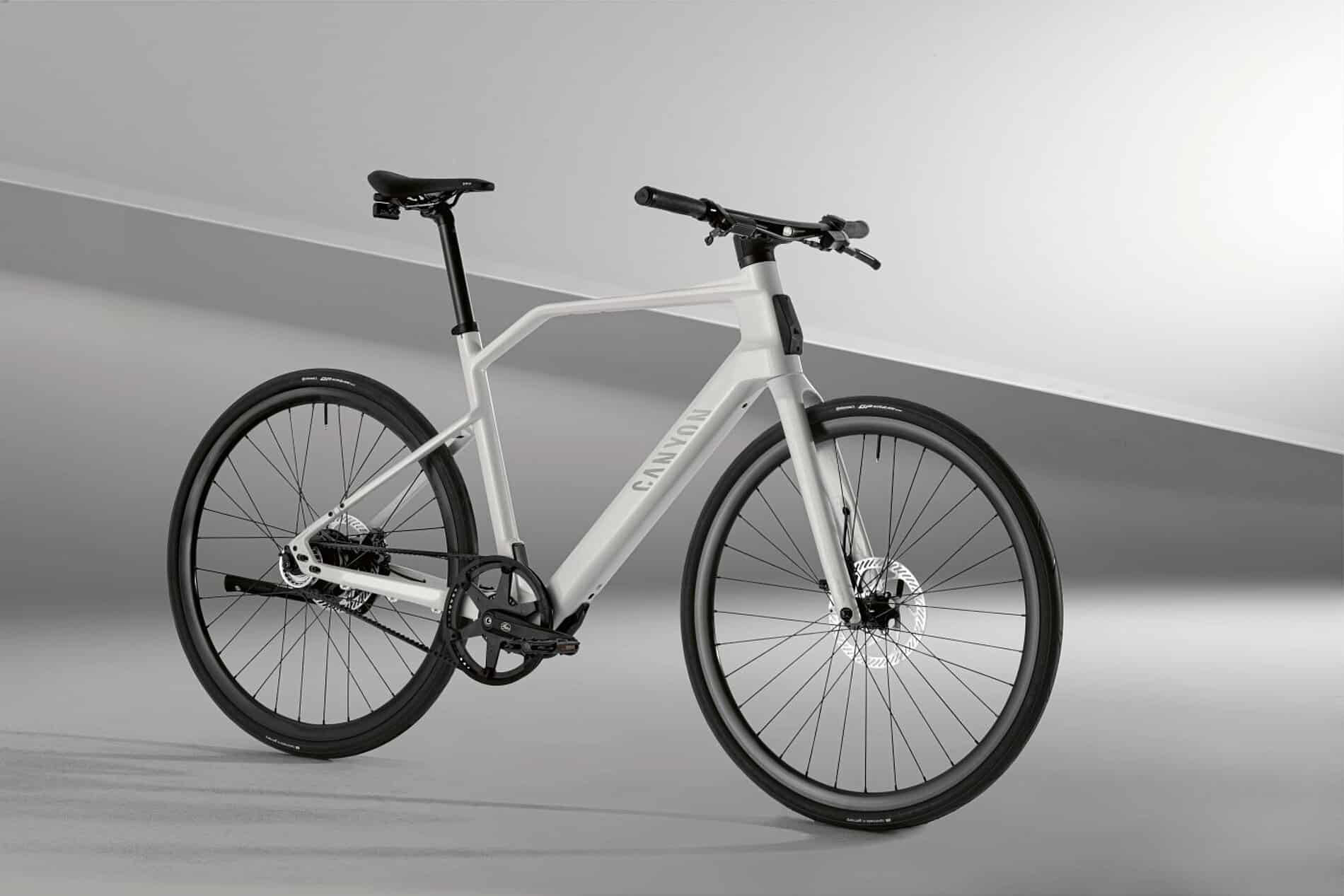
The jury praised the lightweight carbon frame, compact hub motor, and simple single-speed belt drive for keeping the bike genuinely easy to live with day to day. The more forward-looking feature is the V2X (Vehicle-to-Everything) radar prototype, which lets the bike communicate with equipped vehicles to improve visibility in traffic and delivers haptic warnings through the handlebars when something’s off. The jury flagged it as having real potential to make urban cycling meaningfully safer, not just a gimmick bolted on for show.
Cycling Helmet: Canyon Deflectr
Canyon’s first move into helmets had to clear a high bar, and it leads with real safety engineering rather than just styling. The Deflectr’s core innovation is RLS (Release Layer System) technology, a double-shell design with polycarbonate sliding bearings that let the outer panels detach on impact, cutting the rotational force transmitted to the head. According to Marco Dose, the geometry and material layout are specifically engineered to absorb and redirect that rotational energy, and the result is a reported fourfold reduction in concussion risk during a fall.
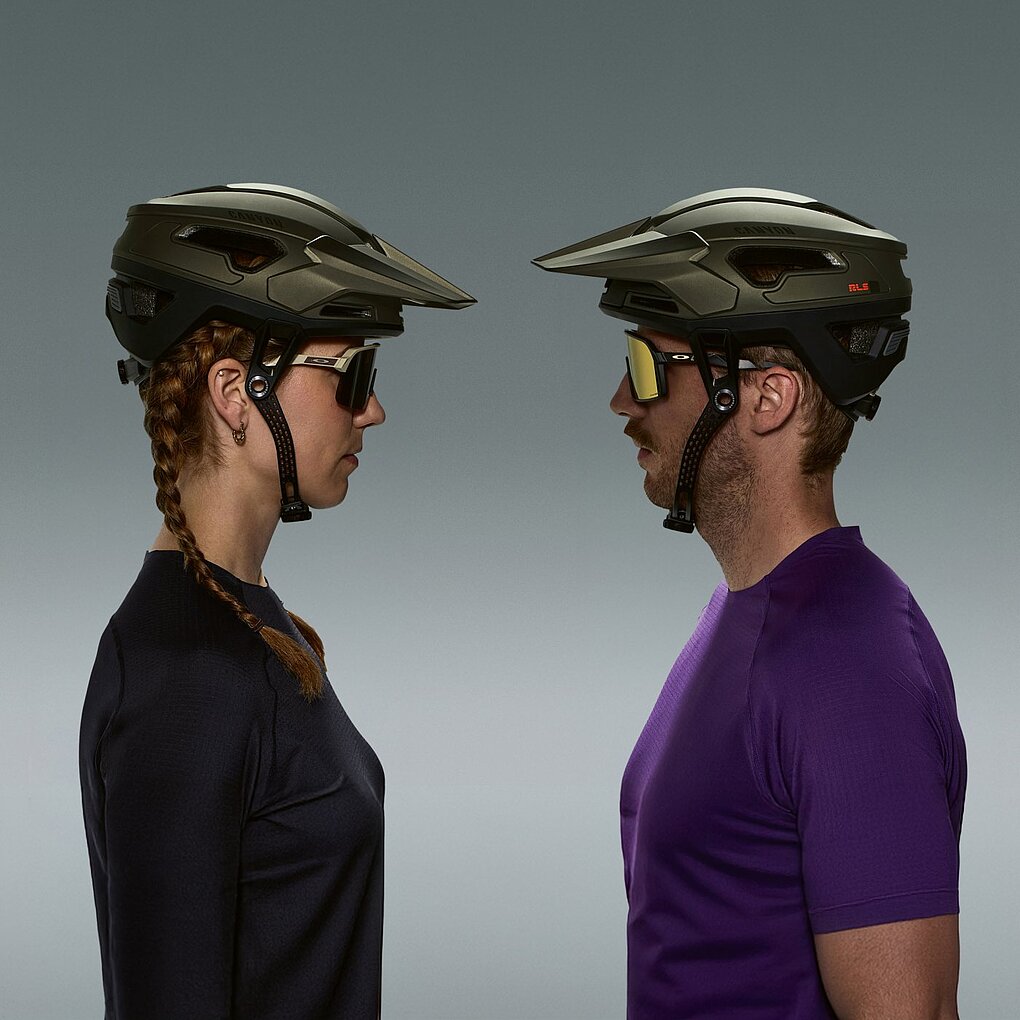
That internal engineering directly shapes the helmet’s look: defined contours, extended coverage, a movable visor, and distinctive venting that reads as both protective and light. Practical touches back it up, including large crown vents for climbs, airflow channels, a moldable chin strap, a tool-free visor adjustment, a magnetic rear light, and a built-in slot for stashing glasses. The jury called out the helmet’s blend of performance, durability, and tactile detail, along with a safety concept that visibly runs through every part of the design.
Torch: Zweibrüder ZB6T
Flashlights don’t usually get much design attention, but the ZB6T earns it by solving a problem nobody else had cracked: seamlessly combining autofocus with automatic dimming in one system. Its Multiple Optic Technology lets users digitally switch between four distinct beam types, while the built-in autofocus continuously adjusts brightness and beam shape to match the environment, no manual fiddling required to go from floodlight to precise high beam to reading light.
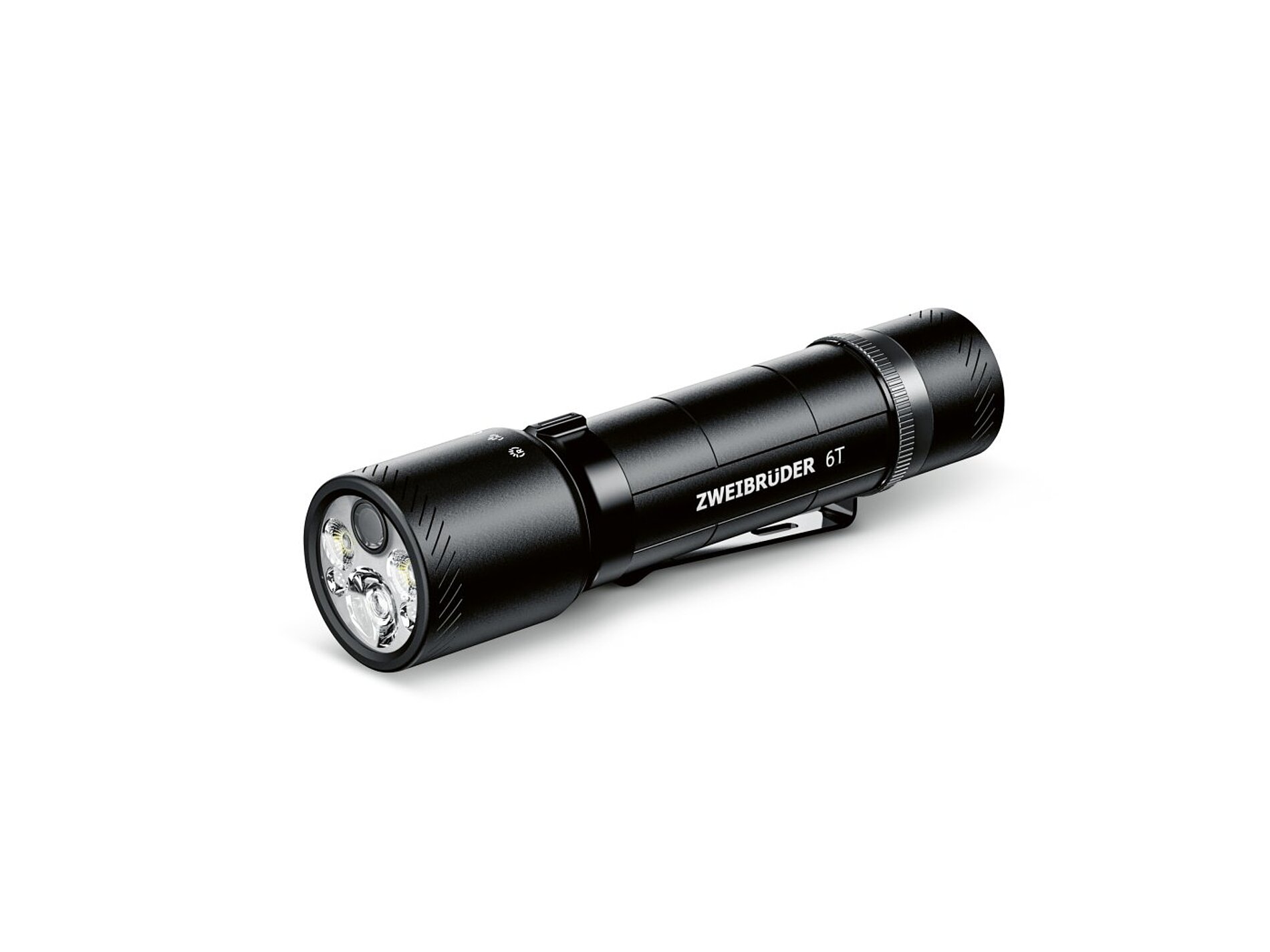
The jury described using it as “a genuinely fun experience,” praising the elegant, stable build and the intuitive way the autofocus function operates without calling attention to itself. Material choices reinforce the premium feel, the adjustment ring is machined aluminum, and an IP67 rating means it shrugs off water and dust. A built-in heat protection system keeps performance stable even under heavy use. The consistent visual language across the light, packaging, and accessories signals a level of design intent that’s rare for a category this utilitarian.
Wash Basin Collection: VALLONE AERRA HAZE
Bathrooms have become less about function and more about mood, and AERRA HAZE leans fully into that shift. The wall-mounted washbasin ensemble is deliberately reduced to its essentials, aiming for a calm, almost meditative presence rather than a statement piece. The basin itself, carved from Tundra Grey marble, sets a strong horizontal line broken only by a narrow vertical drain, a subtle nod to how water shapes stone over time. A tall, slender mirror plays against that horizontality, with a gradient that shifts from soft diffusion to sharp reflection, while a minimalist tap appears to emerge directly from the mirror itself, controlled by an intuitive hydro-progressive mechanism.
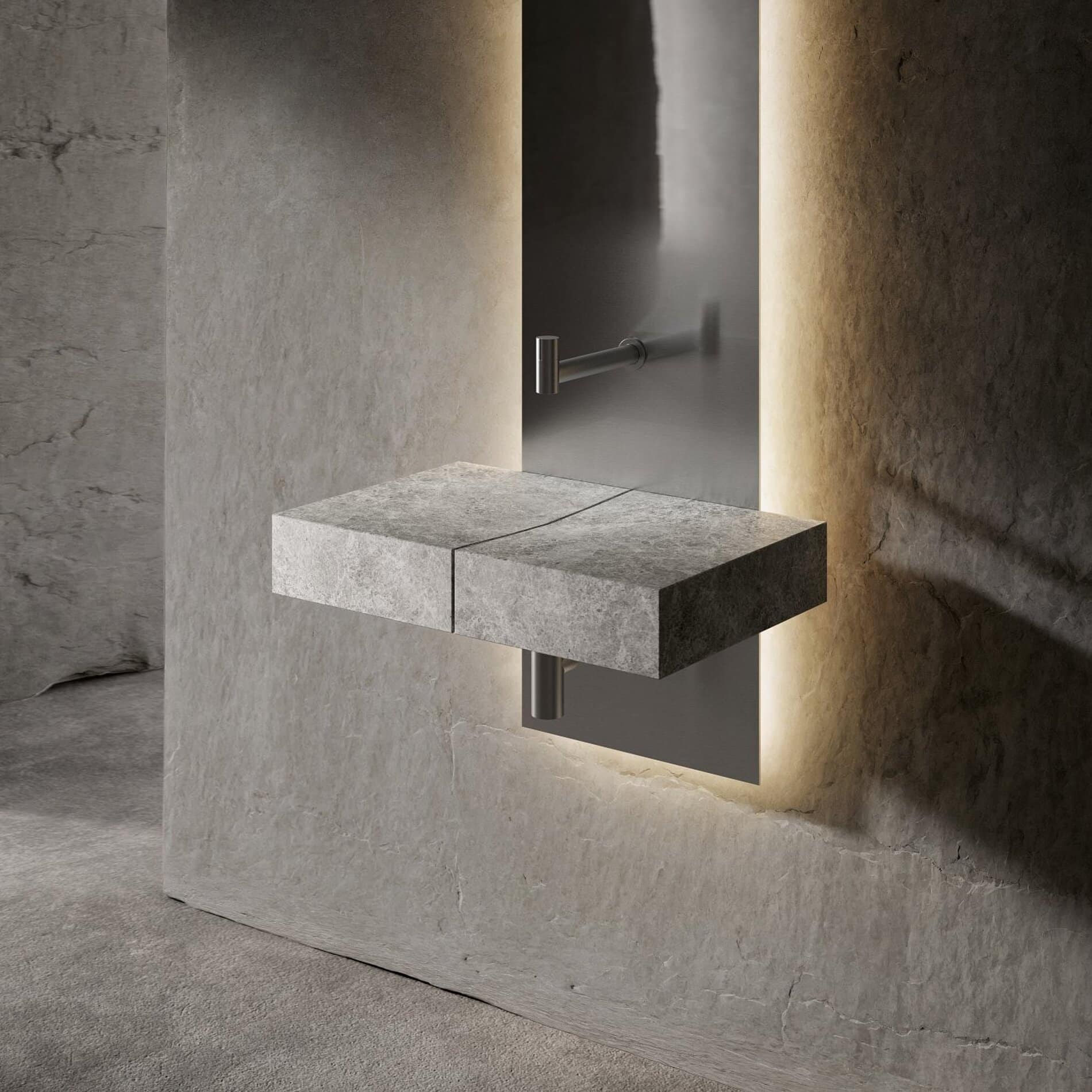
The jury said the collection “appears entirely natural as a holistic ensemble,” pointing to the way geometry, materiality, and the interplay of water and light combine to turn a functional object into something closer to sculpture. Every element here is deliberate, nothing is decorative for its own sake, which is exactly what gives the piece its sense of calm.
Tableware: RAK Porcelain FEELINGS
In fine dining, presentation happens before the first bite, and the FEELINGS collection, designed by Gemma Bernal studio with RAK Porcelain, treats the plate as an active part of that presentation rather than a passive backdrop. Made from bone china and shaped using isostatic pressing (a technique that minimizes deformation and keeps wall thickness consistent), the collection ranges from round and square forms to asymmetrical and boat-shaped pieces, some with up to three recesses that let chefs build multi-level compositions instead of working on a flat surface.
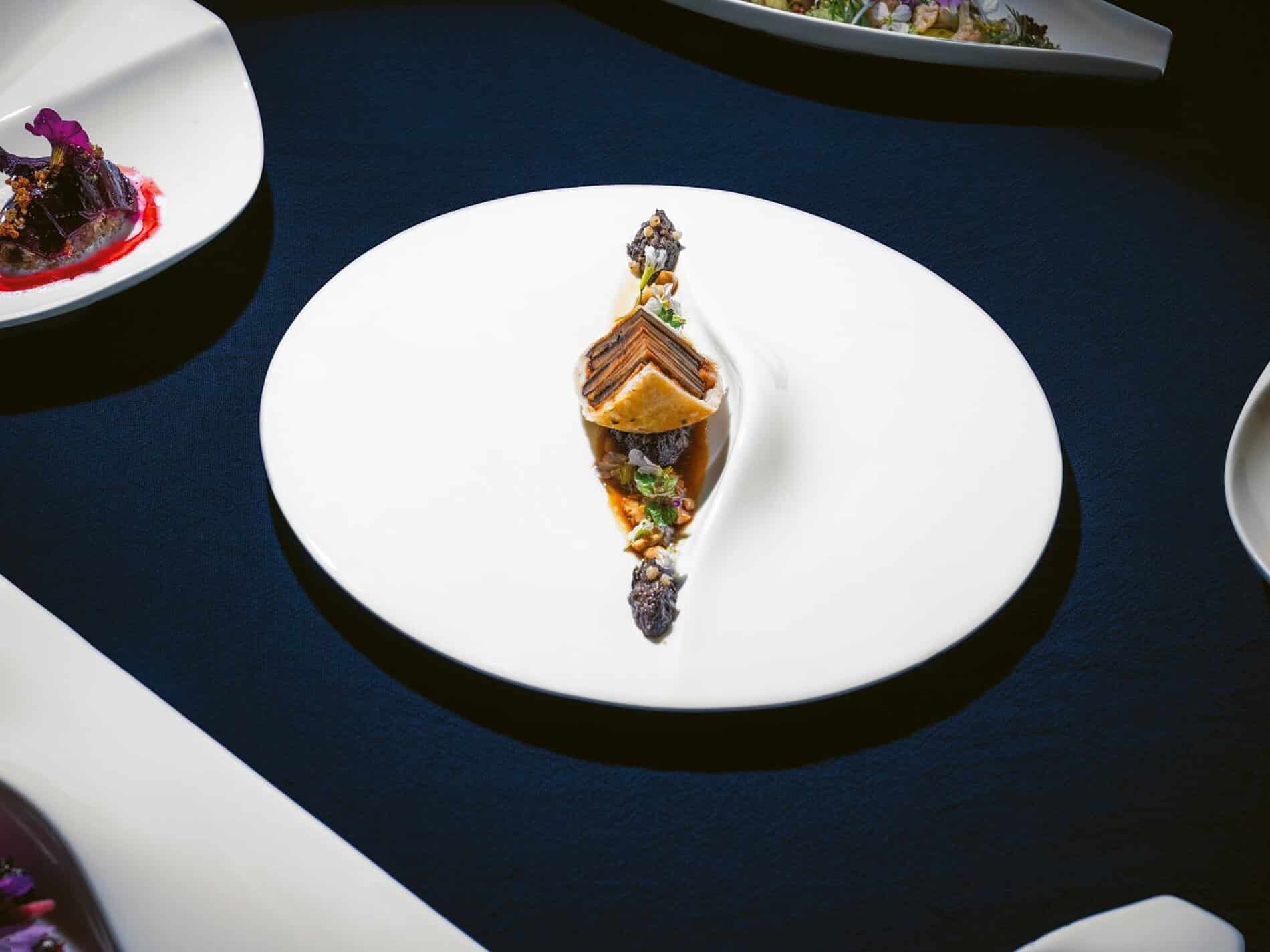
The jury noted that the pieces look delicate but are actually quite durable, and praised the stackable design for making kitchen storage and service more efficient without sacrificing visual ambition. It’s tableware built for chefs who want the plate itself to do some of the storytelling.
Kitchen Appliances: BOSCH Matt Design Serie 8
Strong brands tend to have a design signature you can spot without looking for a logo, and Bosch’s Matt Design Serie 8 accent line leans hard into that. The matte carbon-black finish runs consistently across the entire appliance range, giving kitchens a cohesive, warm-but-modern look while solving a real technical challenge: making very different materials (oven glass, glass-ceramic cooktops) read as one unified surface. The jury noted that the finish creates a strong but harmonious contrast against the digital interfaces built into each appliance.
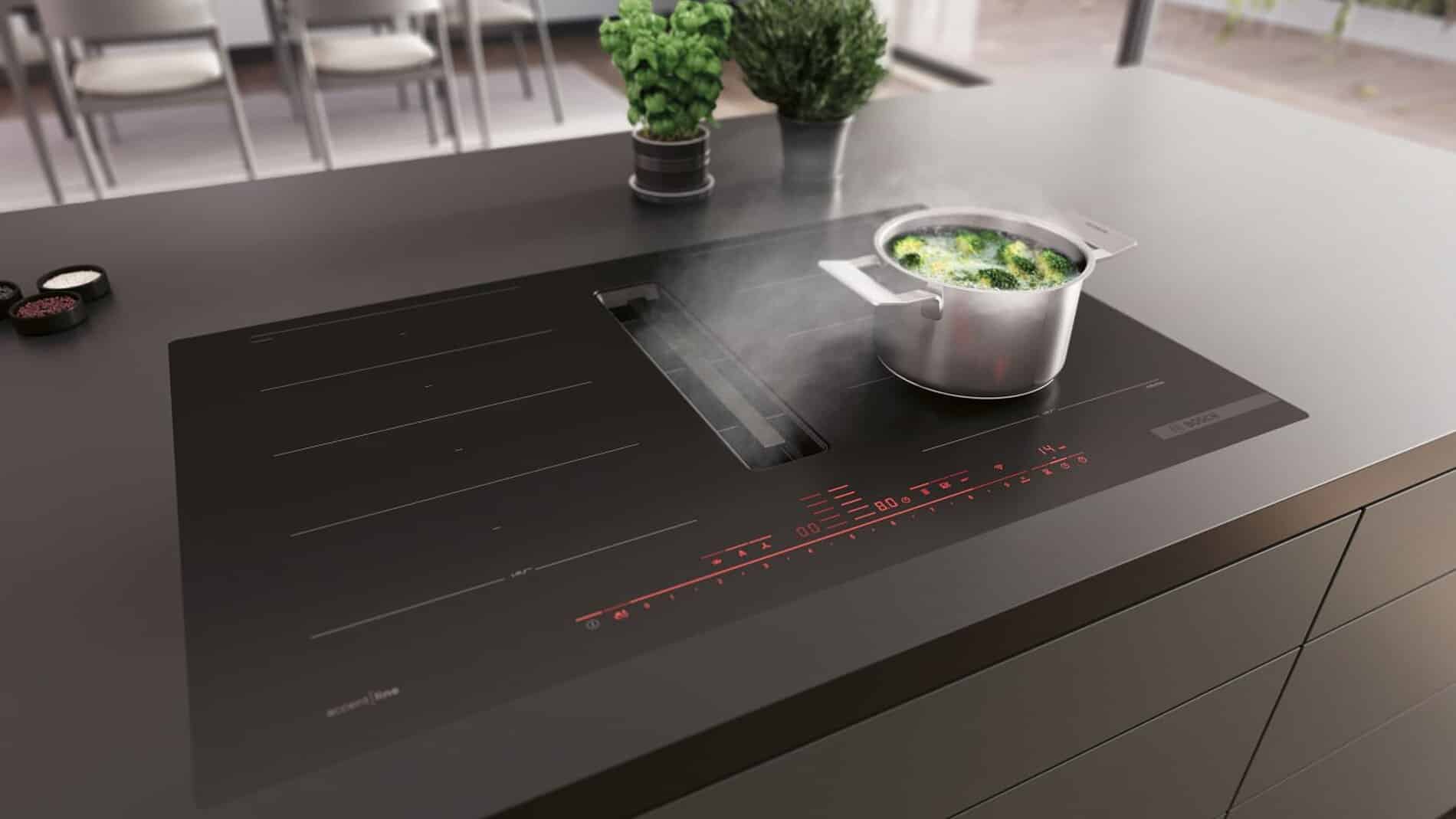
The signature touch is Bosch’s control ring, integrated directly into the glass, which blends modern touch-and-swipe input with the tactile precision of a classic rotary dial, a detail the jury called out for its emotional quality as much as its function. Built-in AI and sensors support the cooking process at every stage, and the matte surfaces are engineered for easy cleaning as well as durability, holding up against wood, stone, and marble surfaces alike.
Table Lamp: Zumtobel TALUNA
Good minimalism is harder than it looks, and the TALUNA table lamp threads that needle by being both sculptural and genuinely built to last. Every component is modular, designed for repair rather than replacement, and the sheet-steel construction supports a wide range of finishes without compromising precision. Zumtobel built sustainability into every stage, including replaceable LED lamps, a feature that’s become surprisingly rare in modern lighting.
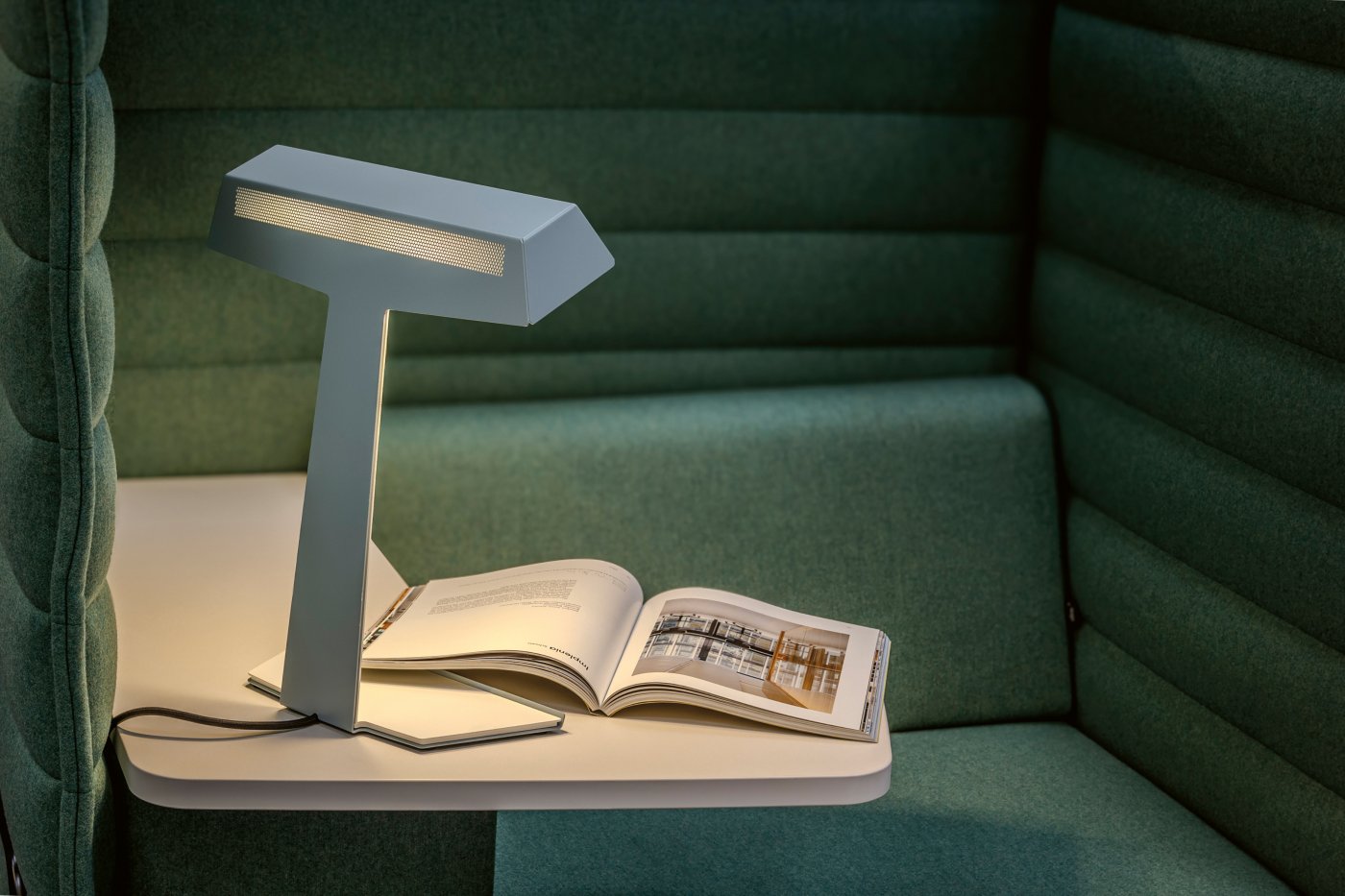
The jury praised the lamp’s “carefully considered design,” calling it precise yet playful, with lines reduced far enough to feel architectural without losing warmth. TALUNA comes in ten curated shades, ranging from soft pastels to bold statement colors, with custom options available for interior designers who want more control. It’s built to function as both a light source and a piece of furniture in its own right, designed, as the Zumtobel team put it, to enhance the relationship between architecture, material, and people.
Desk Lamp: ofinto Lumino Desk
The Lumino Desk lamp makes its purpose obvious the moment you look at it: focused, efficient light with nothing extra. Machined from extruded aluminum, it folds down into a slim column that automatically shuts off when closed. Once opened, it offers three preset light temperatures tuned to the body’s natural rhythm, 5000K to help wake the mind in the morning, 4000K for a neutral daytime tone, and 3000K to ease into evening, all controlled through a single touch surface.
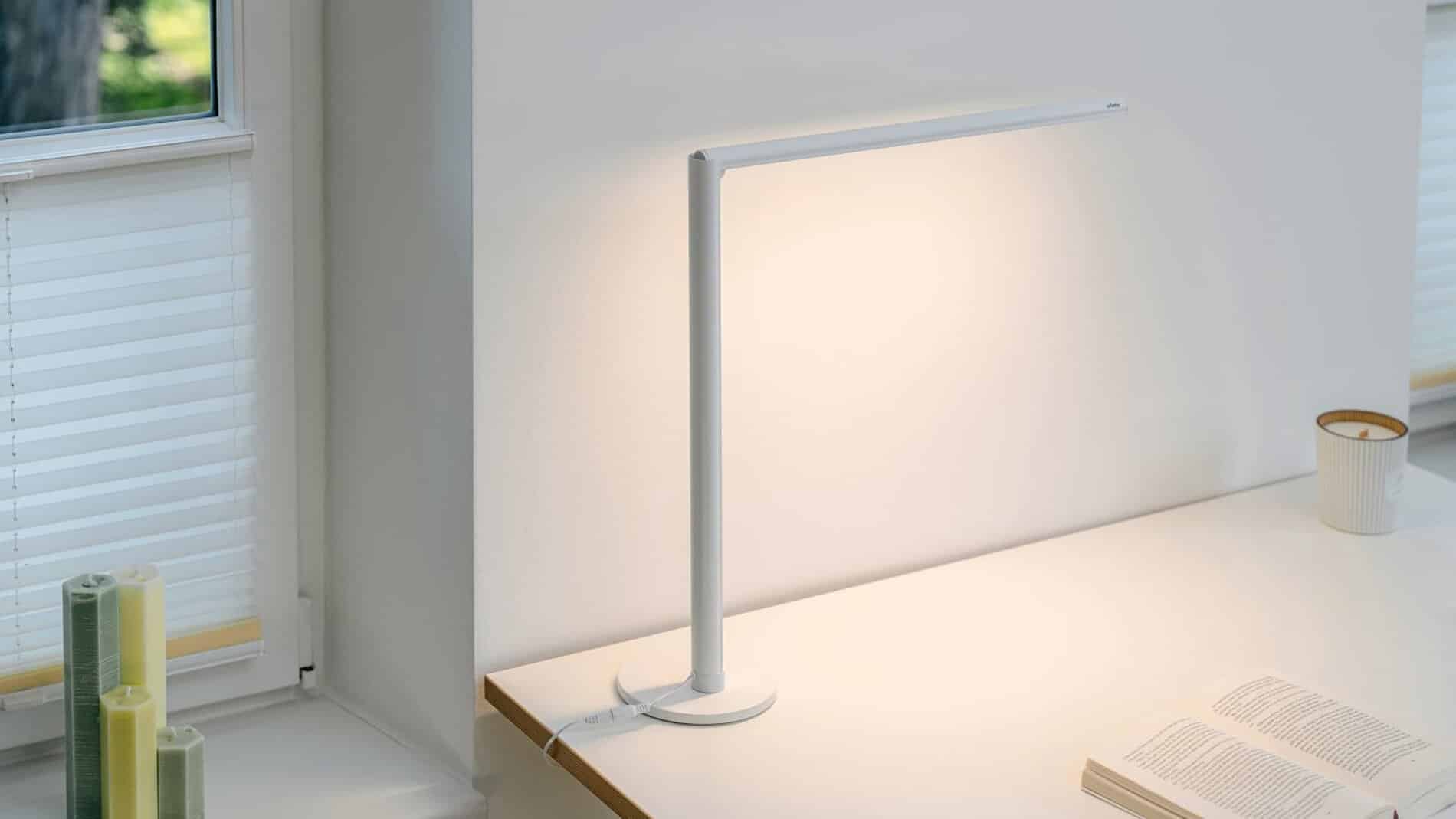
The jury called it “minimalist, yet characterful,” highlighting the glare-free lighting and the cleverly integrated folding mechanism alongside the high-quality materials and precise construction. The matte powder-coated aluminum casing pairs durability with a refined feel, and the lamp is built for high recyclability alongside strong energy efficiency. A muted color palette (white, black, graphite, sand, with a subtle blue accent) keeps it flexible across different environments, while a heavy metal base ensures it stays put on the desk. It’s less a decorative object than a quietly essential tool for anyone trying to build a genuinely ergonomic workspace.

