

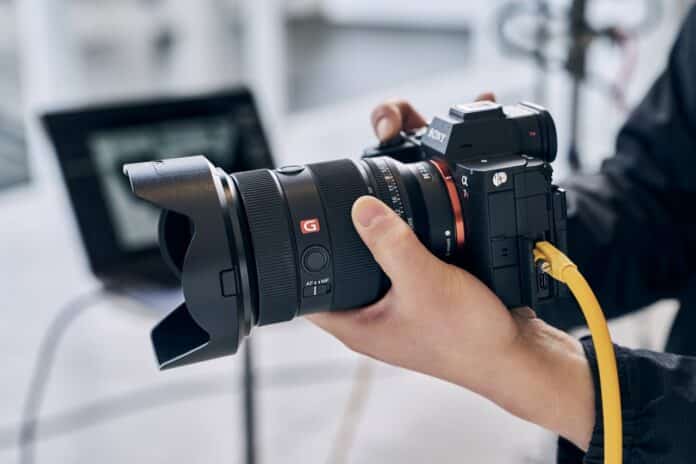

Sony just raised the bar for full-frame mirrorless photography, and for anyone who has been following the Alpha 7R series since its early days, the sixth generation feels like the camera that finally puts everything together.
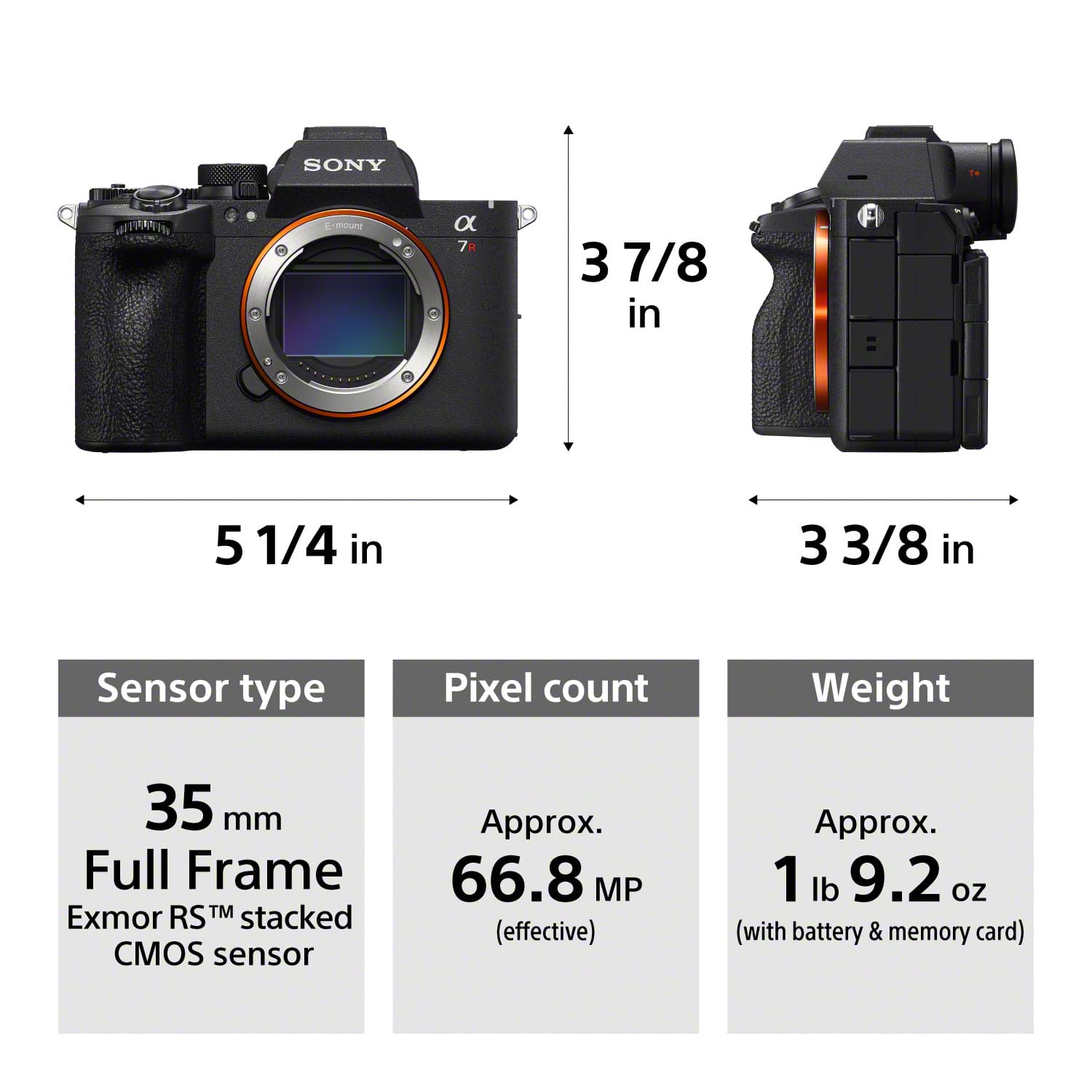
The Alpha 7R VI pairs a newly developed approximately 66.8 effective megapixel back-illuminated fully-stacked Exmor RS CMOS sensor with Sony’s new BIONZ XR2 processing engine. On paper, those are impressive numbers. In practice, they translate to sharper files, more reliable color, and a level of speed that previous high-resolution Sony bodies simply could not match. This is not a camera built for one type of shooter. It is designed to hold up whether the subject is a sprinting athlete, a bird in flight, or a sweeping mountain range at golden hour.
Sony is also launching the XLR-A4 XLR adaptor alongside the camera, bringing professional grade 32-bit float audio recording directly into the camera body for the first time.
Resolution That Actually Keeps Up With the Moment
Sixty-six megapixels is a lot to manage, and Sony clearly thought hard about what that means beyond the spec sheet. The new sensor claims up to 16 stops of dynamic range, with noticeably reduced noise in the mid-sensitivity range where most photographers actually work day to day. Combined with a 5-axis optical image stabilization system rated at up to 8.5 stops of compensation at center and 7.0 stops at the periphery, the Alpha 7R VI is built to extract every bit of detail from that sensor even in less than ideal conditions. Shooting handheld at slower shutter speeds with a long telephoto becomes a much more realistic proposition.
Auto White Balance has also been quietly but meaningfully upgraded. The system now draws on both a visible light sensor and an infrared sensor, layered with deep learning illumination estimation, to produce more stable and natural color in mixed or difficult lighting. Anyone who has spent time correcting white balance drift across a long indoor event shoot will understand exactly why this matters.

Speed That Changes What High Resolution Can Do
High-resolution cameras have historically come with a trade-off: slow. The Alpha 7R VI is making a strong case that this compromise no longer has to exist. The BIONZ XR2 engine, paired with an integrated AI processing unit, achieves approximately 5.6 times faster sensor readout compared to the previous model. The result is blackout-free continuous shooting at up to approximately 30 frames per second, with up to 60 AF/AE calculations happening every second during active tracking.
The autofocus system has been upgraded to what Sony calls Real-time Recognition AF+ (Plus), and the addition of skeletal-based human pose estimation is a real-world difference maker. Rather than locking onto a face or an eye and hoping for the best when a subject turns or is partially obscured, the camera now builds a fuller picture of how a human body is moving through the frame. For sports and editorial photographers, this kind of predictive tracking has the potential to meaningfully improve hit rates in chaotic situations.
A Body Built for Full Days of Work
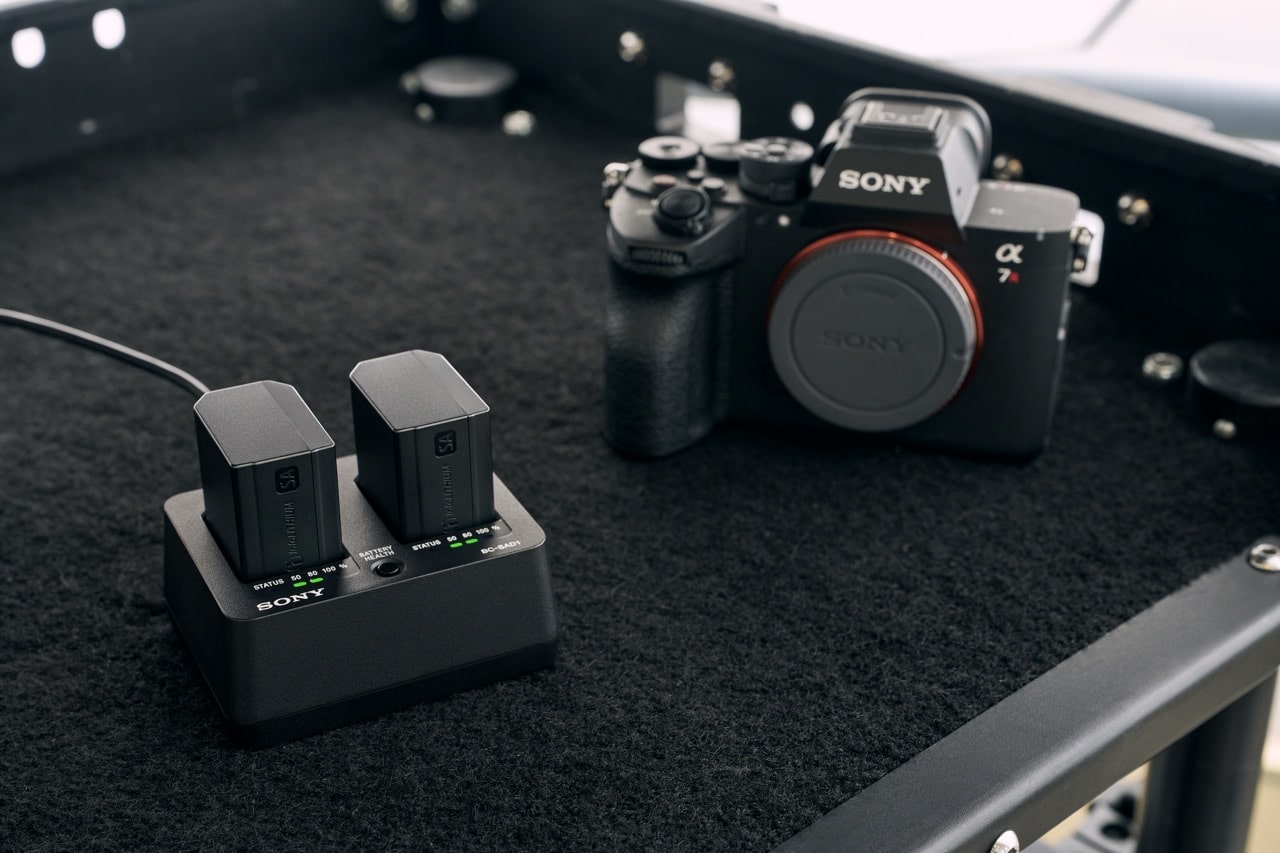
The Alpha 7R VI addresses some of the most practical frustrations that working photographers have voiced about mirrorless systems. Battery life is the obvious one. The new NP-SA100 battery delivers 2670 mAh of capacity, with CIPA ratings of up to 710 still images via the LCD monitor or 600 via the viewfinder. That is a meaningful step forward for anyone shooting long events, editorial days, or remote locations where swapping batteries is an inconvenience or simply not an option.
The viewfinder tells a similar story of thoughtful refinement. At approximately 9.44 million dots with a DCI-P3 equivalent color gamut and 10-bit HDR support, it is among the most capable electronic finders available on any camera right now. Maximum brightness is rated at approximately three times higher than conventional models, which addresses one of the most consistent complaints about shooting outdoors in direct sunlight.
Practical details round out the build in ways that add up over a long shoot. Dual USB Type-C ports allow simultaneous charging and data transfer. Illuminated rear buttons make operation easier in dark environments. The magnesium alloy body carries a 4-axis multi-angle LCD monitor and a new mode dial Memory Recall function that lets photographers link up to 10 custom shooting setups directly to assignable buttons, reducing the time spent navigating menus when conditions are changing fast. The camera also supports Sony’s Camera Authenticity Solution and the C2PA standard, which verifies that images and video were captured with an actual camera rather than generated by AI. For editorial and documentary photographers, that kind of verifiable provenance is becoming less of a novelty and more of a professional necessity.
Video That Matches the Stills Ambition
The Alpha 7R VI is not a hybrid camera that treats video as an afterthought. It records 8K at 30p with 8.2K oversampling, and delivers full-frame 4K at both 60p and 120p without any crop. Effective heat management supports continuous 8K recording for up to 120 minutes, which removes one of the most common frustrations from high-resolution video work.
Dual Gain Shooting, a first for the Alpha series, is available when recording 4K at 30p or lower and optimizes how the sensor handles noise, preserving shadow detail and delivering smoother gradation across a wider exposure range. The redesigned in-camera stabilization expands roll-direction compensation by 2x, and a Dynamic Active Mode is available for handheld shooting that demands steady, smooth footage. Paired with the XLR-A4, the camera records 32-bit float audio internally, which in practical terms means significantly less time worrying about gain settings on location and far less risk of ruined audio from unexpected volume spikes.
The XLR-A4 in Practice
The XLR-A4 connects via the Multi Interface Shoe and supports up to 4-channel digital audio recording, accepting XLR microphones including the ECM-778 for up to two channels alongside 3.5mm stereo mini jack connections. Dual AD converters capture a wide dynamic range from quiet ambient sound through loud and unpredictable action. Recording tops out at 96kHz 32-bit float 4-channel on compatible cameras, and the adaptor doubles as a USB Audio Class 2.0 compatible 96kHz 24-bit 2-channel audio interface when connected to a PC for on-site monitoring. The lower profile design compared to the XLR-K3M and the included extension cable, which allows placement up to approximately 60 cm from the camera, make it more practical to integrate into existing rig setups without fighting for space.

Pricing and Availability
The Alpha 7R VI body is priced at $4,499.99 USD and $5,999.99 CAD, with availability set for June 2026. The XLR-A4 adaptor carries a price of $779.99 USD and $1,089.99 CAD, releasing at the same time. Optional accessories arriving in June 2026 include the NP-SA100 replacement battery at $119.99 USD, the VG-C6 Vertical Grip at $459.99 USD, the BC-SAD1 dual battery charger at $139.99 USD, and the DC-C2 DC Coupler at $149.99 USD, all sold separately.
For photographers who have been waiting for a high-resolution Sony body that does not ask them to sacrifice speed, battery life, or viewfinder quality to get there, the Alpha 7R VI looks like the answer.
