


If there was a single takeaway from CES 2026, it was that Razer is thinking well beyond mice, keyboards, and headsets. The company’s show wasn’t about one headline grabbing product so much as a collection of ideas that all point in the same direction: AI moving closer to the player, the desk, and even the body, rather than living somewhere off in the cloud.
Project AVA is a good place to start. What began as an AI esports coach has turned into a small animated desk companion designed to sit next to a PC. It watches what’s happening on screen, adapts over time, and is meant to help with everything from gaming to everyday tasks. The concept taps into a broader trend of always present AI assistants, the kind that feel more like a background helper than a chatbot you have to summon. The real test, as always, will be whether it feels genuinely useful or just another thing competing for attention.
Razer is also experimenting with what happens when AI becomes wearable. Project Motoko is a headset concept built on Snapdragon hardware, combining first person cameras, spatial audio, and a dense microphone setup to interpret what’s going on around you. In theory, it could assist with gaming, work, or daily life by adding context and awareness in real time. It also raises the familiar questions that follow wearable tech everywhere, including comfort, privacy, and whether people actually want to wear something like this for hours at a time.
Away from the consumer facing concepts, Razer is clearly trying to get the attention of developers. The Forge AI Developer Workstation is designed for teams that want to run and train AI models locally, with an emphasis on speed, control, and predictable costs. Instead of leaning on subscriptions and cloud services, the pitch is about keeping compute on the device, where latency is lower and data stays closer to home. That approach lines up with a growing interest in edge and on premise AI, especially as models get larger and more demanding.
To make that hardware easier to use, Razer also introduced AIKit, an open source toolkit that simplifies local AI workflows. It handles things like GPU detection and clustering, so developers can focus more on building and tuning models and less on setup. Keeping the project open on GitHub suggests Razer understands that developers want flexibility and transparency, not another closed ecosystem to manage.
That same mindset shows up in Razer’s partnership with Tenstorrent. Together, they introduced a compact AI accelerator that connects over Thunderbolt 5 and delivers desktop level AI performance in a portable package. It’s aimed at developers who need serious compute for tasks like language models or image generation, but don’t want to be tied to a full workstation or server. The modular design, which allows multiple units to be linked together, makes it feel more like a building block than a fixed solution.
Razer didn’t ignore the living room, either. The Wolverine V3 Bluetooth controller, developed with LG, is tuned for cloud gaming on TVs, with low latency wireless performance and built in TV controls. It’s a reminder that gaming is increasingly happening on big screens in shared spaces, not just at desks with dedicated hardware.
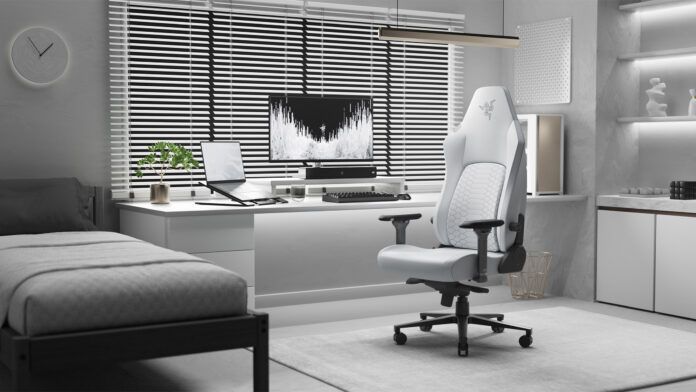
The company also leaned back into comfort and immersion with its seating announcements. Project Madison imagines a chair that adds haptics, spatial audio, and lighting into the mix, while the Iskur V2 NewGen focuses on more practical improvements like cooling and ergonomic support for long sessions. One is clearly experimental, the other immediately usable, and together they show how Razer continues to think about the physical side of extended play.
Taken together, Razer’s CES lineup feels less like a sales pitch and more like a snapshot of where the company is placing its bets. Local AI, open tools, and tighter integration between hardware and software are all central themes. Not every concept will make it to market, and not every idea will resonate with everyone, but the direction is clear. Razer is exploring how intelligence built directly into devices might quietly change how gaming and everyday computing fit into daily life.
