
HomeNewsTechnologyVIDEO: Solar-Electric Hybrid Research Aircraft from Harvard University and MIT

VIDEO: Solar-Electric Hybrid Research Aircraft from Harvard University and MIT

Follow the journey on Google: Follow us on Google News Preferred Source Google Discover

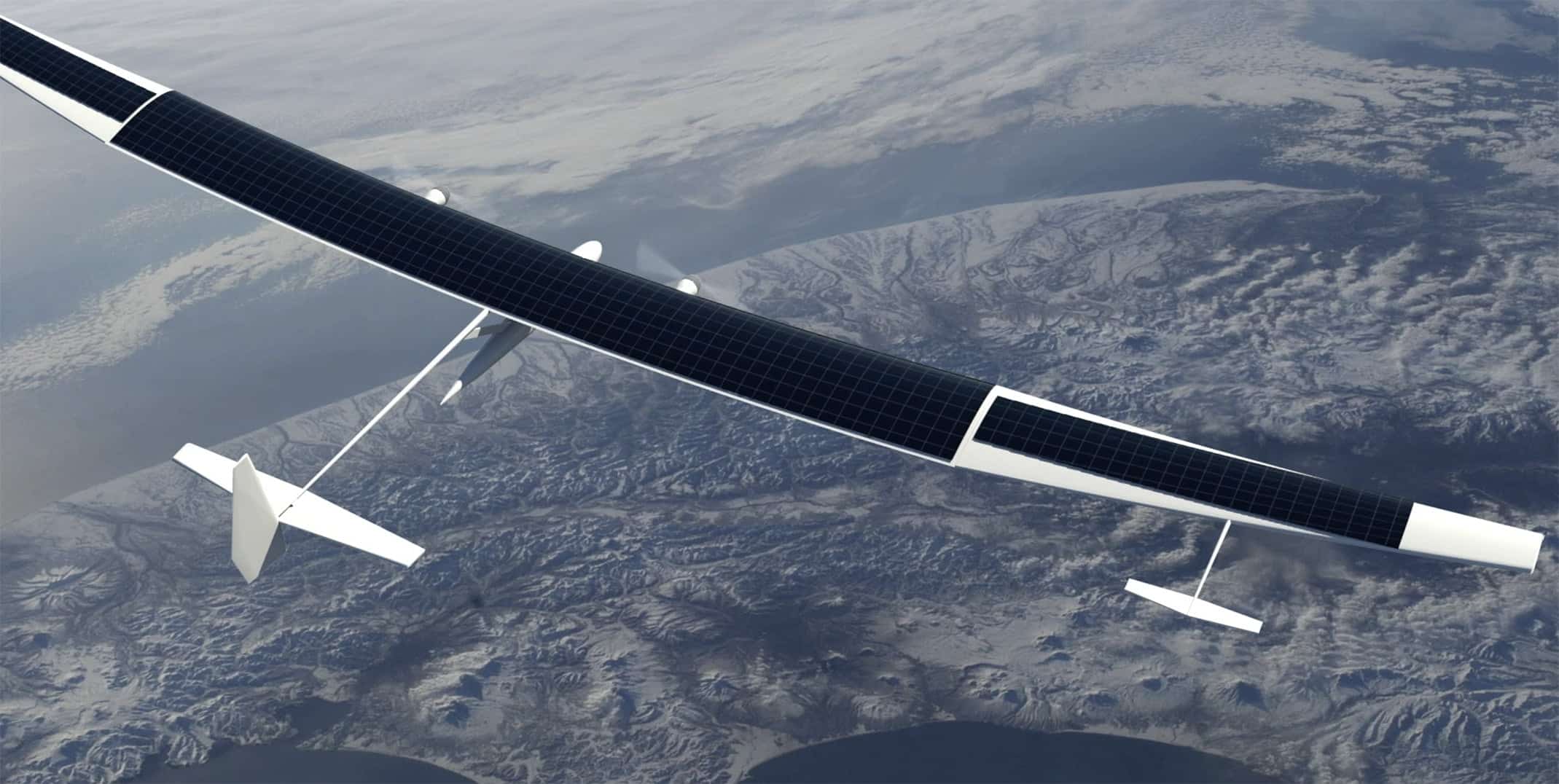
Dawn One, a 90-foot wingspan unmanned aircraft system (UAS) made its first flight from Manassas Regional Airport, Virginia on September 9, 2022, and is the first airplane to emerge from Electra’s new development facility there.  The new plane is part of the Stratospheric Airborne Climate Observing System (SACOS) program. SACOS is being developed under the leadership of Professor James G. Anderson at Harvard University.

The project is supported by a contract from the National Aeronautics and Space Administration (NASA) and by the Weld Foundation for Scientific and Environmental Development.

“The high-spatial resolution observations from SACOS will provide, for the first time, quantitative forecasts of risk associated with rapidly expanding wildfires, the increasing rate of sea level rise, the intensification of severe storms, and global shifts in arid regions that trigger water shortages.  Moreover, these quantitative forecasts of risk will, in turn, establish the essential intellectual links directly coupling irreversible changes in the climate structure to economics, public policy, and associated societal instability,” Professor Anderson explained. 

The Dawn One project originated at the Massachusetts Institute of Technology (MIT) led by Professors John Hansman and Mark Drela.  Detailed design, construction, and testing of the aircraft were led by Electra. This solar-battery aircraft is part of Electra’s ongoing development of reduced and zero-carbon aircraft propulsion technologies, which also include turbine-electric and hydrogen fuel cell-based hybrid systems.

Ads

The SACOS flight is part of the public celebration of the 2021 Dreyfus Prize in Chemical Sciences, to be presented to Professor Anderson on September 29, 2022 at Harvard. JP (James) Stewart of Electra and Annick DeWald of MIT led the aircraft team that included researchers and students from MIT, Harvard, Virginia Tech, Penn State, Stanford, Tuskegee, Embry Riddle, University of Michigan, San Diego State, and The University of Texas at El Paso.
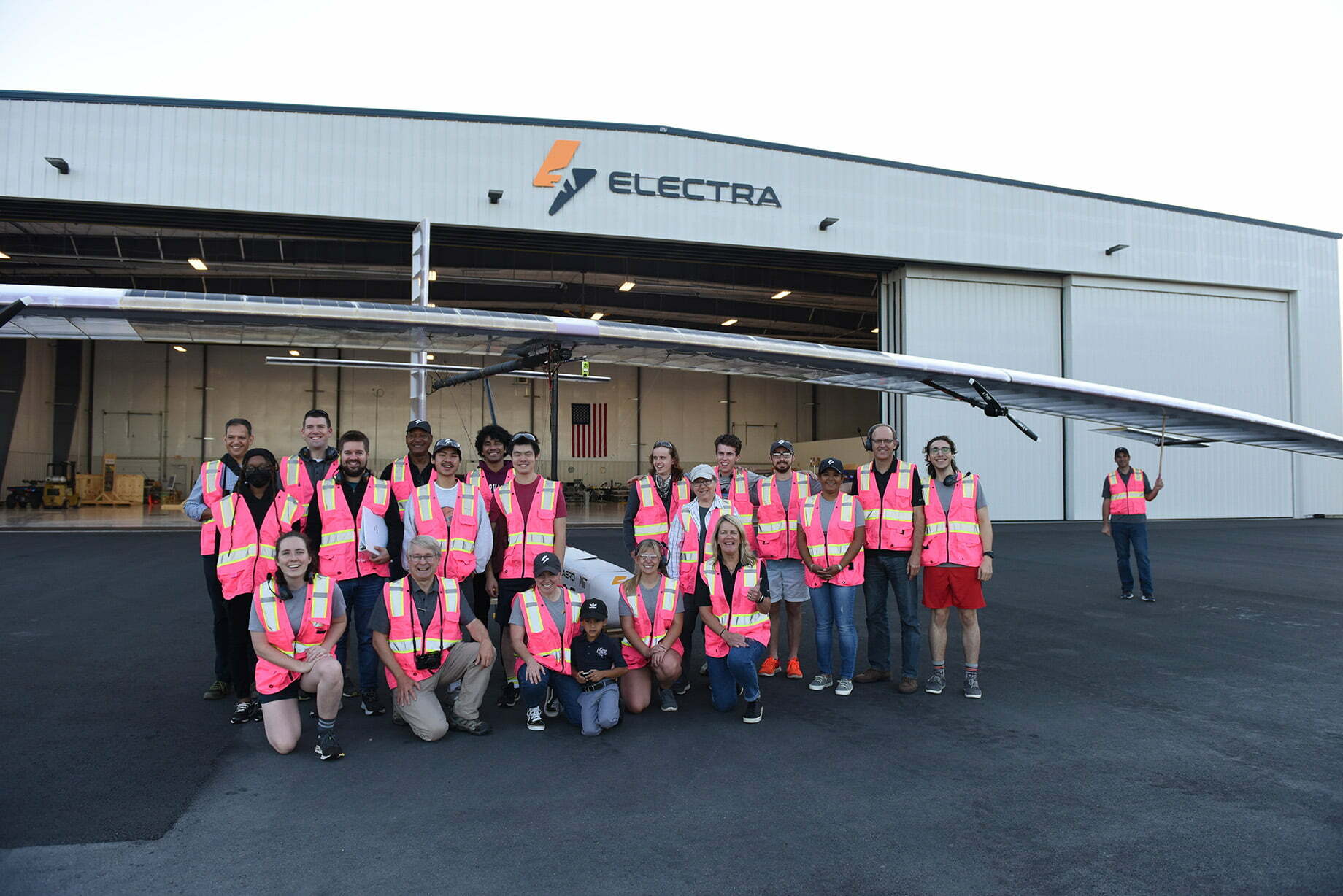

In addition to the Electra team, the “Dawn One” aircraft team included researchers and students from MIT, Harvard, Virginia Tech, Penn State, Stanford, Tuskegee, Embry Riddle, University of Michigan, San Diego State, and The University of Texas at El Paso.

Dawn One, một hệ thống máy bay không người lái sải cánh dài 90 foot (UAS) đã thực hiện chuyến bay đầu tiên từ Sân bay Khu vực Manassas, Virginia vào ngày 9 tháng 9 năm 2022 và là máy bay đầu tiên xuất hiện từ cơ sở phát triển mới của Electra ở đó. Chiếc máy bay mới này là một phần của chương trình Hệ thống quan sát khí hậu trên không tầng bình lưu (SACOS). SACOS đang được phát triển dưới sự lãnh đạo của Giáo sư James G. Anderson tại Đại học Harvard.  Kế hoạch được hỗ trợ bởi hợp đồng từ Cơ quan Hàng không và Vũ trụ Quốc gia (NASA) và bởi Tổ chức Phát triển Khoa học và Môi trường Weld.
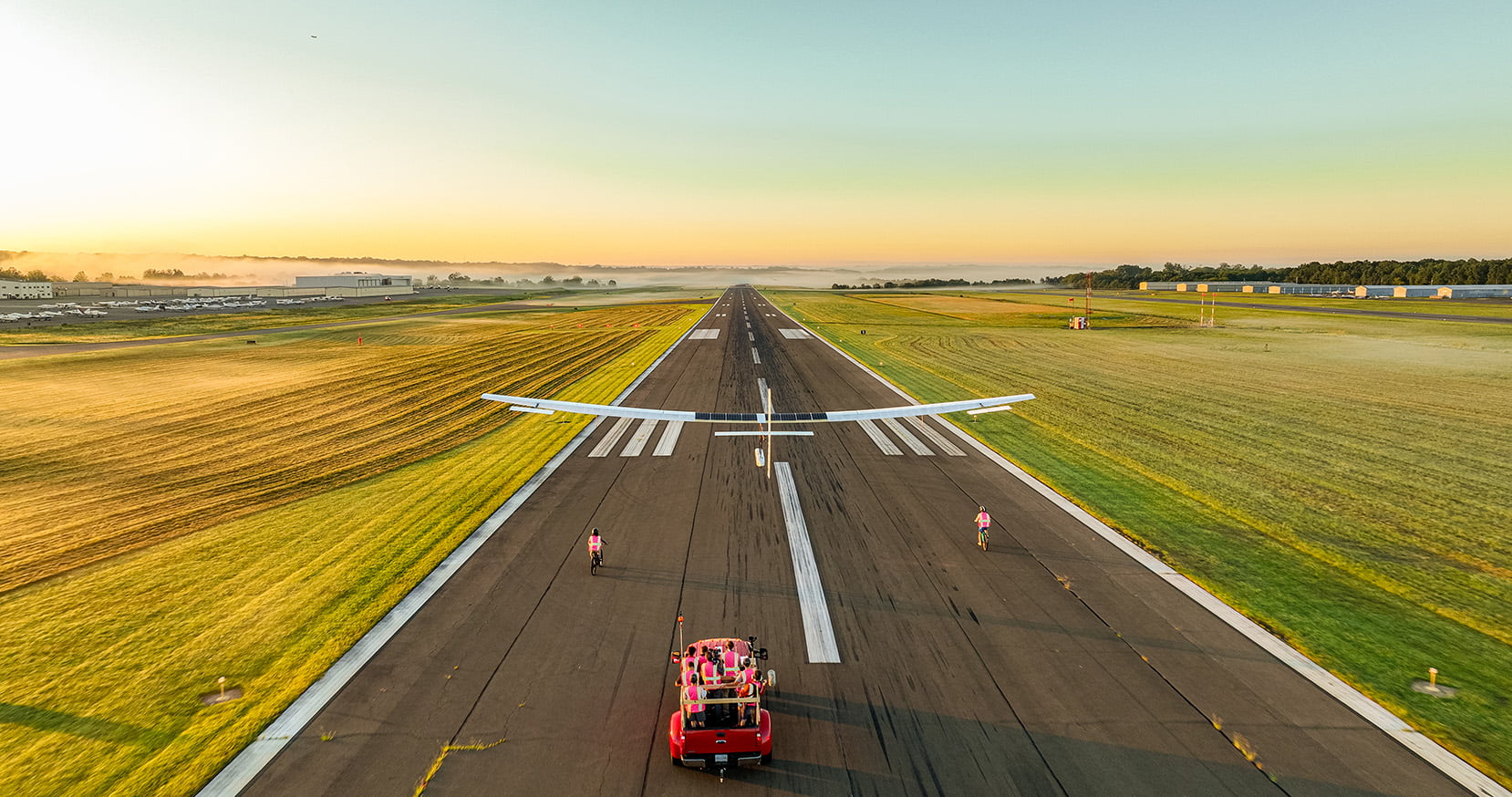
Electra’s “Dawn One” unmanned research aircraft is part of the SACOS program, which promises to dramatically expand our national climate research capabilities.

“Các quan sát có độ phân giải không gian cao từ SACOS sẽ lần đầu tiên cung cấp các dự báo định lượng về rủi ro liên quan đến cháy rừng mở rộng nhanh chóng, tốc độ ngày càng tăng của mực nước biển, cường độ của các cơn bão nghiêm trọng và sự thay đổi toàn cầu ở các khu vực khô cằn gây ra nước sự thiếu hụt. Hơn nữa, những dự báo định lượng về rủi ro này sẽ thiết lập các liên kết trí tuệ thiết yếu trực tiếp kết hợp những thay đổi không thể đảo ngược trong cấu trúc khí hậu với kinh tế, chính sách công và bất ổn xã hội liên quan,” Giáo sư Anderson giải thích.
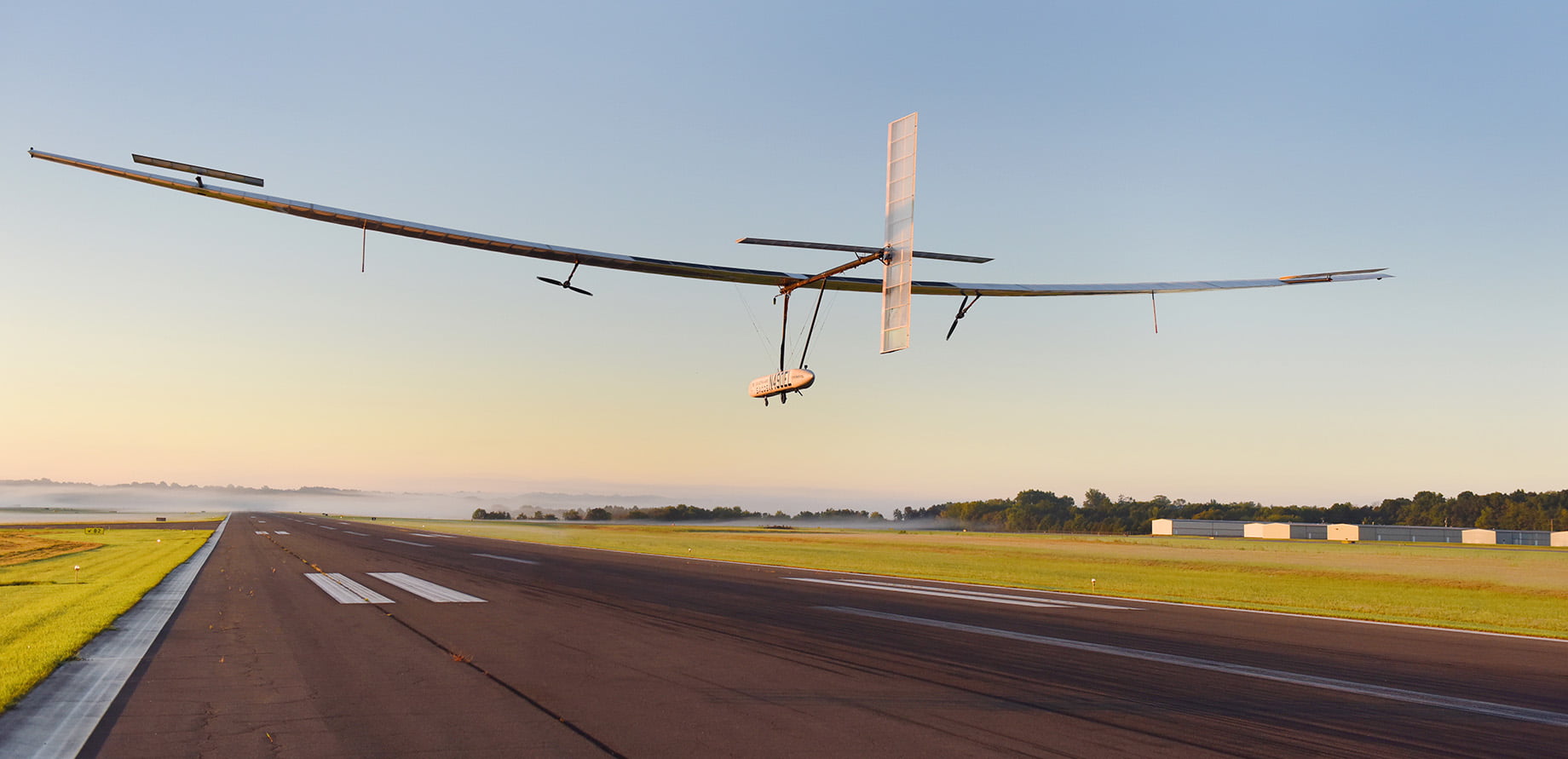
Electra’s unmanned solar-electric hybrid “Dawn One” research aircraft taking off on its maiden flight from Electra’s development facility in Manassas, VA.

Dawn One bắt nguồn từ Viện Công nghệ Massachusetts (MIT) do Giáo sư John Hansman và Mark Drela đứng đầu. Thiết kế chi tiết, chế tạo và thử nghiệm máy bay do Electra phụ trách. Máy bay sử dụng pin năng lượng mặt trời này là một phần trong quá trình phát triển của Electra về công nghệ động cơ đẩy máy bay giảm và không có carbon, cũng bao gồm các hệ thống hybrid dựa trên tua-bin-điện và pin nhiên liệu hydro.

Chuyến bay SACOS là một phần của lễ kỷ niệm công khai Giải thưởng Dreyfus về Khoa học Hóa học năm 2021, sẽ được trao cho Giáo sư Anderson vào ngày 29 tháng 9 năm 2022 tại Harvard. JP (James) Stewart của Electra và Annick DeWald của MIT dẫn đầu nhóm máy bay bao gồm các nhà nghiên cứu và sinh viên từ MIT, Harvard, Virginia Tech, Penn State, Stanford, Tuskegee, Embry Riddle, Đại học Michigan, Bang San Diego và Đại học của Texas tại El Paso.

Julie Nguyen
Julie Nguyen

Julie is the founder of SNAP TASTE and a driving force in global storytelling, innovation, and creative leadership. A respected member of the Harvard Business Review Advisory Council, she also serves as a judge for the CES Innovation Awards (2024, 2025, and 2026), bringing her perspective to the intersections of business, culture, and breakthrough technologies.

Her immersive reporting has taken audiences behind the scenes of defining world moments, from the FIFA World Cup Qatar 2022 and Expo 2020 Dubai to CES, D23 Expo, and the Milano Monza Motor Show. Through her lens, global events become intimate, human stories.

An accomplished film critic and editorial voice, Julie has built a reputation for reviews that go beyond analysis, finding the heartbeat within the frame. Her work on National Geographic documentaries and other cinematic works speaks to audiences who believe that great storytelling has the power to shift perspectives and expand the world.

At the heart of everything Julie does is a belief that art, technology, and culture are not separate conversations. She has spent her career proving they never were.

Ad

Leave a Reply

More to Explore

Googlebook Is Google’s Big Bet on Turning Your Android Phone Into a Laptop

Googlebook is Google's answer to a question nobody quite knew how to ask: what happens when a phone operating system grows up and starts...

Meta Connect 2026: Muse AI and New VR Glasses Revealed

Meta held its Connect 2026 keynote to detail a broad set of updates across artificial intelligence, smart glasses, and virtual reality hardware. CEO Mark...

iPhone Duo: Everything You Need to Know About Apple’s First Foldable iPhone

Apple has officially entered the foldable phone market. At its Cupertino event, the company introduced iPhone Duo, its first foldable iPhone and, by Apple's...

AI Won’t Replace the 3D Artist, But It Will Change How They Work

For years, 3D artists have carried the same quiet burden: the gap between an idea and the finished model is long, tedious, and full...

Inside IFA Berlin 2026: AI Moves From Feature to Foundation of the Smart Home

IFA Berlin, one of the largest events in the world for consumer electronics, home appliances, and future tech, spent its opening days making one...

Google’s Gemini 3.8 Flash arrives with a cybersecurity sibling built for autonomous patching

Google is not slowing down. On September 2, 2026, the company rolled out Gemini 3.8 Flash, a new entry in its Flash lineup that...

Closed-Loop Cooling Explained: How Meta, Google, and Microsoft Are Solving AI’s Water Problem

The rack that used to need a wall of fans now needs plumbing. That is the short version of what has happened inside Meta's...

Google Flow gets a serious upgrade with Gemini Omni 1.1 Flash

Google is giving its AI filmmaking tool another major push forward. At its I/O developer conference earlier this year, the company introduced Gemini Omni...

Apple’s New Mac Mini Gets a Major AI Upgrade With M6 and M5 Pro Chips

Apple has unveiled a refreshed Mac mini, and the headline story is a big one for anyone who cares about on device AI performance....

Mac Studio Gets M5 Ultra, Thunderbolt 5, and Up to 512GB of Memory for Local AI

Apple's latest Mac Studio refresh lands as one of the more substantial internal updates the machine has seen since it first launched, and the...

Blender 5.2 LTS Features Guide: Node Editor, Outliner, and Interface Changes Explained

Blender 5.2 LTS shipped on July 14th, 2026, and it is not the modest interface polish pass the original document made it out to...

Blender Basics: The Beginner Guide Nobody Handed You

Okay, so you downloaded Blender. Good. That already puts you ahead of most people who talk about wanting to make 3D art and then...

Handpicked for You

You Might Also Like