


As summer recedes into autumn, the forests of Yunnan enter one of their most celebrated seasons. Nourished by summer rains, wild mushrooms emerge across the mountainous landscape, bringing with them an abundance of aromas, textures and flavors that have long shaped the region’s culinary identity. This fleeting harvest became the inspiration for an exclusive collaboration in Macau, where two acclaimed Chinese restaurants came together to interpret the season through their distinct culinary traditions.
On August 28 and 29, Yí, the Black Pearl One-Diamond innovative Chinese restaurant at City of Dreams Macau, welcomed Hong0871, a Black Pearl One-Diamond Yunnan restaurant based in Shanghai, for An Innovative Chinese Feast: Summer Bloom. The six-course gastronomic experience brought together the refined culinary heritage of Guangdong and the distinctive terroir of Yunnan, exploring the expressive possibilities of seasonal wild mushrooms through a contemporary Chinese lens. More than an exchange of regional flavors, the collaboration offered a thoughtful interpretation of nature’s abundance, where culinary craftsmanship met the changing seasons.
The experience began well before the first course arrived. Situated within Morpheus at City of Dreams Macau, an architectural landmark designed by the late Dame Zaha Hadid, Yí offers a dining environment that feels almost otherworldly. Guests entered through softly illuminated corridors, where rounded pools of light embedded within the walls recalled fireflies resting among the trees. The delicate illumination created an atmospheric passage, inviting guests to leave the energy of the city behind and enter a different sensory world.
Inside the restaurant, the signature golden dragon-scale semi-domes rose beneath an intricate interplay of light and shadow. Surrounding water features traced fluid pathways through the space, reinforcing the impression of movement and quiet transformation. As evening settled over Macau, the restaurant seemed to take on the silhouette of a dragon gliding through the skyline. Its sculptural architecture and shifting reflections evoked an ethereal palace suspended above the city, where Zaha Hadid’s contemporary vision met the symbolic language of Eastern aesthetics. Before the fragrance of wild mushrooms reached the table, the senses had already been drawn into the experience.
The culinary collaboration was led by Yí Executive Chef Angelo Wong and Hong0871 Founder and Chef Liu Xin. Guided by Yí’s philosophy of eating in harmony with the seasons, the chefs developed a six-course menu centered on Yunnan’s wild mushrooms at the height of their season. The refinement and technical precision of Cantonese cuisine met the untamed character of Yunnan’s mountain ingredients, creating a conversation between two distinct culinary identities. Each preparation reflected the chefs’ individual approaches to seasonal produce while revealing the creative possibilities that emerged when their perspectives came together.
The evening unfolded as a four-part narrative: “The Passing Rain,” “The Glowing Guide,” “The Foraging Feast” and “The Lingering Heat.” Music and movement became an integral part of the experience. Serene melodies carried the atmosphere of the mountains and forests into the dining room, while dancers interpreted the gifts of the earth through graceful, flowing choreography. Their movements evoked renewal, abundance and harmony, giving the dinner a theatrical dimension without separating it from its culinary purpose. Together, the performances and dishes created an immersive journey shaped by the rhythms of nature and the expressive language of contemporary aesthetics.
The Glowing Guide: An Introduction to the Season
The evening opened with “The Passing Rain,” a chapter inspired by the quiet awakening of the mountains after a summer downpour. As the last echoes of rain faded, guests made their entrance, following the dancers’ graceful movements into “The Glowing Guide.” The atmosphere shifted from anticipation to discovery as the flavors of the season began to emerge.
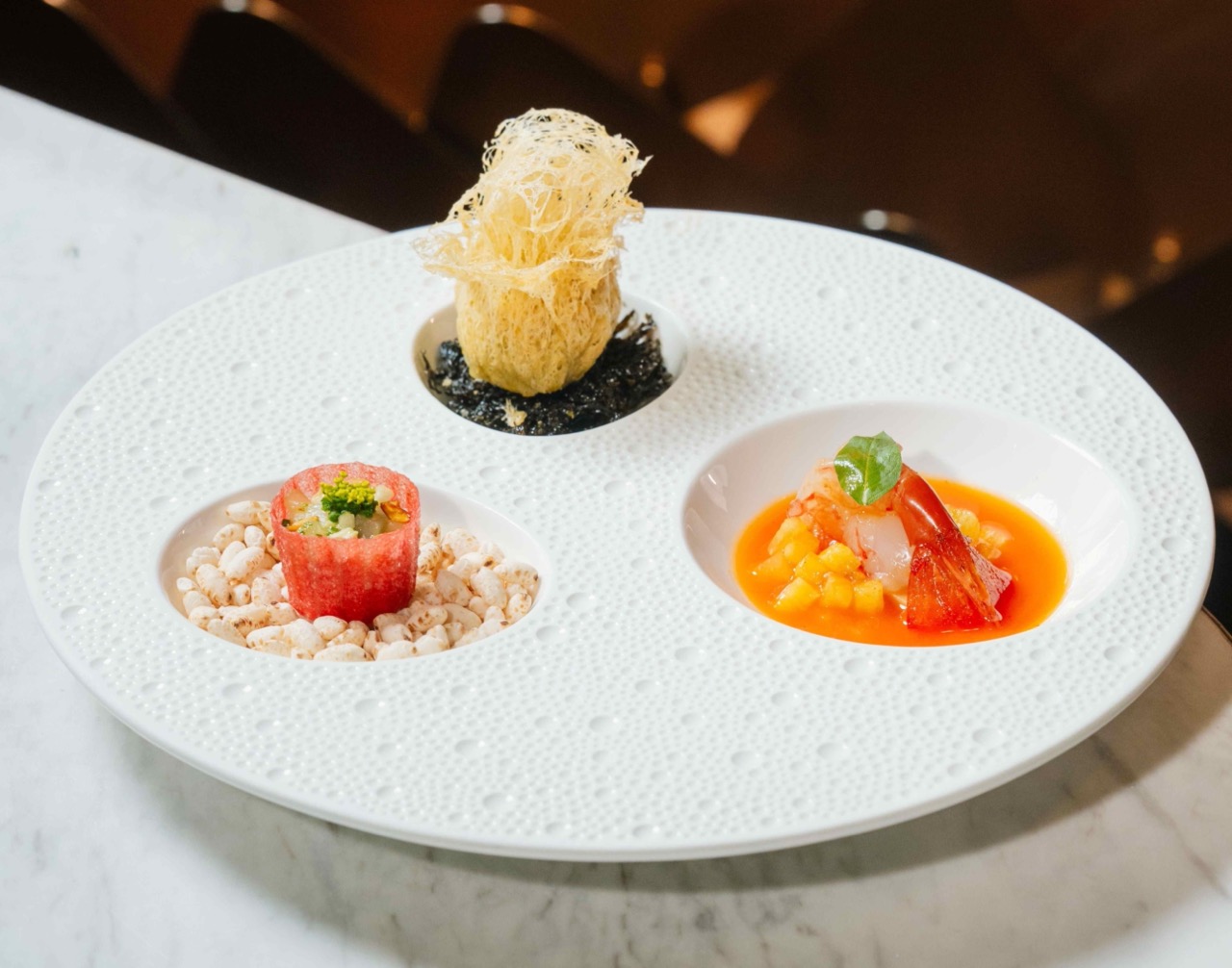
A trio of wild mushroom creations introduced the culinary narrative. “Catathelasma Mushroom with Shrimp and Passionfruit Nhammi,” “Chanterelle Mushroom Scallop Tarte with Scallion Oil and Ginger,” and “Green Russula Mushroom with Crispy Duck Puff” offered three distinct interpretations of the season’s central ingredient. Each preparation brought together the culinary sensibilities of Guangdong and Yunnan, creating a succession of flavors that reflected the richness and diversity of the mountain landscape.
Yí’s opening appetizer, “Steamed Hanasaki Crab Meat with Caviar and Fermented Rice Wine,” followed with a more delicate expression of Cantonese culinary heritage. Inspired by a traditional Hong Kong preparation of steamed crab meat with egg white and Huadiao wine, the dish placed seasonal Hanasaki crab meat atop a silky foundation of steamed egg. The egg white absorbed the crab’s natural sweetness and the aromatic depth of Huadiao wine, creating an understated yet intricate composition.
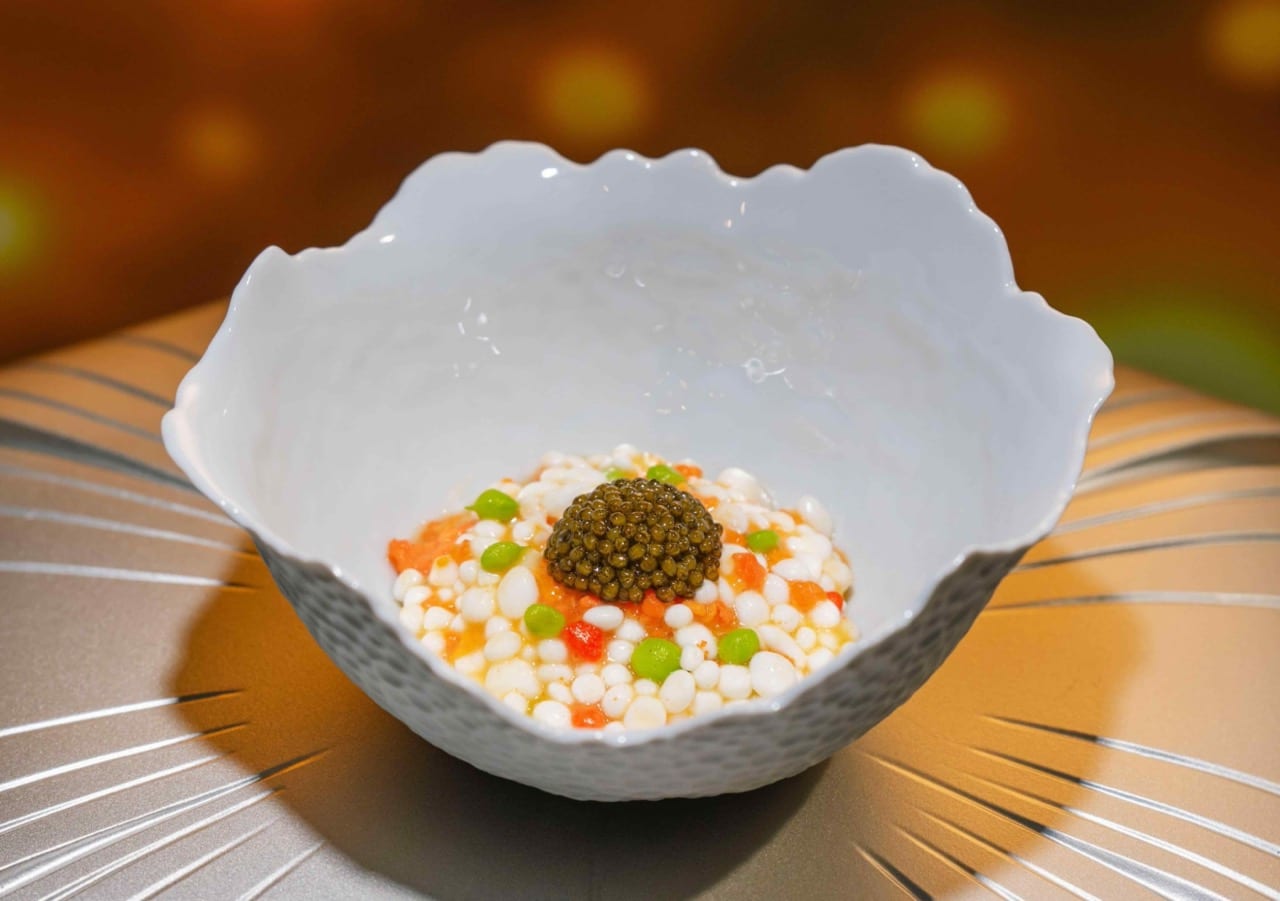
Qiandao Lake caviar introduced a crisp, gently popping texture, while aged fermented rice wine contributed a mellow richness. Handcrafted egg white pearls added another delicate accent. Savory, saline, sweet and rounded notes unfolded gradually, lingering on the palate rather than resolving immediately. The accompanying sounds of the hulusi and electric violin deepened the atmosphere, their ethereal melodies suggesting mist moving through a forest at first light.
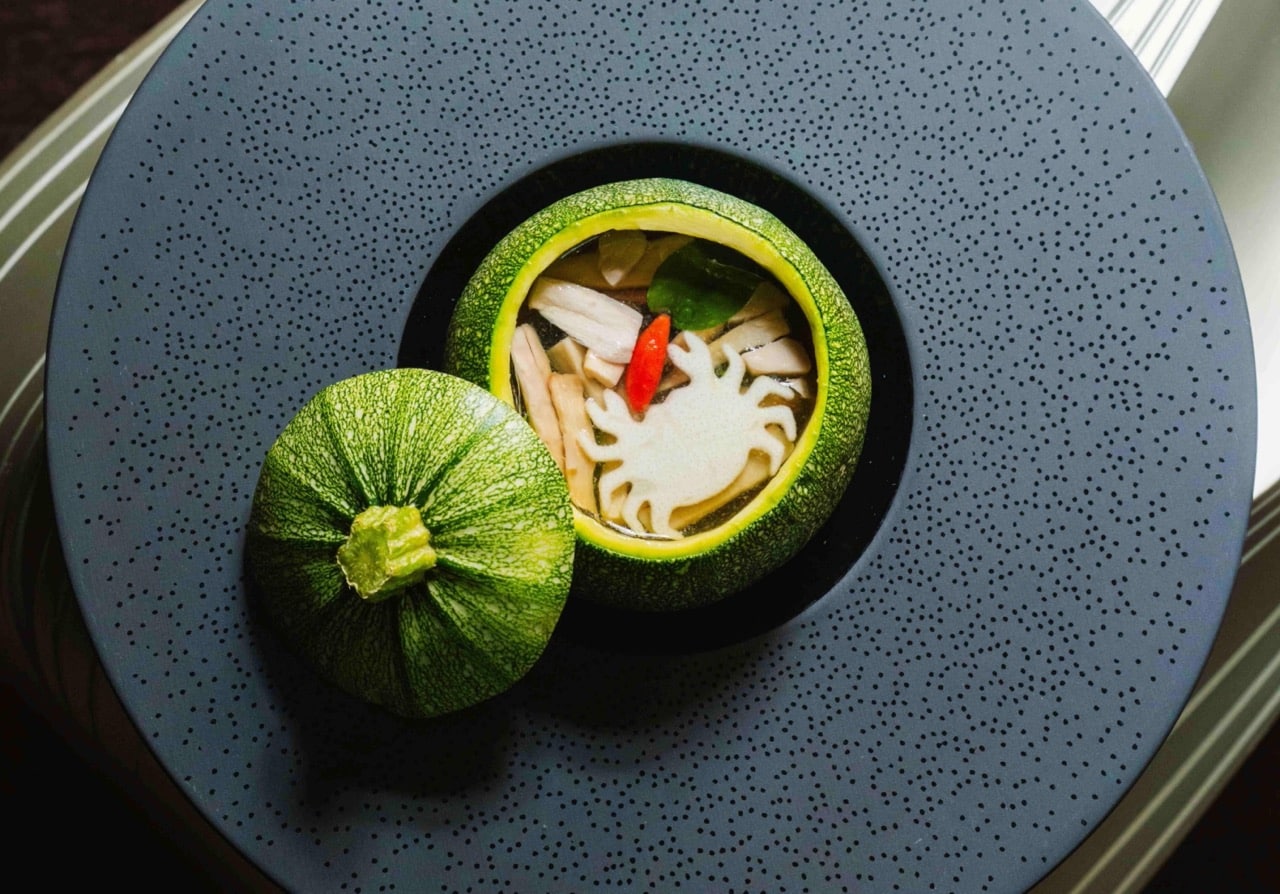
Hong0871’s “Summer Squash Soup with Termite Mushroom and Sea Conch” offered a contrasting expression of the season, bringing together the earthy character of Yunnan’s mountains and the clarity of a carefully prepared broth. Premium black-cap termite mushrooms were hand-torn into delicate strands and gently simmered with sea conch in clear chicken broth for three hours. Served inside a summer squash cup, the soup drew on the vegetable’s natural sweetness to complement the broth’s depth. Its clean, delicate finish revealed the ingredients without overwhelming their individual character.
The Foraging Feast: The Richness of the Mountain Landscape
With “The Foraging Feast,” the evening moved into a more abundant expression of Yunnan’s culinary landscape. Five vivid hues of mountain ingredients came together at the table, introducing greater depth, richness and textural contrast.
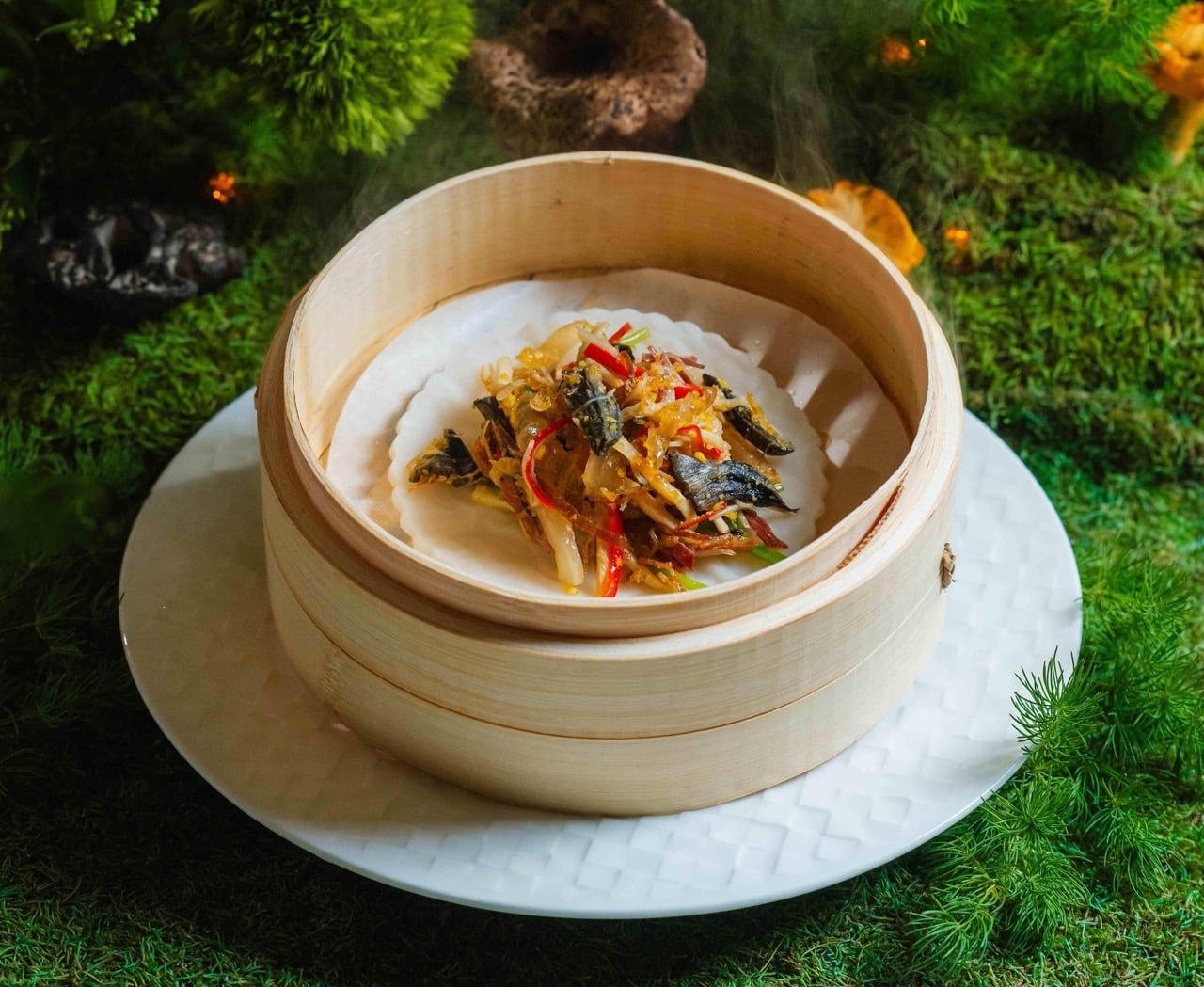
A collaborative creation from Yí and Hong0871, “Wok-fried Ganba Mushroom with Huize Sturgeon Tendon, Fish Maw, Conpoy and Rice Bun” was among the evening’s most elaborate preparations. Fresh Ganba mushrooms were braised with resilient Huize sturgeon tendon, accompanied by fish maw, conpoy, snow crab meat and free-range chicken egg yolk. The composition was further enriched with shredded Nuodeng cured ham from Dali, Yunnan, and rose-cured turnip from a long-established Yunnan soy sauce maker.
Presented in a clay pot, the ingredients formed a striking arrangement of black, white, red, gold and yellow. Their colors reflected the visual richness of the mountain landscape, while their flavors moved between deep savoriness and a subtle, lingering sweetness. The fragrant finish brought the many elements together, allowing the individual ingredients to retain their identities within a cohesive preparation.
Hong0871 continued with “Bamboo-grilled Porcini Mushroom and Wagyu with Lotus Leaf,” drawing inspiration from parcel roasting, a distinctive cooking technique of the Dai ethnic group in Xishuangbanna. Traditionally, ingredients are wrapped in natural banana leaves and roasted over charcoal, producing a lightly charred exterior while preserving tenderness within.
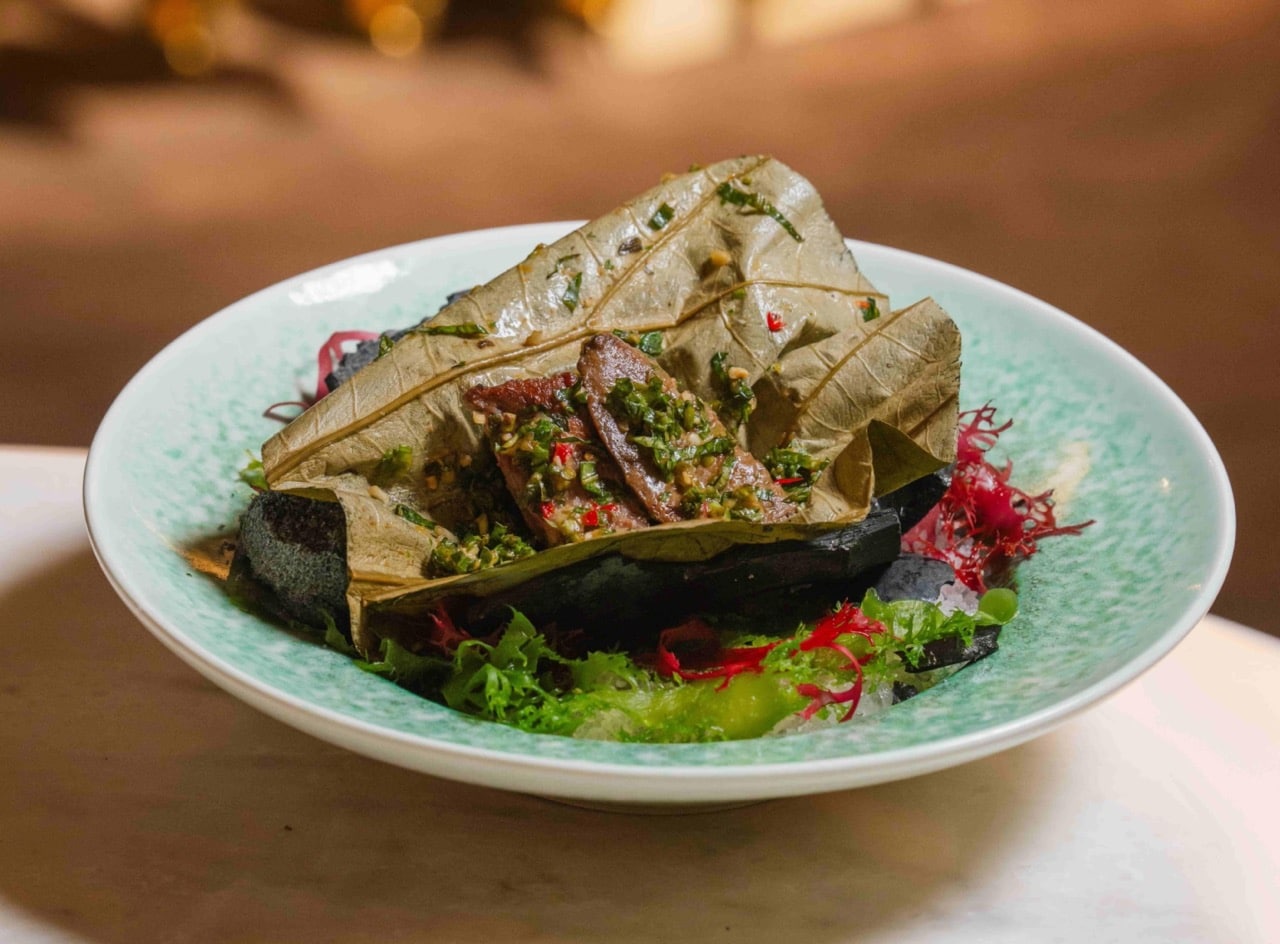
For this interpretation, porcini mushrooms and marbled wagyu were wrapped together in lotus leaves, allowing the ingredients to absorb the wild aromas of Dai herbs. The roasting process concentrated their flavors, releasing a burst of hot, savory juices with each bite. Earthy mushroom notes met the richness of the beef in a preparation that felt both elemental and deeply satisfying. It was a particularly expressive tribute to the cooking traditions of southwestern China, where fire, leaves and the natural character of local ingredients have long shaped the cuisine.
Yí offered a different interpretation with “Black Tiger Paw Mushroom Braised with Rainbow Abalone and Artichoke.” Here, the traditional Cantonese technique of slow braising brought together the untamed earthiness of Yunnan black tiger paw mushrooms and the oceanic umami of New Zealand rainbow abalone. Artichoke, often referred to as the king of vegetables, introduced a gentle sweetness that balanced the richness of the other ingredients.
The gradual braising allowed the mushroom’s fragrance, the abalone’s deep savory character and the artichoke’s natural sweetness to develop together. The resulting texture was rich and velvety, with layers of flavor that unfolded slowly. The dish captured the meeting of two culinary worlds: the measured elegance of Cantonese technique and the distinctive abundance of Yunnan’s natural landscape.
The Lingering Heat: A Final Walk Through the Forest
As the evening entered its final chapter, “The Lingering Heat,” the dancers returned for a graceful closing performance. Their movements brought the narrative to a quiet conclusion, echoing the lingering warmth of summer and the transition toward autumn. The final culinary expressions continued the forest-inspired theme, translating the natural world into a more imaginative form.
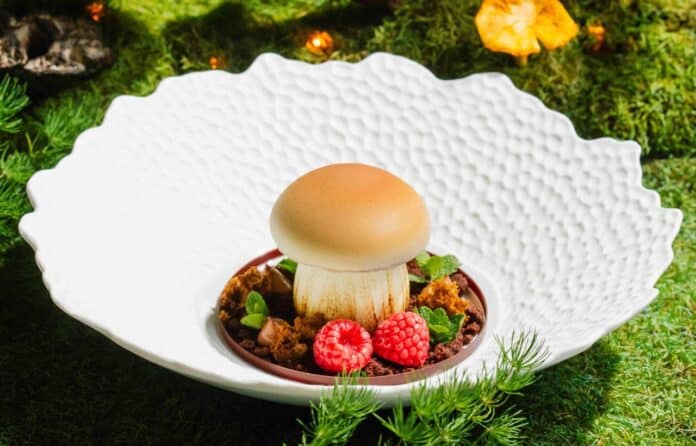
Yí’s “Matsutake Mushroom with Hazelnut and Raspberry” reinterpreted the distinctive woody fragrance of matsutake through the language of dessert. Silky, indulgent hazelnut mousse provided the foundation, while the mushroom’s recognizable form gave the creation an almost lifelike appearance. The result evoked the sensation of discovering a mushroom along a forest path, transforming a familiar ingredient into an unexpected expression of pastry craftsmanship.
The experience continued with an invitation for guests to create their own forest landscape using three edible elements: “soil,” “mushrooms” and “grasses.” Each component offered a different texture and visual impression, allowing diners to assemble a miniature interpretation of the mountains on their own plates. It was a thoughtful final gesture, extending the evening’s connection to nature beyond the chefs’ creations and into the guests’ own participation.
A Celebration of China’s Emerging Wine Landscape
The beverage program completed the experience with a selection drawn exclusively from Chinese wineries, offering a glimpse into the diversity and contemporary expression of the country’s fine wines. The pairing explored two important wine-producing regions, Yunnan and Ningxia, bringing together a range of styles that reflected the breadth of China’s evolving wine culture.
The selection moved from cold-brew sparkling tea and bottle-fermented sparkling wines to dry Chardonnay and red wines. Each was chosen in response to the flavors and textures of its accompanying dish, creating a progression that complemented the changing character of the menu. The delicate seafood preparations, earthy mushroom dishes and richer braised ingredients each found their own expression within the pairing.
Rather than serving simply as an accompaniment, the wines added another regional dimension to the dinner. Their presence reinforced the broader conversation taking place throughout the evening, one that connected the ingredients, culinary traditions and contemporary interpretations of different parts of China.
Where Nature Meets the Art of Chinese Cuisine
The mountains and forests of Yunnan carry a particular kind of seasonal generosity. Their wild mushrooms appear briefly, shaped by rain, soil and the changing conditions of the landscape. Capturing that fleeting abundance requires an appreciation not only of the ingredients themselves but also of the traditions and techniques through which their character can be expressed.
Through An Innovative Chinese Feast: Summer Bloom, Yí and Hong0871 brought these ideas together in a dining experience that reached beyond the boundaries of a conventional restaurant collaboration. Cantonese culinary heritage provided a foundation of precision and refinement, while Yunnan’s distinctive ingredients introduced a sense of wildness, place and seasonal immediacy. The menu moved between delicate seafood, slow-braised delicacies, charcoal-roasted preparations and imaginative desserts, each course revealing another facet of the relationship between nature and the culinary imagination.
The architectural setting of Morpheus, the musical performances, the choreography and the carefully selected Chinese wines gave the experience an additional sense of dimension. Together, they created an evening in which food became a means of storytelling, connecting guests to the landscapes, traditions and creative sensibilities behind each dish.
As summer surrendered to autumn, the collaboration captured the essence of a season that cannot be held for long. Its lasting impression lay not simply in the ingredients presented or the techniques employed, but in the way two culinary perspectives transformed the gifts of the mountains and forests into a shared expression of place, memory and imagination. More than a celebration of wild mushroom season, Summer Bloom offered a quietly ambitious vision of innovative Chinese cuisine, one rooted in tradition yet open to the possibilities of reinvention.
