


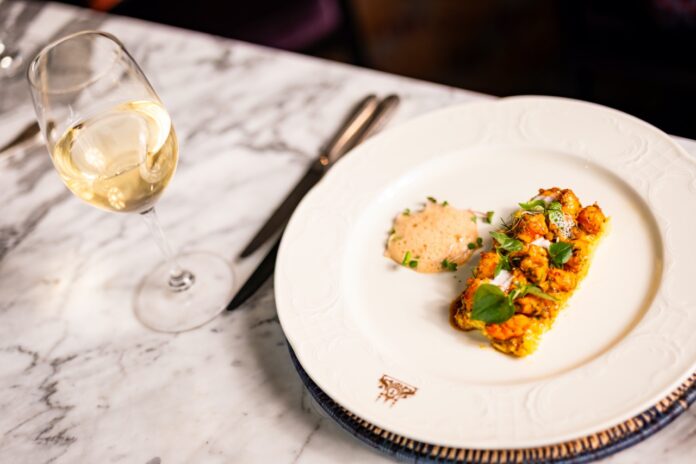

At the storied 1932 restaurant inside Raffles Grand Hotel d’Angkor, four new tasting menus have arrived, each one a love letter to a different chapter of Cambodian history, plated with the kind of precision and warmth that has long defined this Siem Reap institution. It is a menu that reads like a history book and eats like a celebration, tracing Cambodia’s story from the healing gardens of a 12th century king to the palm fringed glamour of the 1960s, before landing somewhere entirely new: a sun bright collision of Khmer and Latin American flavors.
Three of the menus come from Executive Sous Chef Dorn Doeurt, a Siem Reap native whose command of Khmer cuisine has made him one of the region’s most respected culinary voices. The fourth is the work of Executive Chef Memo Hernandez, who brings his own global palate into direct conversation with Cambodia’s ingredients and techniques. Together, the two chefs have built on the Khmer tasting menus first introduced in 2023, going deeper into the country’s culinary archive while leaving plenty of room for invention.
The King’s Apothecary: a vegetarian ode to the Healer King
The first stop is 1180, the era of King Jayavarman VII, the Angkorian ruler remembered as the Great Builder and the Healer King. He is credited with founding 102 hospitals and 121 rest houses across the empire, and with championing the use of medicinal plants and herbs to care for his people. This entirely vegetarian menu, priced at $70 per guest, channels that spirit of natural healing into six courses framed as tonics and remedies.
It opens with the Garden Bite, billed as a rejuvenating elixir of cucumber and kaffir lime, before moving into a Jackfruit and Mango Salad brightened with chili, described on the menu as a digestive nectar. Pumpkin and Coconut arrives as an anti-inflammatory earthen marrow, finished with ginger and a delicate vegetable tuile, while Stuffed Eggplant, layered with wild mushrooms and kroeung, the aromatic Khmer spice paste, is positioned as an immunity elixir. A Cauliflower Steak, dressed in sweet potato, black pepper, and ma’om, takes on the role of spiced tonic oil, and the meal closes with a Red Pepper Chocolate Tarte, its heat softened by sea salt, caramel, and passion fruit, playfully labeled the black balm.
The Reign of King Monivong: royal Khmer cuisine reborn
The second menu, priced at $80 per guest, travels forward to the 1900s and the era of King Sisowath Monivong, grandfather of Norodom Sihanouk and great-grandfather of the current King Norodom Sihamoni. It was during his reign that Royal Khmer Cuisine flourished and that global fascination with Angkor surged, fueled in part by a towering replica of Angkor Wat unveiled at the 1931 Paris Exposition. That wave of interest helped bring the Grand Hotel d’Angkor into being in 1932, and it quickly became a magnet for international guests, among them Ibrahim of Johor in 1933 and Hollywood’s Charlie Chaplin and Paulette Goddard in 1936.
The menu unfolds as a journey across Cambodia’s landscapes. The River and the Paddy brings a Nataing Mousse of crab and pork with pickled cucumber, rice crisps, and peanuts. The Forest offers a Banana Blossom and Poached Chicken Salad lifted with wild mint, lime, shallots, and peanuts. The Sea contributes a Sour Lobster Consommé perfumed with lime leaf and Khmer herbs, while The Lake delivers the menu’s signature dish, Hamok Royal, a refined take on the classic Cambodian fish curry made with Tonlé Sap fish, organic brown rice, and lotus. The Highlands course, Braised Pork Belly Hong, is served with Num Ansom, banana flowers, palm sugar, and quail egg, and the meal ends with The Sacred Land, an Akor Thnoat Royale of palm sugar and coconut.
Cambodia’s Golden Age: the 1960s revival
Priced at $90 per guest, this menu picks up the story in the 1960s, during what the hotel calls the early Sihanouk era, a period of vibrant cultural revival when Siem Reap became a global gateway to the temples of Angkor. That golden age reached its symbolic peak in 1967, when former First Lady Jacqueline Kennedy Onassis visited, fulfilling a lifelong dream of seeing Angkor and cementing Cambodia’s place on the world stage.
The courses here read like postcards from that era. Reef brings a Crab Cake with tamarind and coconut, while Mangrove offers Kep Tiger Prawns with pomelo salad, ling leak herbs, and coconut. Riverbank is a Mekong Bouillon scented with chi barang and straw mushrooms, and Floodplain showcases the menu’s centerpiece, Bay Damneub Muk Bangkang, a dish of lobster, turmeric, and sticky rice. Plateau serves a Sous Vide Duck with tea tim, red wine cabbage, and sauce à l’orange, and the meal closes on Provincial Orchard, a Sweet Potato and Cinnamon Crème Brûlée finished with coconut and mango.
New Khmer Expressions: two tropical worlds in dialogue
The boldest of the four, New Khmer Expressions is Executive Chef Memo Hernandez’s vision of what Khmer cuisine can become when it meets the sun drenched flavors of Latin America. Priced at $100 per guest, the menu is framed as a dialogue between two tropical worlds, one where the smoky warmth of the Central American isthmus meets the fermented depths of the Mekong.
It begins with First Light, Kep crab with tamarind and kaffir lime, and moves into Humidity, the menu’s standout course, pairing barramundi with coconut water, bird’s eye chili, and ma’om. Zenith brings grilled squid with corn, smoked chili oil, and lemongrass ash, while Equatorial sets roasted chicken against corn tortilla, cacao mole, and pickled green mango, a direct nod to Latin American technique. Horizon turns to Koh Kong fish with garlic, Kampot pepper, and betel leaf, and Dusk offers a palate cleansing course of pineapple, Kampot lime, bird’s eye chili, and sea salt. The menu closes with Lunar, a trio of palm sugar flan, coconut tres leches, and chocolate churro, a dessert course that folds Cambodian and Latin American pastry traditions into one plate.
“We are proud to continue evolving Khmer cuisine by drawing inspiration from our rich history and the incredible local produce of Siem Reap,” said Chef Dorn Doeurt. “These menus tell stories of Cambodia’s past while delivering modern, refined dining experiences.”
Beyond the tasting menus
Guests who prefer to build their own meal can order à la carte, choosing from appetizers such as Kep Tiger Prawns Pomelo Salad ($21), Pumpkin and Coconut ($16), and Banana Blossom and Poached Chicken Salad ($17). Main courses include Hamok Royal ($31), Cauliflower Steak ($24), and Tortilla con Pollo ($27), a dish of roasted chicken, corn tortilla, cacao mole, and pickled green mango that mirrors the flavors of Equatorial on the New Khmer Expressions menu. Dessert options round out the list with the Sweet Potato and Cinnamon Crème Brûlée ($17), the Red Pepper Chocolate Tarte ($18), and a Pumpkin Custard ($18) layered with dark chocolate, coconut, and Banteay Srey vanilla ice cream. The restaurant also offers a curated wine pairing selection for guests who want to elevate the experience further.
A history as rich as the menu
The Grand Hotel d’Angkor opened its doors in 1932 to welcome travelers making the pilgrimage to Angkor Wat, and its story remains deeply intertwined with Cambodian royalty. Its culinary lineage traces back to King Jayavarman VII, celebrated for his infrastructure and healthcare legacy, and continues through the reign of King Sisowath Monivong, when Royal Khmer Cuisine first flourished at court. Over the decades, the hotel became a stage for cultural exchange, hosting figures like Ibrahim of Johor and Hollywood stars Charlie Chaplin and Paulette Goddard in the 1930s, and later welcoming Jacqueline Kennedy Onassis during Cambodia’s golden age of the 1960s. With these four new tasting menus, the 1932 restaurant continues that legacy, turning centuries of history into something guests can taste, course by course.