



The Michelin Guide Kyoto Osaka 2026 arrived with the kind of momentum that signals a culinary region in full flower. Unveiled at a ceremony in Osaka on April 23, the new edition spans 479 restaurants, ten more than the previous year, and offers a portrait of two cities where ancient tradition and restless creativity continue to find each other in the most delicious ways.
Kyoto’s Crowning Moment
The headline belongs to Miyamaso, a ryokan and restaurant that has stood in the remote Hanase mountains since the 1890s, when it operated as a guesthouse for priests serving the Kasuga Taisha Shrine. Founded over a century ago during the Meiji era, the inn received its first Michelin star in 2010 and has held two stars since 2011. Now, with its elevation to three stars, Kyoto welcomes its first new three-starred restaurant since the inaugural 2020 edition of the guide, bringing the total number of three-star establishments in the ancient capital to six.
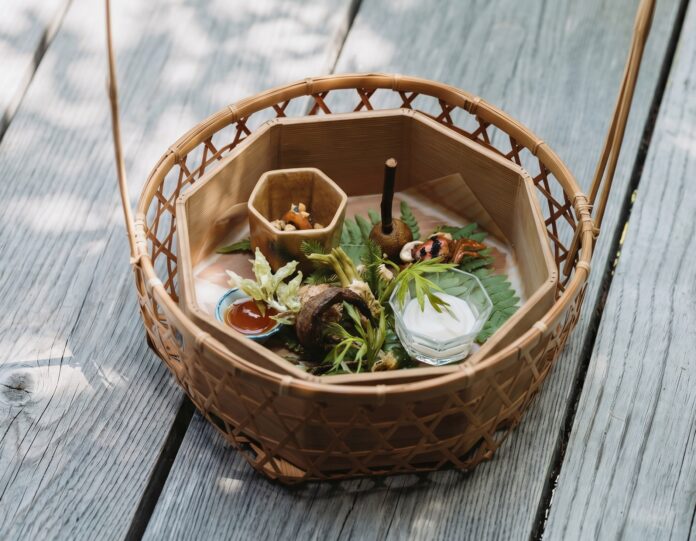
The man responsible is Chef Hisato Nakahigashi, whose cooking philosophy is as rooted in the landscape as it is in the kitchen. The restaurant specializes in a style of high-end Japanese cuisine called Tsumikusa, a rustic, highly seasonal approach centered on foraged wild plants, herbs, and flowers gathered directly from the mountains and fields. The seasonal menu moves through the year with quiet insistence: wild mountain vegetables in spring, river fish in summer, mushrooms in autumn, and gibier in winter. Nakahigashi often forages the ingredients himself, and his culinary credo, as he has described it, is a belief that the earth and the human body are indivisible. The journey from Kyoto to Miyamaso takes nearly two hours by train, though those who make the trip often find it worth considering an overnight stay at the attached ryokan. Proprietress Sachiko Nakahigashi, who received the guide’s Service Award in 2023, ensures that the hospitality matches the landscape in its grace and intentionality.
Four Kyoto restaurants were promoted to two stars, all carrying forward Japanese cuisine with distinct personalities. Doppo, the third restaurant from chef Masato Miyazawa, offers a total integration of cuisine, tableware, and setting that expresses what Michelin inspectors described as the full aesthetic sensibility of Japanese cooking. Higashiyama Yoshihisa draws its energy from the visible unity between chef Yoshihisa Suzuki and his team, with certain dishes finished at the counter in a way that transforms service into hospitality. Tokuha Motonari, led by chef Shinya Matsumoto, builds on rigorous classical training while reaching toward inventive new expressions, including the theatrical technique of grilling ingredients upright in the hearth. Muromachi Yui operates as a kappo restaurant where chef Kazuteru Maeda changes the omakase menu each month, anchoring each iteration in Japan’s seasonal customs and composing hassun plates that read as edible almanacs of the moment.
Twelve restaurants joined the one-star ranks in Kyoto, five through promotion and seven as new entries. Among the promoted, Germoglio distinguishes itself as the sole Italian entry, layering Kyoto ingredients onto a foundation of Italian regional cooking. New entry LURRA, classified as innovative cuisine, reaches across Japan’s four seasons and the food cultures of the wider world to produce dishes that feel genuinely singular. Korean Restaurant Byeoleeya, another new entry, grounds its modern Korean dishes in the “food as medicine” philosophy, guided by a chef trained in royal court cuisine. The French cuisine category added two: ima, which pairs wood fire with French technique inside a machiya townhouse, and KOGA, which builds its identity around distinctive sauces and the interplay of aroma and charcoal-grilled meat.
Three restaurants entered the Bib Gourmand selection in Kyoto. Fuyacho Kuraku, an izakaya, serves straightforward small plates built on seafood from nearby Wakasa Bay and poured alongside local Fukui sake. Ramenya Fujitora brings a focused approach to soy-sauce ramen made with chicken and pork broths. KOKAGE, a soba specialist, mills its own buckwheat flour in-house and serves 100 percent buckwheat noodles alongside simple snacks.
Osaka’s Creative Surge
Osaka contributed its own star-powered story with the promotion of Teruya to two stars. Chef Katsunori Teruya, who trained in Kyoto before striking out on his own, has developed a style rooted in technical precision and an unusually sensitive ear for subtle flavor. His kitchen labors with great care over harmony in dashi, drawing each ingredient’s aroma into the broth so that soups, steamed dishes, and simmered items carry a depth that reveals itself slowly. The result is cuisine that appears simple on the surface but rewards close attention.
Seven restaurants earned one star in Osaka. Among the promoted, atelier HANADA is carving a distinctive identity within Chinese cooking. Numata Sou turns tempura into something almost meditative, using batter as a vehicle to gently steam ingredients and concentrate umami. Tosara, which earns its place in the contemporary category, draws heavily on ingredients from Awaji Island, the chef’s hometown, and weaves Italian and Japanese foundations together with personal conviction. New entries include Ukitacho Ima, where the kitchen views knife technique in sashimi preparation as a direct determinant of flavor, and Sushi Shigenaga, which seasons its firm vinegared rice with beet sugar and sources its toppings primarily from Kyushu.
Nine new Bib Gourmand restaurants were added in Osaka, including PITAK GOHAN for Thai cuisine, two yakitori specialists in Sumisho Mikuriya and Sumibi Iwata, a pair of French options in DIVA and bistrot neuf, and the ramen shop Mendokoro Subete.
Honoring the Humans Behind the Tables
The 2026 edition also introduced the inaugural Sommelier Award for the Kyoto and Osaka region, presenting it to Miki Tanaka, owner-sommelier at the Osaka French restaurant LOUISE. The award celebrates individuals with expertise not only in wine knowledge and food pairing, but also exceptional service skills. Deeply trusted by chef Yannick Lahopgnou, Tanaka has been present since the restaurant opened, developing an intuitive read of guests’ preferences and a particular gift for matching wine to the spice-forward, fruit-bright cooking that defines the kitchen.
The Mentor Chef Award went to Hideaki Matsuo of Kashiwaya Osaka Senriyama, one of the most celebrated kaiseki restaurants in Japan. With a philosophy deeply rooted in tea ceremony and the wabi-sabi aesthetic, Kashiwaya offers orthodox kaiseki that finds its origins in the hospitality traditions of the Kyoto tea house, presenting an eight-course menu that changes with each month. Matsuo has held three Michelin stars for over a decade and, in 2021, earned a Michelin Green Star for sustainability, a rare combination that speaks to both culinary excellence and a deep commitment to eco-friendly practice. Beyond his own kitchen, Matsuo welcomes trainees from overseas, teaches at culinary schools, and leads a study group among Osaka chefs, work that made him, in the guide’s estimation, a natural recipient of the award.
The Service Award honored Yuko Kuwamura of Kyoto’s two-star Kodaiji Wakuden. Born and raised in Kyotango, she learned the rhythms of the traditional restaurant trade alongside her mother during her student years. A period of residence at a sub-temple of Daitoku-ji, where she devoted herself to cleaning and fieldwork, gave her a foundation in humility and gratitude that has shaped her approach to hospitality ever since. Now the second-generation proprietress and the public face of Wakuden, she has extended the restaurant’s influence beyond the dining room, contributing to regional revitalization in Kyotango through reforestation efforts. Her guiding maxim, “a warm heart is a universal remedy,” has become the animating spirit of Wakuden-style hospitality and the reason she was chosen for this distinction.
MICHELIN Guide Kyoto Osaka 2026: Selection Overview
THREE STARS
Miyamaso — Kyoto — Japanese cuisine
Miyamaso, an inn and restaurant established in the Hanase mountains during the Meiji era, received its first star in 2010 and held two stars from 2011. Its elevation to three stars in the 2026 edition marks the first addition to Kyoto’s three-star cohort in six years and brings the city’s total to six establishments at that distinction.
TWO STARS — NEW PROMOTIONS
Kyoto
Doppo — Japanese cuisine. The third restaurant opened by chef Masato Miyazawa. Cuisine, tableware, and setting operate in deliberate alignment to express the formal aesthetic principles of Japanese cooking.
Higashiyama Yoshihisa — Japanese cuisine. Led by chef Yoshihisa Suzuki. Certain preparations are completed at the counter, integrating service into the culinary sequence. The coordination between chef and team is a distinguishing feature of the experience.
Tokuha Motonari — Japanese cuisine. Chef Shinya Matsumoto draws on classical training while incorporating technique-driven variation, including the grilling of ingredients upright within a hearth.
Muromachi Yui — Japanese cuisine, kappo format. Chef Kazuteru Maeda revises the omakase monthly in accordance with seasonal custom. Hassun presentations are composed to reflect the occasions and natural conditions of each month.
Osaka
Teruya — Japanese cuisine. Chef Katsunori Teruya, trained in Kyoto, executes a style defined by careful attention to dashi balance and the integration of each ingredient’s aromatic properties into the broth. Soups, steamed dishes, and simmered preparations demonstrate depth that rewards sustained attention. The approach is precise and restrained; the distinction between this kitchen and its peers lies largely in what is withheld.
ONE STAR — SELECTED NEW ENTRIES AND PROMOTIONS
Kyoto — Promoted
Sokkon Fujimoto — Japanese cuisine, kappo format. Consistent execution across cuisine, setting, and service.
Higashiyama Tsukasa — Japanese cuisine. Omakase format incorporating Western and Asian ingredients alongside Japanese technique.
YOKOI — Japanese cuisine. Adherence to classical cooking principles with attention to ingredient combination.
Miyagawacho Hotta — Japanese cuisine. Menu incorporates beef cutlet within a traditional progression.
Germoglio — Italian cuisine. Italian regional preparations augmented with Kyoto-sourced ingredients.
Kyoto — New Entries
MUBE — Japanese cuisine. House-made seasonings including shio-koji, fish sauce, and miso; the kitchen develops a synergy between dashi technique and fermentation.
Higashiyama Ogata — Japanese cuisine. Ingredient counts per dish are deliberately limited; the aim is full expression of each product’s inherent character.
Manjuji Hakuran — Japanese cuisine. Specialties of the Goto Islands — notably Hatoshi and Goto udon — presented within a Kyoto context.
ima — French cuisine. French technique applied over wood fire in a machiya townhouse counter setting.
KOGA — French cuisine. Defined by saucing and the relationship between aroma and charcoal-grilled preparation.
Korean Restaurant Byeoleeya — Korean cuisine. Modern dishes organized around the principle of food as medicine; the chef holds training in Korean royal court cuisine.
LURRA — Innovative cuisine. Draws on Japan’s seasonal structure and a range of international food cultures to produce a single, integrated menu.
Osaka — Promoted
Tosara — Contemporary cuisine. Ingredients from the chef’s native Awaji Island figure prominently; the culinary foundation combines Italian and Japanese technique.
atelier HANADA — Chinese cuisine. A self-defined approach to Chinese cooking that operates outside established regional conventions.
Numata Sou — Tempura. Batter is employed as a medium for gentle steaming; the result concentrates umami and moisture within each preparation.
Osaka — New Entries
Ukitacho Ima — Japanese cuisine. Knife technique in sashimi fabrication is treated as a direct determinant of flavor.
Hachi — Japanese cuisine. Counter-format omakase organized around presenting each dish at the precise point of optimal condition.
Sushi Shigenaga — Sushi. Vinegared rice is seasoned with rice vinegar and beet sugar; toppings are sourced predominantly from Kyushu.
Empathie — French cuisine. Counter format. Ingredient-focused preparations executed with economy of means.
BIB GOURMAND — NEW ENTRIES
Kyoto: Fuyacho Kuraku (izakaya; seafood from Wakasa Bay, local Fukui sake), Ramenya Fujitora (ramen; soy-sauce base with chicken and pork broths), KOKAGE (soba; 100 percent buckwheat noodles from house-milled flour).
Osaka: PITAK GOHAN (Thai cuisine), Chukashunsai Morimoto (Chinese cuisine), Tonkatsu Minato (tonkatsu), Shuko Osaka Manpukudou (Japanese cuisine), DIVA (French cuisine), bistrot neuf (French cuisine), Sumisho Mikuriya (yakitori), Sumibi Iwata (yakitori), Mendokoro Subete (ramen).