
HomeNewsTechnologyVIDEO: Solar-Electric Hybrid Research Aircraft from Harvard University and MIT

VIDEO: Solar-Electric Hybrid Research Aircraft from Harvard University and MIT

follow us on Google News

Dawn One, a 90-foot wingspan unmanned aircraft system (UAS) made its first flight from Manassas Regional Airport, Virginia on September 9, 2022, and is the first airplane to emerge from Electra’s new development facility there.  The new plane is part of the Stratospheric Airborne Climate Observing System (SACOS) program. SACOS is being developed under the leadership of Professor James G. Anderson at Harvard University.

Ads

The project is supported by a contract from the National Aeronautics and Space Administration (NASA) and by the Weld Foundation for Scientific and Environmental Development.

“The high-spatial resolution observations from SACOS will provide, for the first time, quantitative forecasts of risk associated with rapidly expanding wildfires, the increasing rate of sea level rise, the intensification of severe storms, and global shifts in arid regions that trigger water shortages.  Moreover, these quantitative forecasts of risk will, in turn, establish the essential intellectual links directly coupling irreversible changes in the climate structure to economics, public policy, and associated societal instability,” Professor Anderson explained. 

The Dawn One project originated at the Massachusetts Institute of Technology (MIT) led by Professors John Hansman and Mark Drela.  Detailed design, construction, and testing of the aircraft were led by Electra. This solar-battery aircraft is part of Electra’s ongoing development of reduced and zero-carbon aircraft propulsion technologies, which also include turbine-electric and hydrogen fuel cell-based hybrid systems.

Ads

The SACOS flight is part of the public celebration of the 2021 Dreyfus Prize in Chemical Sciences, to be presented to Professor Anderson on September 29, 2022 at Harvard. JP (James) Stewart of Electra and Annick DeWald of MIT led the aircraft team that included researchers and students from MIT, Harvard, Virginia Tech, Penn State, Stanford, Tuskegee, Embry Riddle, University of Michigan, San Diego State, and The University of Texas at El Paso.
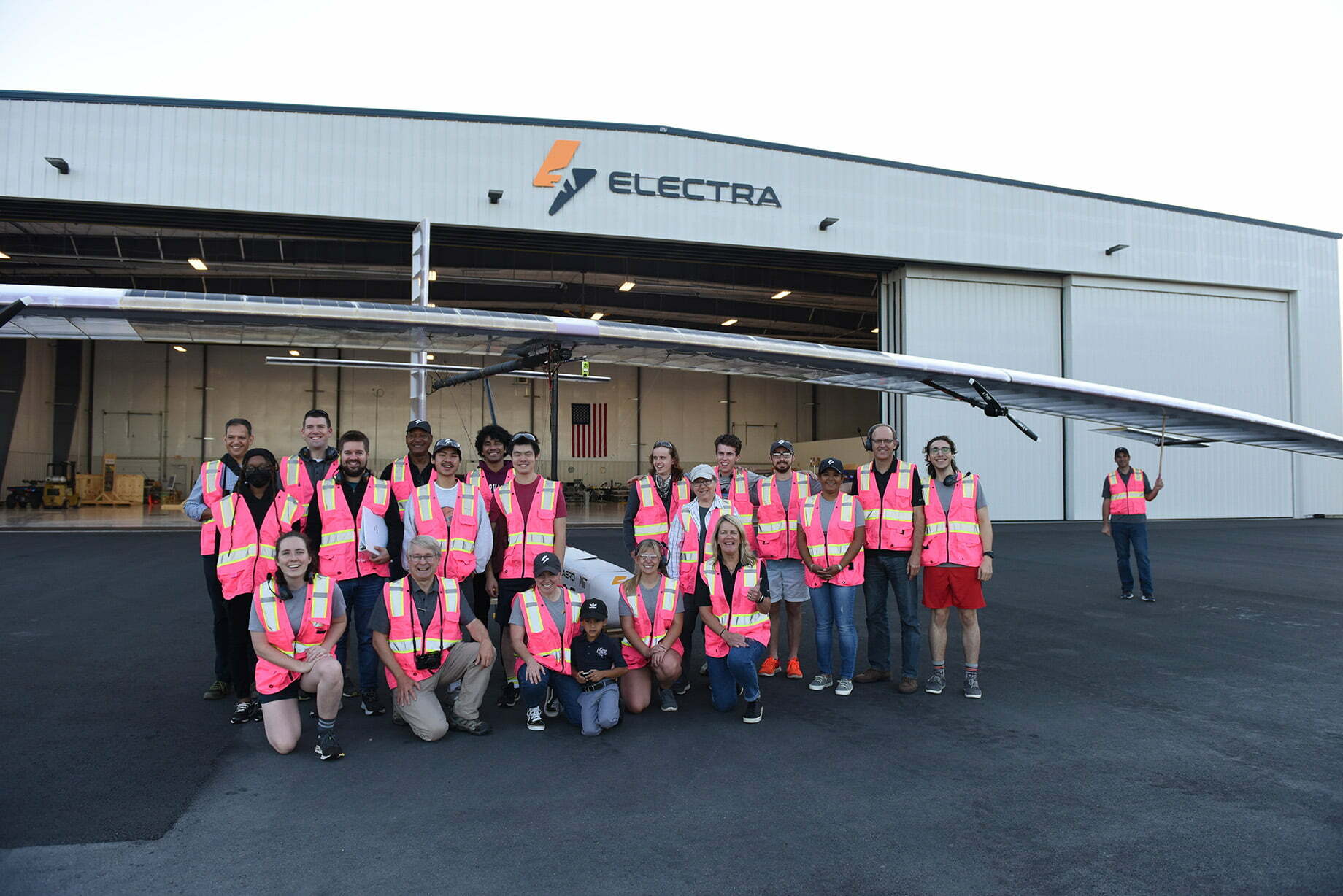

In addition to the Electra team, the “Dawn One” aircraft team included researchers and students from MIT, Harvard, Virginia Tech, Penn State, Stanford, Tuskegee, Embry Riddle, University of Michigan, San Diego State, and The University of Texas at El Paso.

Dawn One, một hệ thống máy bay không người lái sải cánh dài 90 foot (UAS) đã thực hiện chuyến bay đầu tiên từ Sân bay Khu vực Manassas, Virginia vào ngày 9 tháng 9 năm 2022 và là máy bay đầu tiên xuất hiện từ cơ sở phát triển mới của Electra ở đó. Chiếc máy bay mới này là một phần của chương trình Hệ thống quan sát khí hậu trên không tầng bình lưu (SACOS). SACOS đang được phát triển dưới sự lãnh đạo của Giáo sư James G. Anderson tại Đại học Harvard.  Kế hoạch được hỗ trợ bởi hợp đồng từ Cơ quan Hàng không và Vũ trụ Quốc gia (NASA) và bởi Tổ chức Phát triển Khoa học và Môi trường Weld.
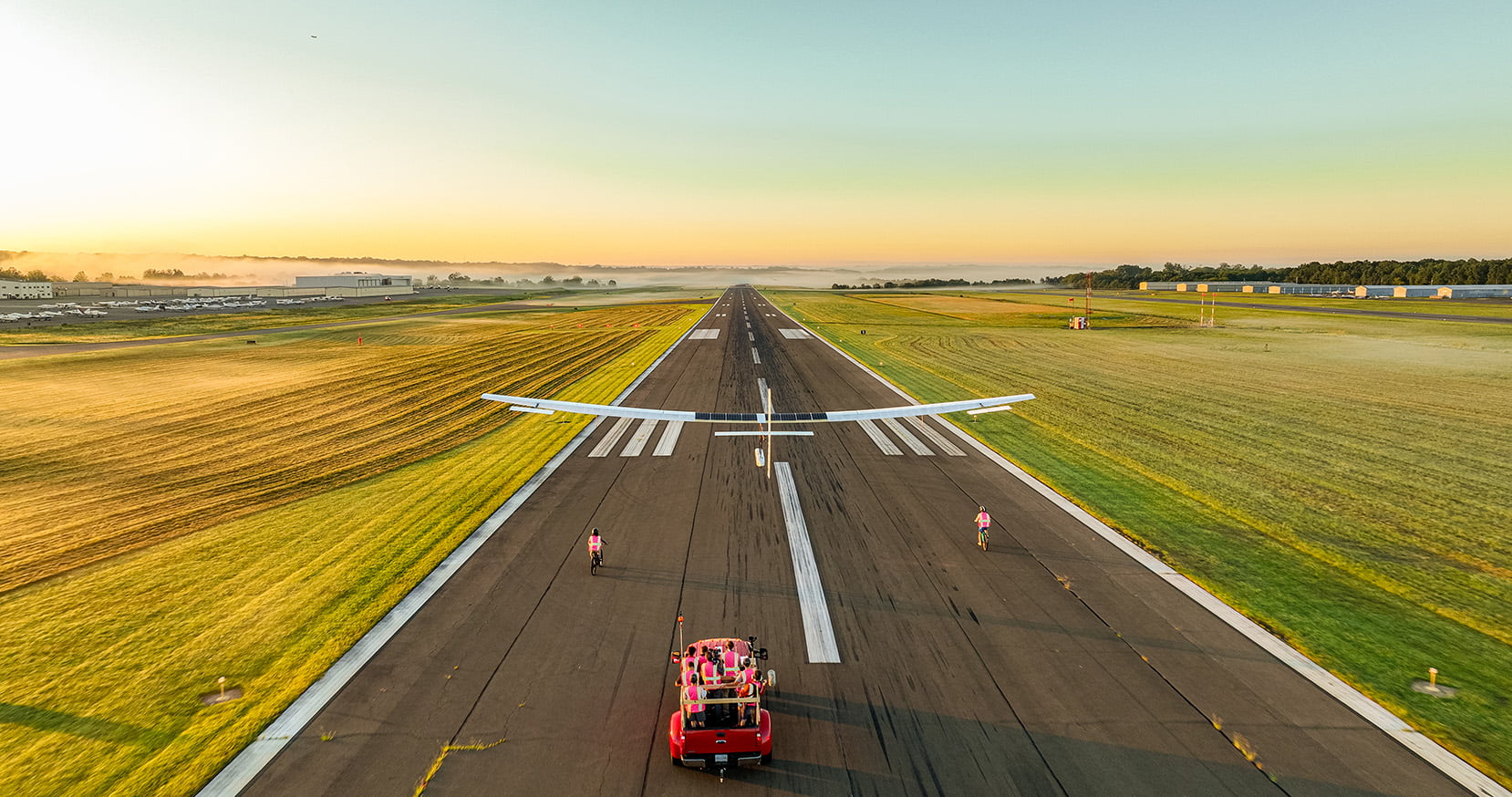
Electra’s “Dawn One” unmanned research aircraft is part of the SACOS program, which promises to dramatically expand our national climate research capabilities.

“Các quan sát có độ phân giải không gian cao từ SACOS sẽ lần đầu tiên cung cấp các dự báo định lượng về rủi ro liên quan đến cháy rừng mở rộng nhanh chóng, tốc độ ngày càng tăng của mực nước biển, cường độ của các cơn bão nghiêm trọng và sự thay đổi toàn cầu ở các khu vực khô cằn gây ra nước sự thiếu hụt. Hơn nữa, những dự báo định lượng về rủi ro này sẽ thiết lập các liên kết trí tuệ thiết yếu trực tiếp kết hợp những thay đổi không thể đảo ngược trong cấu trúc khí hậu với kinh tế, chính sách công và bất ổn xã hội liên quan,” Giáo sư Anderson giải thích.
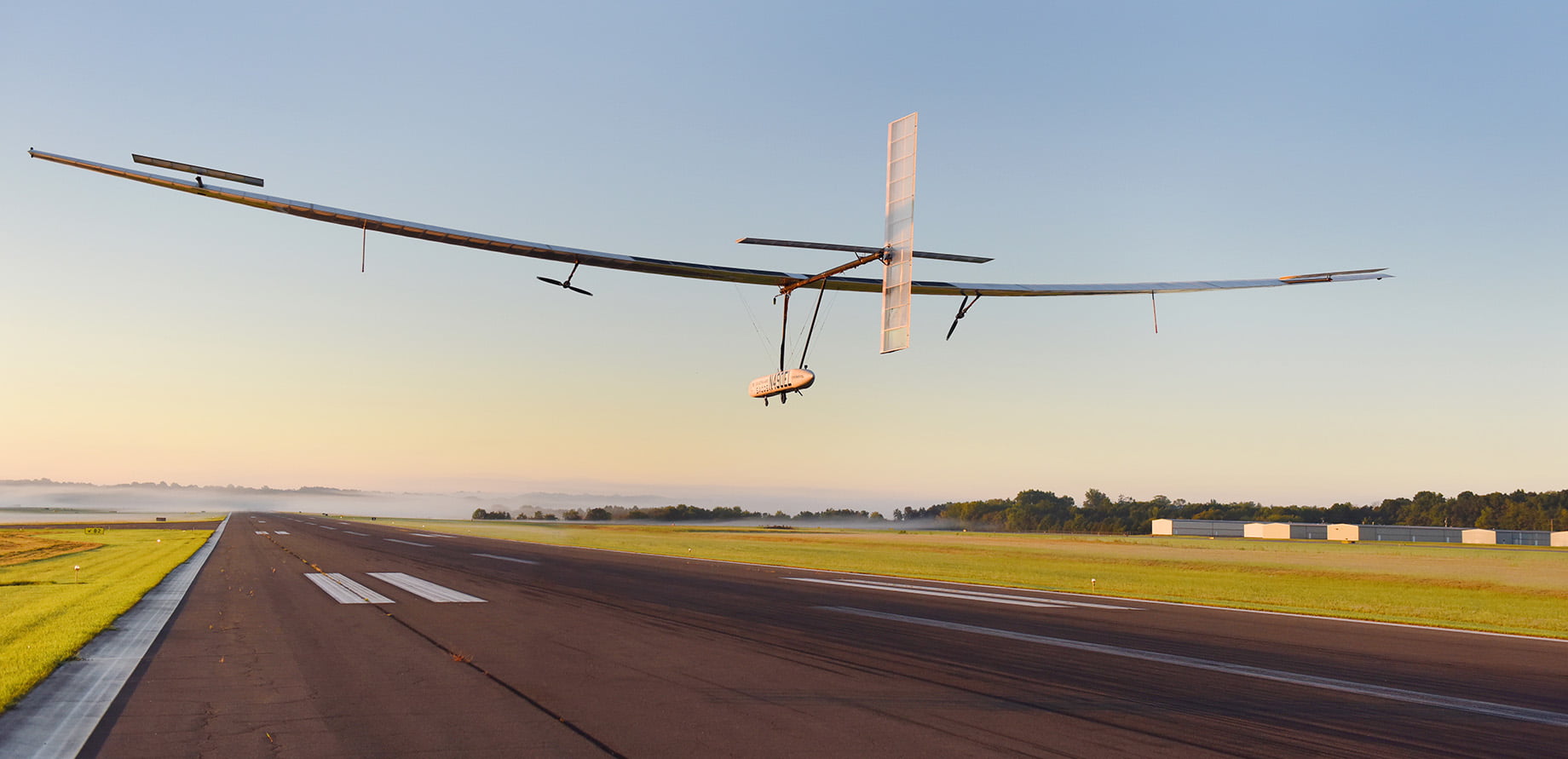
Electra’s unmanned solar-electric hybrid “Dawn One” research aircraft taking off on its maiden flight from Electra’s development facility in Manassas, VA.

Dawn One bắt nguồn từ Viện Công nghệ Massachusetts (MIT) do Giáo sư John Hansman và Mark Drela đứng đầu. Thiết kế chi tiết, chế tạo và thử nghiệm máy bay do Electra phụ trách. Máy bay sử dụng pin năng lượng mặt trời này là một phần trong quá trình phát triển của Electra về công nghệ động cơ đẩy máy bay giảm và không có carbon, cũng bao gồm các hệ thống hybrid dựa trên tua-bin-điện và pin nhiên liệu hydro.

Chuyến bay SACOS là một phần của lễ kỷ niệm công khai Giải thưởng Dreyfus về Khoa học Hóa học năm 2021, sẽ được trao cho Giáo sư Anderson vào ngày 29 tháng 9 năm 2022 tại Harvard. JP (James) Stewart của Electra và Annick DeWald của MIT dẫn đầu nhóm máy bay bao gồm các nhà nghiên cứu và sinh viên từ MIT, Harvard, Virginia Tech, Penn State, Stanford, Tuskegee, Embry Riddle, Đại học Michigan, Bang San Diego và Đại học của Texas tại El Paso.

Julie Nguyen
Julie Nguyen
Julie is the visionary founder of SNAP TASTE and a dynamic force in global storytelling, innovation and creative leadership. She is a respected member of the Harvard Business Review Advisory Council and serves as a judge for the CES Innovation Awards (2024, 2025 and 2026), where she contributes thought leadership on the intersections of business, culture and breakthrough technologies. As Managing Director, she also oversees the Fine Art, Digital Art, Portfolios and Marketing departments, ensuring the brand’s strategic vision and creative direction are realized across disciplines. Her immersive reporting has brought audiences behind the scenes of global milestones such as the FIFA World Cup Qatar 2022, Expo 2020 Dubai, CES, D23 Expo, and the Milano Monza Motor Show, offering exclusive access to moments that define contemporary culture. An accomplished film critic and editorial voice, Julie is also recognized for her compelling reviews of National Geographic documentaries and other cinematic works. Her ability to combine analytical depth with narrative finesse inspires audiences seeking intelligent, meaningful, and globally relevant content. With a multidisciplinary perspective that bridges art, technology, and culture, Julie continues to shape the dialogue on how storytelling and innovation converge to influence the way we experience the world.
Ad

Leave a Reply

More to Explore

Blender 5.1: The Precision Refinement Every Designer Needs

Released on March 17, 2026, Blender 5.1 arrives not as a radical departure, but as a masterclass in refinement. While version 5.0 was the...

How to Set Up Firefox’s New Free Built-in VPN and Use Native Split View

Digital privacy often feels like a full-time job, requiring users to juggle various extensions and subscriptions just to keep their personal data from leaking...

OpenAI Shuts Down Sora as Disney’s $1 Billion Deal Collapses

The sudden closure of OpenAI's AI video platform marks one of the most dramatic reversals in the brief history of generative AI, and leaves...

Sony’s Tokyo Studio Is Where the Future of Filmmaking Gets Made

Sony is bringing its global media production hub network to Japan, opening the Digital Media Production Center Japan (DMPC Japan) inside the company's Group...

Anthropic’s Claude Cowork Lets You Assign AI Tasks From Your Phone and Walk Away

Artificial intelligence is getting better at doing things. The harder challenge has always been getting it to do things without you watching. Anthropic's Claude...

NVIDIA’s Dynamo 1.0 Is Free, Open Source Software That Makes AI Inference Up to 7x Faster

Running AI models at scale is harder than it looks. Training a model is a one-time investment. Inference, the process of actually using that...

Adobe and NVIDIA Are Teaming Up to Reinvent Creative and Marketing Workflows With AI

Two of the most influential companies in creative technology are deepening a partnership that goes back more than two decades. Adobe and NVIDIA have...

NVIDIA Is Trying to Become the Default Platform for Every Kind of Robot

Jensen Huang has a bold prediction: every industrial company will become a robotics company. Whether or not that timeline plays out exactly as he...

NVIDIA and T-Mobile Want to Turn the 5G Network Into a Distributed AI Computer

Most conversations about AI infrastructure focus on data centers, the massive facilities packed with GPU racks that train and run the world's most powerful...

BYD, Nissan, Geely and More Are Building Self-Driving Cars on NVIDIA’s Platform — and Robotaxis Are Coming to Uber by 2027

Self-driving vehicles have been a promise for a long time. The technology has advanced significantly, but wide-scale deployment has remained perpetually just around the...

NVIDIA Wants to Be the Platform That Powers Every Enterprise AI Agent

Autonomous AI agents are moving from experiment to enterprise infrastructure faster than most organizations anticipated. The question is no longer whether companies will deploy...

NVIDIA Is Building a Coalition of AI Labs to Develop Open Frontier Models Together

The race to build the most powerful AI models has largely been a competition, with labs guarding their research, their data, and their techniques...

Handpicked for You

You Might Also Like