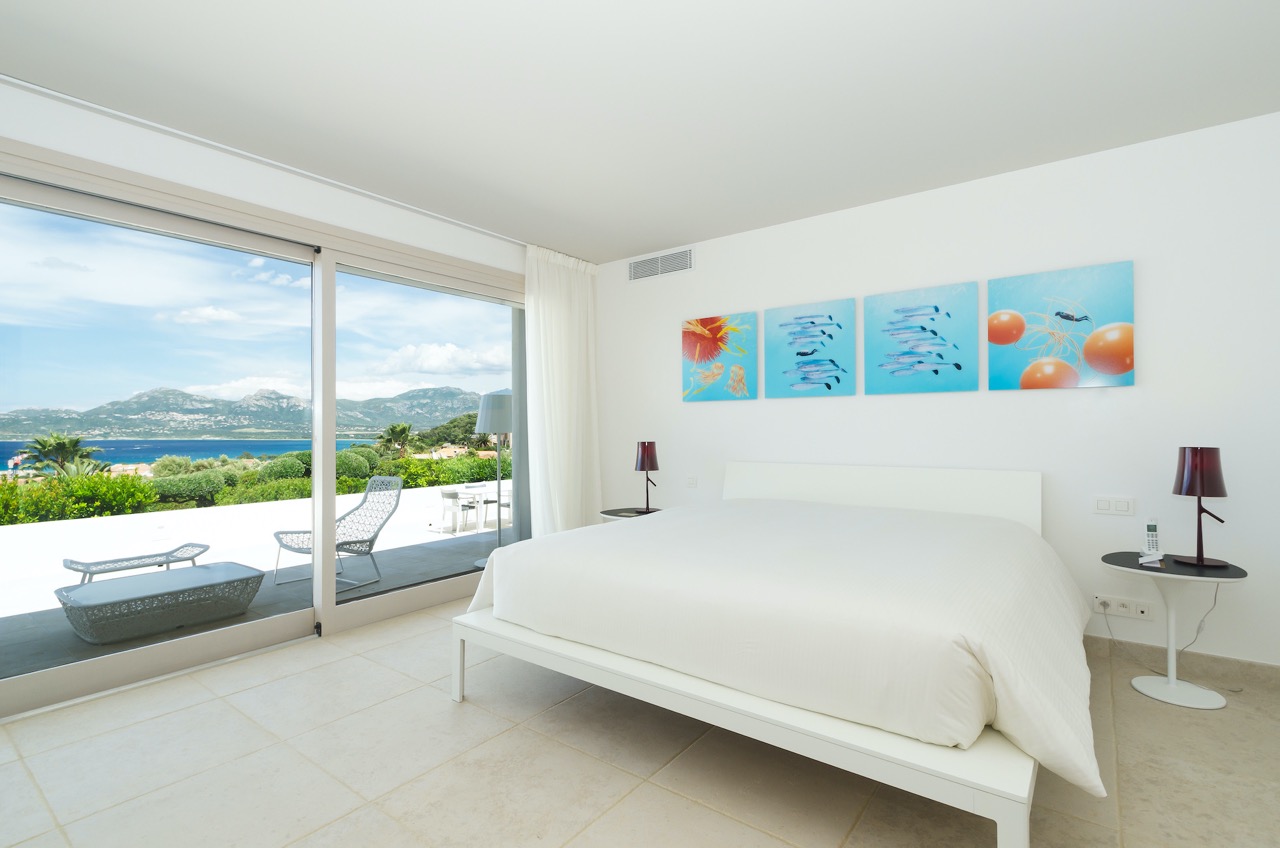

There is a particular quality to the light in Calvi in the early evening, when it catches the ochre facades of the 12th century citadel and turns the Bay into something that feels less like geography and more like a painting one has always meant to see in person. It is the kind of light that makes you stop mid-sentence, mid-thought, mid-sip. The kind that renders elsewhere briefly unimaginable.
Villa Calvi has been watching that light for more than thirty years.
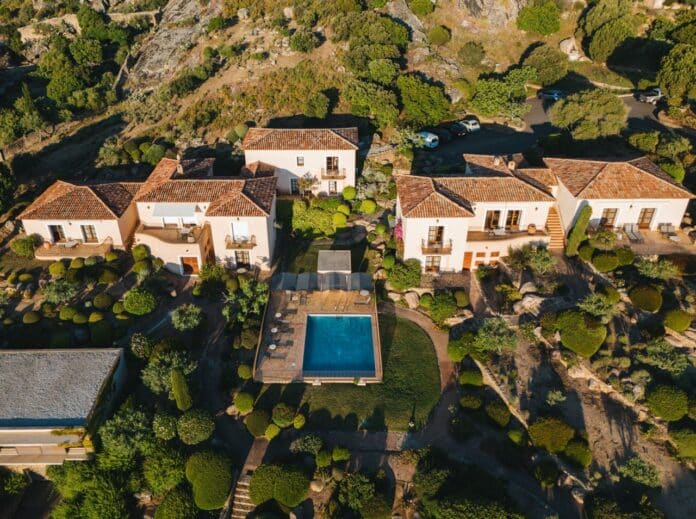
Set within three hectares of Mediterranean gardens above the city, where lavender and oleander grow alongside umbrella pines and ancient olive trees, a hundred endemic species arranged with the quietly confident hand of landscape architect Bruno Dumoustier, who trained in the tradition of Versailles, the hotel occupies a position that feels less like a location and more like a point of view. From the suspended terraces, from the smallest balcony, from the Pool Bar at the hour when the day begins to release its grip, the Bay of Calvi is always there, unhurried and absolute.
What Jean-Pierre Pinelli understood, when he returned to his native Balagne after years in Africa and a life lived at angles to expectation, was that Corsica had not yet been given the hotel it deserved. This was 1989. He had been paying attention to Paris, to Saint-Barth, to the quiet codes that distinguish a place of genuine hospitality from mere accommodation, and he arrived at his four-star inaugural with the conviction of someone who had done his research and trusted his instincts in equal measure. His wife Marion, whom he had met during his travels through Germany and Argentina, joined him from the beginning. The challenge of building something meaningful together, in a corner of the world famous for its beaches and its silence and its fierce sense of self, must have felt like the only logical next step.
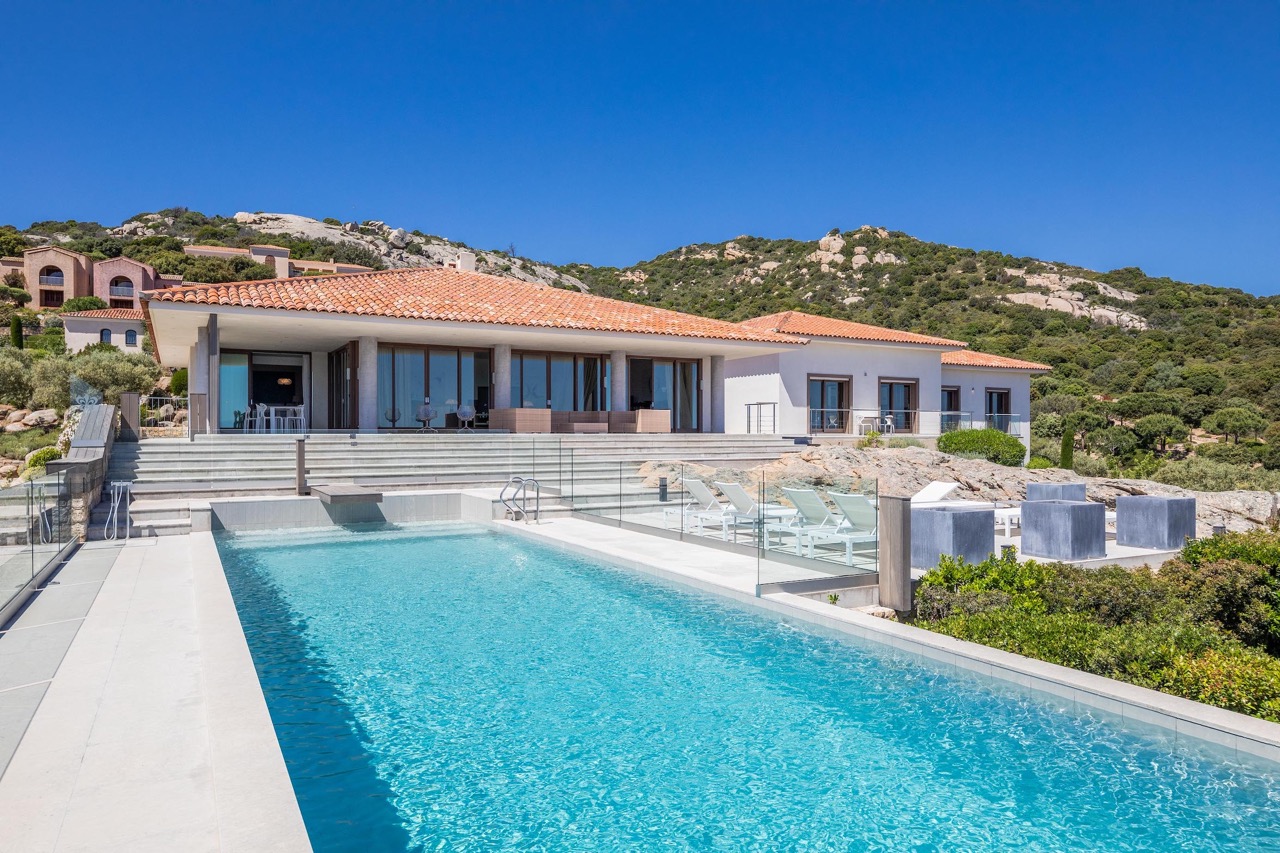
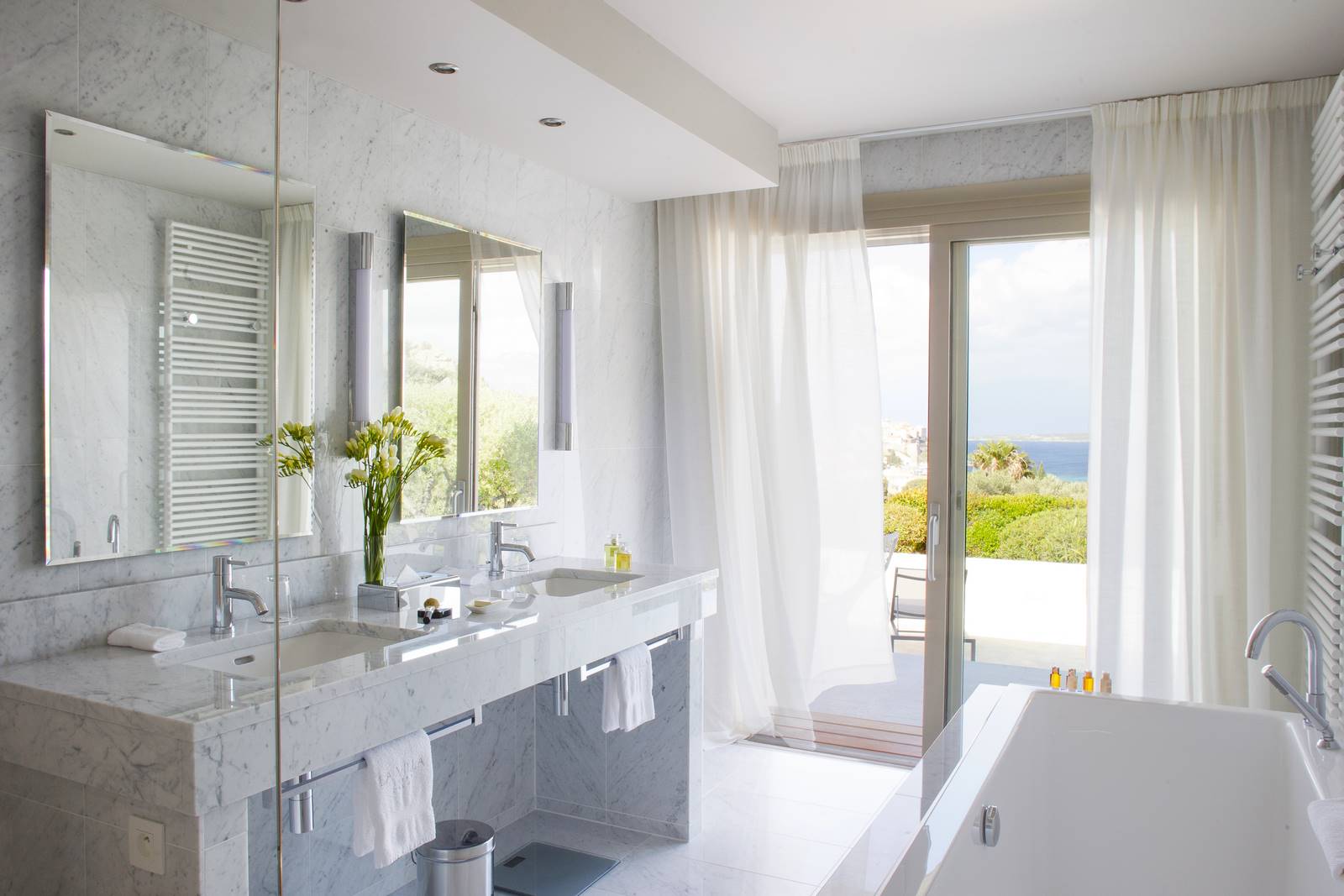
The hotel they built is many things simultaneously, and it has the rare quality of coherence despite its eclecticism. Forty-eight rooms and suites, three private villas ranging from intimate to expansive, an architecture that recedes into its vegetation with deliberate modesty. Marion moves through the interiors the way a curator moves through a collection: always revising, always attuned to the weight of a material, the logic of a lighting fixture, the conversation between a design piece and the particular quality of afternoon sun in that specific room. Ephemeral lounges appear and dissolve. Private dining rooms take shape for a season, then reinvent themselves. The spaces share a sensibility rather than a formula, and the result feels less like a hotel than like a house that has been loved over time by people with excellent taste and genuine warmth.
In 2019, the next generation arrived. Marie, who had spent years inside the machinery of Mandarin Oriental and Four Seasons after studying at the Glion Hotel School, returned to Calvi to take charge of development and commercial strategy. Her brother Antoine, whose passions run toward contemporary art and the question of how it reaches people, arrived with ideas that would change the conversation entirely. It was Antoine who transformed the hotel’s central pathway, a 700-square-metre passage between the entrance and the restaurant terraces, into a gallery space with the seriousness and selectivity of a proper curatorial project. The artists he champions are not decorative. Fred Allard works with inclusions of luxury accessories. Hom Nguyen builds portraits in acrylic, charcoal and Indian ink. Stéphane Cipre bends aluminium into sculpture. The monochrome ducks by Julien Marinetti, whose career Antoine helped shape having first introduced the artist’s work on social media before formally becoming his agent, float on the main basin with an elegant absurdity that somehow anchors the whole emotional register of the place.
The story of how art arrived at Villa Calvi is instructive. It was not planned. Around fifteen years ago, a pair of Czech guests asked Jean-Pierre and Marion whether they might hang some paintings. They agreed. The response from other guests was immediate and, apparently, revelatory. What began as an act of hospitality became a ritual, then an institution. JonOne, now among the most recognised names in street art, was exhibited here before he was famous. His XXL canvas still greets arriving guests, a flourish of controlled energy that sets the tone before a single room key is collected. It is, one suspects, exactly the kind of origin story the Pinellis would have invented if they hadn’t simply lived it.
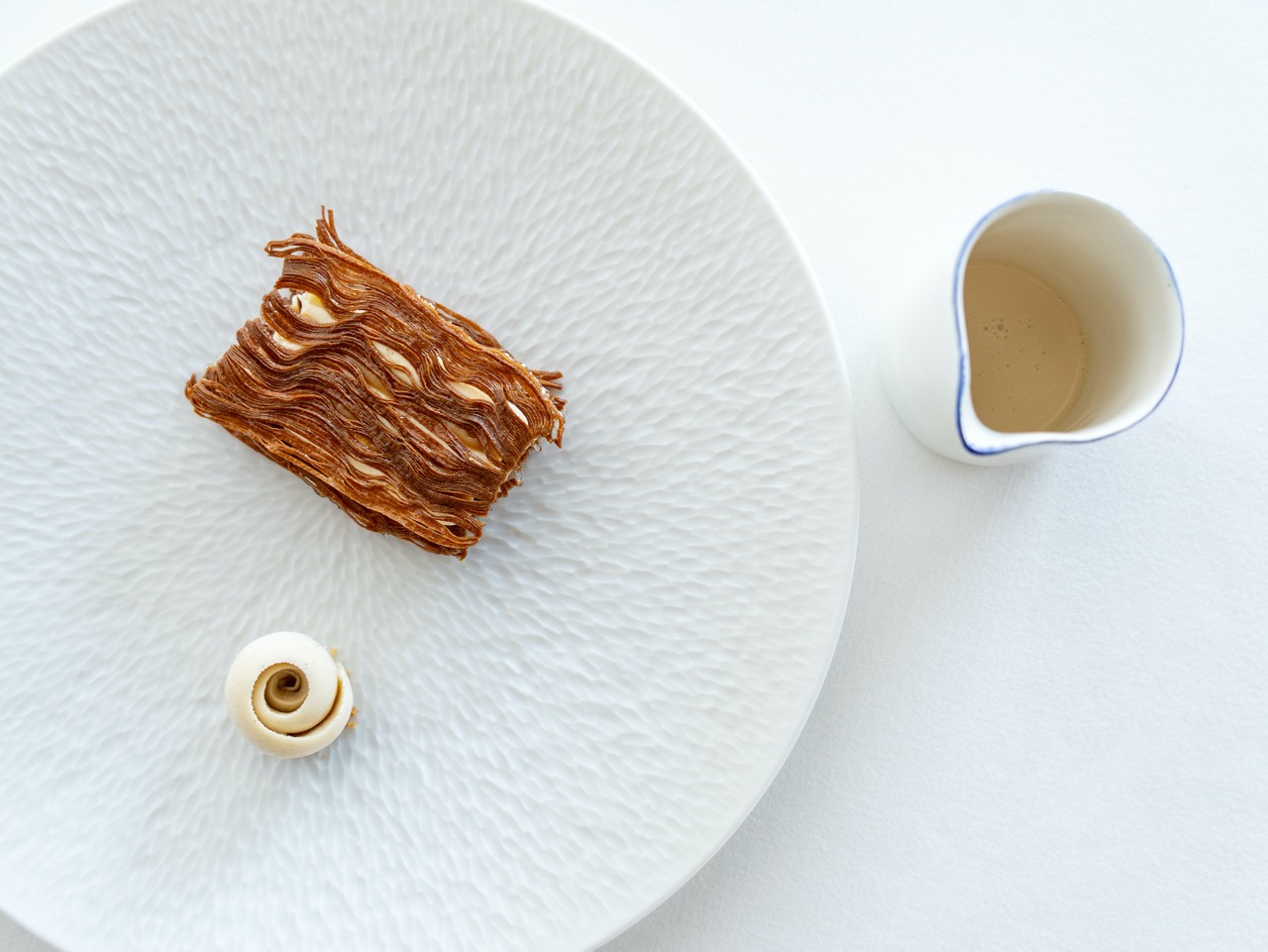
The culinary chapter is its own education. Fabio Volontè, born in Como in 1991, arrived at Villa Calvi via a route that reads like a tour of the European kitchens where standards are made rather than maintained. He cooked under Simone Zanoni and Pietro Volonté at Gordon Ramsay at the Trianon in Versailles. He studied marine refinement at L’Olivo at the Capri Palace under Andrea Migliaccio. He served as sous chef at La Réserve Ramatuelle, where his contribution was integral to the restaurant earning its second Michelin star. At Pierre Gagnaire’s table, he encountered cooking as perpetual creative inquiry. What he distils from all of this at Villa Calvi is something more essential than technique: a cuisine structured around three elements, principal ingredient, accompaniment and sauce, that trusts the product enough not to overwork it. Local Corsican produce, Italian and French influences, natural fermentations and Mediterranean spices, served in the spirit of sharing and without the ceremony that sometimes makes exceptional food feel inaccessible.
The hotel has been a member of Relais & Châteaux since 1995, and Jean-Pierre founded the Cercle des Grandes Maisons Corses in 2010. These are not incidental affiliations. They reflect a commitment to a particular idea of hospitality, one rooted in place, in personality, in the belief that luxury is most legible when it feels entirely natural.
This philosophy extends into how Villa Calvi frames the island itself. Jean-Antoine Ottavi, an aesthete of the Corsican landscape with an uncommon gift for unearthing unspoilt corners even in high season, arranges private tables in hidden pockets of the maquis: painted crockery, antique linen, fresh flowers, and a view that no map quite prepared you for. Boat trips reach the Scandola nature reserve, a UNESCO World Heritage site of volcanic red rock and crystalline water, or deliver guests to Girolata, a village accessible only by sea. Electric fatbikes wind through the vineyards of Balagne, through Culumbu with its works of art among the vines and Clos Landry, where tastings unfold against the backdrop of the sea. Sports coach Césaire, a local, leads hikes on trails that the family has kept deliberately unknown to the wider world.
On four evenings a week, DJ Vincent from Saint-Florent transforms the terrace for Les Nuits de la Villa, the aperitif hour expanding and slowing in the way that aperitif hours do in places where no one is in a hurry to be anywhere else. The private beach, a few minutes from the hotel and sheltered behind a pine forest with the citadel in permanent view, offers a chic and unhurried alternative to the afternoons: rows of sun loungers above the sand, a seasonal Mediterranean menu served in the shade, the sense of something discovered rather than provided.
What Villa Calvi has cultivated, over three decades and across two generations, is not a brand so much as a point of view. A belief that a hotel should be curious, that it should take positions on art and food and landscape and how a room should feel at dusk. That comfort and intellectual life are not in opposition. That the most memorable stays are rarely about the amenities, though the four swimming pools, the indoor 25-metre swimming corridor and the Pilates studio, the first of its kind in any French hotel, are all present and considered, but about the quality of attention. The sense that the people who built this place were trying to make something that mattered.
The citadel catches the last of the light. The bay holds its blue. Somewhere below the terrace, a monochrome duck drifts across still water.
There are hotels that accommodate, and there are hotels that hold something of themselves in reserve, waiting to be understood. Villa Calvi is undeniably the latter.