


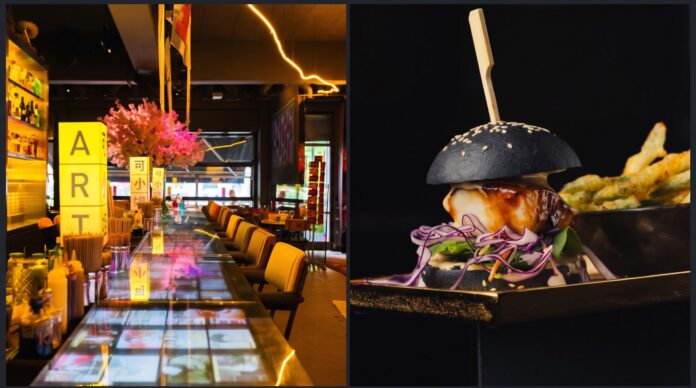

On the impossibly chic Avenue George V, in the heart of Paris’s Golden Triangle, a restaurant unlike anything else in the city pulls diners into an alternate universe. Miss Kō, dreamed up by legendary designer Philippe Starck and veteran restaurateur Claude Louzon, is less a dining room than a portal. Step through the door and the codes of ordinary Parisian dining dissolve, replaced by a hyper stimulating world where food, art, sound, and scent collide.
A Restaurant Built Like a Story
Rather than designing a simple interior, Starck built an entire fictional universe around an imagined heroine: Miss Kō herself, a faceless Eurasian woman who reveals herself only through the tattoos covering her body. She is the ghost who haunts every corner of the restaurant, and her mystery is the engine behind the whole 5,400 square foot space.
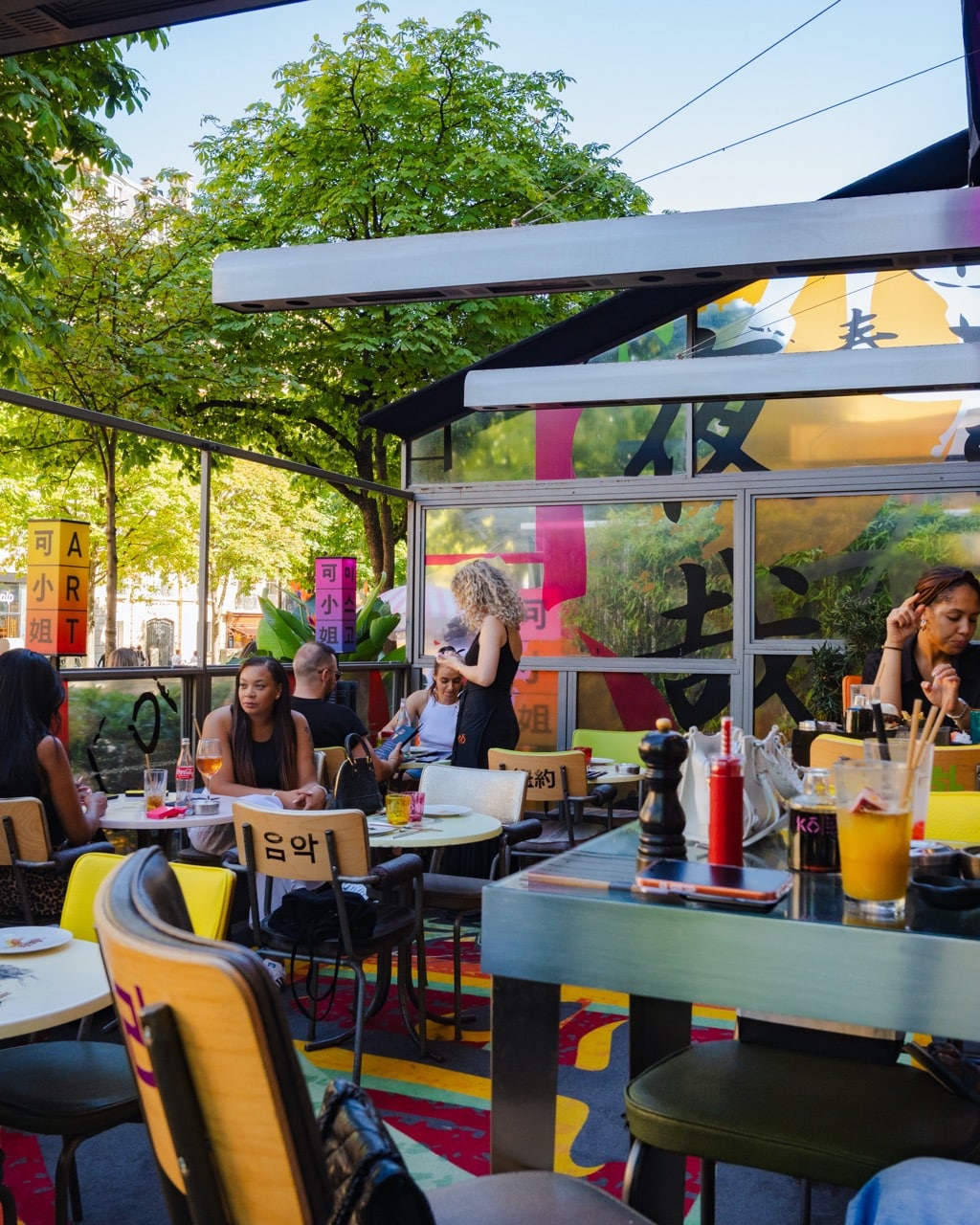
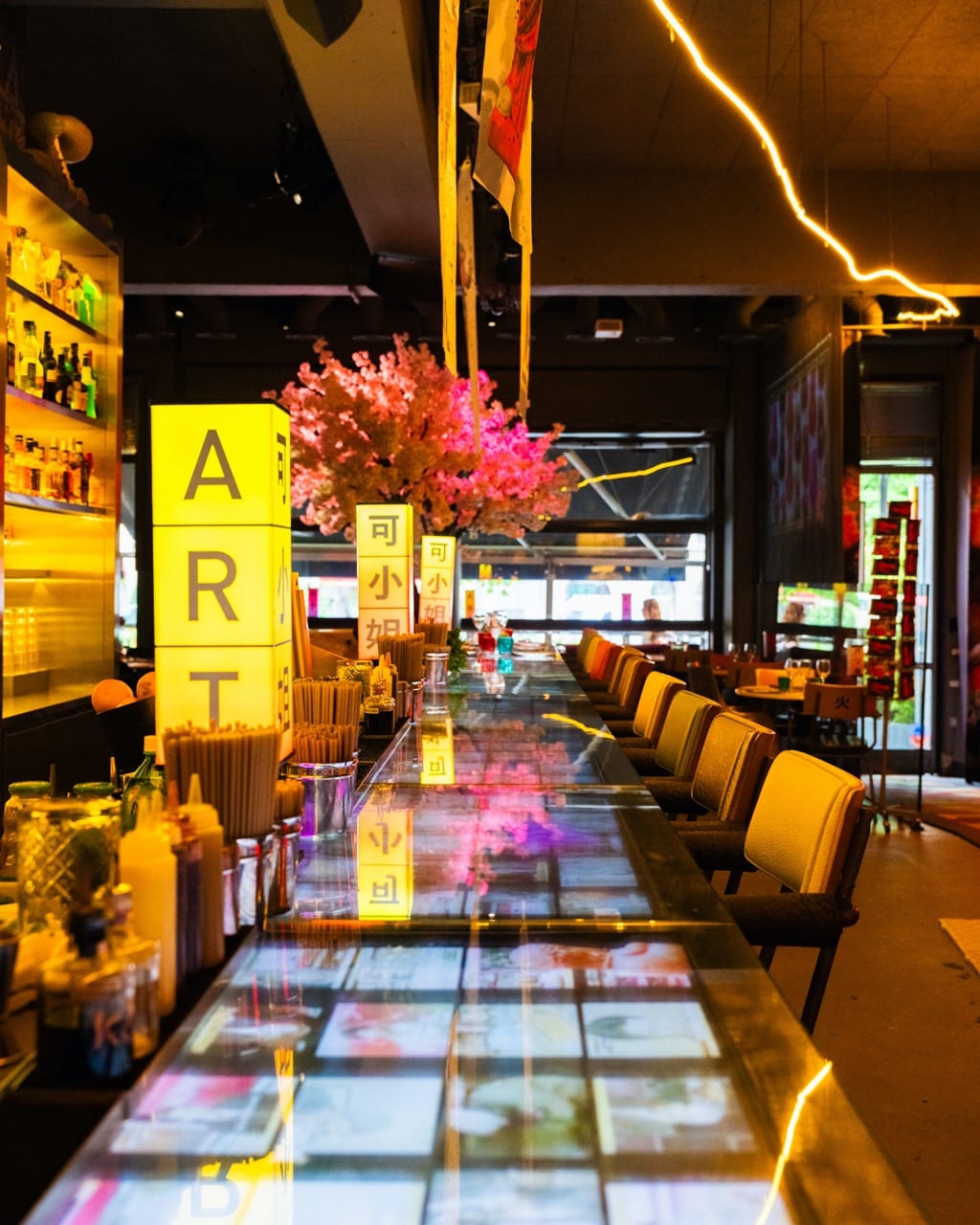
Starck has described the project as a wild collage, something like stumbling into a distant, lawless market street pulled straight out of Blade Runner. It is a place where creative rules do not apply, where technology feels like a glimpse of tomorrow, and where industrial materials are elevated into art. Concrete parking garage walls sit next to Formica chairs, television screens flicker with looping Asian news broadcasts, and an open kitchen fills the room with smoke, steam, and the sizzle of the grill.
A 26 Meter Bar of Screens and a Monumental Fresco
The visual heartbeat of Miss Kō is a double bar wrapped in glowing monitors that stretches an astonishing 26 meters, streaming a nonstop collage of Asian television channels interrupted by the occasional passing dragon. On the concrete walls, rippling projections of rice grains and morphing faces blur the boundary between the room and the screen, making the whole space feel alive and slightly untethered from reality.
Above it all looms a fifteen meter fresco by artist David Rochline, painted using a meticulous mix of watercolor, pencil, and gouache. Lush, crowded, and unapologetically strange, the mural reads somewhere between wallpaper and a futuristic manga, packed with wide eyed characters who seem to watch the room right back. Starck has called Rochline something like the Jean Cocteau of his generation, and the fresco is the closest thing Miss Kō has to a signature backdrop, the piece every diner ends up photographing.
Lighting designer Jean Philippe Bourdon, known for his work on French television, uses layers of neon to erase any sense of a ceiling and to spotlight the room’s most theatrical details. A custom soundtrack from Maison Sérieuse and Orsten Karki, along with rotating guest DJs, keeps the energy pulsing, while a bespoke fragrance commissioned from perfumer Rami Mekdachi quietly ties the whole sensory experience together.
The Food: Asian Tradition Meets French Technique
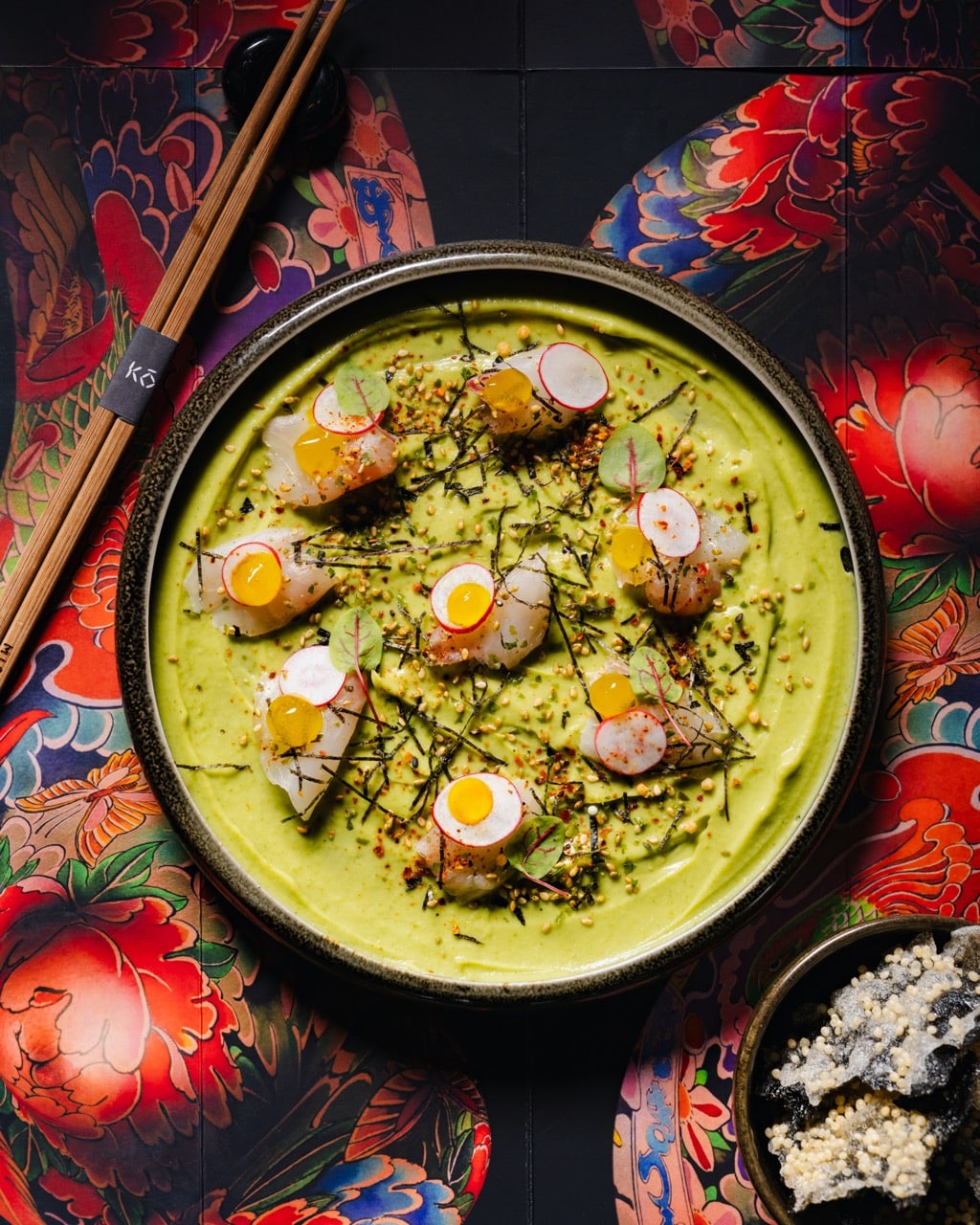
For all its visual drama, Miss Kō is ultimately a restaurant, and the kitchen takes that seriously. Chef Fabrice Monot, developing the menu with guidance from Nobu veterans Linda Rodriguez and Martin Swift, reworks the classics of pan Asian street food through a distinctly French lens.
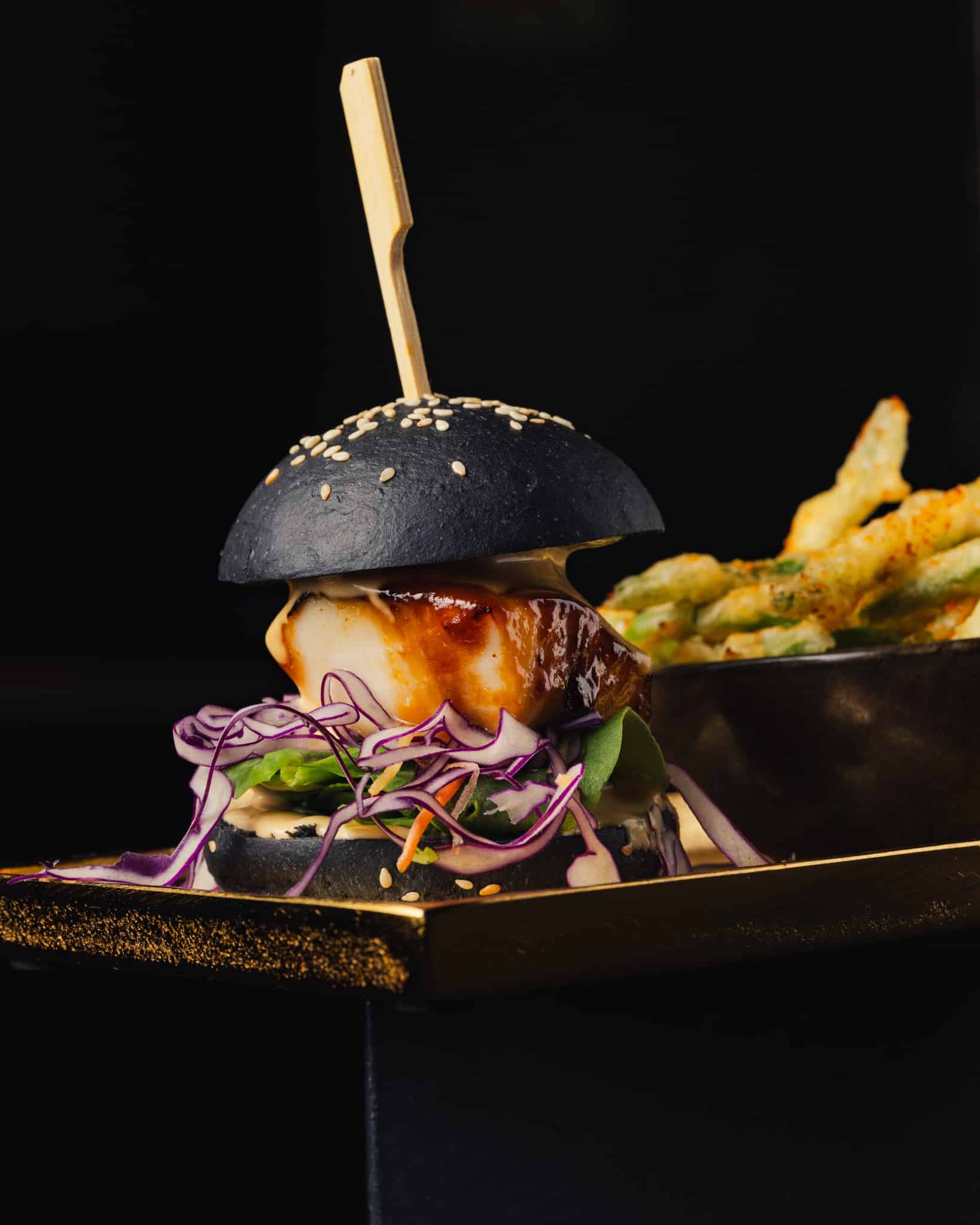
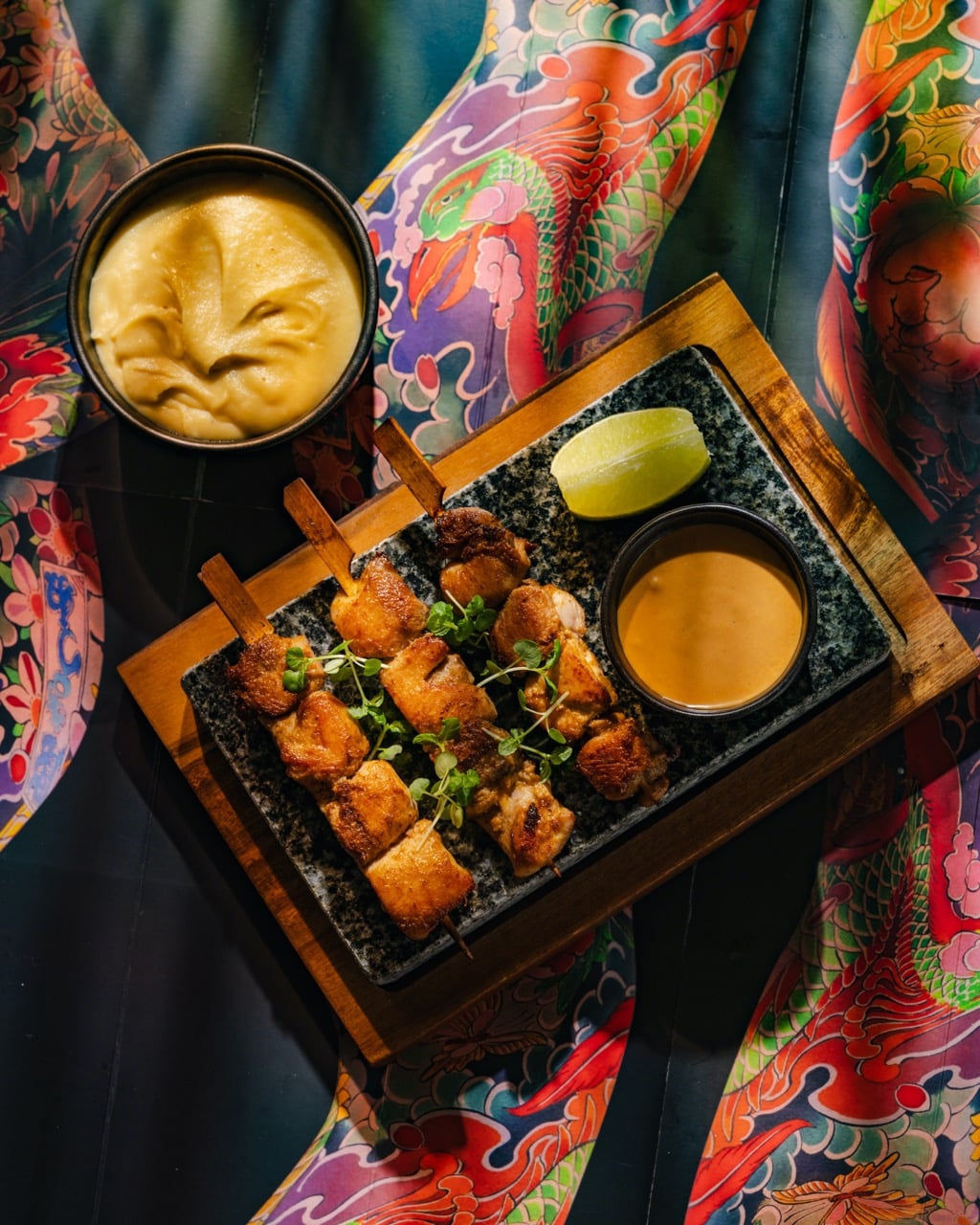
Expect reinvented sushi rolls with sweet and savory twists, crisp and tender textures playing against each other on the same plate. Gyoza, bo bun, spring rolls, and yakitori all get the Miss Kō treatment, alongside inventive salads built around contrasting flavors and textures. Squid ink sometimes darkens the burger buns, while bo bun turns up served right on the terrace overlooking George V.
One of the kitchen’s most talked about inventions is the Sashizza, a playful hybrid of Japanese inspired pizzetta and fresh tuna sashimi. Classic French dishes get an equally bold Asian reinterpretation too: a Niçoise salad drifts toward the Far East, bouillabaisse loosens up with Asian spicing, foie gras appears dressed for spring, and beef bourguignon is wrapped in a tailor made gyoza dough kimono.
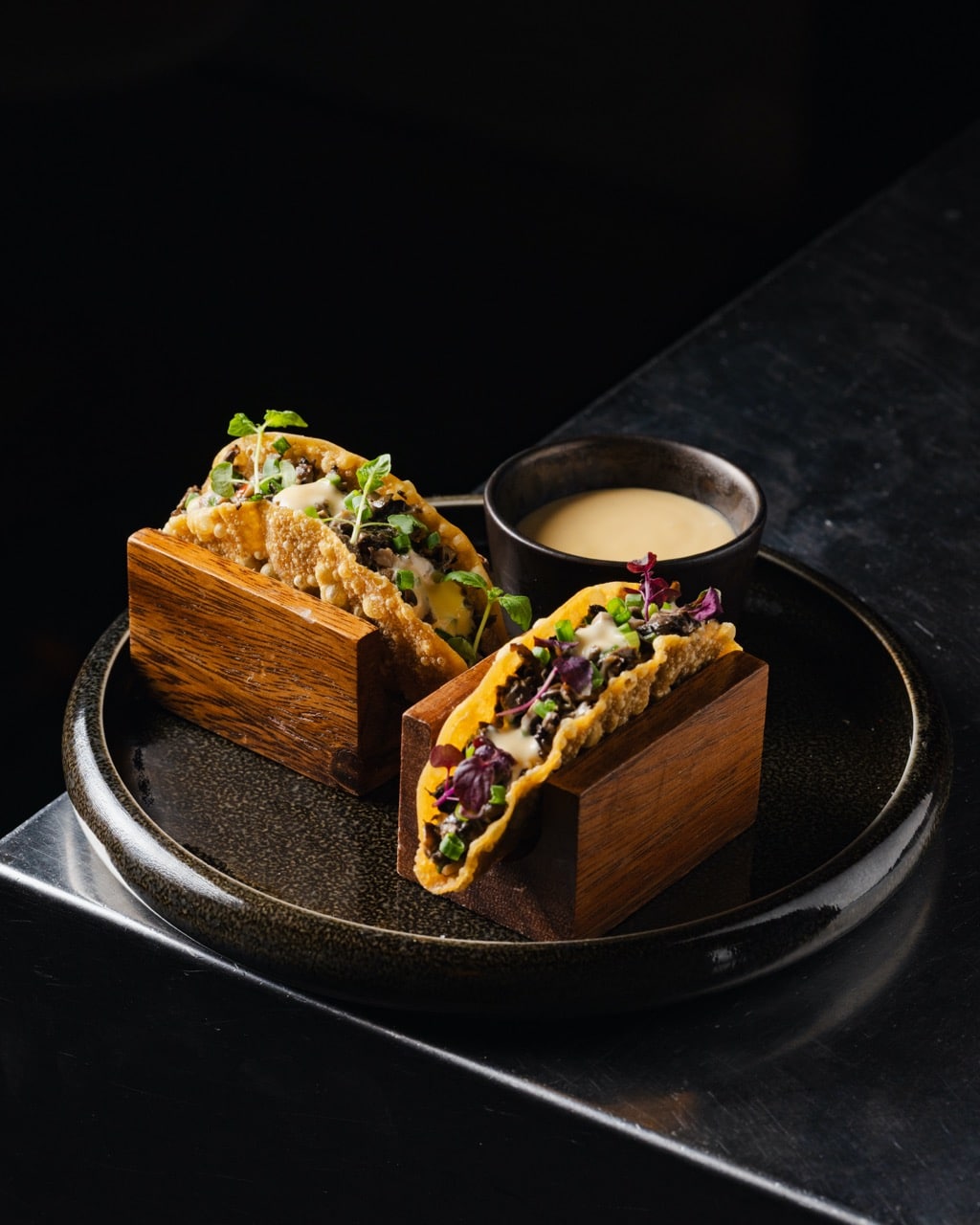
Dessert follows the same East meets West logic. Alongside a classic cheesecake, diners will find sweet Sashizzas, a mysterious chocolate mousse topped with a printed disc, tapioca pearls lifted with coconut mousse and fresh mango, and an ambitious dessert called Himalaya that has quickly become a house favorite.
With 200 covers spread across the George V terrace, the sushi counter, a communal table, and intimate two tops, Miss Kō gives every guest a slightly different way to experience the menu, whether that means a quiet dinner for two or a front row seat to the chaos of the open kitchen.
Cocktails as Liquid Storytelling
At Miss Kō, the bar program is treated with the same narrative ambition as the food and the decor. The bar team describes mixology here as a kind of liquid poetry that guides the whole evening, blending polished classics with inventive signature drinks built around bold textures, vivid colors, and evocative aromas.
Among the house favorites is the Swimming Kō, a sparkling mix of champagne, apricot liqueur, and fresh fruit that channels a bright tropical escape. The Asian Smash combines Bombay Original gin with Thai basil, cilantro, lime, and a light syrup for something that feels like a midnight walk through an Asian night market. Miss Kō also serves one of the best Pornstar Martinis in Paris, made with Remyx vodka, Passoa, fresh passion fruit puree, and vanilla syrup, finished with its own shot of champagne for a final spark.
Food, Art and Curiosity: A New Chapter
Since October 2025, Miss Kō has pushed its identity even further with the launch of Food, Art and Curiosity, an ongoing program of international artist residencies. The idea is to treat the restaurant as a living laboratory where gastronomy, art, and imagination keep reshaping one another.
The inaugural residency, running from October 2025 through January 2026, features London based artist Natalie Liu, whose hybrid digital and organic works sit somewhere between technology and nature. Her fluid, almost edible looking forms transform the space into an immersive digital landscape built around the fleeting beauty of natural phenomena. To match the installation, the kitchen has created a limited experimental menu inspired directly by her work, extending the artist’s aesthetic from the walls onto the plate.
The Team Behind Miss Kō
The restaurant is the result of a three year collaboration between Philippe Starck, whose design philosophy centers on creativity that improves everyday life, and Claude Louzon, a restaurateur with more than four decades of experience behind concepts like Le Paradis du Fruit and Hanoï Cà Phê. In the kitchen, Olivier Jegousse, now Culinary Technical Director for the DNA Paradis group, brings classical French training and experience working alongside chef Yannick Alléno to the operation. The visual identity was shaped by London agency GBH, known for branding that pushes past conventional expectations.
Miss Kō is not a restaurant you simply visit once and forget. It is designed to keep evolving, adding new artist residencies, new chef collaborations, and new sensory surprises, so that no two visits ever feel quite the same.