
HomeNewsTechnologyL'Oréal Unveils the L'Oréal Cell BioPrint at CES® 2025: Revolutionizing Personalized Skin...

L’Oréal Unveils the L’Oréal Cell BioPrint at CES® 2025: Revolutionizing Personalized Skin Analysis

follow us on Google News

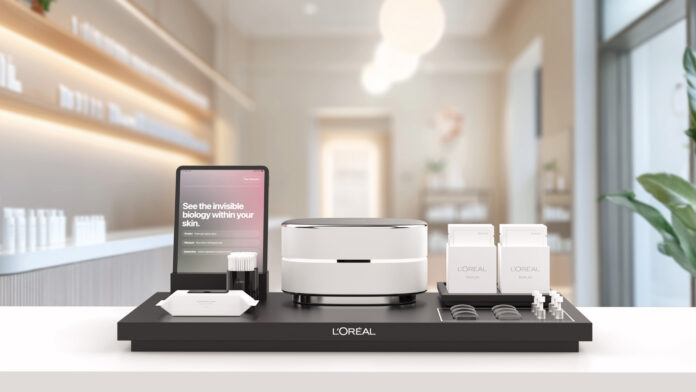
At CES® 2025, L’Oréal Groupe introduced the L’Oréal Cell BioPrint, a cutting-edge tabletop device that provides personalized skin analysis in just five minutes. The device uses advanced proteomics, the study of protein composition in the human body, to offer detailed insights into skin aging and help users make more informed skincare decisions.

Made possible by L’Oréal’s Longevity Integrative Science™, this groundbreaking technology reveals how biological mechanisms affect skin appearance. The L’Oréal Cell BioPrint was developed in collaboration with NanoEnTek, a Korean startup specializing in microfluidic technology. It provides users with a comprehensive skin assessment, including:

  • Skin’s Biological Age: L’Oréal Cell BioPrint calculates the biological age of the skin and offers personalized advice on slowing the visible signs of aging.
  • Ingredient Responsiveness: The device helps predict how specific active ingredients, such as retinol, will interact with the skin, reducing guesswork in product selection.
  • Proactive Skincare: It helps predict potential skin concerns like dark spots or enlarged pores before they become visible, enabling proactive skincare routines.

Barbara Lavernos, Deputy CEO in charge of Research, Innovation, and Technology at L’Oréal, stated, “At L’Oréal, we continue to innovate by blending cutting-edge discoveries with our expertise in beauty. We are excited to introduce Cell BioPrint, a unique lab-on-a-chip technology that allows users to understand deeper skin insights and proactively enhance the longevity and beauty of their skin.”

- Advertisement -

A Step Forward in Personalized Skincare

The global skincare market, projected to reach $125 billion by 2024, is increasingly driven by consumer demand for personalized, effective skincare products. A recent survey revealed that nearly 80% of skincare users rely on trial and error to find suitable products, trying an average of seven different cleansers before discovering one that works.
L'Oréal Cell BioPrint at CES® 2025
L’Oréal Cell BioPrint at CES® 2025

Advanced Science and Technology Behind L’Oréal Cell BioPrint

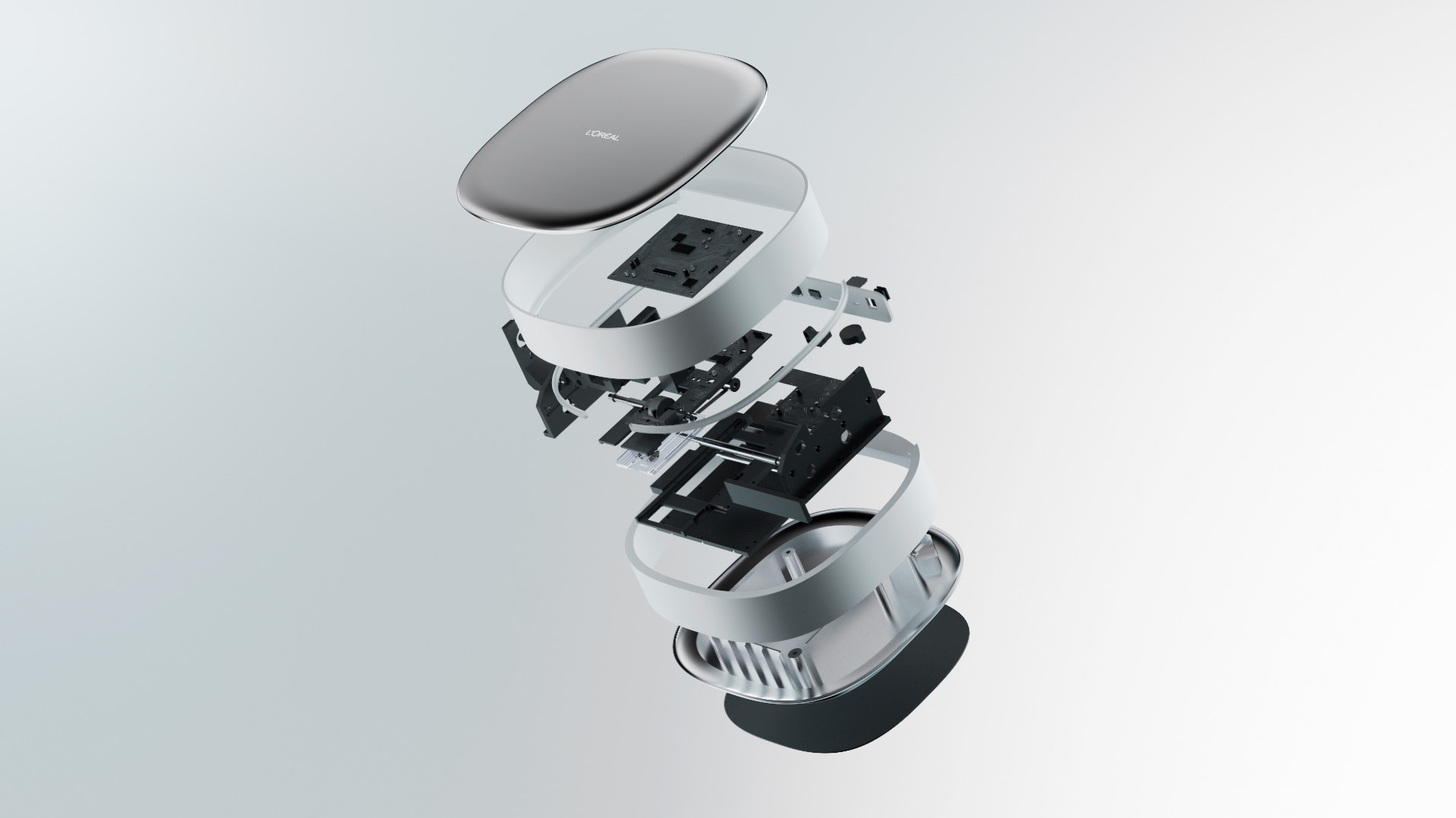
L’Oréal’s Advanced Research team has built on decades of innovation to identify unique skin biomarkers linked to healthy, youthful skin. The L’Oréal Cell BioPrint device incorporates NanoEnTek’s microfluidic lab-on-a-chip technology, which is based on over 100 patents, to analyze L’Oréal’s groundbreaking protein biomarkers within just five minutes.

The simple, non-invasive process includes:

  1. Applying a facial tape strip to the cheek and placing it in a buffer solution.
  2. Loading the solution into the Cell BioPrint cartridge for analysis.
  3. As the device processes the sample, users complete a short questionnaire about their skin concerns and aging, while the Skin Connect device captures facial images.

Scheduled for a pilot launch with a L’Oréal brand in Asia later in 2025, the L’Oréal Cell BioPrint aims to make personalized skin assessments and customized skincare solutions accessible to a wider audience.

Leave a Reply

More to Explore

From Pixels to the Body: Inside Midjourney’s Surprise Leap Into Medical Hardware

Midjourney has spent four years training the public to think of it as a company that turns text prompts into pictures. This week the...

Apple Just Redesigned Siri With AI, and iOS 27 Comes With Powerful New Parental Controls

Apple used its annual developer conference to lay out its vision for the next year of software across the iPhone, iPad, Mac, Apple Watch,...

The Strategic Implications of Anthropic Public Market Debut

The transition of frontier artificial intelligence from research and development into public market capitalization presents a critical study in operational resilience and capital allocation....

The End of the Passive PC: How NVIDIA RTX Spark is Making AI Your Local Teammate

For decades, personal computers have been exactly that: tools you operate. You click an application, type a command, and wait for a result. But...

Meet Claude Opus 4.8: The AI That Finally Admits What It Does Not Know

There is a specific anxiety that comes with using generative AI: the fear that the machine will confidently hand you a broken piece of...

The Age of the Agent: How Google I/O 2026 Rewrote the Rules of Artificial Intelligence

By the time Sundar Pichai walked off the Shoreline Amphitheatre stage on the evening of May 19, 2026, the word "assistant" had been quietly...

Sony Just Solved the Biggest Annoyance of Super Telephoto Lenses

Sony just redefined what photographers can expect from a long range zoom. The newly announced FE 100 to 400mm F4.5 GM OSS brings a...

Sony’s Alpha 7R VI Is the High-Resolution Camera Serious Photographers Have Been Waiting For

Sony just raised the bar for full-frame mirrorless photography, and for anyone who has been following the Alpha 7R series since its early days,...

Blender 5.1: The Precision Refinement Every Designer Needs

Released on March 17, 2026, Blender 5.1 arrives not as a radical departure, but as a masterclass in refinement. While version 5.0 was the...

How to Set Up Firefox’s New Free Built-in VPN and Use Native Split View

Digital privacy often feels like a full-time job, requiring users to juggle various extensions and subscriptions just to keep their personal data from leaking...

OpenAI Shuts Down Sora as Disney’s $1 Billion Deal Collapses

The sudden closure of OpenAI's AI video platform marks one of the most dramatic reversals in the brief history of generative AI, and leaves...

Sony’s Tokyo Studio Is Where the Future of Filmmaking Gets Made

Sony is bringing its global media production hub network to Japan, opening the Digital Media Production Center Japan (DMPC Japan) inside the company's Group...

Anthropic’s Claude Cowork Lets You Assign AI Tasks From Your Phone and Walk Away

Artificial intelligence is getting better at doing things. The harder challenge has always been getting it to do things without you watching. Anthropic's Claude...

NVIDIA’s Dynamo 1.0 Is Free, Open Source Software That Makes AI Inference Up to 7x Faster

Running AI models at scale is harder than it looks. Training a model is a one-time investment. Inference, the process of actually using that...

Adobe and NVIDIA Are Teaming Up to Reinvent Creative and Marketing Workflows With AI

Two of the most influential companies in creative technology are deepening a partnership that goes back more than two decades. Adobe and NVIDIA have...

Recommended for You

You Might Also Like