



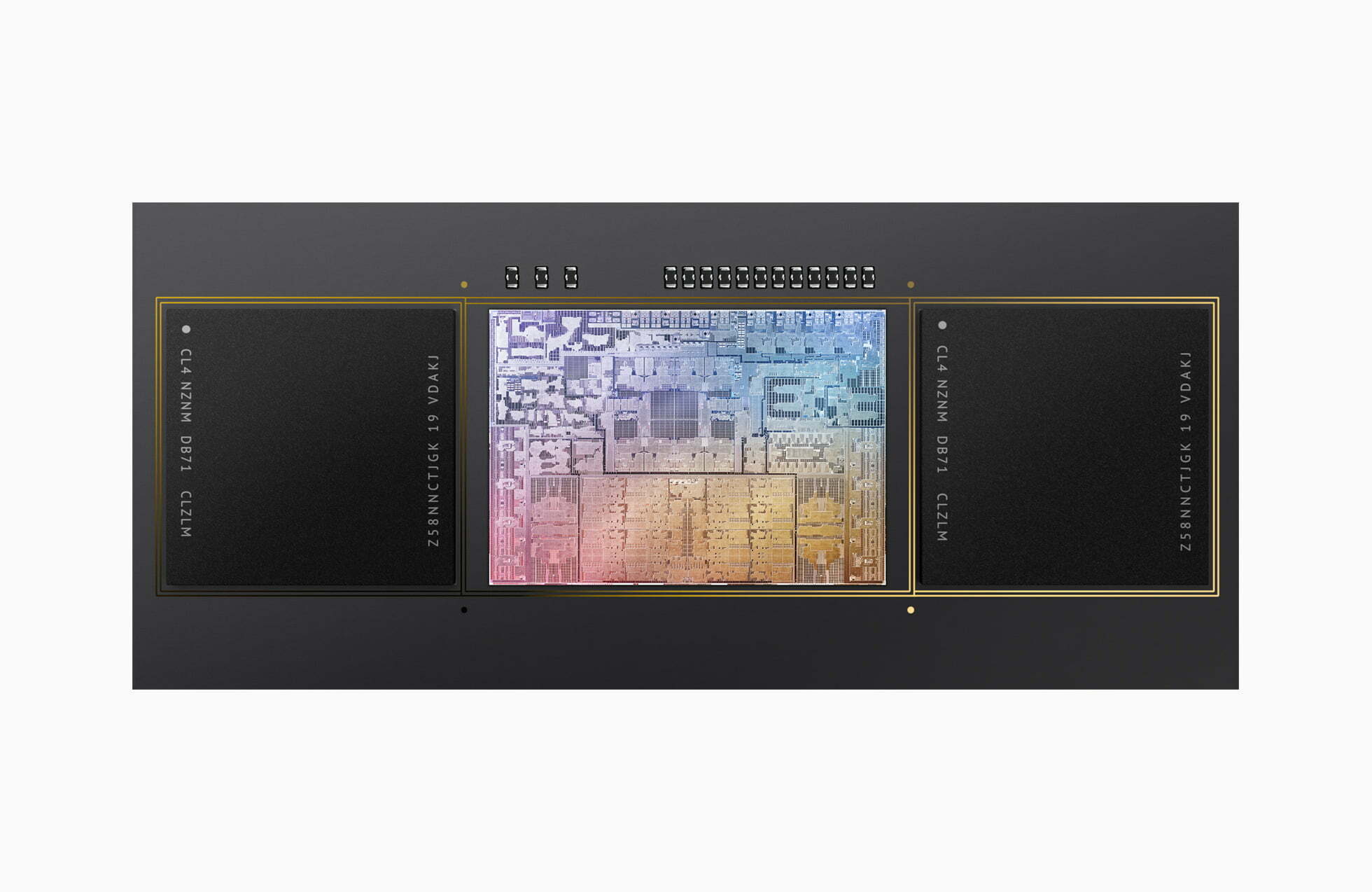
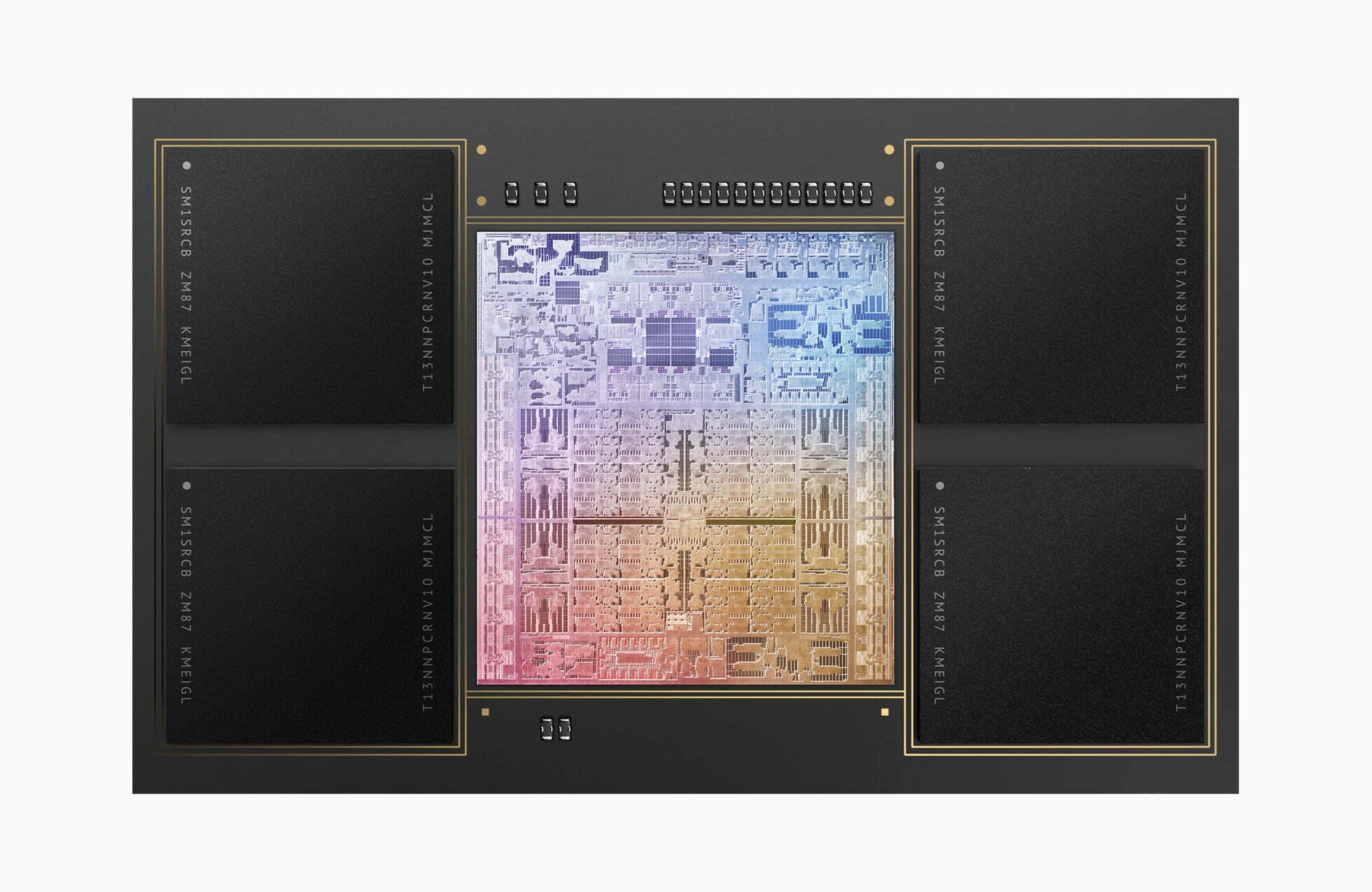
Apple announced the updated MacBook Pro lineup, featuring a 14 and 16″ model of Apple’s powerful new M1 Pro and M1 Max chips. The biggest news about the MacBook Pro is that it will feature Apple’s all-new “pro chips,” the insanely powerful M1 Pro and M1 Max. What does “insanely powerful” mean? According to Apple, by scaling up the original M1’s architecture, the M1 Pro delivers dramatically increased performance speed, battery life, and power efficiency. And the M1 Max takes those improved capabilities even further.
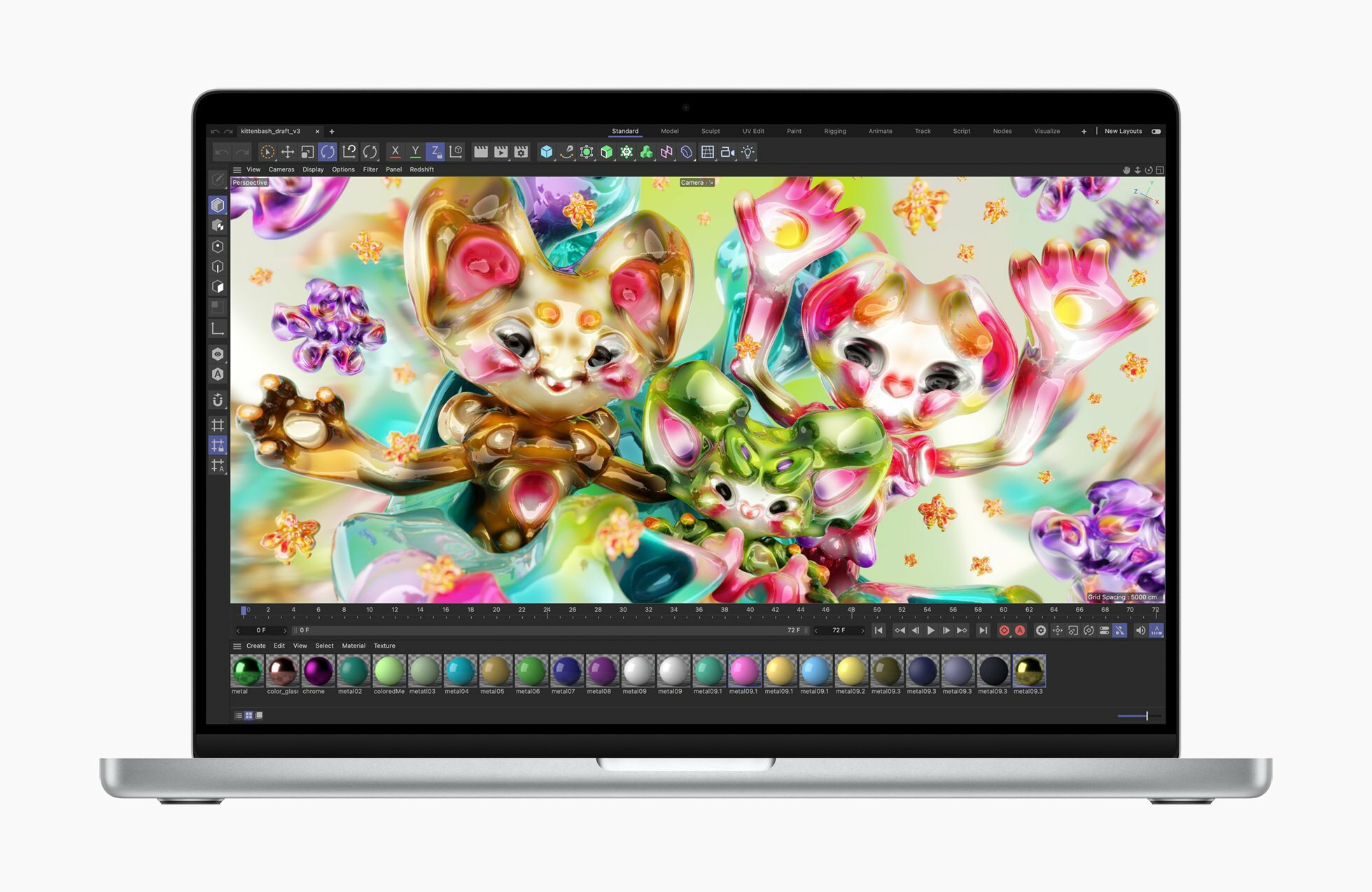
Compared to a high-end configuration of last year’s 13″ MacBook Pro with M1 Chip, a new 14-inch MacBook Pro can:
- Render 4K video up to 9.2x faster in Final Cut Pro with M1 Pro and up to 13.4x faster with M1 Max
- Render effects up to 3.6x faster in Blackmagic Design DaVinci Resolve Studio with M1 Pro, and up to 5x faster with M1 Max
- Track objects up to 8.7x faster in Final Cut Pro with M1 Pro and up to 11.5x faster with M1 Max
How did Apple achieve this new level of power and performance? According to Apple, it introduced a system-on-a-chip (SoC) architecture with the M1 Pro and M1 Max that features fast unified memory, and better performance per watt, along with increased 200GB/s of memory bandwidth with support for up to 32GB of unified memory for the M1 Pro, and up to 400GB/s of memory bandwidth and support for up to 64GB of unified memory. Those are a lot of numbers that basically say the new MacBook Pro is an absolute beast, capable of handling even the most demanding workflows and tasks.
Both chips also add a ProRes accelerator in the media engine, which Apple claims will deliver uncompromisingly fast performance and video processing. As a result, professional video editors can edit up to 30 streams of 4K ProRes video, or up to seven streams of 8K ProRes video, in Final Cut Pro. And that’s not all. For the first time ever, video editors can now use their Mac to color-grade video in HDR on 8K ProRes 4444.

Here are some more numbers to help you make sense out of all this power.
Using the same comparison models as before, the new 14-inch MacBook Pro will deliver:
- Up to 2.9x faster combined vector and raster GPU performance in Affinity Photo with M1 Pro, and up to 4.5x faster with M1 Max
- Up to 4.4x faster scene edit detection in 1080p ProRes 422 video in Adobe Premiere Pro
- Up to 1.5x faster performance with M1 Pro and up to 2x faster with M1 Max when selecting subjects in images in Adobe Photoshop
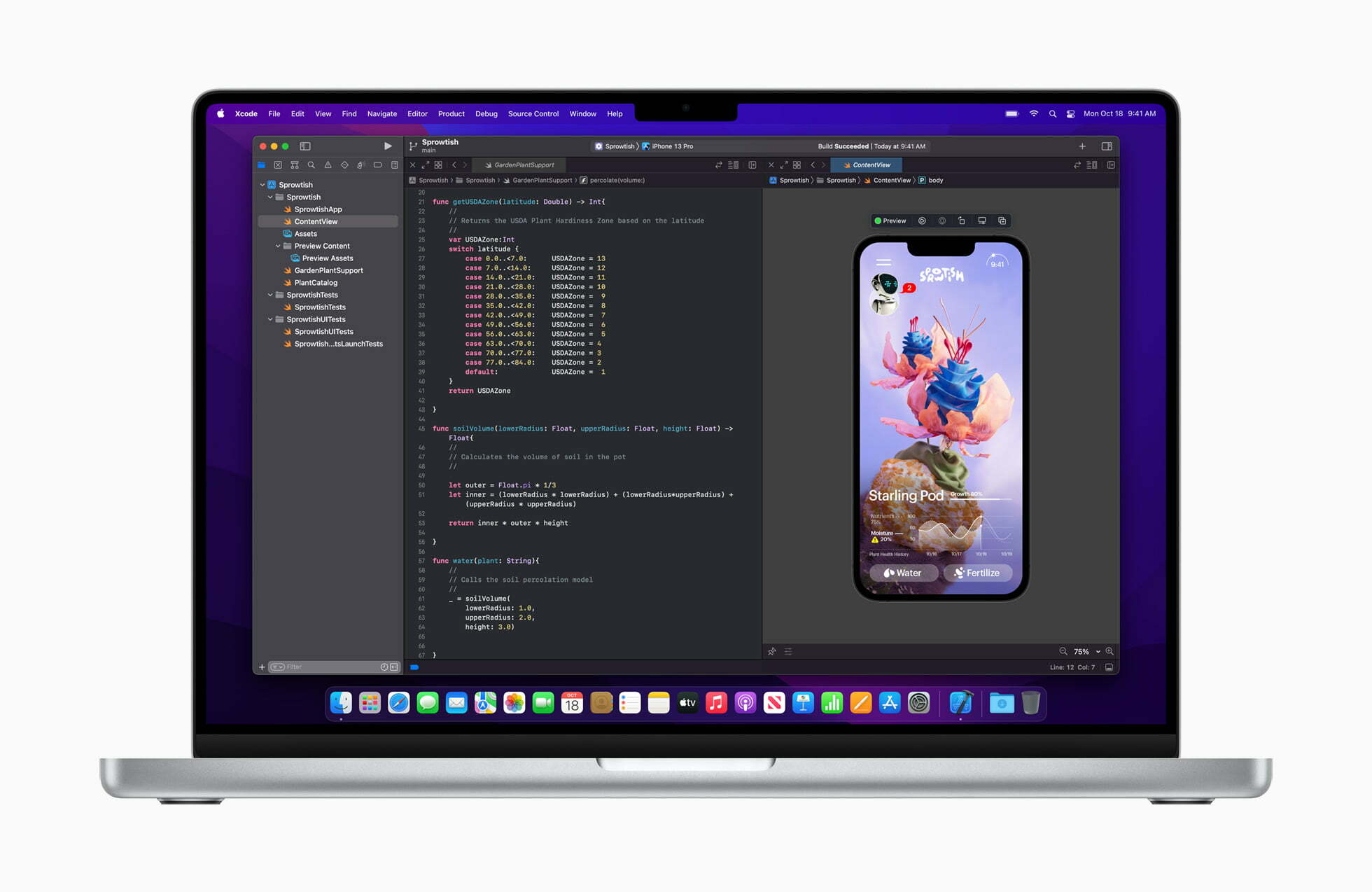
The examples of how well the new MacBook Pro outperforms last year’s model are essentially endless. But the main takeaway is that the new MacBook Pro featuring the M1 Pro or M1 Max chip can crush any task, such as high-res photo and video editing, allowing even pro users to fly through the most demanding workflows.
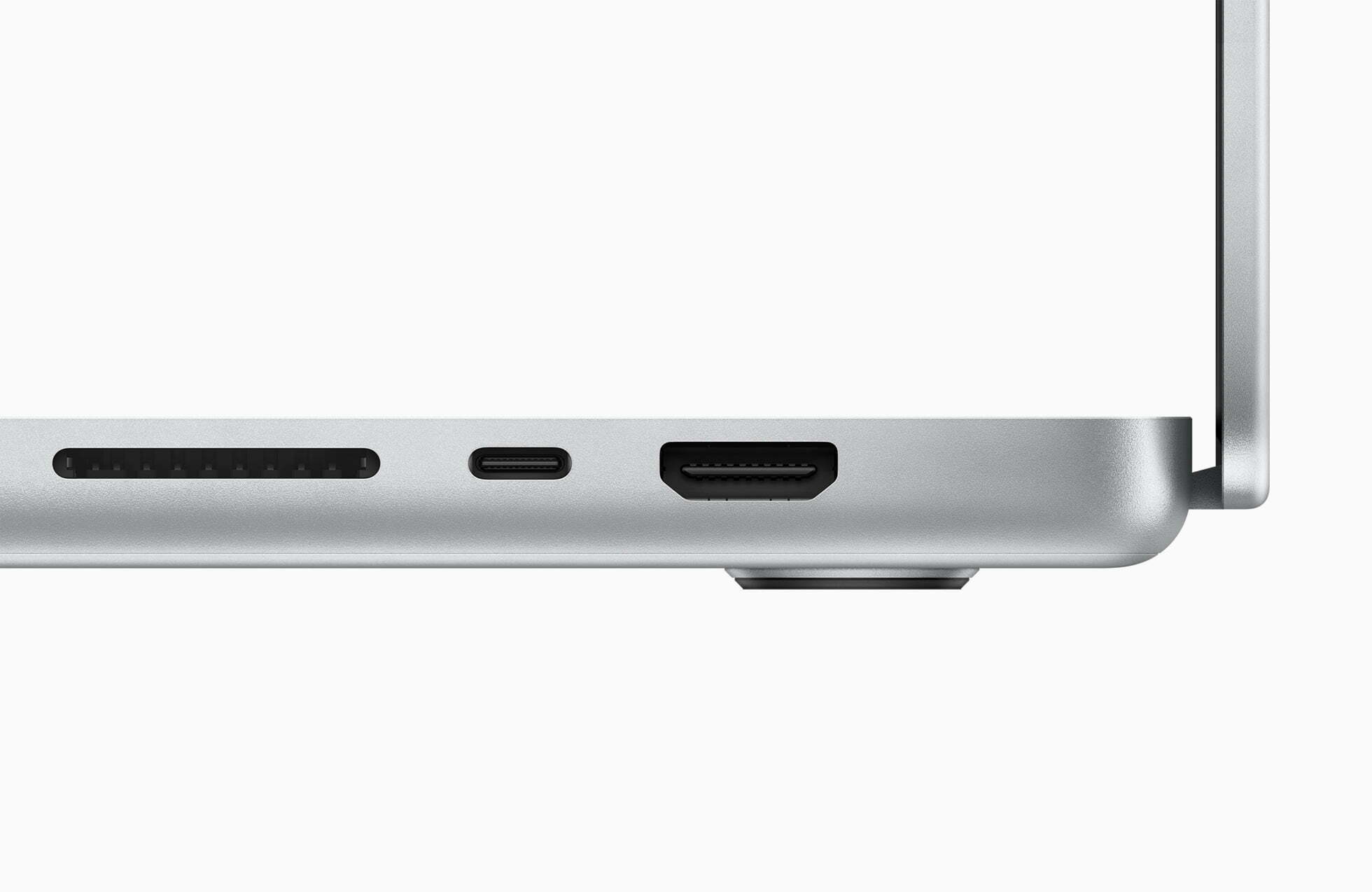
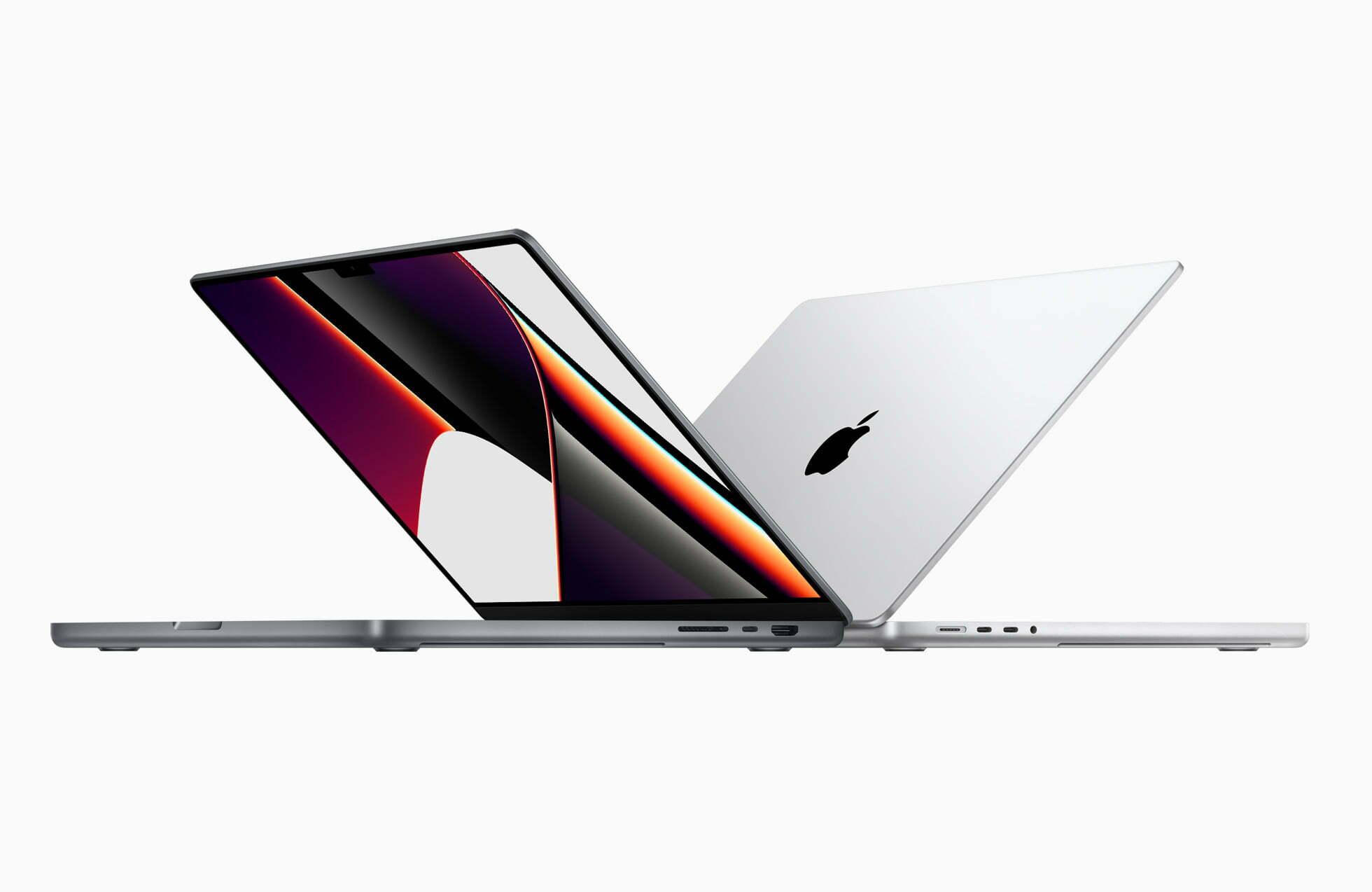
In terms of physical design, the updated MacBook Pro features an all-new aluminum enclosure and thermal design. The redesign adds an upgraded I/O as well, including a built-in HDMI and SDXC card slot. Even the Magsafe charger makes a comeback. According to Apple, the internal fans rarely need to turn on, making this one of the most quiet MacBooks to date. Wi-Fi 6 and Bluetooth 5.0 are both onboard. Battery life gets a notable boost, too. According to Apple, the 14-inch model delivers up to 17 hours of video playback, while the 16-inch model delivers up to a remarkable 21 hours of video playback.

Last but not least, the new MacBook also features a redesigned Liquid Retina XDR display. The new screen utilizes the same mini-LED technology that made the most recent iPad Pro’s display so vibrant and undeniably gorgeous. Speaking of vibrant: The MacBook Pro’s new display can deliver up to 1,600 nits of peak brightness, and 1,000,000:1 contrast ratio. And, at long last, ProMotion technology comes to the Macbook Pro, bringing with it an adaptive refresh rate up to 120Hz, optimizing video footage and ensuring ultra-fluid and responsive performance all-around.
AirPods
The third generation of Apple’s best-selling AirPods was also announced today. Featuring a fresh new design, Spatial Audio, and even longer battery life, the new AirPods look primed to continue their reign as the “world’s most popular wireless headphones.”
Similar to previous generations, the third-gen AirPods are lightweight and focused on comfort, secure fit, and optimal position for delivering audio into the ear. The redesign also features a slightly shorter stem that is meant to make the already-slight AirPods even more less obtrusive.
The new design also includes new audio features, including some of the breakthrough sound experiences found in Apple’s premium AirPods Max headphones—such as Adaptive EQ and Apple’s new spatial audio feature with dynamic head tracking. These new features support the AirPod’s already outstanding overall audio performance.
Battery life, which was already solid among wireless headphones, also gets a boost. The third-generation AirPods deliver a full extra hour of battery life, bringing the total amount of listening time you get—including a full charge case—up to 30 hours.
HomePod mini
There wasn’t a new HomePod mini announced today, but there were new color options. In addition to classic white and space gray, you can now get your HomePod mini in yellow, orange, or blue.

