


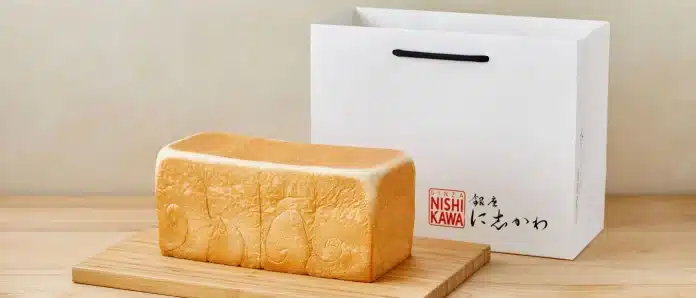

There is a particular kind of hush that falls over a person the moment they slice into a truly great loaf of bread. Not a baguette shattering into shards, not a sourdough with its aggressive crackle, but something quieter and stranger: a loaf so soft and so pillowed that the knife seems almost apologetic for cutting it at all. That is the sensation that greets anyone who finally gets their hands on a loaf from Ginza Nishikawa, the Japanese bakery that has turned a single, humble product, milk bread, into one of the most sought after and most debated indulgences in the Japanese American food world.
For the uninitiated, shokupan is Japan’s answer to the sandwich loaf, a soft white bread often labeled milk bread outside of Japan because of its enriched, dairy heavy dough. It is squarer, denser in a good way, and noticeably sweeter and silkier than the mass produced sandwich bread found on most American supermarket shelves. In Japan, a humble loaf can be had for a dollar or two at any neighborhood grocery. But over the past decade, a new category has emerged: the premium shokupan, baked with couture level attention and priced accordingly. Ginza Nishikawa sits near the top of that category, and its loaves, which run in the neighborhood of twenty one dollars, have become one of the more talked about bakery items to cross the Pacific.
The Backstory Behind the Hype
Ginza Nishikawa is a relatively young brand as far as Japanese bakeries go. It was founded by Hitoshi Takahashi, who opened the flagship shop in Tokyo’s glossy Ginza district in 2018. Takahashi’s background is telling: he grew up around parents who worked as traditional kappo style chefs, an experience that reportedly shaped his obsession with how water chemistry can coax out umami and subtle flavor in food. That fixation on water became the bakery’s calling card. Within a handful of years, the brand expanded rapidly, eventually growing to more than one hundred locations across Japan, a remarkable trajectory for a company that sells exactly one product.
In the summer of 2022, Ginza Nishikawa made its first move outside of Japan, opening its debut international location in West Los Angeles. According to the bakery’s American leadership, the plan to bring the brand stateside had actually been in motion since before the pandemic, meaning it took roughly four years of preparation before the first loaf was sold on American soil. Rather than open a traditional storefront, the company chose to operate out of a ghost kitchen model, working through a shared culinary space and offering pickup and delivery rather than a full café experience. It was, by the company’s own account, a deliberate choice, a way of testing the American market nimbly before committing to permanent retail real estate. Since that first Los Angeles debut, the brand has continued to grow its footprint in Southern California, with operations and pop up pickup points that now reach into Orange County, including a standing location in Santa Ana, along with rotating pop ups in cities such as Irvine and the city of Orange.
What separates Ginza Nishikawa from the wider premium shokupan boom is its insistence on water as the defining ingredient. The bakery uses proprietary alkaline ionized water, produced in house, which carries a higher pH than ordinary tap or filtered water. In theory, and reportedly in practice, this altered water chemistry allows the dough to extract and amplify the natural flavors of the other ingredients more effectively, resulting in a crumb that is silkier and softer than what a conventional dough could achieve. It is a very Japanese kind of obsession, the sort of meticulous, almost scientific devotion to a single variable that shows up again and again in the country’s culinary culture, whether in the water used for soba noodles or the water used to brew sake.
Beyond the water, the bakery leans on genuinely rich ingredients: fresh cream, butter, honey, and a specially selected blend of Japanese wheat flour. There are no commercial preservatives in the mix, which is part of why the bakery is so insistent that customers eat the bread within a matter of days rather than let it sit on a counter indefinitely.
The technical secret that makes this kind of texture possible is a method called yudane, sometimes known outside Japan by its Chinese name, tangzhong. Before the main dough is even mixed, bakers cook a small portion of the recipe’s flour together with liquid on the stovetop, heating it until the starches gelatinize, typically somewhere around one hundred fifty degrees Fahrenheit. That cooked paste can then hold roughly double the liquid that raw flour could absorb on its own. When it gets folded into the final dough, the result is a much higher hydration bread than a Western baker would typically produce, which explains both the spring in the crumb and the bread’s unusual ability to stay soft for several days without any chemical help. It is worth remembering, too, that this is enriched dough in the fullest sense. Where a classic Western sandwich loaf might rely on little more than flour, water, yeast, and salt, shokupan replaces its liquid almost entirely with whole milk and heavy cream, loads in butter to soften and shorten the gluten strands, and pushes sugar and honey to levels that can reach up to fifteen percent of the flour’s weight. The result reads less like bread in the everyday sense and more like a cousin of brioche that has been tuned for a lighter, less buttery finish.
The Tasting
Buying the loaf is, in itself, part of the ritual, and arguably part of the product. Ginza Nishikawa does not operate like a typical bakery with a rotating case of goods. It sells loaves through scheduled pop ups and preorder windows, and demand regularly outpaces supply, with batches reportedly selling out within minutes of being posted online. That scarcity has become central to the bread’s mystique, for better or worse, and it is impossible to separate the tasting experience from the mild adrenaline of actually managing to secure one.
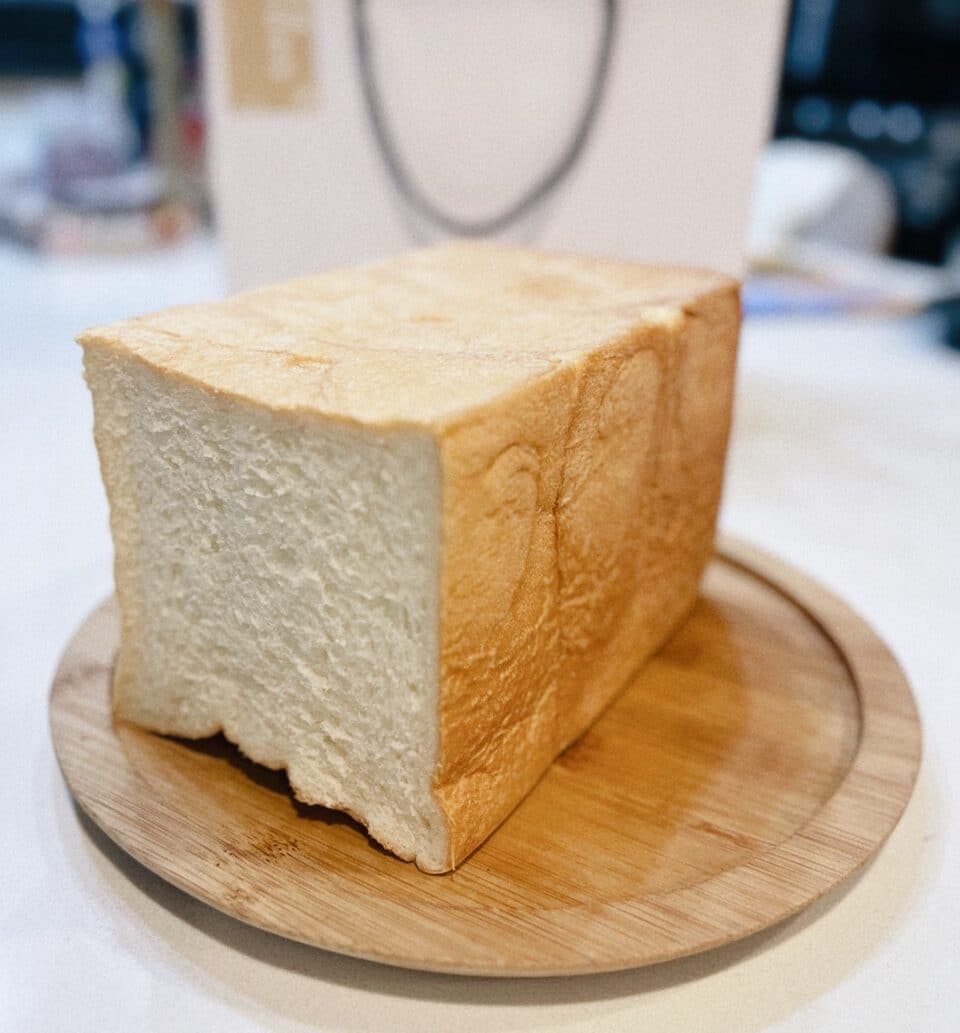
Opening the box for the first time delivers an immediate, unmistakable perfume: a wave of sweet, buttery aroma that signals this is not going to behave like an everyday piece of white bread. The bakery itself advises against using a serrated bread knife, the kind built for tearing through a crusty baguette, since the jagged edge can crush the loaf’s structure. A smooth, sharp blade, the kind reserved for something delicate like sashimi, is the better tool, and the difference in the resulting slice is noticeable.
On the first day, the proper way to eat it is almost childlike: tear off a piece with your hands and eat it plain, no toppings, no toasting. The texture in that moment is genuinely startling, airy and light in a way that makes it difficult to stop at just one piece, each bite chasing the fleeting, cloudlike sensation of the last. The sweetness is present but restrained, closer to the gentle sugar level found in many Japanese confections than to the cloying sweetness of, say, a slice of American Hawaiian bread.
By the second day, the character of the loaf shifts. The bread firms up slightly as moisture redistributes, and the sweetness becomes more pronounced, more forward, which is when slicing it thick and dressing it up with toppings, whether that is a pat of salted butter, a swipe of jam, or something savory, starts to make sense. The third day is when the bakery recommends toasting, and the result holds up: even after time in a toaster, the interior stays notably moist rather than drying out the way a conventional loaf would, a testament to that high hydration dough and the yudane technique behind it.
Is It Worth the Money
Here is where any honest review has to be direct: twenty one dollars is a lot of money for a loaf of bread, and there is no getting around the fact that a portion of that price tag is paying for scarcity, branding, and the particular thrill of having something that sold out in minutes. Judged purely as a value proposition against a supermarket loaf, premium shokupan does not really compete, because it is not trying to.
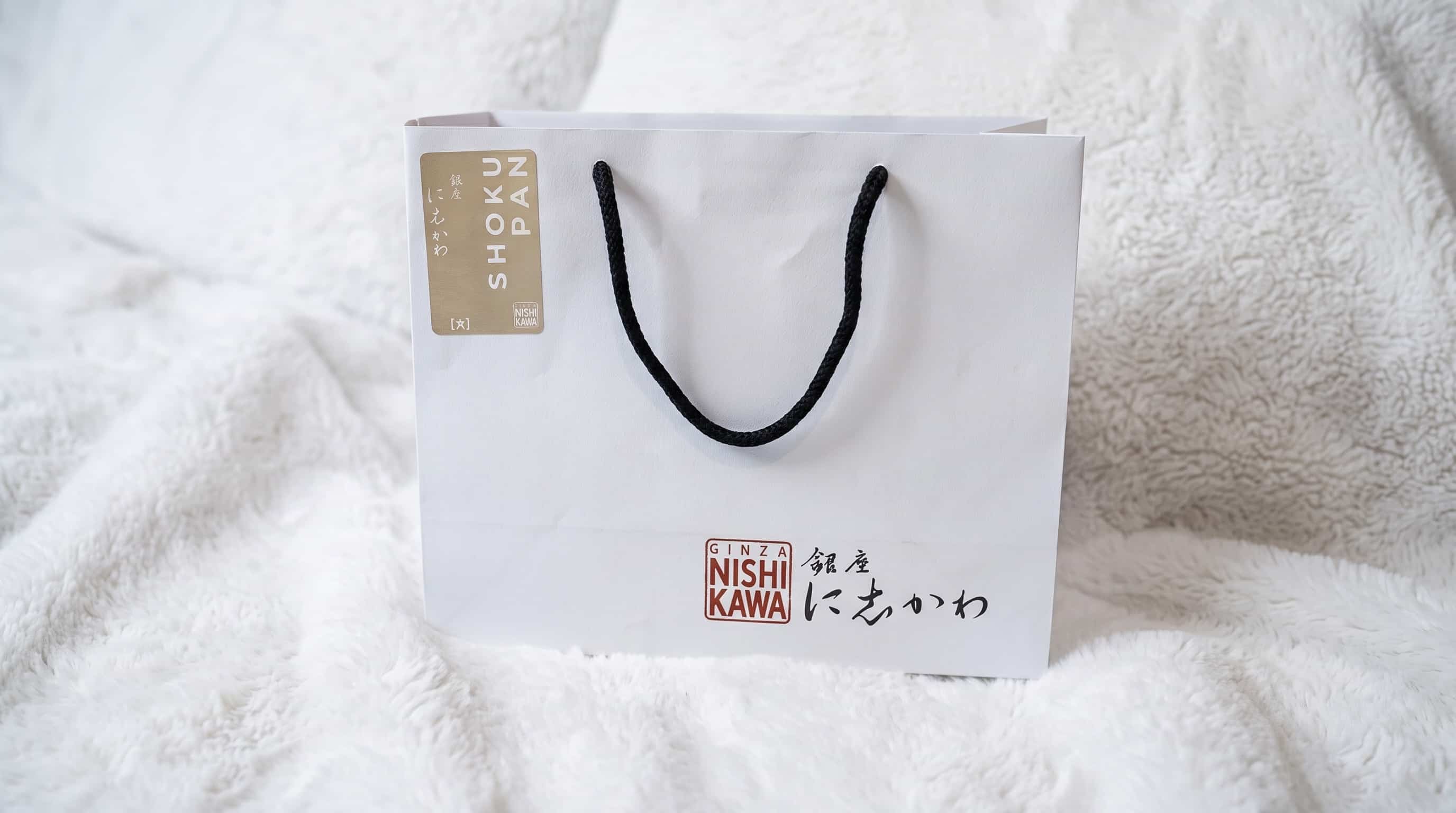
But judged as a piece of craftsmanship, the case is much stronger. The dough science behind the bread, the water treatment, the yudane method, the enriched ratios of cream and butter and honey, is genuinely sophisticated, and it produces a texture that is difficult to replicate at home or find anywhere else on a typical bakery shelf. There is also a cultural dimension worth understanding. Japan is a deeply gift oriented society, where bringing a small, beautifully packaged treat to a colleague, a host, or a friend is practically expected, and a striking loaf of bread, wrapped in the brand’s elegant paper bag, makes a far more memorable gift than an ordinary box of cookies at the same price point. That context helps explain why a product this simple has managed to command this kind of following, and this kind of price, without seeming absurd to the people buying it.
The Bottom Line
For anyone who has never tried Ginza Nishikawa’s shokupan and has been on the fence about whether the hype is deserved, the answer, after tasting it firsthand, leans toward yes, with a caveat. This is not the bread to buy if the goal is simply to make a sandwich and save money. It is the bread to buy for a specific kind of small luxury: the experience of tearing into something clearly made with obsessive care, tasting a texture that genuinely differs from anything else in an American bread aisle, and understanding, bite by bite, exactly why a country full of world class bakeries fell for a piece of milk bread all over again. Those in Southern California curious enough to try it can track down the brand’s pop up schedule across Orange County and Los Angeles, including its Santa Ana location, and secure a preorder before the loaves inevitably disappear. It is, in the end, just a loaf of bread. It is also, somehow, a little more than that.