



There is a particular quality of silence that settles over a boxing gym between rounds — the moment when the bell has just rung and the fighters return to their corners, gasping, calculating, still. Something of that energy lives in the space between Bloodhounds Season 1 and Season 2: three years of quiet, of healing, of ordinary life reasserting itself, before the world remembers that it has unfinished business with Gun-woo and Woo-jin.
The show, adapted from Jeong Chan’s Naver webtoon and first released on Netflix in June 2023, arrived without much fanfare and promptly charted in the streamer’s Top 10 across 83 countries. It was the kind of success that sneaks up on you — built not on spectacle alone, but on something rarer: two men who genuinely seemed to need each other, fighting for something they could not afford to lose. Season 2, which dropped on April 3, 2026, with all seven episodes available at once, is a larger, louder, and in many ways bolder piece of television. Whether it is a better one is the more interesting question.
What Came Before
To understand Season 2, you must first sit with what Season 1 asked of its characters — and of its audience.
Kim Gun-woo, played by Woo Do-hwan with the kind of still, coiled intensity that makes you forget you are watching an actor, is a young boxer with a straightforward dream: to earn enough in the ring to give his single mother a life she deserves. That dream cracks open in the first episode when his mother falls prey to Smile Capital, a loan shark operation of quiet, bureaucratic brutality, run by the reptilian Kim Myeong-gil. The debt is unpayable by design. That is the point.
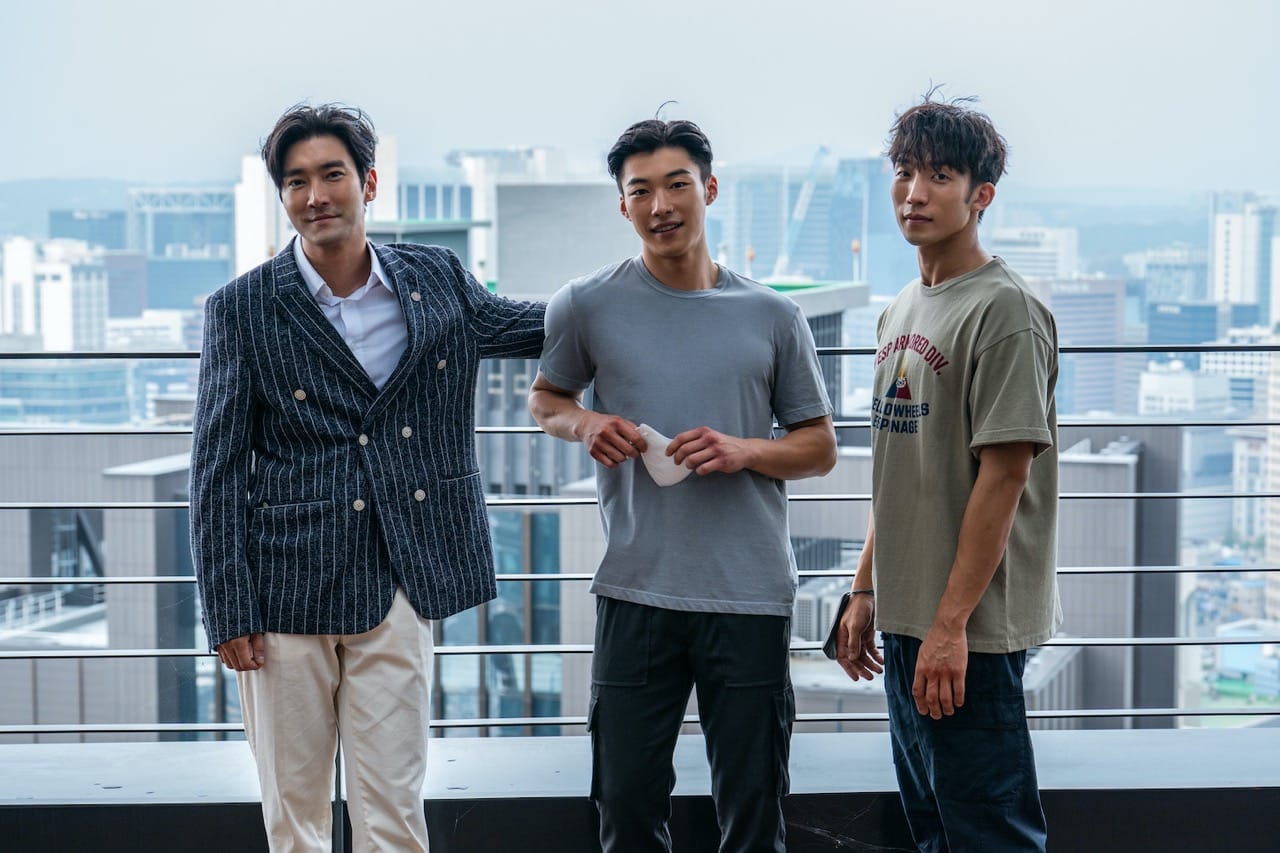
Into this moment of crisis walks Hong Woo-jin — former marine, gifted brawler, a man whose charm functions as camouflage for a bottomless reserves of loyalty. Lee Sang-yi plays him with a loose, almost comedic ease that makes the violence, when it comes, feel genuinely shocking. Together, Gun-woo and Woo-jin become something the show never quite names: brothers, in every sense that matters.
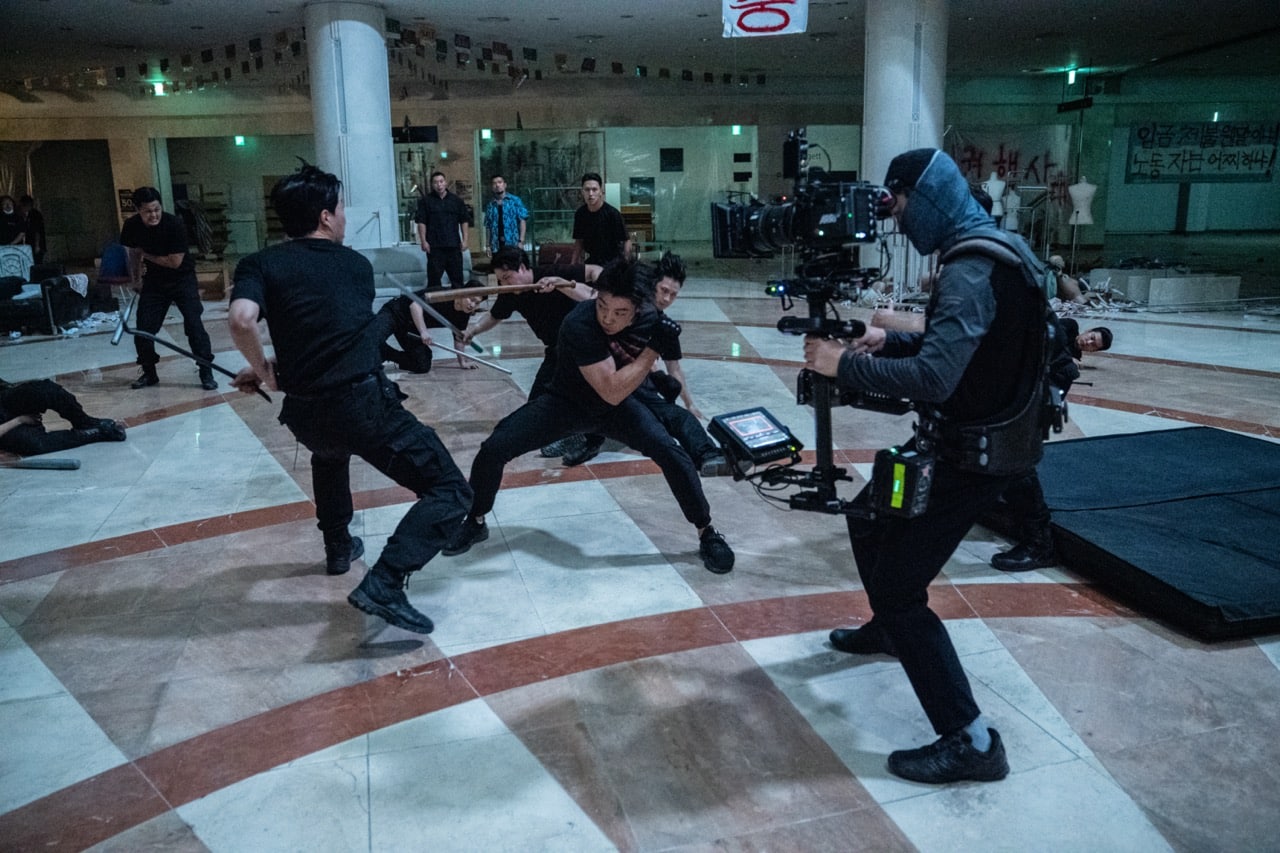
Their fight against Smile Capital is waged across eight episodes with increasingly bruising choreography and a moral seriousness that lifts the show above its genre. They are helped by Choi Tae-ho — played by Huh Joon-ho, who brings to the role a kind of battered, generous warmth — a former loan shark who now lends money without interest, an act of penance made flesh. And by Hong Min-beom, the well-connected fixer played by Choi Siwon, whose resources prove instrumental when the walls begin to close in.
By the finale, Myeong-gil is beaten, arrested, and his empire dismantled. Gun-woo and Woo-jin walk away bearing the marks of what they have been through — scarred, quieter, but alive. It felt, in the best possible way, like an ending.
The New Chapter
Three years have passed. Gun-woo has not left boxing — he has gone deeper into it, now consumed by the ambition to compete legitimately, to win on a stage that asks only for skill. Woo-jin has stepped out of the ring and into the corner: he is a coach now, Gun-woo’s cornerman and chosen family, the one person in the world who knows exactly what his fighter is capable of, and exactly how much it has cost him.
It is a beautiful setup — the shift in their dynamic, the way power and vulnerability have redistributed between them. And it is precisely this equilibrium that the season’s new antagonist is designed to shatter.
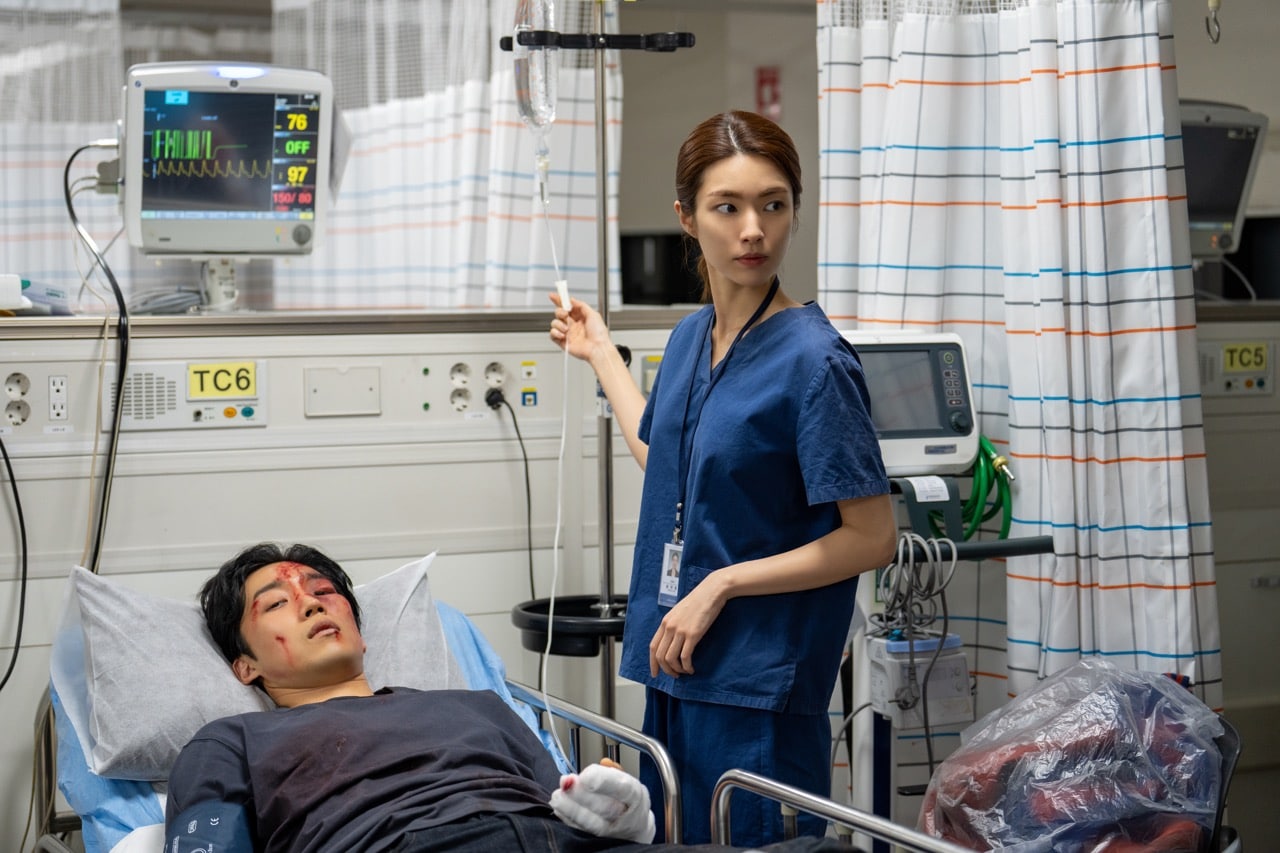
LEE SANG-YI as Hong Woo-jin in Bloodhounds 2.
Cr. Soyun Jeon, Seowoo Jung/ Netflix © 2026
Baek-jeong arrives like weather. Played by Jung Ji-hoon — the artist known as Rain, whose long career in K-pop and K-drama has rarely asked him to be genuinely frightening — he is a man who controls an illegal international boxing league with the cold efficiency of someone who has never once confused sentiment with strategy. He fights, in his own words, for money and power, above all else. What he wants with Gun-woo and Woo-jin is something the season earns slowly, and the waiting is part of the pleasure.
Rain’s performance is the revelation of the season. There is a particular stillness he brings to Baek-jeong — a quality of absolute self-possession that makes every scene in which he appears feel subtly dangerous, as though the room temperature has dropped by several degrees without anyone being able to say exactly when it happened. It is his first villain role in over two decades, and the decision to wait this long feels, in retrospect, like a form of wisdom.
Also joining the ensemble is Hwang Chan-sung of 2PM, bringing additional texture to a supporting cast that continues to reward close attention. Choi Siwon returns as Min-beom, his particular brand of polished resourcefulness now stretched to accommodate a threat that operates on a genuinely global scale.
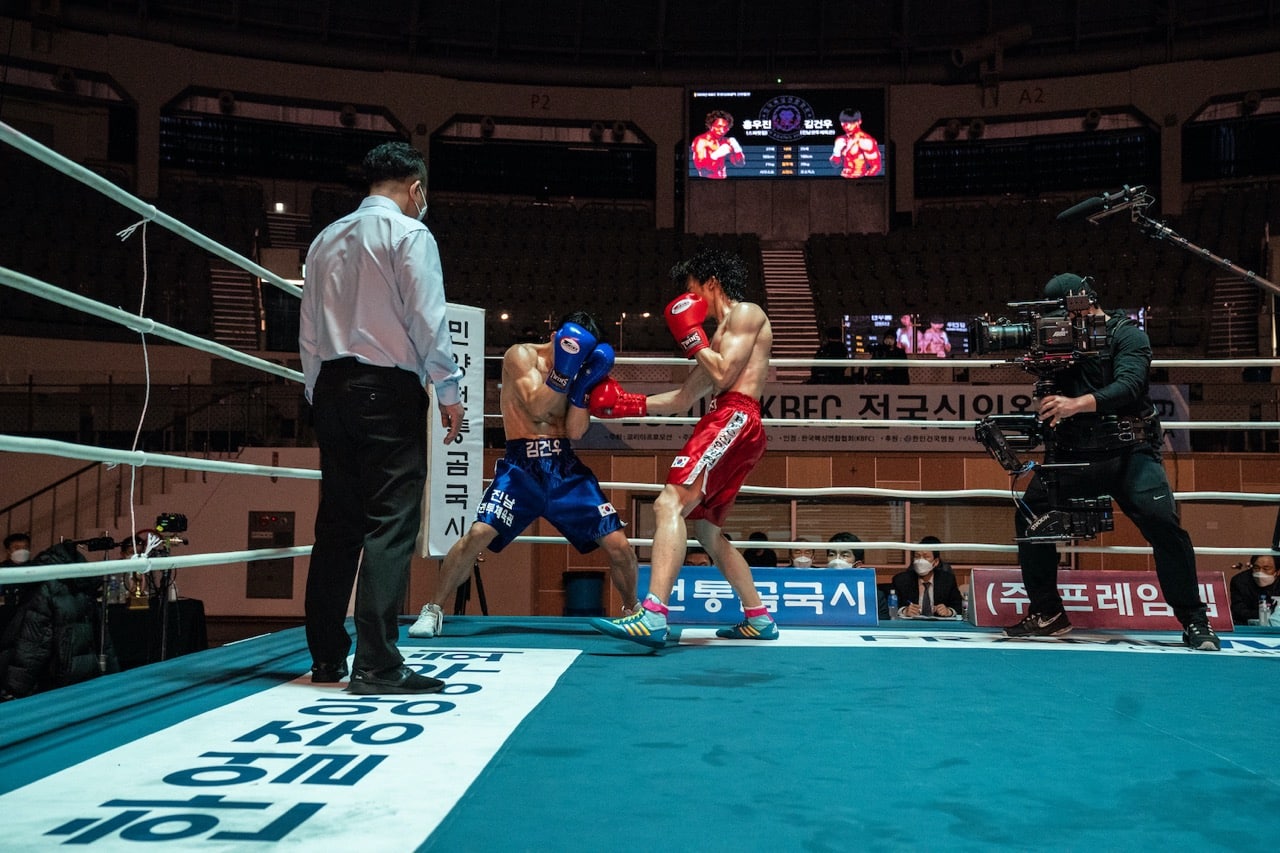
Season 2 moves from the intimate brutality of domestic crime into something colder and more vertiginous: the world of underground international boxing, where the rules are made by men who have never been asked to follow them.
The Shape of the Thing
Where Season 1 was eight episodes — occasionally, perhaps, one or two too many — Season 2 condenses itself into seven, and the compression shows in the best possible sense. The pacing is faster, the fights more elaborate, the production values noticeably higher. Some early viewers have noted that the writing trades a degree of emotional interiority for kinetic momentum, and this is a fair observation. The new characters, Baek-jeong excepted, do not always have the time to fully breathe.
But what the show understands, as it has always understood, is that Gun-woo and Woo-jin are the gravitational centre around which everything else orbits. Their brotherhood — tested now not just by external threat but by the new configuration of their relationship, coach and fighter, the one who watches and the one who takes the blows — is what gives the action its emotional weight. A fight scene means nothing if you do not care what happens to the people in it. Bloodhounds has always known how to make you care.
The fight choreography, meanwhile, has evolved into something genuinely cinematic. The sequences in Season 2 are among the best the franchise has produced — grounded, physical, and lit with a kind of furious craft. There is nothing balletic about the violence here. It lands. It costs something. That is precisely the point.
The Cast
Woo Do-hwan — Kim Gun-woo. The moral compass of the series, and its emotional centre. A boxer whose quiet righteousness has never been entirely comfortable with itself.
Lee Sang-yi — Hong Woo-jin. Returning now as coach and family. His warmth has deepened into something more complicated — the man who holds others up, and rarely speaks about the cost.
Jung Ji-hoon (Rain) — Baek-jeong. New antagonist. Cold, global, and deeply controlled. Rain’s first villain role in decades, and worth every year of the wait.
Choi Siwon — Hong Min-beom. The resourceful director of Lil Group, returning with resources and loyalties that are tested at a higher altitude than before.
Hwang Chan-sung — New role (undisclosed). The 2PM member brings new energy to the ensemble in a significant supporting capacity.
Huh Joon-ho — Choi Tae-ho. The beloved benefactor of Season 1 — battered, generous, irreplaceable.
Park Sung-woong — Kim Myeong-gil. The villain of Season 1, whose arrest closed the first chapter. His shadow lingers.
Yoon So-yeon — Gun-woo’s mother. The woman whose debt set everything in motion, and whose safety remains the quiet underpinning of her son’s every choice.
Bloodhounds Season 2 is available now on Netflix worldwide, alongside the complete first season. Seven episodes. Watch them slowly, if you can — this is a show that rewards the kind of attention it pays to its own characters.