


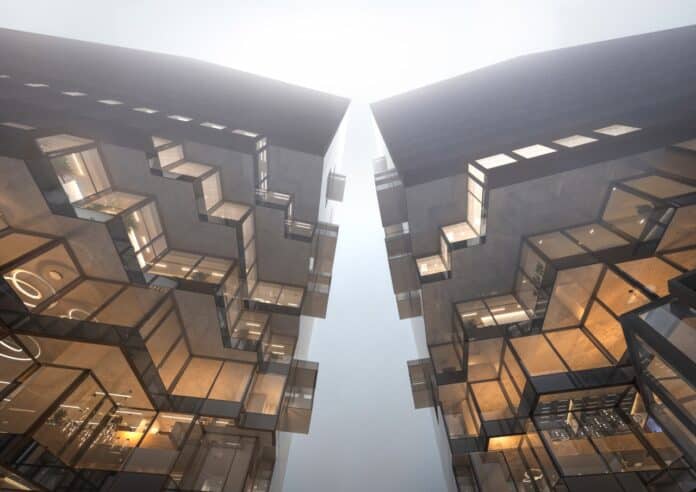

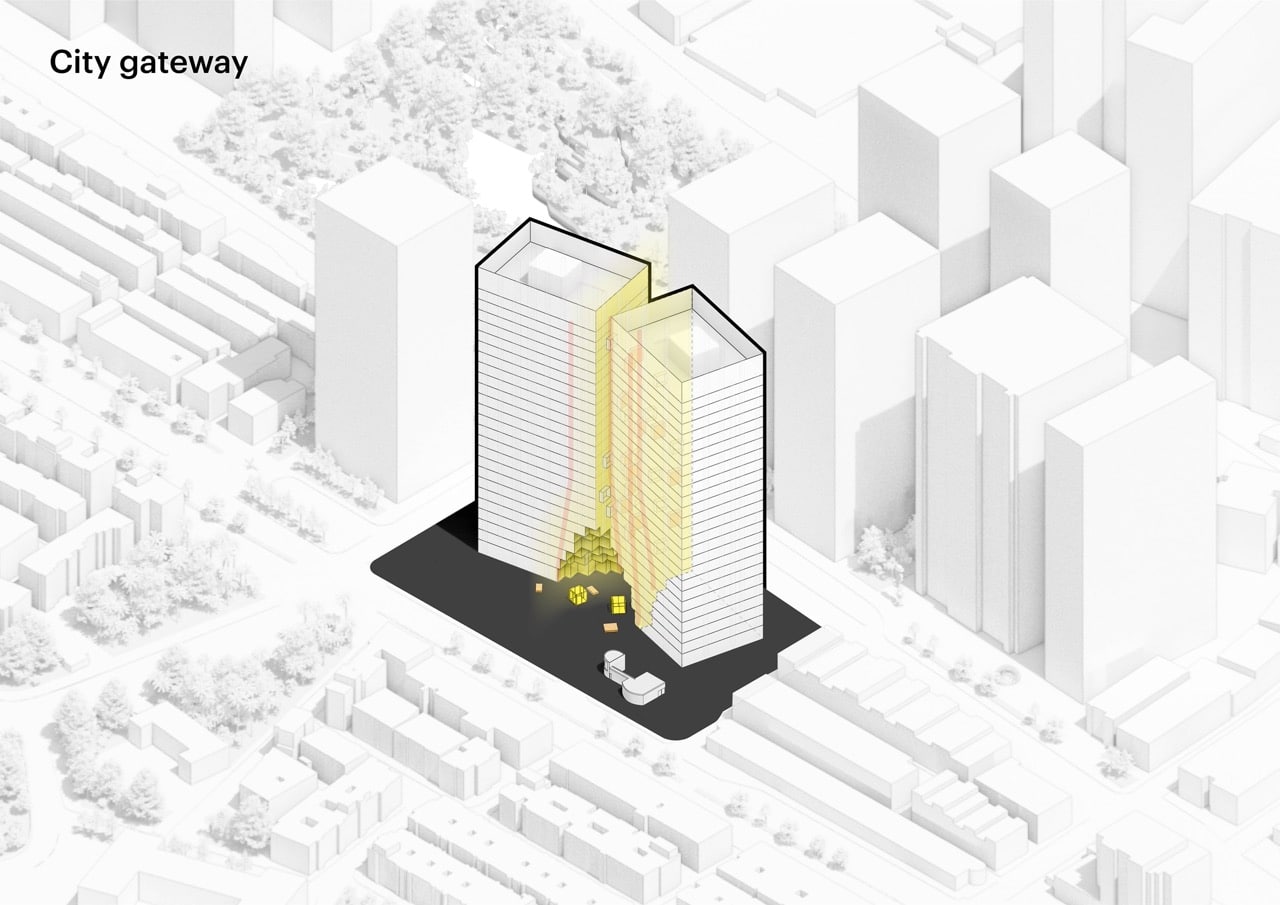
MVRDV has unveiled a striking proposal for an eastern gateway into Taipei. Commissioned by JUT Group and sited directly in front of Kunyang Station, Nangang Pair takes the form of two office towers that read, at first glance, as a single massive block torn apart down its center. The gesture is theatrical by design: it announces the threshold into the Nangang district while opening a generous public plaza between the two halves, drawing commuters naturally from the station into the surrounding streets.
From Industrial Periphery to Transit Hub
Nangang was once known informally as Black Town, a designation tied to its industrial past. In recent decades it has been reshaped into a center for technology, finance, and transit, largely through a wave of development that produced a fairly consistent architectural vocabulary across the district. Nangang Pair stands apart from that pattern deliberately, offering a landmark with a distinct silhouette in a neighborhood that has tended toward uniformity.
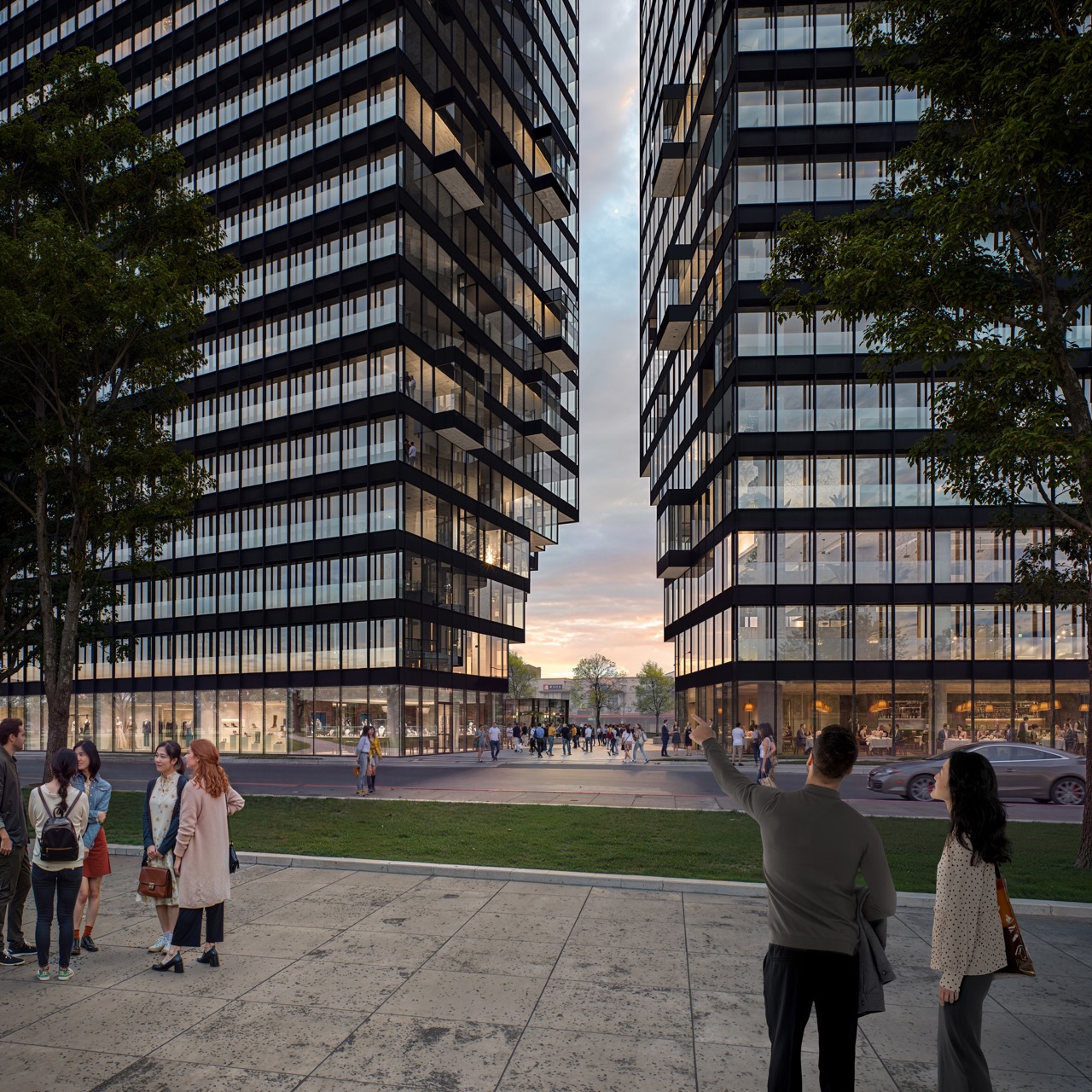
The site itself presented a planning challenge. Located where regional and high speed rail lines intersect, the location sees enormous volumes of foot traffic, and a single solid building mass would have functioned as an obstruction. MVRDV’s response was to cleave the building in two and angle the resulting volumes so pedestrian movement could pass through rather than around. The split also opens framed views toward the neighboring Hsin Hsin Park and creates expansive lobby and entry zones at the base of each tower.
A Deliberate Contrast in Surface
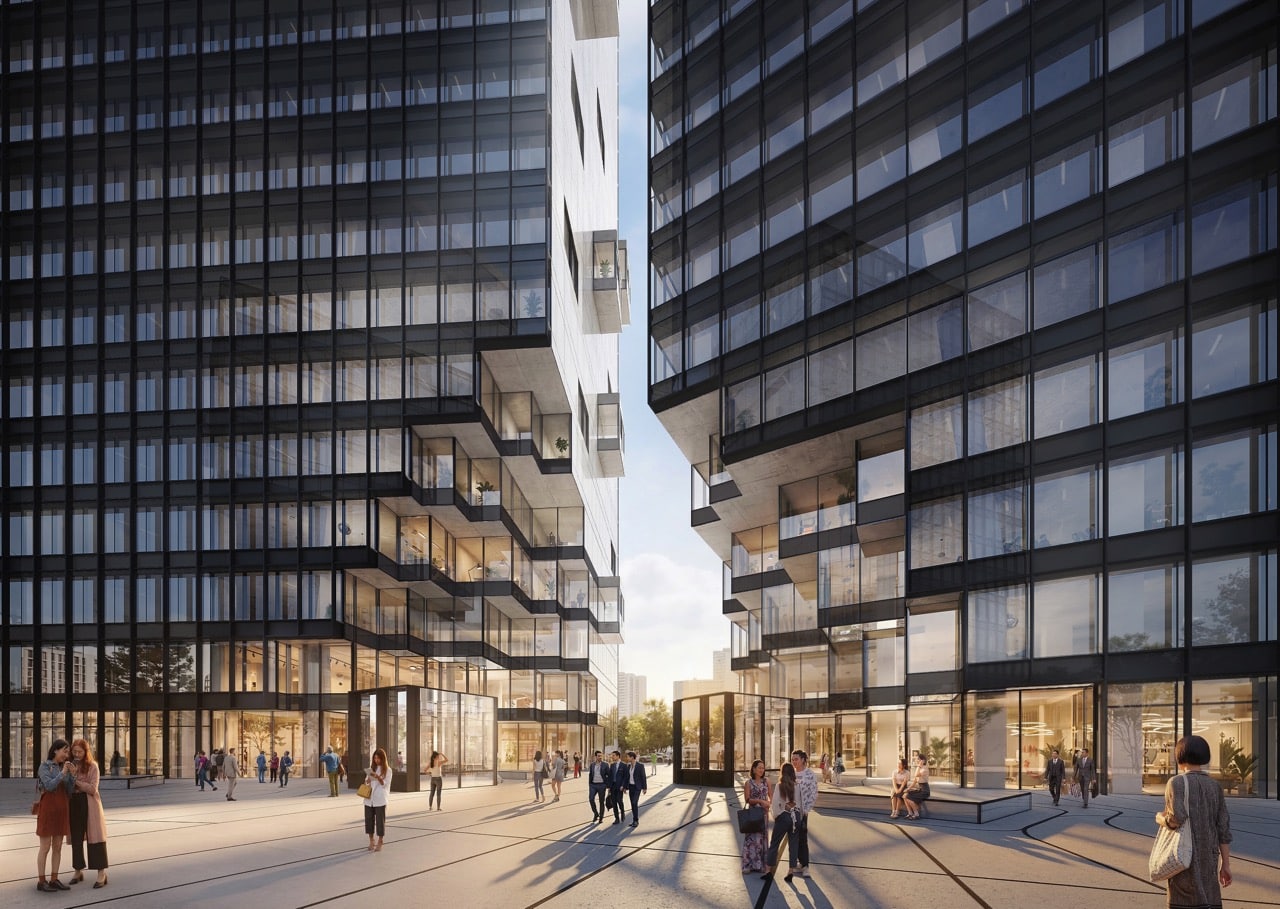
The most arresting feature is the treatment of the two facing walls of the divide. Where the towers meet, the surfaces appear to crumble away in tiers, with cascading balconies on one volume mirroring corresponding recesses on the other. That broken, irregular language stands in deliberate contrast to the rest of the building: the outward facing facades are wrapped in a glazed curtain wall with projecting vertical mullions, smooth and continuous, while the inner faces of the fracture are left raw and exposed. The grid pattern from the facade extends down into the plaza itself, where a warped paving design echoes the sense of ground splitting open beneath the towers.
Engineering the Open Ground Plane
At street level, the inner corners of each tower have been carved away to create sheltered, column free entrances, a feat made possible by angled structural columns positioned along the inside edges of the buildings. This solution allowed the architects to satisfy Taiwan’s demanding seismic codes without compromising the openness of the entry sequence. The ground floor accommodates lobbies, retail space, cafes, and restaurants, while a shared amenity floor on level three offers lounges and conferencing space for tenants. Scattered through the plaza are small pavilion like structures, doubling as seating and kiosks, that appear as fragments scattered from the main building mass, extending the architecture’s broken language into the landscape.
Built In Resilience
Sustainability measures are woven into the scheme rather than added on. A rooftop garden gives tenants an elevated green retreat, supported by rainwater harvesting systems that feed the landscaping below. Detention tanks built into the ground level and foundation help manage stormwater and reduce flood risk, a meaningful consideration in Taipei’s climate, and photovoltaic panels integrated into the rooftop bulkheads generate power for the building’s shared public areas. Together, these systems position Nangang Pair as both a sculptural gesture and a working piece of climate conscious infrastructure for the district.