


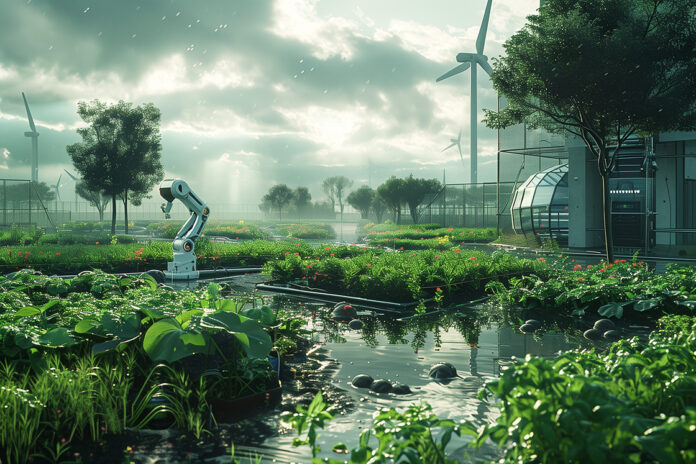

Few countries embody the triumph of design over nature quite like the Netherlands. Built on land once claimed by the sea, the nation’s very existence is the result of centuries of ingenuity, engineering, and relentless spatial management. Against the odds, this waterlogged terrain evolved into a prosperous, densely populated society, now ranked among the world’s largest economies and second only to the United States in agricultural exports.
But what happens when the improbable collides with the inevitable?
This question is at the heart of WHAT-IF: Nederland 2100, a visionary study that explores the choices the Netherlands must confront as the impacts of climate change, demographic pressure, and environmental degradation accelerate. Developed by three leading design studios—MVRDV, IMOSS, and Feddes/Olthof—the project presents speculative yet grounded visions for a radically altered Dutch landscape.
Commissioned by Platform Ontwerp NL in collaboration with the Dutch Ministry of the Interior’s Beautiful Netherlands Programme, the study aims to turn abstract scenarios into tangible possibilities. More than a thought experiment, WHAT-IF is a prompt for national debate—especially timely as a new Dutch government prepares to reshape spatial policy. The insights carry global significance, speaking to the nearly one billion people living in low-lying coastal zones worldwide.
To support these explorations, MVRDV introduced a “decision matrix,” a planning framework that allows for the combination of multiple future conditions. Variables such as climate severity, population growth, water management strategies, political trends, and land-use priorities are treated like dials on a control panel. This structured approach helped the studios create internally consistent narratives, showing how different values might produce different outcomes.
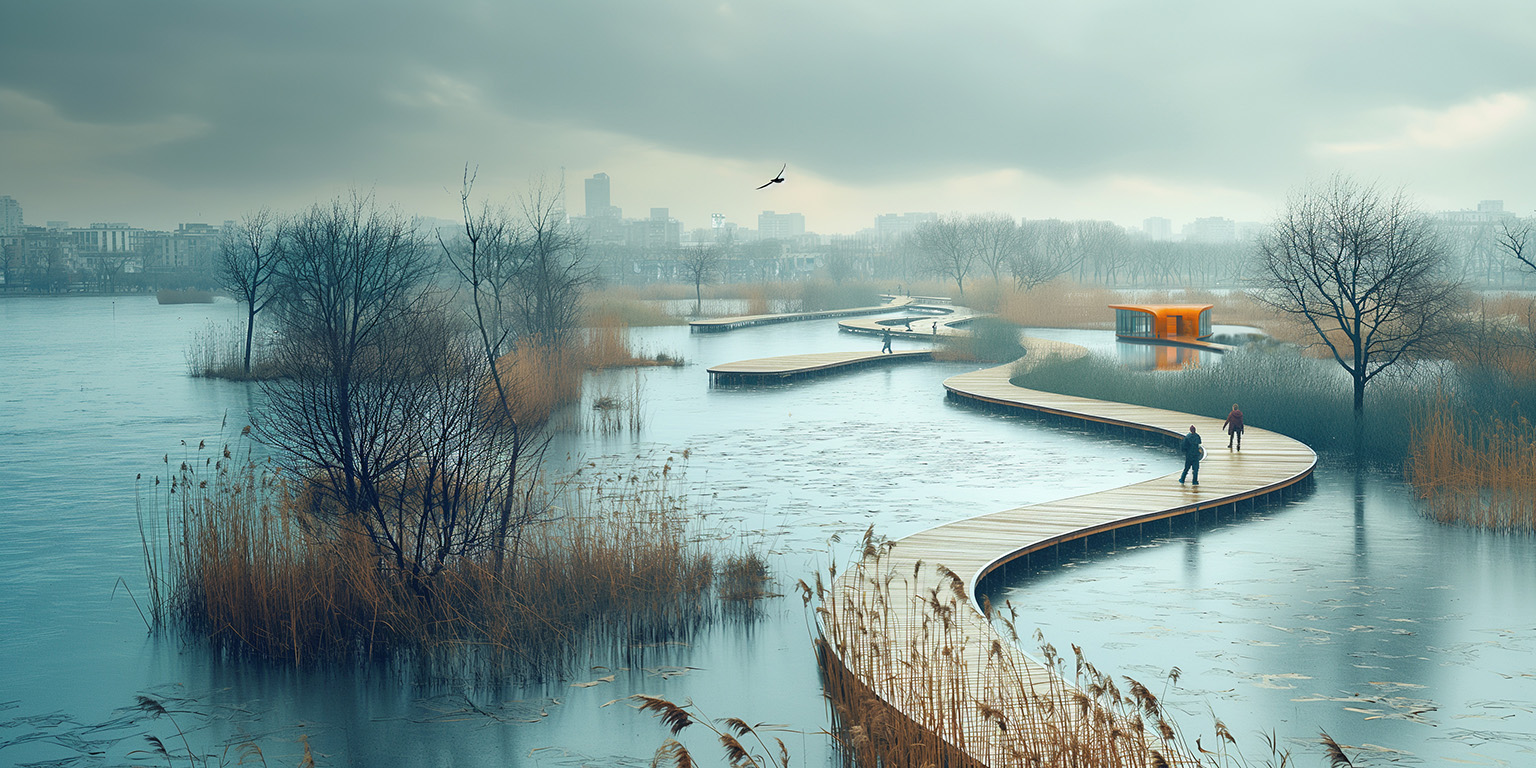
The studios collectively chose to explore a scenario of extremes: maximum projected sea-level rise, combined with high population growth. In this imagined future, Dutch society would abandon the age-old practice of fighting the sea. Instead, it would begin adapting to it.
This shift would redraw the map of the country. The low western regions—currently home to the largest cities—would no longer be fully defendable. Instead, the Netherlands would be split between saturated “water cities” in the west and compact, elevated “sand cities” in the east.
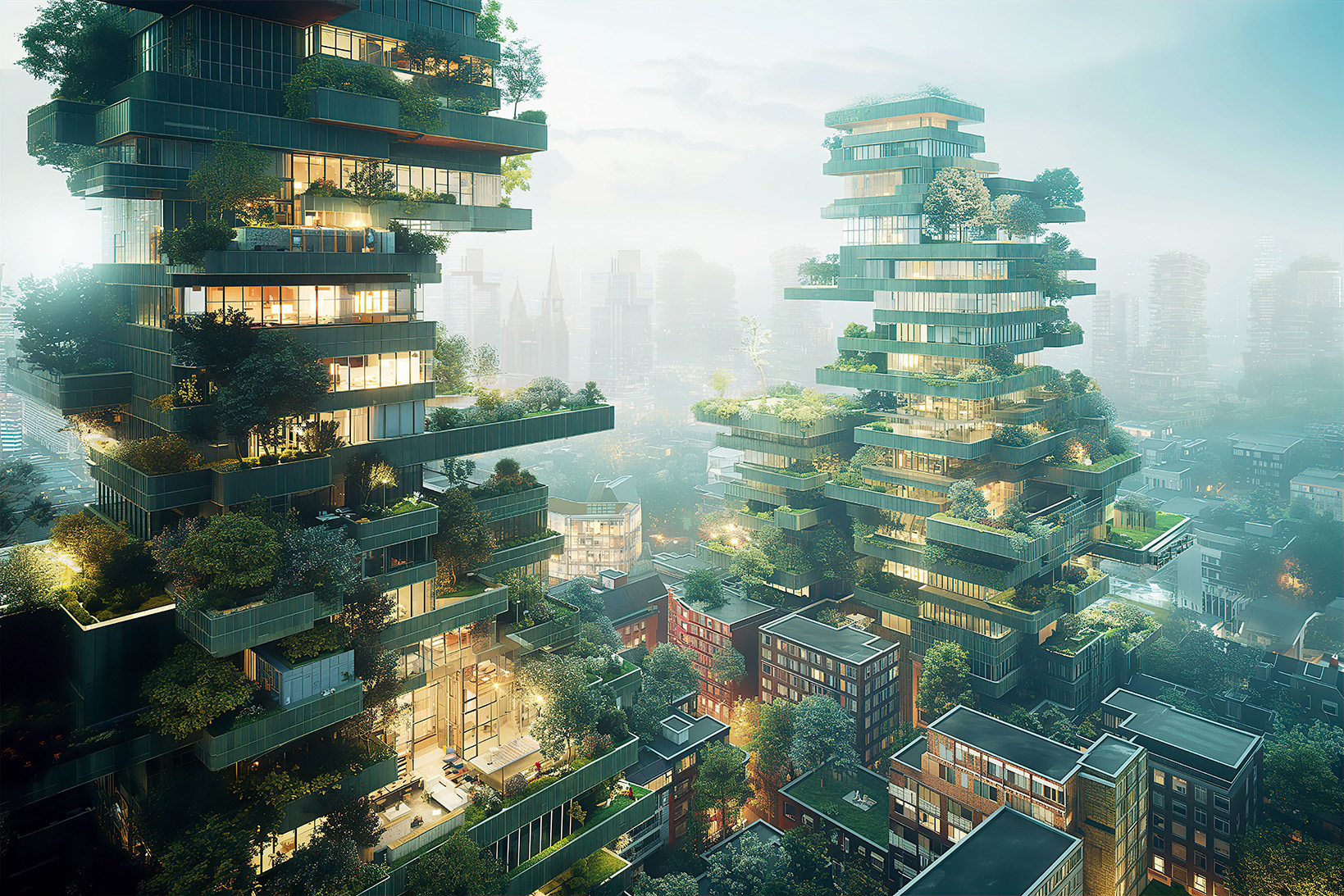
In MVRDV’s vision, these sand cities would intensify dramatically. They would accommodate the country’s population growth through vertical farms, compact housing, layered green spaces, and integrated systems for energy and water. Density would no longer be a constraint, but a design principle.
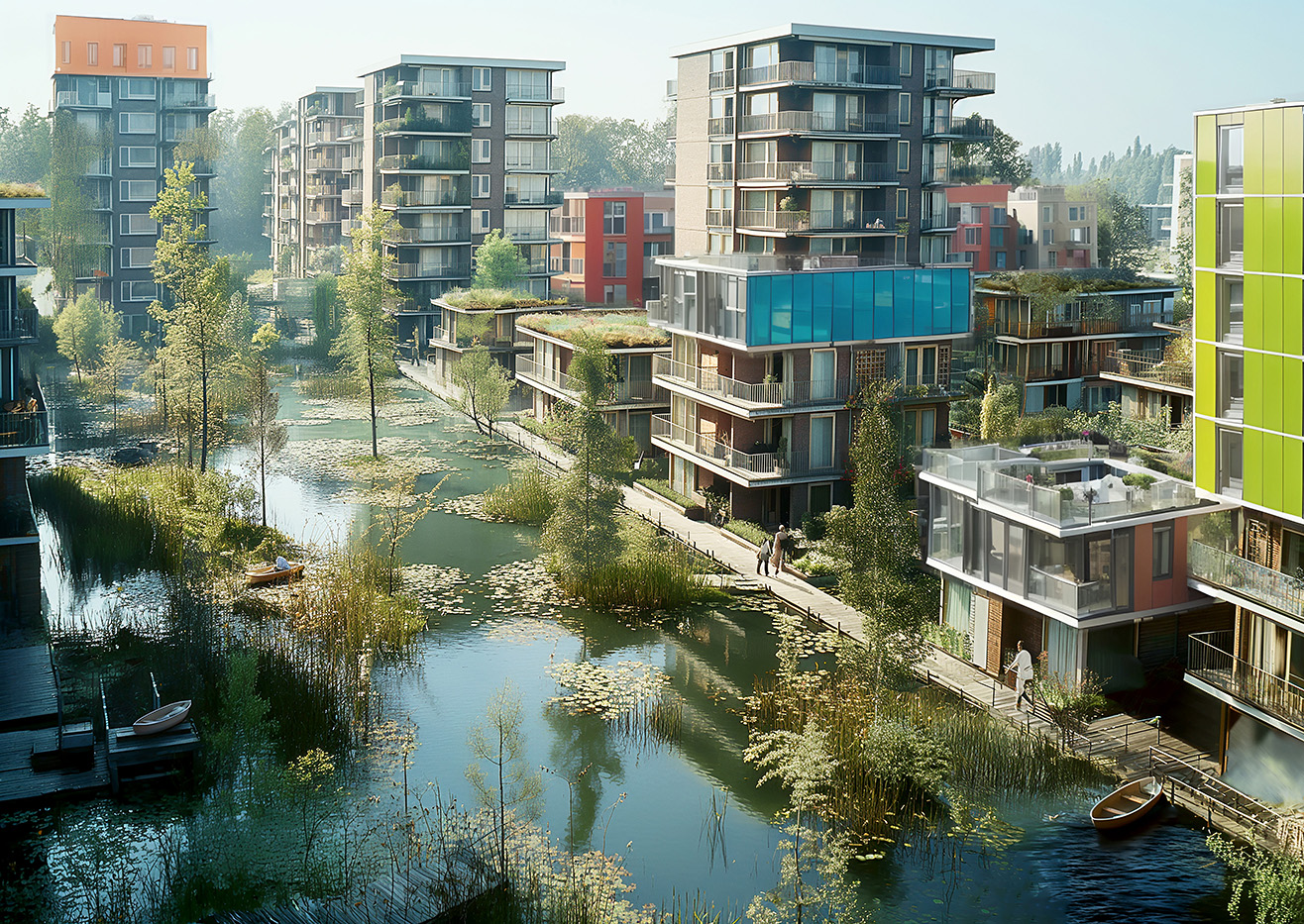
Meanwhile, the west would evolve into a different kind of city altogether—one that learns to live with water. Iconic historic centers like Amsterdam would be protected by massive dikes, but the surrounding urban fabric would begin to transform. Flood-prone ground floors would be abandoned, rooftops extended upward, and new pedestrian paths built at a raised level. Boats and water-based transport would replace cars. Industrial zones would give way to wetlands and bio-based economies. These “amphibious cities” would not just survive but embrace the water, becoming laboratories of ecological adaptation.
The contrasting strategies—hyper-dense and water-adaptive—offer a provocative image of what might be required to sustain a livable Netherlands in the coming century.
“What we hope to show is that alternatives exist,” said Winy Maas, co-founder of MVRDV. “We can live differently, build differently, grow differently. We could have floating neighborhoods. We could grow food in towers. We could move millions of people inland. What we cannot do is keep pretending that the way we’ve always done things is sustainable.”
WHAT-IF: Nederland 2100 was produced by Platform Ontwerp NL, an advocacy platform uniting the Dutch professional organisations for architecture (BNA), engineering (Koninklijke Nederlandse Ingenieurs), urban planning (BNSP), landscape architecture (NVTL), and interior design (BNI), in partnership with the Federation of Spatial Quality and the Deltametropolis Association. The report was presented on June 3rd to Irene Jansen, Director of Space and Living Environment at the Ministry of the Interior.
By challenging conventional thinking and visualizing radical adaptation, the project invites not only designers but also policymakers, communities, and citizens to imagine—and shape—a very different future.
Credits
Architect: MVRDV
Founding Partner in charge: Winy Maas
Design Team: Stephan Boon, Stijn Lanters, Sanne van Manen, Kima Boudouaya, Anna Zoia, Xiaochun Sheng, Sherry Aine Te
Copyright: MVRDV Winy Maas, Jacob van Rijs, Nathalie de Vries