


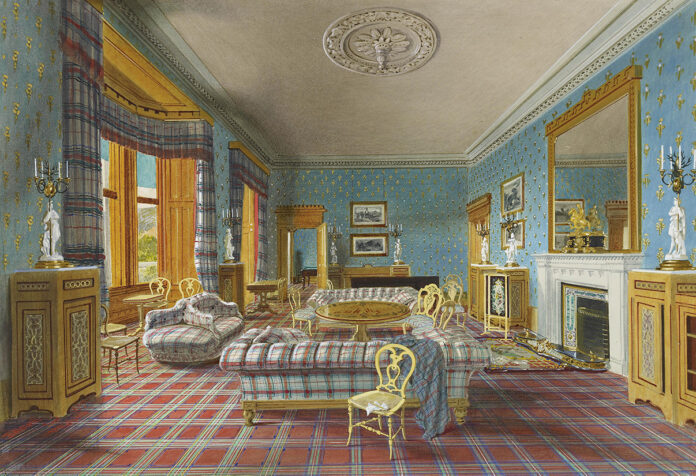

An exhibition of 80 watercolors collected by Queen Victoria and Prince Albert, an evocative visual record of their public and private lives together, has opened at The Queen’s Gallery, Palace of Holyroodhouse.
Victoria & Albert: Our Lives in Watercolour is at The Queen’s Gallery, Palace of Holyroodhouse, April 26 – 3 October 3, 2021.
Throughout their marriage Victoria and Albert were passionate patrons of watercolor painting and spent happy evenings together organizing their thousands of watercolors into albums, as the Queen recalled fondly in her journal. These albums recorded moments of both personal and historic significance, foreign travel and diplomacy, scenes of family life, and the homes they created together.
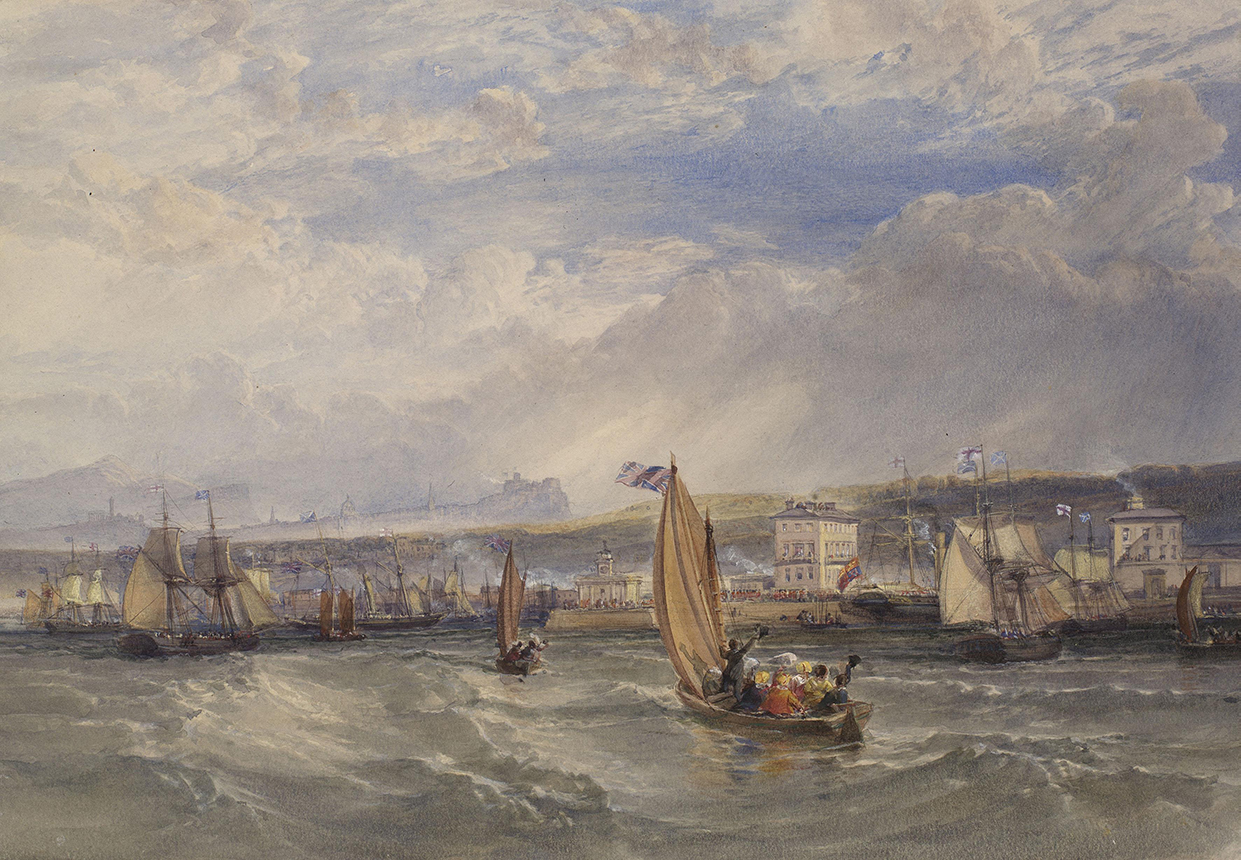
The Queen and her consort travelled frequently around the British Isles and commissioned artists to depict the places they visited. William Wyld’s romanticized view of Manchester, painted to record their visit in 1851, shows an idyllic pastoral foreground contrasted with a mass of smoking chimneys in the distance. The work correlates with Victoria’s own account of the ‘endless chimneys & factories’ in the newly industrialized city. A watercolor by William Leighton Leitch depicting the royal yacht sailing into Granton Pier, on display for the first time, emphasizes the warm welcome Victoria and Albert received when they arrived in Edinburgh for their first tour of Scotland in 1842. Victoria wrote afterwards that ‘Edinburgh made a great impression upon us; it is quite beautiful & totally unlike anything I have seen’.
William Leighton Leitch, one of Victoria’s favorite watercolorists, was a self-taught Glaswegian artist who became one of the most celebrated Scottish landscape painters of the 19th century. He was also the Queen’s tutor for almost 20 years, and under his supervision she grew to be a talented amateur watercolorist. Her subjects often included her children, such as a watercolor of her third son, Prince Arthur, aged three, painted at Osborne House in 1853. Upon Leitch’s death, Victoria wrote in her journal of her sadness at the passing of ‘dear old Mr Leitch, my kind old drawing Master, such an excellent artist, known to me for so many years, connected with happy & sad times, & with Scotland’.
Fittingly, the Palace of Holyroodhouse is the subject of several works in the exhibition. An atmospheric watercolor of Edinburgh at sunset by the Dunfermline-born painter Waller Hugh Paton captures the view Victoria enjoyed on her approach to the Palace from the railway station, looking west over St Margaret’s Loch and Holyrood Park, with Calton Hill and the National Monument in the distance. The Queen was captivated by the ‘ancient Palace of my ancestors’ and gave permission for its historic apartments to be opened to the public for the first time. An interior scene by Edinburgh artist, George Greig, depicts Victoria’s comfortable oak-paneled sitting room, hung with richly colored tapestries. Today’s visitors can see this room, now known as the Privy Chamber, along with a temporary display in the Lobby of a tartan dress which belonged to Victoria. She and Albert embraced the early 19th-century vogue for tartan, and a watercolor by James Roberts of the Drawing Room at Balmoral demonstrates their enthusiastic incorporation of tartan into interior design.
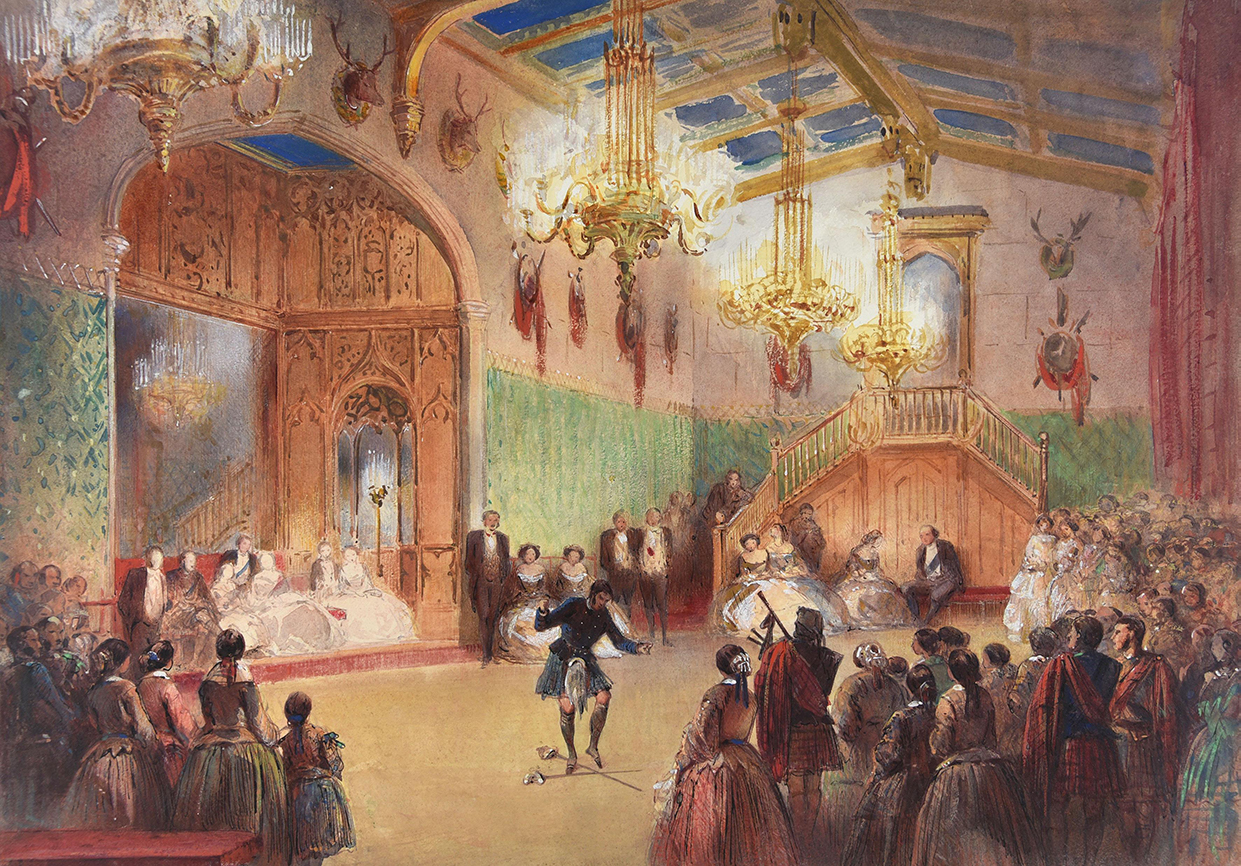
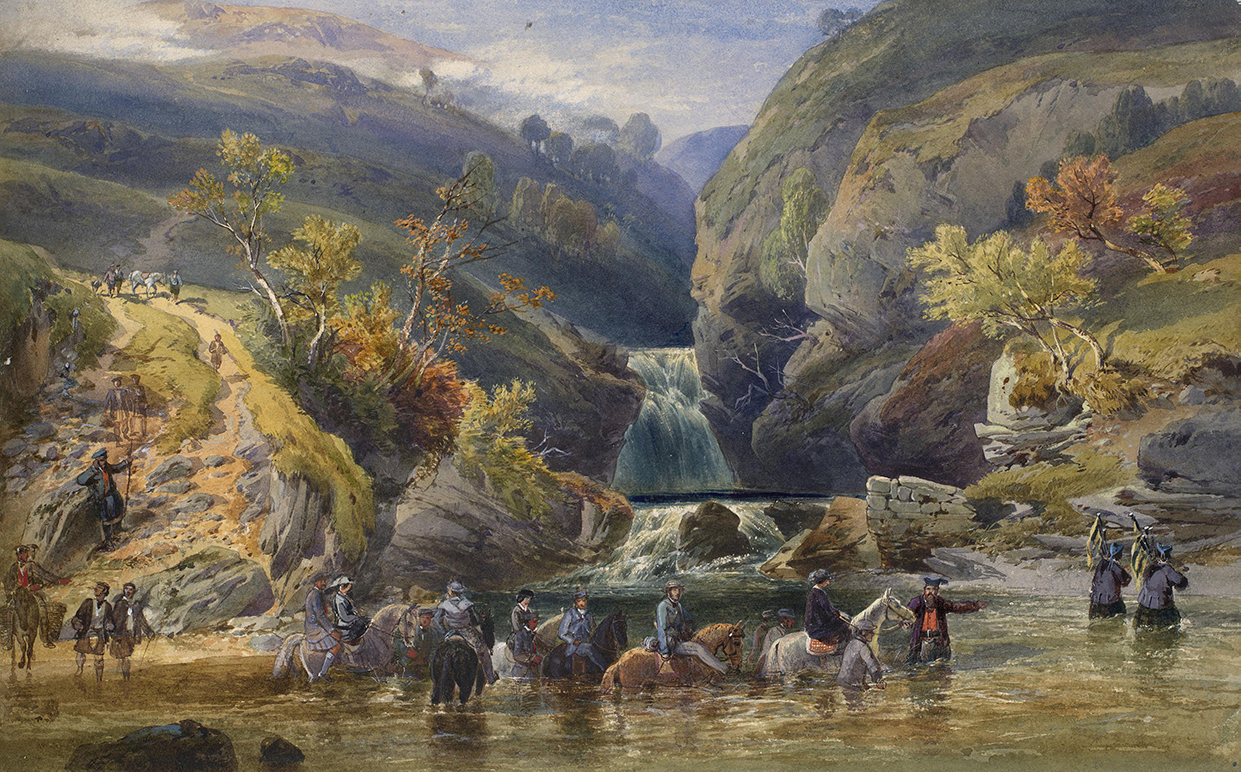
Victoria and Albert shared a romantic view of Scotland, partially inspired by the novels of Sir Walter Scott, admiring the rugged landscape of the Highlands, which Victoria described as ‘beautiful, so wild & grand’. Albert bought the Balmoral Estate in 1852 to create a family home, Balmoral Castle, where artists were regularly invited to record the scenic views, fishing trips and Gillies’ balls that the royal family enjoyed every autumn. In the years shortly before Albert’s death, he and Victoria made four ‘Great Expeditions’, traveling incognito to scenic spots in the Cairngorms and staying in local inns under pseudonyms such as ‘Lord and Lady Churchill’. On display for the first time is a watercolor by Richard Principal Leitch depicting one such expedition, when the royal party were led on horseback across the river by the Falls of Tarff at the head of Glen Tilt, accompanied by two pipers. Victoria recalled the exhilarating moment in her journal: ‘A few minutes brought us to the celebrated Ford of the Tarff…which is very deep & after heavy rain almost impassable….where the current, from the fine high falls, is very strong…It was quite exciting’.
Many artists were kept busy recording the changing appearances of the nine royal children. Franz Xaver Winterhalter’s watercolor of Victoria, Princess Royal (known as Vicky) and Princess Alice, shows the girls dressed in 18th-century costume for their mother’s birthday party in 1850. To mark Vicky’s marriage to Frederick William, Prince of Prussia, eight years later, Albert commissioned a watercolor by Egron Lundgren as a private gift for Victoria. The painting evokes the intimacy and solemnity of the wedding ceremony, which forged new ties between Britain and Germany.
The pomp and spectacle of 19th-century Anglo-French diplomacy is chronicled through the exhibition, with watercolors recording Victoria and Albert’s state visits to meet King Louis-Philippe in Normandy and his successor Emperor Napoleon III in Paris, as well as reciprocal visits they hosted at Windsor Castle. Several watercolors document the couple’s trips to Germany, described by Victoria as ‘my dearest Albert’s birthplace & favorite place’.
A series of watercolors commissioned by Victoria and Albert to mark the Great Exhibition of 1851 illustrates their desire to record events of public significance. Albert played a leading role in the exhibition’s organization, and is depicted by Joseph Nash delivering a closing address to thousands of spectators in the Crystal Palace. Other keys moments from Victoria’s reign are captured in watercolor, including the Crimean War and the state funeral for the Duke of Wellington.
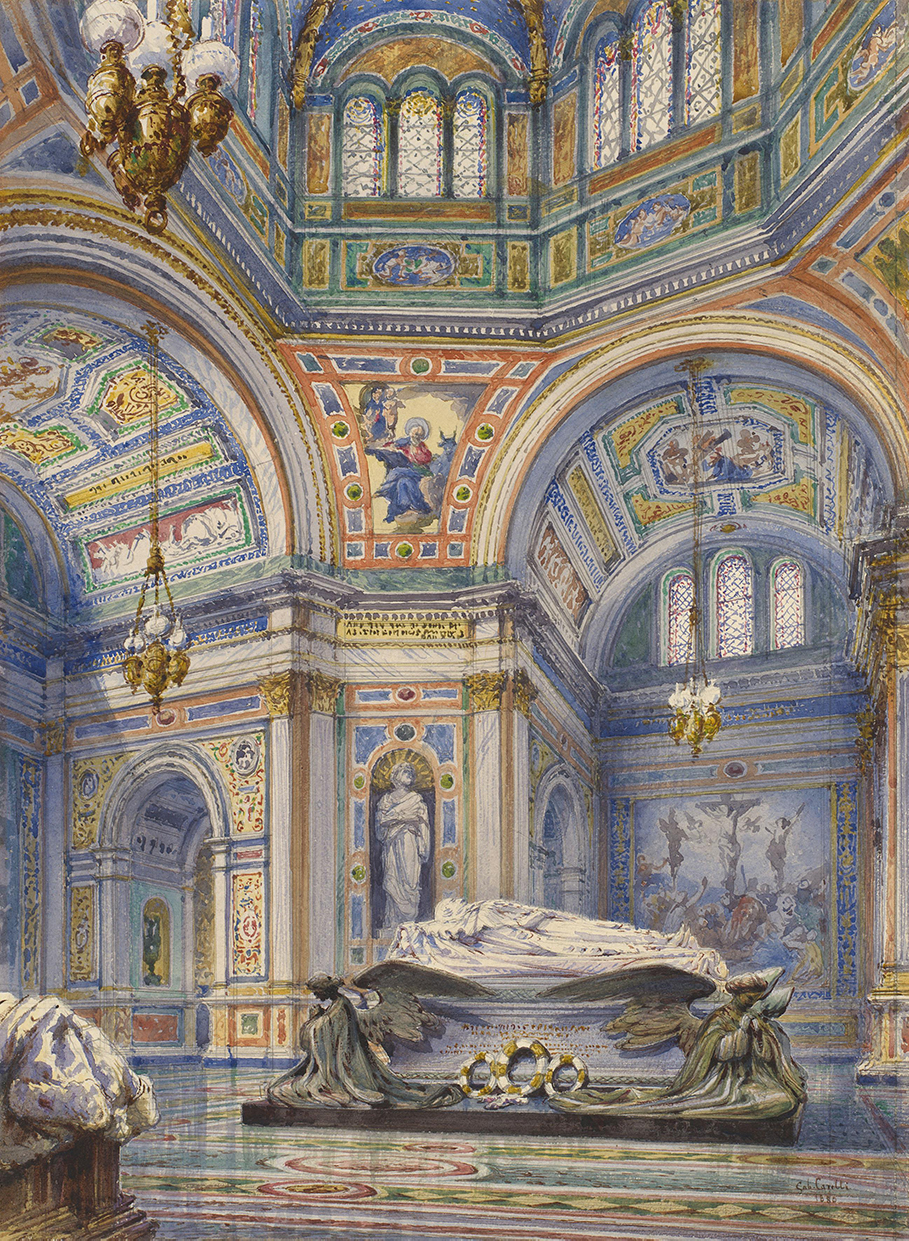
Following Albert’s untimely death in 1861, the watercolor albums took on even greater significance for Victoria, offering tangible memories of the years spent with her beloved husband. The exhibition’s later works reflect Victoria’s efforts to perpetuate Albert’s memory. The Italian painter Gabriele Carelli captures the elaborate decorative scheme of the newly built Royal Mausoleum at Frogmore, where Albert was laid to rest. Finally, a watercolor by the Glaswegian artist William Simpson, on display for the first time, depicts Victoria in mourning clothes at the unveiling of the memorial to Albert in Charlotte Square in 1876, a landmark in Edinburgh to this day.
The Palace and The Queen’s Gallery remain closed on Tuesdays and Wednesdays. Throughout May and June, public programming at the Palace of Holyroodhouse will be themed ‘Queen Victoria’s Palace’, featuring drop-in short talks, historical trails and sketching activities. In August, programming will mark the 250th anniversary of the birth of Sir Walter Scott, whom Victoria and Albert both greatly admired. Activities will explore how Scott’s fiction shaped their love of Scotland.