
Picture a kid in Italy, running around the kitchen with a foot-long chili-infused salami raised above his head like it was Excalibur. That kid grew up to be Fabio, and honestly? That energy never left. What started as a childhood obsession with capsaicin became a lifelong hunt: scanning menus, ordering the hottest thing available, and more often than not, going home quietly disappointed. Too many pepper flakes that tasted like paint chips. Too many hot sauces that were all heat and zero soul. He wanted more. So eventually, he built it.
SpiceQuest is Fabio’s answer to a question most of us never thought to ask out loud: what if chili peppers were treated with the same seriousness and curiosity we give to wine, or olive oil, or any ingredient we’ve decided deserves our full attention? The company offers a curated lineup of dried whole peppers, each with a distinct personality, housed in a sleek one-handed push-button grinder and organized across a ten-level heat scale that is actually, genuinely calibrated. Not vibes-based. Not approximate. Calibrated.
The grinders come in Ferrari Red or Onyx Black, which feels completely correct and very Italian of him.
The part where they actually do the science
Here’s what separates SpiceQuest from every impulse-buy hot sauce you’ve ever grabbed at a farmers market: they test their peppers. For real. In-house, they use voltammetry, a technique that requires five to seven runs per sample to actually mean something, and it works beautifully for milder varieties. For the big ones, the limited editions, anything pushing into superhot territory, they send batches to a third-party lab for HPLC testing. HPLC stands for High-Performance Liquid Chromatography and it is the gold standard for measuring capsaicin. A small artisan food company investing in independent lab verification is not the norm. It should be, but it isn’t. SpiceQuest does it anyway.
The result is a ten-level scale that you can actually trust. And once you start moving through it, you realize there’s a whole flavor map hiding inside the heat.
The Scotch Bonnet, which SpiceQuest calls Caribbean Flame and places at Level 2, is kind of the low-key perfect entry point for anyone who thinks they don’t like spicy food. It hits immediately and with confidence, but it brings mango and pineapple in with it: tropical, fruity, lingering warmth without any aggression. The Ghost Pepper at Level 5 is a different creature entirely. It opens slow, almost politely, and then builds into something smoky and complex and absolutely relentless. There’s a reason it’s called Phantom Fire. The heat haunts you.
Then there’s the Brain Strain at Level 6, which is exactly as dramatic as it sounds. Cultivated in North Carolina by a grower named David Capiello from the legendary Trinidad 7 Pot pepper, it’s named for its deeply wrinkled, brain-like shape. It opens with bright fruit, then the heat arrives and it does not leave. Fabio’s team calls the burn “protracted,” which is a polite word for “you are going to feel this for a while.” The Trinidad Scorpion at Level 7 carries a floral sweetness underneath what can only be described as a full palate assault, and the Carolina Reaper at Level 10, Guinness-certified hottest pepper on earth for those keeping score, is smoky, weirdly nuanced, and deeply committed to making its presence known in every corner of your mouth.
What happens when you bring these to an actual dinner
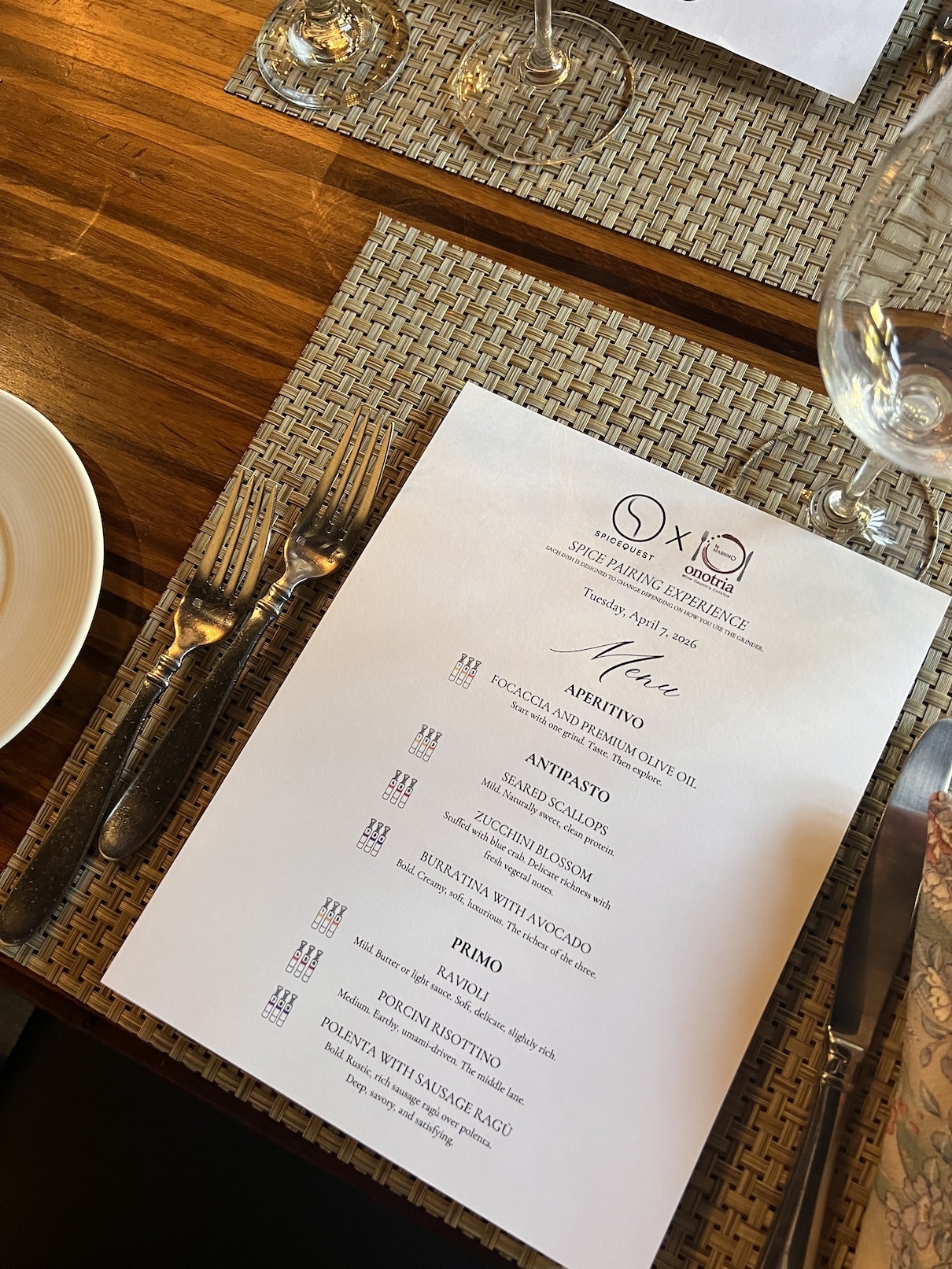
The grinders showed up at Onotria Wine Country Cuisine in Southern California for a pairing dinner, and what unfolded was genuinely one of those meals that changes how you think about an ingredient. The kitchen designed each dish to shift depending on which level you brought to the table. Not in a gimmicky way. In an actually-let’s-think-about-this-together way.

Seared scallops arrived as a clean, sweet canvas. Zucchini blossoms stuffed with blue crab brought delicate richness and fresh vegetal notes that asked for a very gentle hand. The burratina with avocado, which is already bold and creamy and low-key one of the most satisfying textures in food, got paired with the Brain Strain at Level 6. That smoky, fruity heat cut right through the fat without erasing anything. It added dimension. It made the dish more itself.
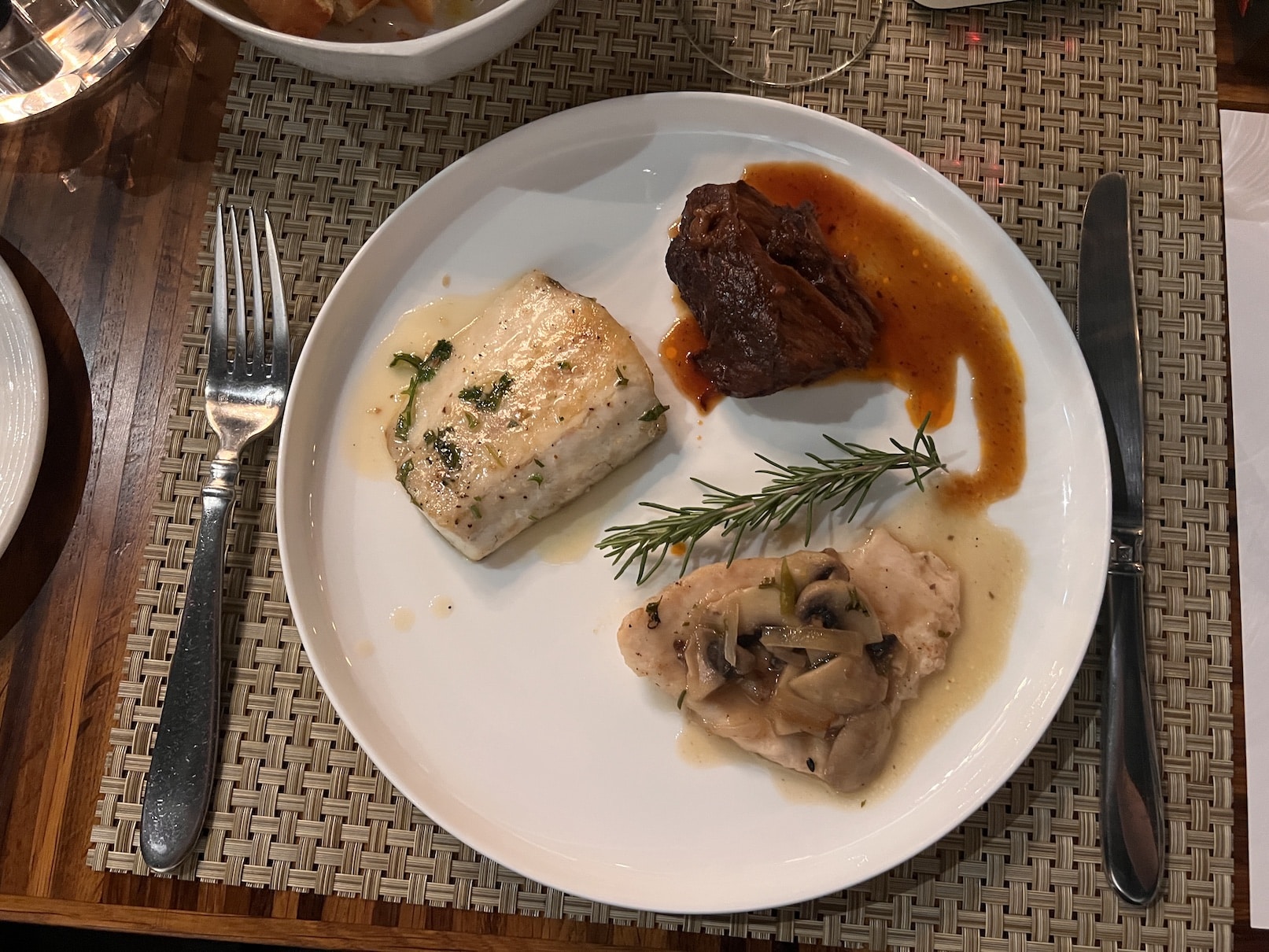
The branzino, clean and delicate as a good piece of fish should be, found its match in the Trinidad Scorpion at Level 7. That floral note buried under all that heat aligned with the fish in a way that felt almost architectural. The pepper didn’t compete with the branzino, it reframed it. And the chocolate mousse, rich and smooth, paired with the Ghost Pepper’s slow smoky burn in a combination that managed to be both unexpected and completely obvious in hindsight. Chocolate and heat are obsessed with each other, and Phantom Fire made the case.

The cheat sheet you didn’t know you needed
One of the most useful things Fabio has done is give people a framework for thinking about pepper pairings beyond just “how much can you handle.” Heat intensity and flavor character are two different dials, and once you understand both, cooking with SpiceQuest starts to feel genuinely intuitive.
At the mild end, peppers like Pequin and Scotch Bonnet are about sensory lift. They brighten flavors without burn, which makes them ideal for anything delicate: think seafood, light pastas, anything where you want presence without aggression. Mid-range peppers like Bird’s Eye, Habanero, and Ghost are flavor amplifiers. They deepen umami, open up aromatics, and do things to a dish that feel almost impossible to explain until you’ve tasted it. And the superhots, the Scorpion and the Reaper, are built for fat. Rich braises, slow-cooked meats, deeply satisfying dishes that can absorb that endorphin wave and turn it into something transcendent.
Flavor-wise, the fruity peppers including Scotch Bonnet, Habanero, and Ghost carry tropical stone fruit energy and are genuinely obsessed with seafood and chocolate. The smoky, earthy ones like Pequin and Bird’s Eye anchor olive oil and grains with a roasted depth that feels almost like a secret ingredient. And the floral varieties like Habanero, Brain Strain, and Reaper drift toward butter sauces and stone fruit, where their perfume has room to open up rather than just burn.
None of this is complicated once you see it. Heat is a flavor. It always has been. Fabio has just spent his whole life insisting the rest of us catch up.
SpiceQuest grinders are available at spicequestlabs.com. All peppers are certified organic and gluten-free.