


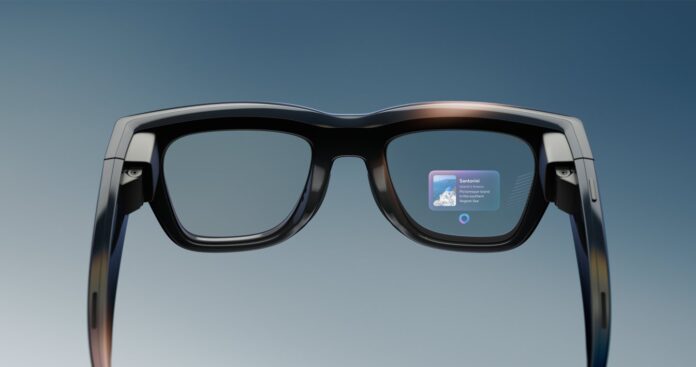

Meta has pulled back the curtain on the Meta Ray-Ban Display, a full-fledged AI wearable that combines next-generation display technology, intelligent audio, and neural-input control. This isn’t a modest upgrade to last year’s camera-first Ray-Ban Meta glasses. It’s a bold redefinition of the category—an everyday pair of glasses that can discreetly project a vibrant screen into your field of view and respond to muscle signals from your wrist. With a launch price of $799 (including the neural wristband), Meta is betting that a complete rethink of smart glasses can finally move AI wearables into the mainstream.
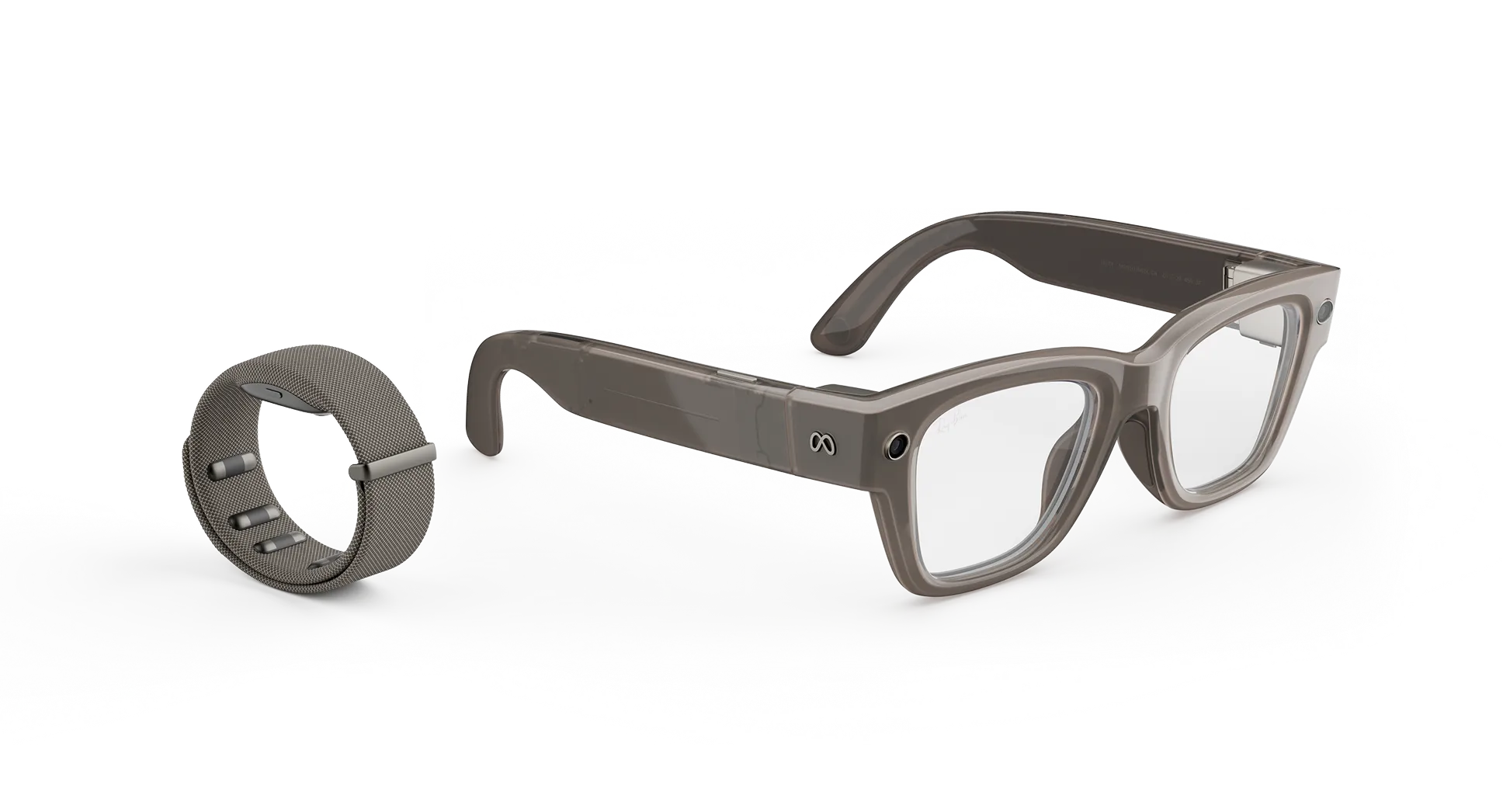
The Meta Ray-Ban Display keeps the familiar Ray-Ban aesthetic but conceals a formidable technology stack. Available in two sizes—144 mm/150 mm hinge-to-hinge—the frame weighs 69 g (standard) or 70 g (large), and is paired with a 169 g charging case that adds up to 24 additional hours of runtime on top of the glasses’ 6-hour mixed-use battery. The charging case is compact enough for daily carry and delivers quick top-ups through pogo-pin contacts.
The lenses integrate a monocular micro-display inside the right lens, projecting 600 × 600-pixel imagery with 42 pixels per degree across a 20-degree field of view. A 90 Hz maximum refresh rate keeps animations smooth (though most content refreshes at 30 Hz to save power), while brightness spans 30 to 5,000 nits, making it visible even in full sunlight. Critically, the display disappears entirely when inactive—one glance away and it vanishes from sight.
Despite the compact build, Meta manages to include a 12 MP ultra-wide camera capable of 3024 × 4032-pixel photos and 1440 × 1920-pixel video at 30 fps, supported by a 3× digital zoom. Audio hardware includes two custom-built open-ear speakers and a six-microphone array (two per arm, one near the nose pad, and one contact mic) delivering 76.1 dB(C) loudness and bass for clear calls and immersive music without isolating the wearer.
Inside, there’s 32 GB of flash storage and 2 GB LPDDR4x memory, enough for 1,000 photos or more than 100 short videos. All of this is packaged in a frame that still passes for stylish eyewear rather than a gadget.
Every pair of Meta Ray-Ban Display glasses ships with the Meta Neural Band, a 42 g EMG (electromyography) wristband that reads the tiny electrical signals generated by muscle movement. With 18-hour battery life, IPX7 water resistance, and construction using Vectran (the same high-strength fiber used on Mars rover crash pads), it is both rugged and comfortable for all-day wear.
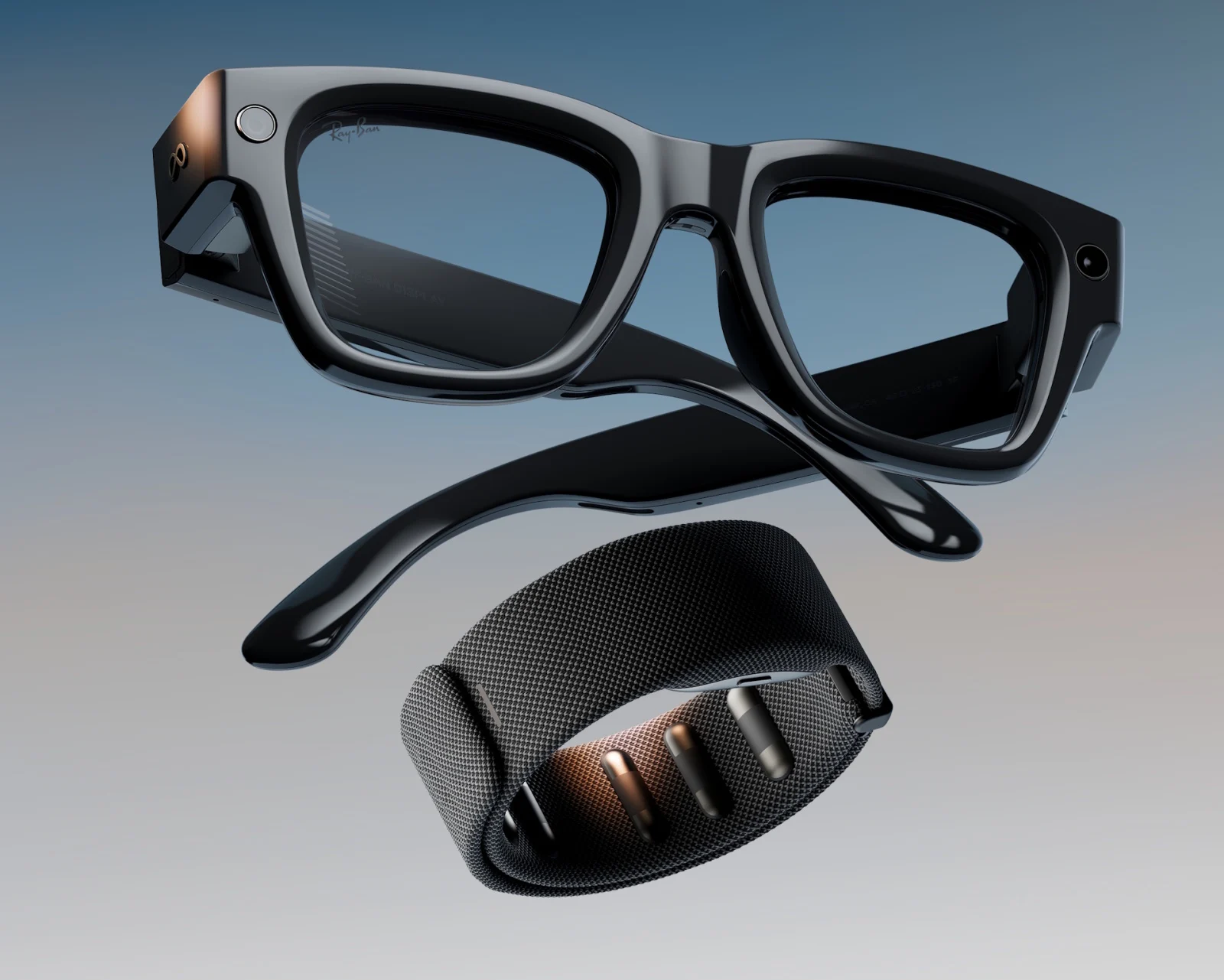
The Neural Band transforms subtle muscle activity into digital commands. Pinching your fingers, flexing slightly, or even initiating a movement that doesn’t visibly occur can trigger scrolling, clicking, or—coming soon—writing text in the air. Meta says it trained this system with data from nearly 200,000 research participants, allowing it to “just work” without complex calibration, even for users with limited hand mobility or tremors.
This is more than a clever interface; it’s a significant accessibility advance. People with mobility limitations can control their glasses with minimal motion, and for everyone else it offers a natural, silent way to interact without speaking or reaching for a phone.
Smart Features: AI at a Glance
Meta’s software turns the hardware into a real everyday assistant. Key features include:
- Messaging & Video Calling: Receive WhatsApp, Messenger, Instagram, and SMS messages directly in the lens. Live video calls show the caller your view in real time—ideal for quick visual sharing.
- Camera Preview & Zoom: The in-lens display doubles as a viewfinder, letting you frame shots and share media instantly.
- Pedestrian Navigation: Turn-by-turn walking directions display as floating arrows and street names, starting with select cities in beta.
- Live Captions & Translation: On-demand speech-to-text and real-time translation help break language barriers.
- Music Playback: Visual track info and intuitive thumb gestures make music control effortless.
These features emphasize quick, context-aware interactions. Rather than strapping a smartphone to your face, Meta delivers a heads-up glance that keeps you present in the physical world.
Market Position: Between AR Headsets and Simple Smart Glasses
By combining a bright, full-color display and EMG input into a sub-$1,000 package, Meta is carving out a unique middle ground:
| Competitor | Price | Weight | Display | Key Differentiator |
|---|---|---|---|---|
| Apple Vision Pro | $3,499 | 600+ g | Immersive dual 4K micro-OLED | Full mixed reality, high price and bulk |
| Magic Leap 2 | $3,200 | ~260 g (tethered) | AR with spatial computing | Enterprise focus |
| Snap Spectacles 4 | ~$380 | ~134 g | Minimal HUD | Creator-first camera focus |
| Xiaomi Mijia / TCL NXTWEAR S+ | $400–$500 | 75–100 g | Video-centric micro-OLED | Entertainment display |
The Meta Ray-Ban Display will launch September 30 in the United States through Best Buy, LensCrafters, Sunglass Hut, and Ray-Ban Stores, with Verizon availability to follow. A global rollout—Canada, France, Italy, and the UK—is scheduled for early 2026, and Meta plans to broaden distribution as production scales.
Meta isn’t just selling hardware; it’s pushing toward a new computing paradigm. By blending on-demand visuals, ambient AI assistance, and muscle-based interaction, Meta Ray-Ban Display reimagines how people can stay connected and informed without constantly pulling out a phone.
For now, the product is aimed at early adopters and tech-forward consumers. But with its competitive price, all-day comfort, and feature set that beats or matches rivals costing several times more, Meta is signaling that the future of AI wearables will look less like a helmet and more like a pair of everyday sunglasses.
Bottom Line: Meta Ray-Ban Display is not just another gadget—it’s a calculated leap toward the next era of personal computing. Stylish enough for daily wear and technically deep enough to challenge everything from Snap Spectacles to Apple Vision Pro, it may be the clearest proof yet that AI glasses are ready to leave the lab and live in the real world.