


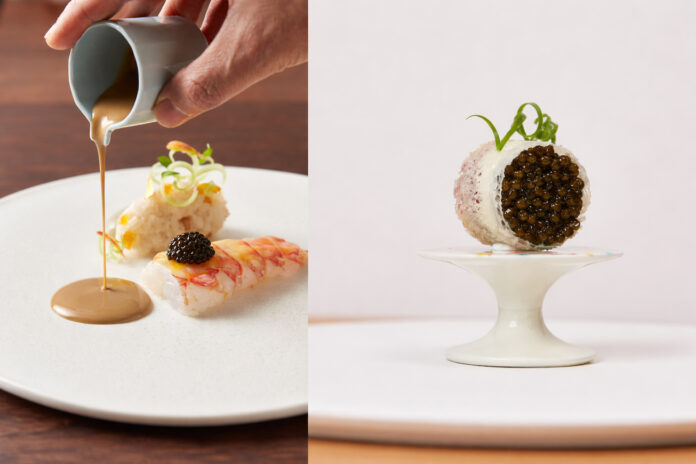

The MICHELIN Guide has released its full restaurant selection for Seoul and Busan, marking the 10th anniversary of its presence in Korea with a sweeping edition that reflects just how far the country’s dining culture has come. The 2026 guide encompasses 233 restaurants in total, with 178 in Seoul and 55 in Busan, and stands as a testament to a culinary ecosystem that has grown more confident, layered, and globally relevant with each passing year.
“Over the past decade, Korea’s dining landscape has grown in breadth and depth,” said Gwendal Poullennec, International Director of the MICHELIN Guide, who described Seoul as having matured into a highly polished gastronomic capital and Busan as a dynamic hub shaped by local character and culinary creativity.
Mingles Holds the Crown
Chef Min-goo Kang’s Mingles retains its Three MICHELIN Stars for the second consecutive year, remaining the undisputed pinnacle of Korean gastronomy. Set within a space that quietly reflects Korean aesthetics, the kitchen continues to harmonize tradition and modernity through refined creativity and a consistency that speaks to the entire team’s sustained dedication.
Promotions and New Stars
Among the most celebrated promotions of this edition is Sosuheon, where Chef Kyung-jae Park presides over just eight counter seats in a serene, elegant setting that feels far removed from the city outside. The intimacy of the space allows diners to watch each dish take shape directly in front of them. Cod roe arrives with hairy crab, steamed tilefish and grilled hairtail follow in thoughtful succession, and generously formed nigiri, particularly the gizzard shad and a deeply creamy cuttlefish preparation, carry the meal toward a close punctuated by a bowl of matcha. Sosuheon earns a promotion to Two MICHELIN Stars.
Joining it at that level is Mosu, Chef Sung-jae Ahn’s fine dining restaurant, which earns a newly awarded Two MICHELIN Stars distinction. The kitchen deals in imagination as much as precision, with unpredictable flavors and intriguing textures arriving course after course. The abalone taco, sesame tofu, and burdock tarte have become signatures for good reason, while the sourdough charms on its own terms and the fish course demonstrates elegant composition. Each floor of the restaurant offers a distinct atmosphere, and attentive service alongside thoughtful wine pairings seal an experience that lingers well after the last bite.
Four restaurants earn One MICHELIN Star for the first time. In Seoul, Gaggen by Choi Junho is run by the team of Hyeon-Ah Choi and Jin-hee Won, who channel refined Japanese seasonality through preparations that feel genuinely uncommon, including hand-pulled somen, freshly ground sesame, and bracken-starch warabi-mochi. Dinner begins promptly at 7 p.m., with each course presented directly before the guest so that the chefs’ craftsmanship remains fully visible throughout the evening.
Also newly starred in Seoul, Hakusi opens a bold new chapter in Cheongdam with a modern, open layout and a kitchen centered on confident, distinctive cooking. The signature unagi is served twice over: first with sansho, then wrapped in a delicate pancake alongside basil and basil vinegar, the two preparations distinct yet linked by a steady sense of balance. After 8 p.m., à la carte options become available alongside a tasting menu of past signatures.
JUEUN, also newly awarded in Seoul, takes a classical and understated approach to Korean cuisine, tracing the country’s four seasons through ingredients enhanced by fermented sauces that bring natural depth without drama. The course concludes with a traditional Korean table that showcases a wide spectrum of flavors, while curated pairings of traditional Korean spirits and wine offer a grounding counterpoint.
In Busan, Le DORER earns the city’s newest star under a young chef who has built a tasting menu around the modernized essence of traditional Korean cuisine. Seasonal local ingredients anchor every plate, with French and Japanese techniques woven in subtly rather than loudly. The dining room has the atmosphere of a speakeasy, with expansive ocean views and a wine program that rises to meet the food.
Four additional restaurants in Seoul receive One MICHELIN Star recognition. At Collage, Chef Jin-sung Noh draws on a broad understanding of ingredients to achieve dishes in which various flavors find genuine balance, expressed through harmonious combinations of inherent ingredient flavors and dense sauces that bring a contemporary edge to traditional French cuisine. GiwaKang sees Chef Min-chul Kang melding classic Korean flavors with refined French technique to arrive at pairings that might otherwise seem improbable: dongchimi with caviar, squid mandu, and ganjang gejang rice alongside truffle each find a sophisticated and harmonious resolution on the plate.
SAN, led by Chef Seong-hyun Jo, blends modern cuisine with a creative sensibility, highlighting seasonal ingredients and pairing them with sauces that balance complexity against restraint. Korean-inspired dishes such as lobster jeotgal and chamoe dongchimi illustrate Chef Jo’s imagination clearly, while milmyeon and dweji-gukbap deliver the robust flavors of Korean cuisine elevated by his personal interpretation. The restaurant’s forest setting adds another dimension to an already quietly memorable experience.
Tucked inside Hinotsuki, Sushi Kanesaka operates an intimate eight-seat hinoki counter where a Japanese chef and a Korean team serve refined sushi through the lens of seasonal Korean seafood. The rice, seasoned with salt and two types of red vinegar, delivers a clean umami that lets the fish speak without interference. The dinner course builds into a more elaborate, intricately composed progression than its lunch counterpart.
Busan Holds Its Own
In Busan, Mori, Palette, and Fiotto each retain their One MICHELIN Star for the third consecutive year since the first Busan edition launched in 2024. With Le DORER joining their ranks, the city now counts four starred restaurants, a figure that reflects the growing seriousness with which the culinary world is taking South Korea’s second city.
Green Stars and Special Honors
On the sustainability front, Gigas in Seoul and Fiotto in Busan retain their MICHELIN Green Stars, while Mitou and Gosari Express, both in Seoul, earn the recognition newly this year, bringing Korea’s Green Star total to four.
The guide’s Special Awards recognize exceptional individuals across the industry. The Sommelier Award, presented in partnership with Perrier-Jouët, goes to Jun-in Lee of GiwaKang, whose confident and flexible approach to wine pairings allows each course to be met with clarity and ease. The Service Award honors Manager Il-woo Kim of Gucci Osteria da Massimo Bottura for the warmth and professionalism he and his team bring to every table. The Young Chef Award goes to Chang-uk Kim of Le DORER, whose calm, restrained interpretation of contemporary Korean cuisine, built on precision and a deep respect for seasonal local produce, marks him as a young cook with a clear and developing voice.
A newly introduced Opening of the Year Award goes to Chef An Lee of IAán in Busan, a new MICHELIN Selected restaurant that has distinguished itself from the start through the alignment of cuisine, space, and service around a single, coherent identity. Chef Lee’s belief that consistency is fundamental has produced a debut of notable operational maturity and creative confidence.
Twenty-four additional restaurants join the selection as MICHELIN Selected establishments, bringing that category’s total to 116 across both cities.