



There was a time, not so long ago, when the measure of a great restaurant was its grandeur: the sweep of a dining room, the pageantry of a brigade in white, the sense of occasion conjured by sheer scale. To dine well was to dine widely, surrounded by the hum of many tables turning in elegant synchrony. That era, for those who seek the highest expression of the culinary arts, is quietly, decisively ending.
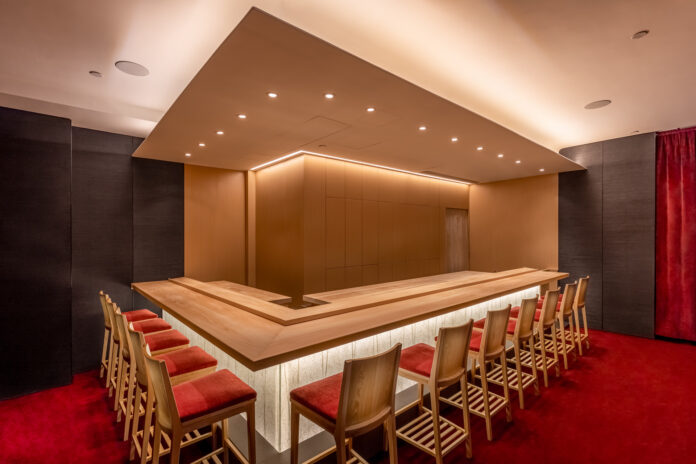
In its place has risen something altogether more considered: the small room, the counter of twelve, the table for eight where the chef both cooks and converses, where every seat is, as one celebrated London address once declared, “at the chef’s table.” Across the world’s most consequential dining cities, from Tokyo to Los Angeles, from Paris to Mumbai, the finest meals are increasingly being served in rooms that seat fewer guests than a well-attended dinner party. This is not a coincidence. It is a philosophy.
The Architecture of Attention
The logic of the intimate restaurant is, at its heart, the logic of attention. In a room of sixty covers, a chef’s focus is necessarily divided. In a room of ten, it is wholly devoted. Every dish leaves the kitchen with the weight of its maker’s full consideration. Every plate that arrives at the counter carries with it the knowledge that there is no other plate quite like it being prepared at this moment, for this guest, in this city.
The pattern repeats itself with notable regularity. At Hayato in Los Angeles’s Arts District, chef Brandon Hayato Go serves his kaiseki omakase to just seven guests per seating, ceramics handcrafted and imported from Japan, each course unfolding with the unhurried precision of a tea ceremony. At Restaurant Ki, tucked into Little Tokyo with only ten seats, chef Ki Kim, awarded the Michelin Guide’s 2025 Young Chef distinction, brings to each guest the full arc of his training at New York’s Jungsik and Atomix, compressed into an experience so personal it resembles a private commission rather than a public service.
Scarcity as Substance
The small restaurant does something that no amount of interior design or wine programming can replicate: it makes the guest feel, genuinely and not merely as a matter of marketing, that their presence matters. In a room of ten, a dietary preference remembered, a birthday acknowledged, or a wine opened specifically for the evening registers not as exceptional service but as something closer to friendship. The transaction of dining is transformed into something more mutual.
This shift has not gone unnoticed by those who study the appetite of luxury consumers. Research published by the hospitality industry has noted that sixty-seven percent of luxury diners report that emotional connection significantly improves their satisfaction at table. What the large restaurant can provide in spectacle, the small restaurant provides in sincerity, and increasingly, the latter is what the most discerning guests are prepared to wait months to experience.
The waiting, too, has become part of the currency. Restaurants operating with fewer than twenty covers per evening routinely maintain waitlists measured not in weeks but in seasons. The Michelin Guide’s inspectors, in their notes on Natsu in Orlando, an omakase restaurant of just ten counter seats offering two seatings per night, observed that the sushi is impressive and does not overreach, each piece a study in restraint. The room’s limitation is what allows that restraint to exist.
The Chef Liberated
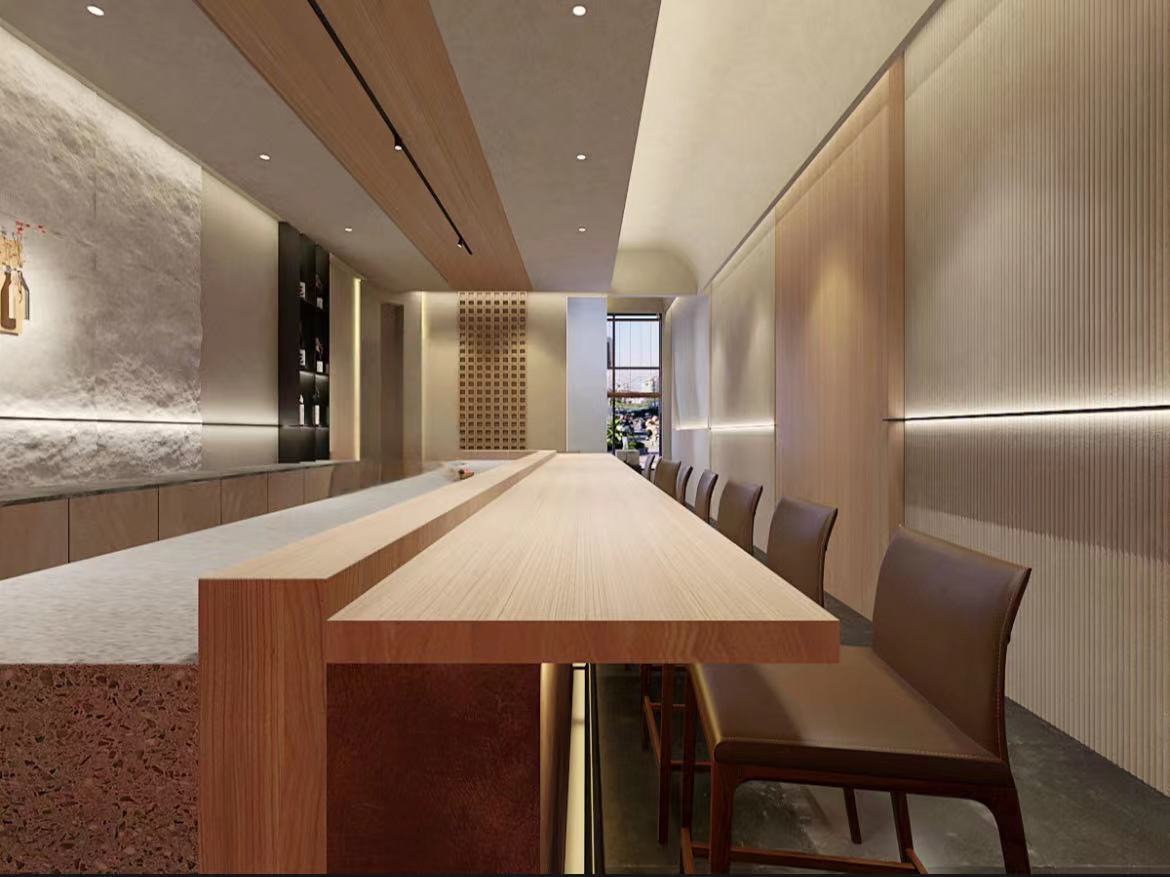
For the chefs themselves, the small room is frequently described not as a constraint but as a liberation. In the larger restaurant, the demands of consistency across eighty covers push the kitchen toward systems, toward repetition, toward the reliable replication of a formula. In the room of twelve, the chef can follow instinct, can change a course because the morning’s market offered something unexpected, can read the mood of the table and pace the meal accordingly. The menu becomes less a fixed contract and more a living conversation.
Chef Ben Staley, who opened his twelve-seat Alder Room with the explicit intention of creating a more elevated experience through limitation, articulated the principle with characteristic directness: by serving fewer people, one can seek out the finest quality ingredients and provide service of a quality that larger operations simply cannot sustain. The small room, paradoxically, permits a generosity that the large restaurant cannot afford.
This is borne out in the economics of the form. A restaurant of ten seats, with a single seating per evening at a considered price per head, generates revenue that supports the procurement of ingredients no large kitchen could justify for the whole room. The aged fish flown from Japan at Hayato, the foraged herbs at Feld in Chicago, sourced from within a four-hour radius by chef Jacob Potashnick, who earned his first Michelin star in 2025, the hand-selected produce that defines the menus of the smallest rooms: these are luxuries made possible precisely because the kitchen is not feeding a crowd.
Rooms That Reward the Journey
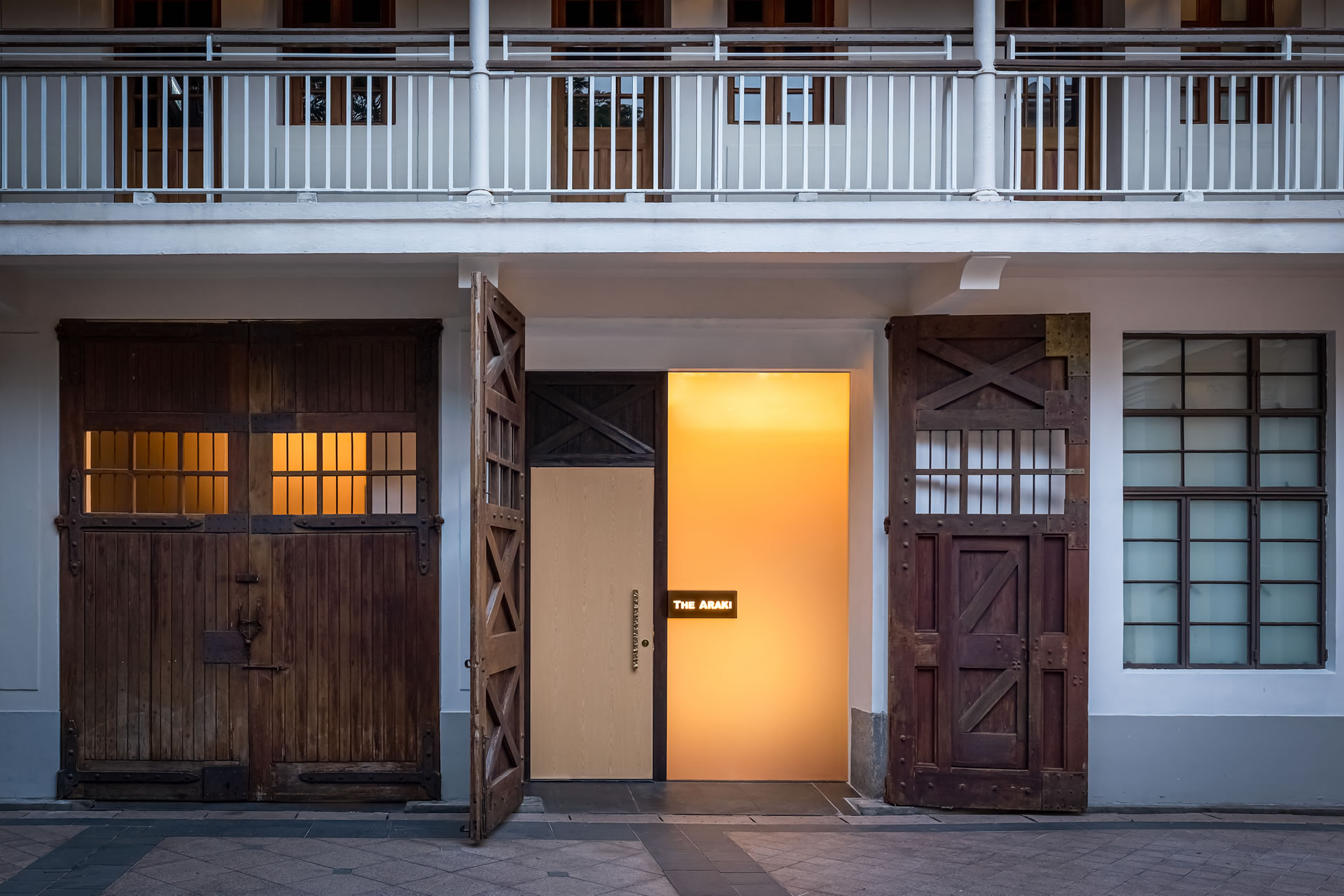
The Michelin Guide has long understood that the meal worth a special journey need not occupy a grand address. The nine-seat Tsuta in Tokyo, and the twelve-seat Araki in Hong Kong, each demonstrated that the star is agnostic to the square footage of the room in which the cooking takes place. What it demands is that the cooking transcend the ordinary, and the small room, it seems, offers an unusual concentration of conditions in which that transcendence can occur.
Behind, the fish-forward London restaurant in London Fields, had been open a mere twenty days when it earned its first Michelin star in 2021. Its eighteen seats are arranged around a horseshoe-shaped counter where diners watch chef Andy Beynon and his team at close quarters, the distance between the guest and the act of creation reduced to something almost uncomfortably intimate. That proximity is, for those who seek it, the point entirely.
At Mono in Hong Kong, just twenty-two seats total share the room with a ten-seat kitchen counter, where chef Ricardo Chaneton’s Latin American compositions are prepared in full view of those who have traveled to see them. The tasting menu’s arc, from sweetbread arepas with guasacaca to kumquat confit with saffron sorbet, unfolds as a performance staged not for an audience but for a handful of guests who have, by the act of securing their reservation, demonstrated their readiness to be moved.
The New Definition of Luxury
What unites these establishments is a redefinition of luxury that the current moment seems to demand with unusual urgency. The luxury of the past was the luxury of abundance: more courses, more service staff, more grandeur, more. The luxury of the present is the luxury of singularity: the dish prepared for you specifically, in this quantity, on this evening, by this pair of hands.
The small restaurant understands that what cannot be scaled cannot be replicated, and that what cannot be replicated cannot, in any meaningful sense, be commodified. To sit at a counter of ten and watch a chef compose a plate in silence is to participate in something that no amount of money can otherwise procure: the experience of being, for an hour or two, the entire purpose of another person’s considerable art.
In an age that has made almost everything available to almost everyone, the rarest thing of all is not an ingredient, not a wine vintage, not a table in a famous room. It is, simply, undivided attention. The great small restaurants of our time understand this, and have built, quite deliberately, the conditions in which it can be given and received.
That is what the empty chair represents, in a dining room that has very few of them. Not a table unsold, but a limit held. Not scarcity manufactured, but quality protected. The fewer the seats, it turns out, the more they are worth.