


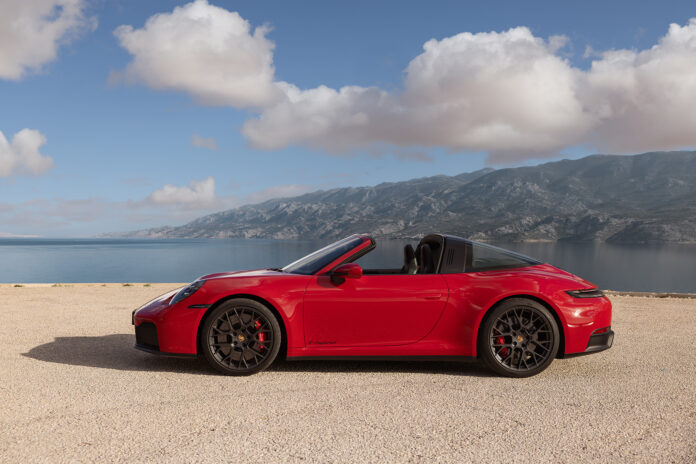

Porsche has made substantial updates to the latest 911 generation. The new 911 Carrera GTS is the first road-legal 911 model to feature a lightweight, performance-focused hybrid powertrain, centered around a newly developed 3.6-liter engine. This model accelerates from 0 to 60 mph in 2.9 seconds, an improvement of 0.3 seconds, and reaches a top speed of 194 mph. The 911 Carrera has also been enhanced, now equipped with an updated 3.0-liter twin-turbo boxer engine with increased power. Additionally, the new 911 models feature a refreshed design, improved aerodynamics, new colors, a revamped interior, enhanced standard equipment, and more extensive connectivity.
For the new 911 Carrera GTS models, Porsche engineers utilized racing expertise to develop the hybrid system. Frank Moser, Vice-President of the 911 and 718 model lines, explained that various ideas and approaches were tested to create a hybrid system that optimally suits the 911. The resulting powertrain is well-integrated and significantly enhances performance.
The 911 Carrera GTS powertrain includes a strengthened eight-speed dual-clutch transmission (PDK) with an integrated, permanently excited synchronous motor. This motor supplements the boxer engine with up to 110 lb.-ft. of torque and can develop up to 40 kW. The model also features a newly developed, electrically driven turbocharger. An electric motor between the compressor wheel and the turbine wheel quickly speeds up the turbocharger to develop boost, and can generate up to 11 kW using the exhaust gas stream. The electric turbocharger allows for the use of a single turbocharger, improving throttle response and performance.
The electrically driven turbocharger and the electric motor in the transmission are paired with a compact high-voltage battery, comparable in size and weight to a conventional 12-volt AGM starter battery. This high-voltage battery retains up to 1.9 kWh of energy and operates at 400 volts, located under the front hood where the previous 12-volt battery was. To optimize weight distribution, the 12-volt battery is now a lightweight lithium-ion battery located behind the parcel shelf in the rear.
At the core of the T-Hybrid powertrain is a newly developed 3.6-liter boxer engine. The high-voltage system allows the air conditioning compressor to be powered electrically, eliminating the need for a belt drive and making the engine more compact. This configuration provides space above the flat engine for the pulse inverter and DC-DC converter. An increase in bore and stroke raises the engine displacement by 0.6 liters compared to previous 911 Carrera GTS models. The new engine features VarioCam camshaft adjustment and valve control using roller rocker arms, maintaining the ideal fuel-air mixture over the full range of engine speeds.
The new boxer engine alone produces 357 kW (478 hp) and 420 lb.-ft. of torque. The total system power is 398 kW (532 hp) and 449 lb.-ft. This power increase of 45 kW (59 hp) over the previous 911 Carrera GTS models is particularly noticeable when accelerating from a standstill. The new 911 Carrera GTS achieves heightened performance without the typical weight increase of conventional hybrid systems, with a moderate weight increase of 103 lbs compared to its predecessor.
The 911 Carrera continues to be powered by a 3.0-liter twin-turbo boxer engine, now featuring the intercooler used in the 911 Turbo models, placed above the engine beneath the rear decklid grille. The turbochargers are adopted from the previous 911 Carrera GTS models. With these modifications, the new 911 Carrera now produces 290 kW (388 hp) – an increase of 9 hp – and up to 331 lb.-ft. of torque. The 911 Carrera Coupe accelerates from 0 to 60 mph in 3.9 seconds (3.7 seconds with the optional Sport Chrono Package) and reaches a top track speed of 183 mph, improving by 0.1 second and 1 mph, respectively, over the previous model.
The suspension of the 911 Carrera GTS has undergone extensive updates. For the first time, rear axle steering is standard, enhancing vehicle stability at higher speeds while reducing the turning circle. The optional Porsche Dynamic Chassis Control (PDCC) roll-stabilization system is integrated into the high-voltage system of the performance hybrid, allowing for the use of an electro-hydraulic control system that is more flexible and precise. A standard sport suspension with adaptive dampers (PASM) and a 10-millimeter reduction in ride height compared to the standard 911 Carrera deliver a driving experience typical of GTS models.
The new 911 Carrera models offer a choice of seven different wheel designs in 19-/20- or 20-/21-inch combinations. For the first time, 911 Carrera Exclusive Design wheels are available with carbon fiber aeroblades, which reduce the drag coefficient and optimize efficiency. The 911 Carrera GTS models come standard with 21-inch rear wheels measuring 11.5 inches in width, fitted with 315/30 ZR 21 tires. The front features 245/35 ZR 20 tires on 8.5 x 20-inch rims. The rear tires, which are 10 mm wider than those on the previous model, accommodate the increased power level of the new 911 Carrera GTS, improving performance and traction.
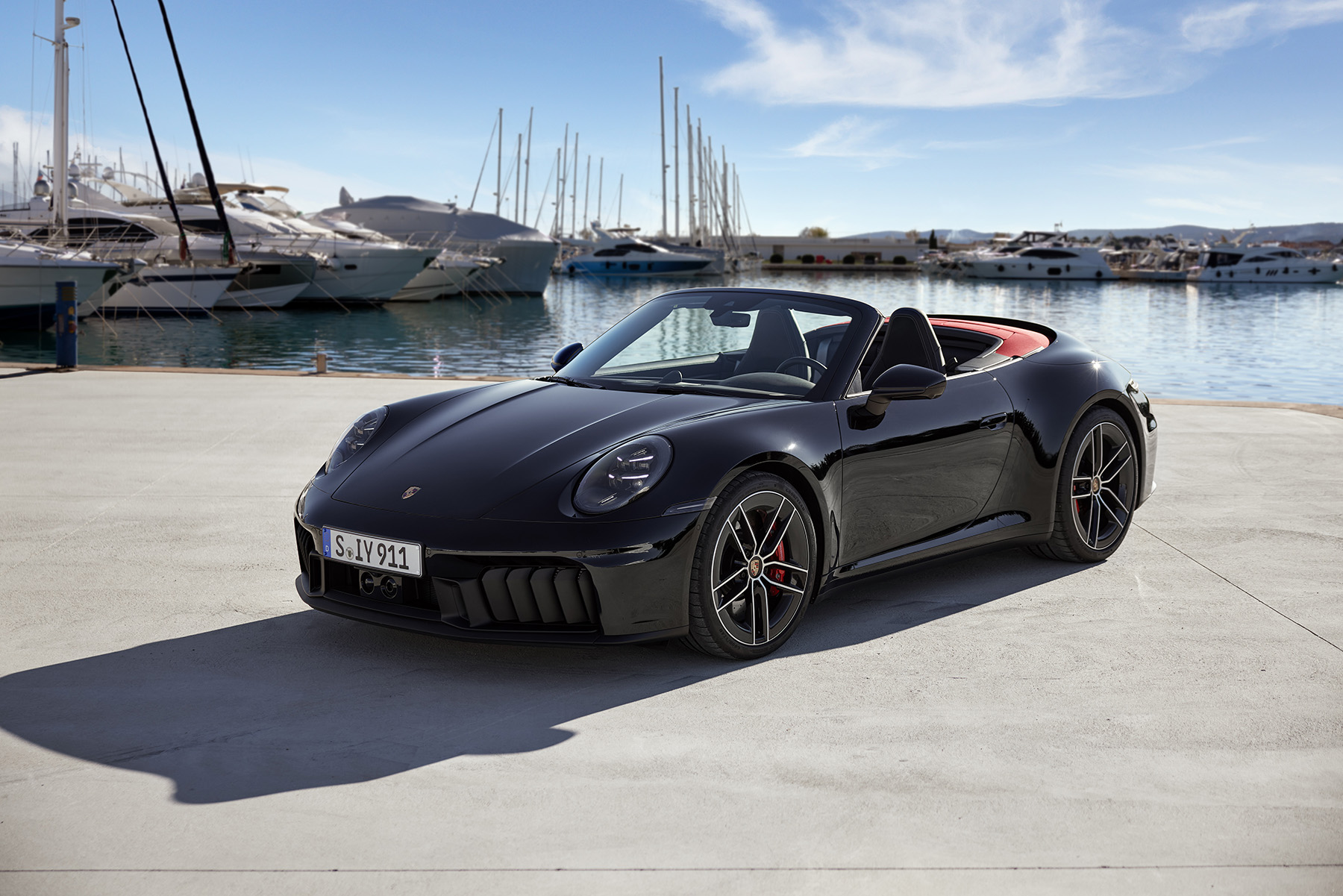
Porsche has refined the exterior design of the new 911, with a focus on optimizing aerodynamics and performance. Key updates include a new, model-specific front fascia. The standard LED Matrix design headlights, featuring the characteristic four-point design, now integrate all light functions, allowing for larger air intakes in the front fascia since the lights previously mounted there are now part of the headlights.
The 911 Carrera GTS models feature a front fascia with five visible, vertically aligned active air flaps and an additional hidden flap on each side that closes off the bypass. These are complemented by adaptive front diffusers in the underbody, used for the first time, which work in conjunction with the cooling air flaps. These elements direct airflow as needed: closed air flaps optimize aerodynamics when little power is needed, while open flaps funnel air to the radiators when high engine power is required, such as on the track. The assistance system sensors are integrated into a high-gloss area below the front license plate mount.
At the rear, a redesigned light band with “PORSCHE” lettering enhances the car’s width and low stance. A new rear decklid grille with five strakes per side forms a visible unit with the rear window, flowing seamlessly into the automatically extending, variable rear spoiler. The rear license plate is mounted higher than before, and the rear fascia is simplified. Model-specific exhaust systems are integrated into the pronounced diffuser fins. The 911 Carrera models have an optional sport exhaust system, while the 911 Carrera GTS models come standard with a GTS-specific sport exhaust system.
Additionally, an optional Aerokit is available to further enhance the performance of the 911 Coupe models. It includes a SportDesign front fascia with a unique front spoiler lip, special side skirts, and a weight-optimized, fixed rear wing, all of which reduce lift and increase performance.
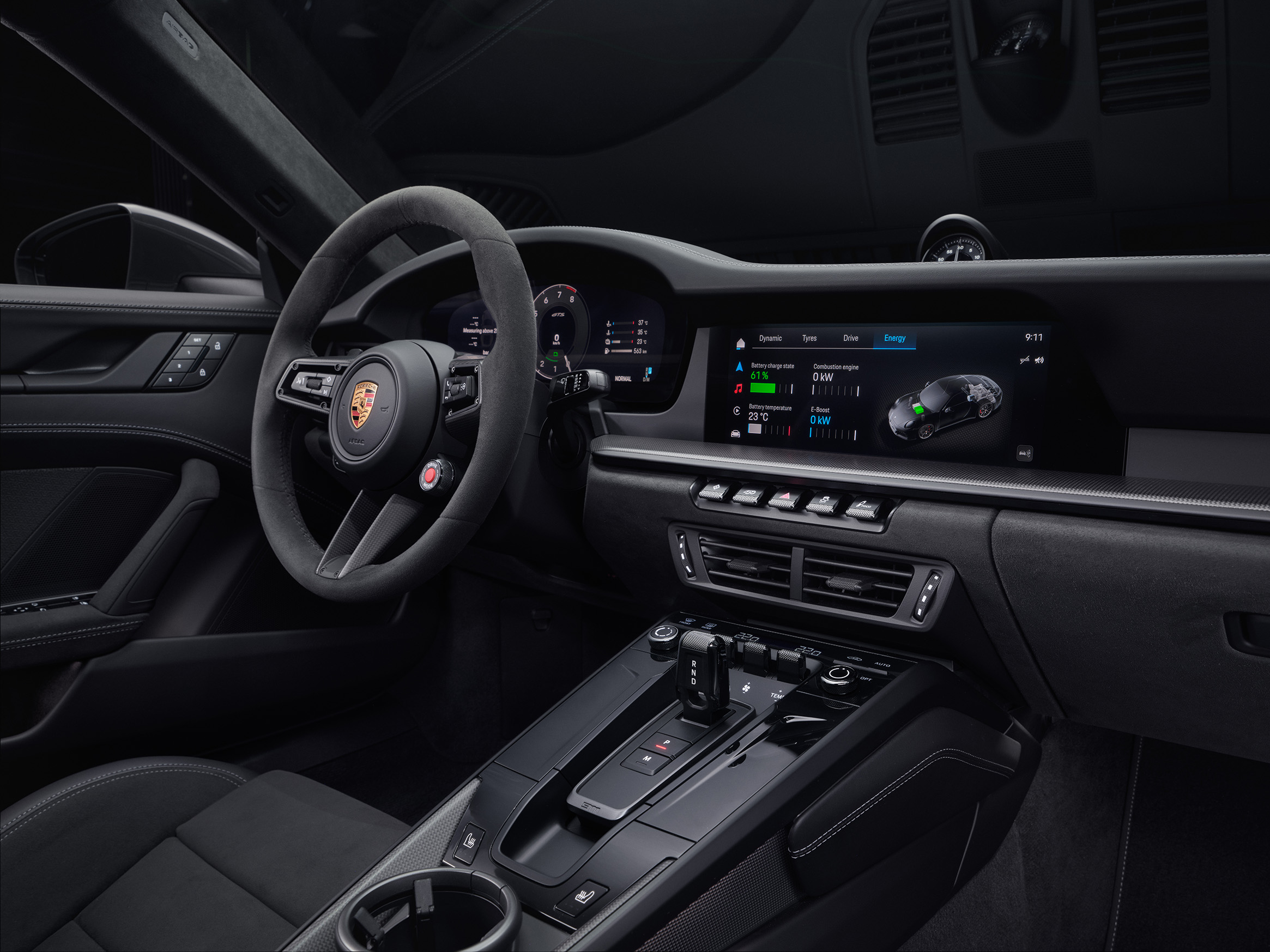
The new Porsche 911 coupe models come standard as pure two-seaters without rear seats. However, a 2+2 seat configuration is available at no extra cost. Inside, the traditional 911 design is combined with modern technology. The Porsche Driver Experience provides intuitive and quick access to key functions central to the driver. Important controls are positioned on or next to the steering wheel, including the standard drive mode switch, an updated control stalk for assistance systems, and for the first time in a 911, a start button located to the left of the steering wheel. The center console features a cooled storage compartment for smartphones with an inductive charging area.
The 911 now includes a fully digital instrument cluster for the first time. The 12.6-inch curved display integrates seamlessly into the new operating and display concept, offering extensive customization based on the driver’s preference. It provides up to seven different display views, including a classic display reminiscent of the historic five-tube design with a centrally positioned tachometer, a hallmark of the 911.
The Porsche Communication Management (PCM) system is operated via a high-resolution central display measuring 10.9 inches diagonally. The customization of drive modes and operation of assistance systems has been optimized in the new 911. The updated models also feature enhanced connectivity functions, including a QR code for easier login with the Porsche ID in the PCM. Apple CarPlay® is more deeply integrated into the vehicle, allowing information from the system to be displayed in the instrument cluster and accessed via Siri®. For the first time, video streaming is available as an option for use while the car is parked. Apps such as Spotify® and Apple Music® can be used as native apps in the PCM without needing to connect a smartphone.
The 2025 Porsche 911 Carrera is now available for order, offered as a Coupe or Cabriolet with rear-wheel drive. Additionally, the 2025 911 Carrera GTS comes in both rear-wheel and all-wheel drive configurations (911 Carrera GTS and 911 Carrera 4 GTS), available in Coupe, Cabriolet, and an exclusively all-wheel drive Targa variant. Both models come standard with the PDK transmission. Deliveries of the new 2025 911 Carrera models to U.S. Porsche Centers are expected to begin in the fall, while the 911 Carrera GTS models will start arriving by the end of 2024. The 911 Turbo, Turbo S, and GT3 RS models will continue to be offered for the 2025 model year with unchanged pricing. The Manufacturer’s Suggested Retail Pricing (MSRP) for the 2025 Porsche 911 range is listed below, excluding tax, title, registration, dealer charges, and a $1,995 delivery, processing, and handling fee.
- 2025 Porsche 911 Carrera: $120,100
- 2025 Porsche 911 Carrera Cabriolet: $133,400
- 2025 Porsche 911 Carrera GTS: $164,900
- 2025 Porsche 911 Carrera GTS Cabriolet: $178,200
- 2025 Porsche 911 Carrera 4 GTS: $172,700
- 2025 Porsche 911 Carrera 4 GTS Cabriolet: $186,000
- 2025 Porsche 911 Targa 4 GTS: $186,000
- 2025 Porsche 911 Turbo: $197,200
- 2025 Porsche 911 Turbo Cabriolet: $210,000
- 2025 Porsche 911 Turbo S: $230,400
- 2025 Porsche 911 Turbo S Cabriolet: $243,200
- 2025 Porsche 911 GT3 RS: $241,300