

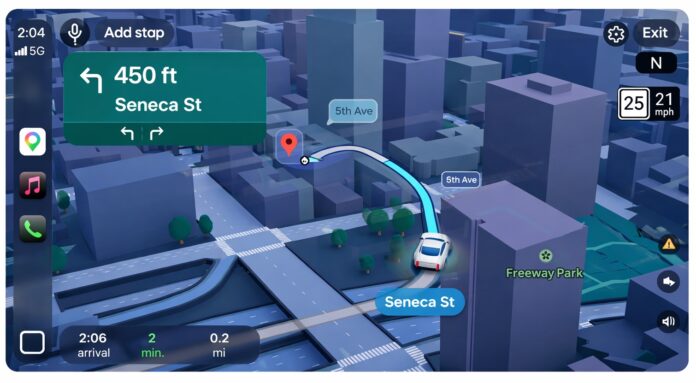

Google Maps is rethinking what a map is actually for. The company is rolling out two major updates that blend its Gemini AI models with real world mapping data, making it possible to search for places conversationally and navigate with a level of visual clarity that has not existed before. Together, they represent a meaningful shift in how people interact with one of the most used apps on the planet.
Ask Maps Turns Search Into a Conversation
The first update is Ask Maps, a new feature that lets users ask Google Maps the kinds of questions that would typically require a Reddit thread, a few Yelp searches, and some educated guessing. Things like, “My phone is dying. Where can I charge it without waiting in a long line for coffee?” or “Is there a public tennis court with lights I can play at tonight?” Now those questions get direct, conversational answers, complete with a customized map to visualize the options.
What makes Ask Maps more than just a chatbot layer on top of search is the depth of information it draws from. Maps analyzes data from over 300 million places and taps into reviews from a community of more than 500 million contributors. That means answers are grounded in real, current information rather than generic suggestions.
The feature also personalizes results based on a user’s search and save history. Ask for a spot to meet friends after work and Ask Maps already factors in dietary preferences, location, and timing without needing to be told twice. From there, users can book reservations, save locations, share options with friends, and get directions, all within the same flow.
Ask Maps is rolling out now in the U.S. and India on Android and iOS, with desktop support coming soon.
Immersive Navigation Reimagines the Drive Itself
The second update is more fundamental. Immersive Navigation is a ground up redesign of the driving experience in Maps, and it goes well beyond a visual refresh. The new interface renders a vivid 3D view of the road ahead, complete with buildings, overpasses, and terrain. When it matters, the map surfaces lane markings, traffic lights, crosswalks, and stop signs to help drivers make confident decisions in real time. That level of spatial detail is powered by Gemini models processing fresh Street View imagery and aerial photography.
The guidance itself has also been rethought. Rather than robotic turn by turn instructions, voice navigation now sounds more like a knowledgeable passenger. Instead of “Turn right in 500 feet,” drivers might hear, “Go past this exit and take the next one for Illinois 43 South,” paired with visuals that make the next move obvious before it arrives.
A few other additions round out the update. The map now offers a broader view of the route ahead, using smart zooms and transparent building overlays so drivers can anticipate tricky merges and lane changes well in advance. When faster or alternate routes emerge, Maps explains the tradeoffs clearly, whether that means a toll, more traffic, or a few extra minutes. Real time alerts for construction and road incidents, sourced from more than 10 million daily community contributions, keep the picture current. And as drivers approach their destination, the app surfaces parking options, building entrances, and which side of the street to be on, handling the final stretch with the same clarity as the rest of the route.
Immersive Navigation is available now in the U.S. and will expand to additional iOS and Android devices, CarPlay, Android Auto, and Google built in vehicles in the months ahead.
Why It Matters
Navigation apps have largely looked and worked the same way for years. What Google is doing here is not incremental. Layering conversational AI onto real world mapping data, and using that same AI to reinterpret how visual guidance works on the road, suggests a broader rethink of what utility software can feel like. The bar for what counts as a useful map just moved.
