


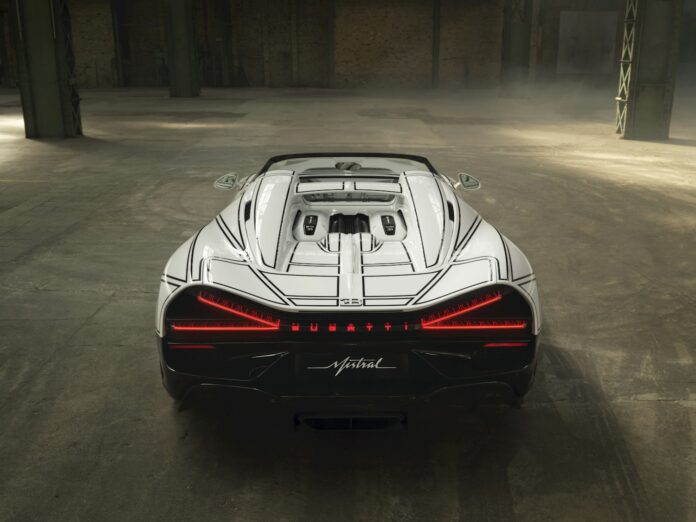

Bugatti Sur Mesure just dropped one of its most striking creations yet. The W16 Mistral roadster gets transformed into a rolling canvas with “Blanc Éternel,” a one-of-one build that fuses cutting-edge digital design with old-world porcelain craft courtesy of Königliche Porzellan-Manufaktur Berlin (KPM). Translation: this is Bugatti closing out the legendary W16 era in the most artful way possible.
The Backstory: A 15-Year Callback
This isn’t Bugatti and KPM’s first collab. Rewind fifteen years and the two houses linked up on “L’Or Blanc,” a porcelain-inspired take on the Veyron Grand Sport that helped define Bugatti’s bespoke design language. Current Design Director Frank Heyl was hands-on with that original build, hand-painting flowing lines straight onto the car.
The inspiration? A porcelain vase by Italian designer Enzo Mari, decked out in confident blue brushstrokes. Bugatti’s team took that same energy and mapped it onto automotive “lines of light,” the reference lines designers use to check a car’s surfaces for flaws. On “L’Or Blanc,” those technical lines became art.
Fast Forward: Digital Meets Handmade
Fifteen years later, Bugatti isn’t repeating the formula, it’s evolving it. The W16 Mistral was designed entirely in the digital realm, no clay models involved, built from a mesh of NURBS surfaces (Non-Uniform Rational B-Splines) that create its seamless body lines. For “Blanc Éternel,” that usually invisible digital blueprint becomes the entire design concept.
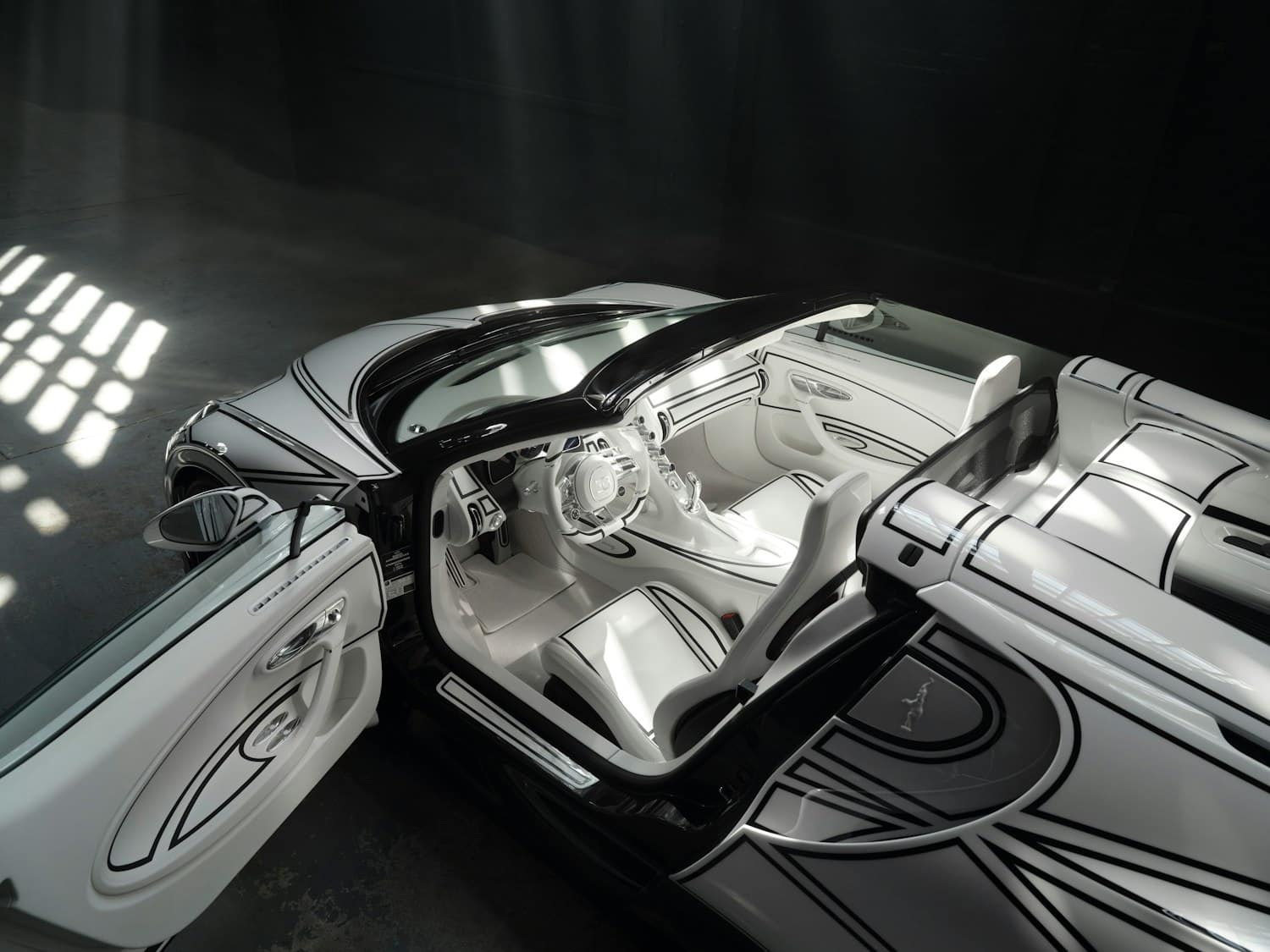
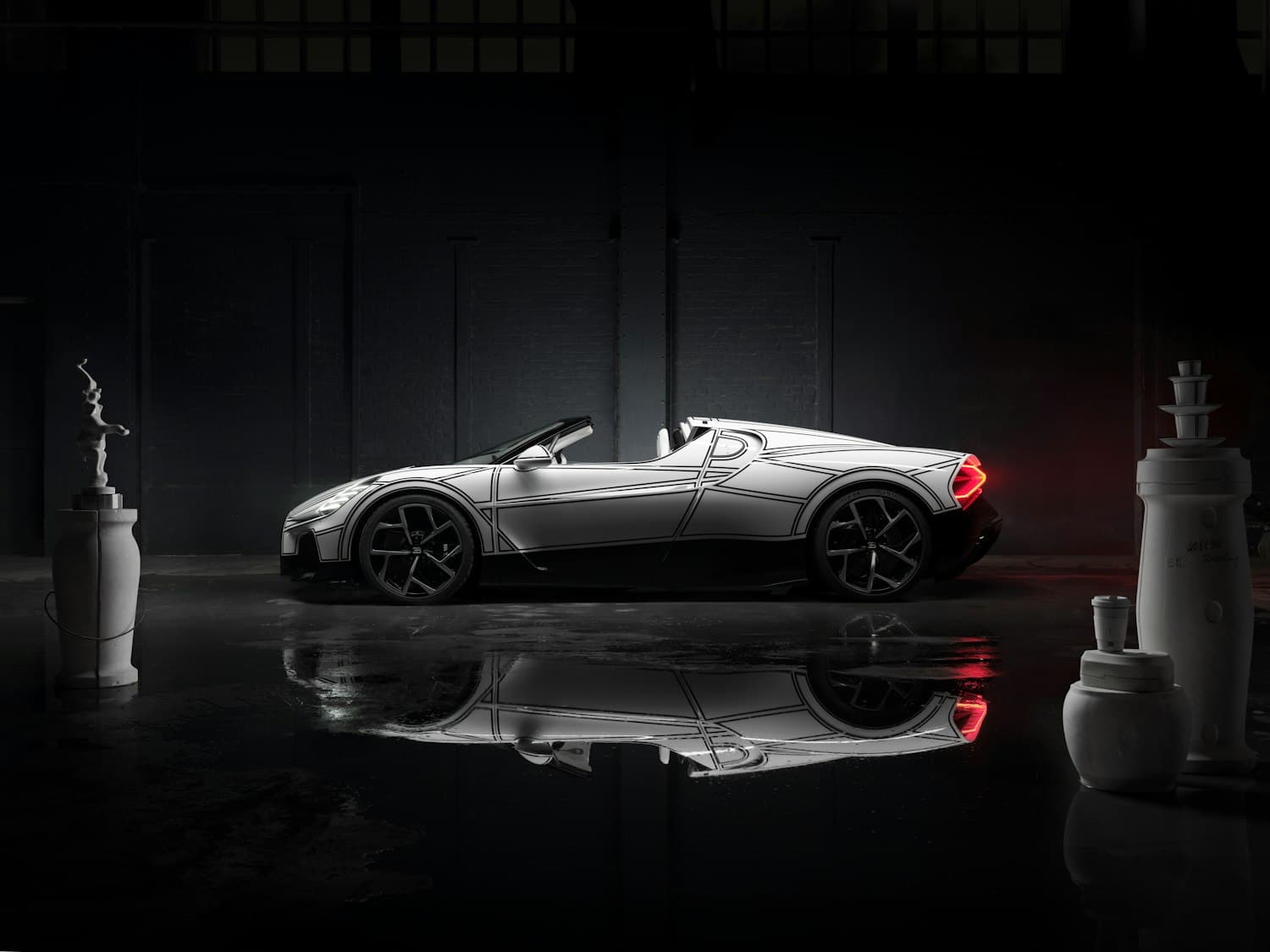
Fine black lines trace the Mistral’s underlying digital surface map, exposing the geometry beneath the bodywork. It’s a black-on-white flex that nods straight to digital modeling, while the “Blanc Éternel” name pays tribute to porcelain’s timeless white and the W16 engine’s legendary run.
Old-School Craft, New-School Process
Here’s the twist: even though the design started as code, the execution is 100% handmade. Painters taped every single line directly onto the physical car, no clay reference to work from. The body was finished in pure white, hand-taped line by line, counter-masked, then sprayed black to reveal the final graphic. Pure patience, pure skill.
The result hits every signature Mistral feature, the horseshoe grille, sculpted front end, rising C-line, aggressive air intakes, and the X-shaped taillights, all wrapped in this striking linework.
Porcelain Everywhere, and It’s Actually Functional
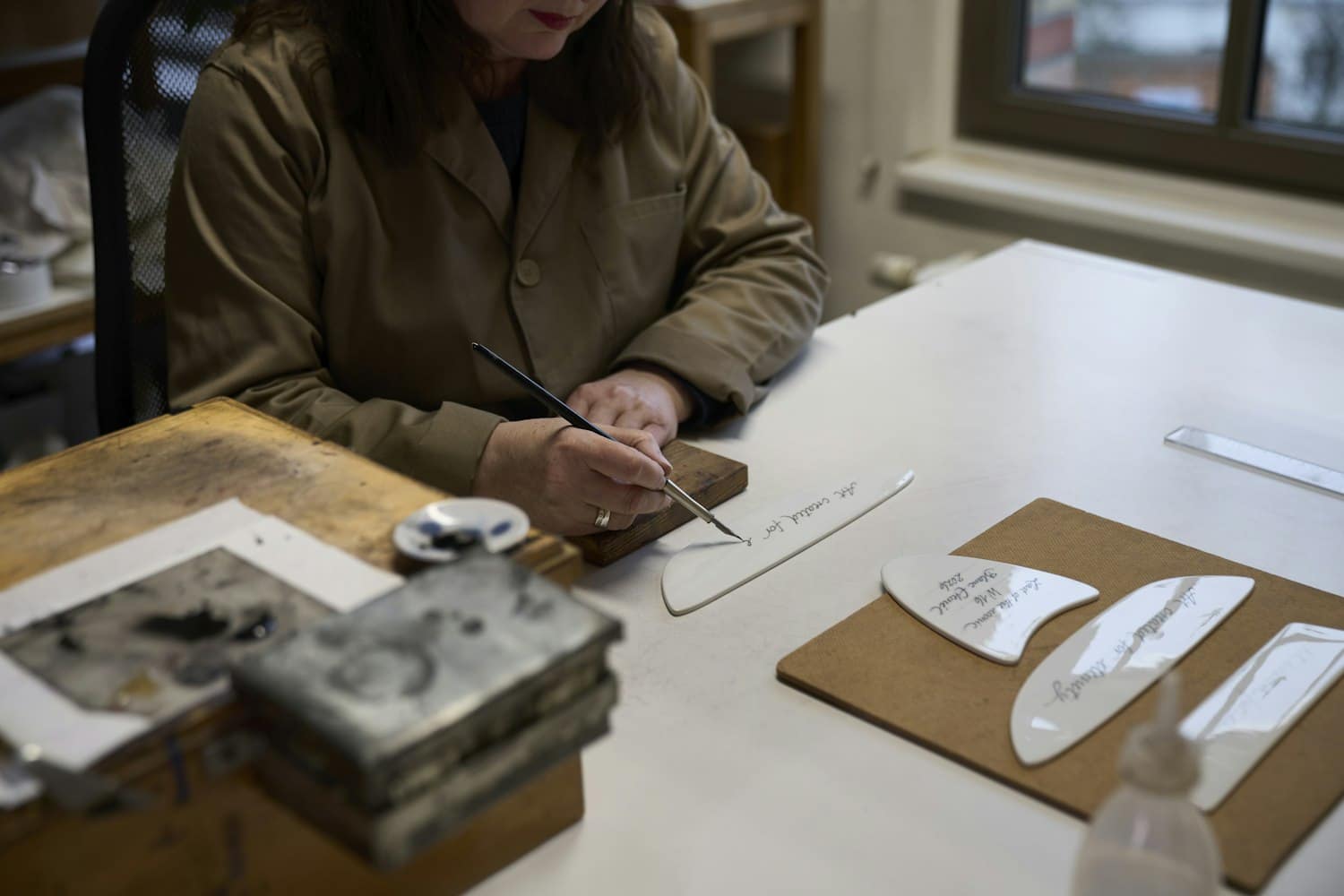
KPM porcelain shows up across the exterior on the EB emblem, fuel and oil caps, and engine cover inlays featuring KPM’s royal scepter logo. Fun fact: porcelain shrinks during firing, so every piece has to be engineered to account for that shift before it’s even fired.
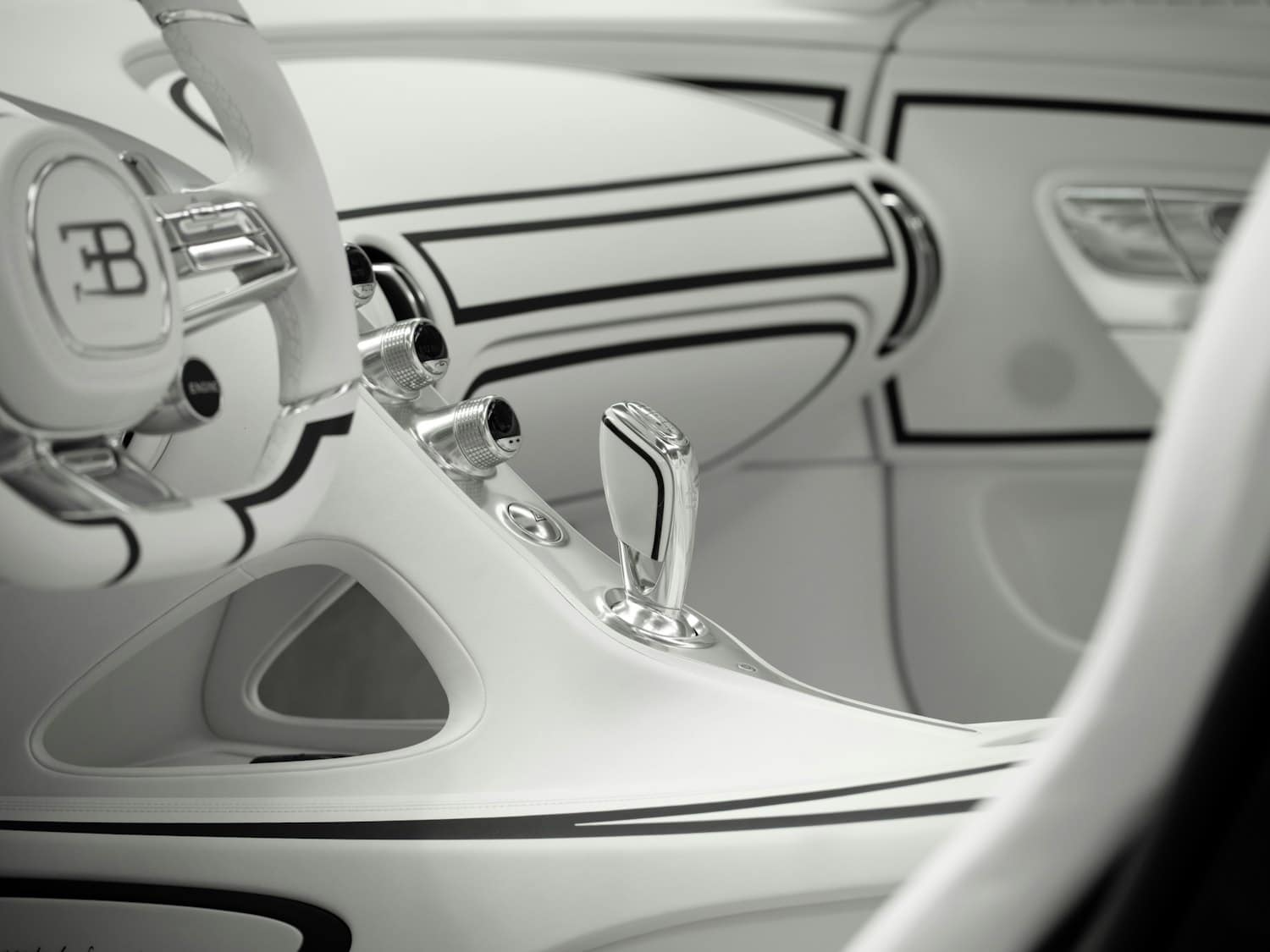
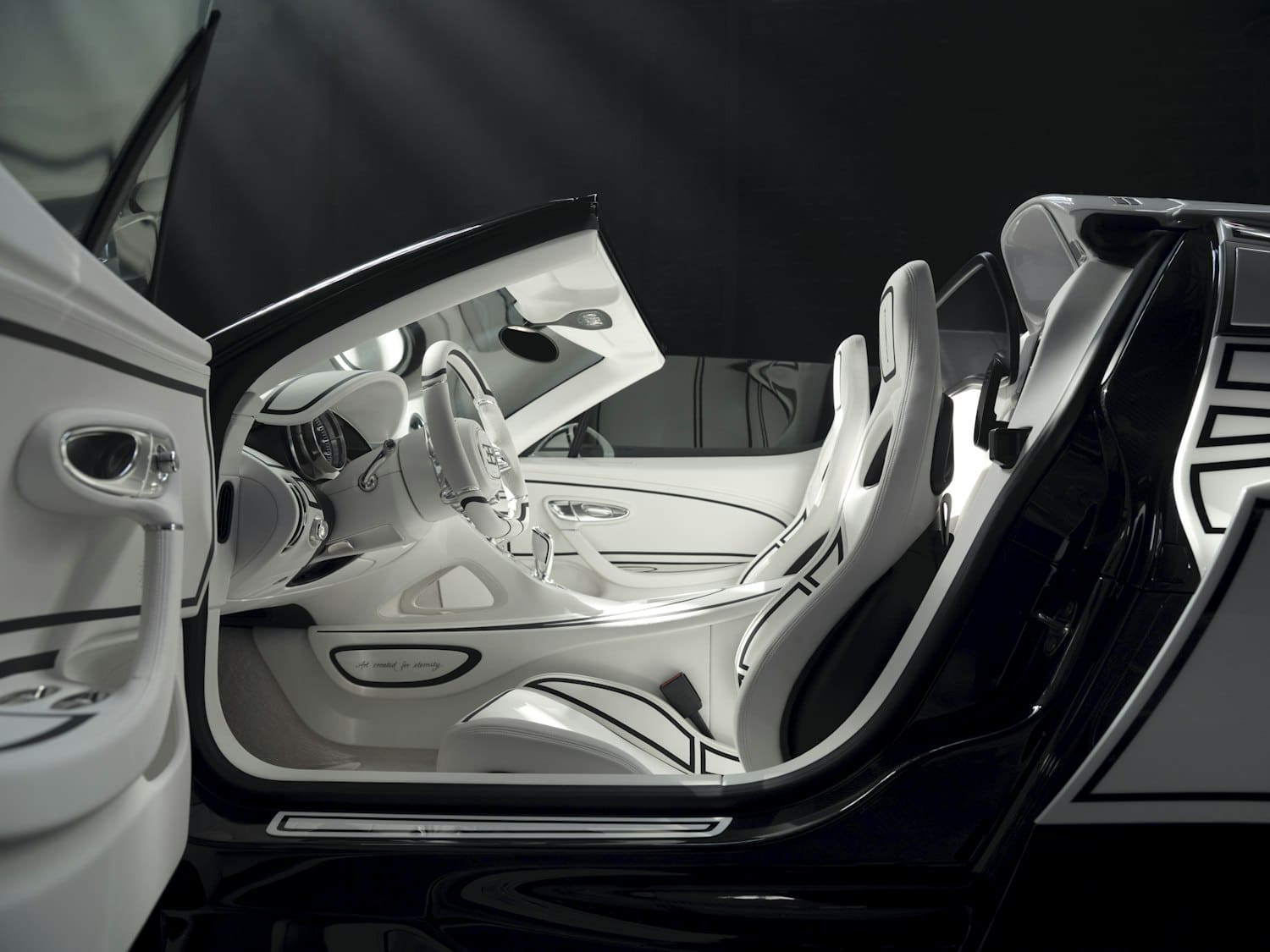
Inside, the design language continues onto white leather using an entirely new Bugatti technique, black paint hand-applied over hand-masked leather sections for that same graphic contrast. Porcelain isn’t just decorative here either. It’s built into the gear-shifter shells, kneepad inlays, speaker cover, center console armrest, and window-lifter buttons. You’re literally touching porcelain every time you shift gears.
The Drop: A Limited Porcelain Collection
To celebrate the collab, Bugatti and KPM are also launching a “Blanc Éternel” porcelain collectible line, featuring the To-Drive Cup and KPM’s Aviator Cup in two sizes. Only 1,000 pieces exist, each one handmade.
Bottom Line: “Blanc Éternel” isn’t just a paint job, it’s Bugatti and KPM turning digital-age engineering into a wearable piece of design history, closing out the W16 chapter with serious style.