


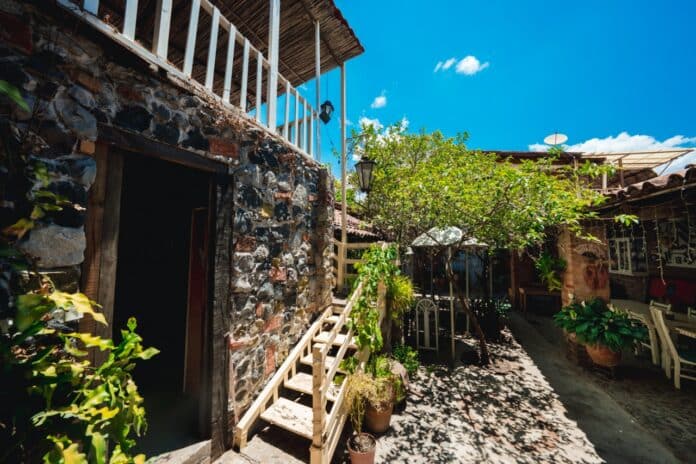

There is a particular quality of light in southern Nayarit, amber and slightly diffuse, as though the air itself has been warmed through, that makes ordinary things feel weighted with significance. You notice it when you step off the highway and into the streets of Ixtlán del Río, a town whose name, rendered from Nahuatl, means place where obsidian is abundant. That etymology is not incidental. The ancient inhabitants of this region maintained workshops for the manufacturing of obsidian arrowheads and knives, which were used in trade. Commerce and craft shaped this town in equal measure, and something of that dual inheritance still lingers in how the place feels: purposeful, alive with making.
Most travelers pass through Ixtlán without pausing. It sits along Federal Highway 15, roughly equidistant between Tepic and Guadalajara, and for many it is simply a blur of rooftops seen through glass. To spend a day here, genuinely, unhurriedly, is to discover that the town has organized its identity around three acts: the ritual of the morning table, the alchemy of cold and sweetness, and the primordial scent of cacao on a hot stone. Together, they constitute something rarer than a food trail. They constitute a philosophy of place.
La Casona: Stone, Adobe, and the Weight of Memory
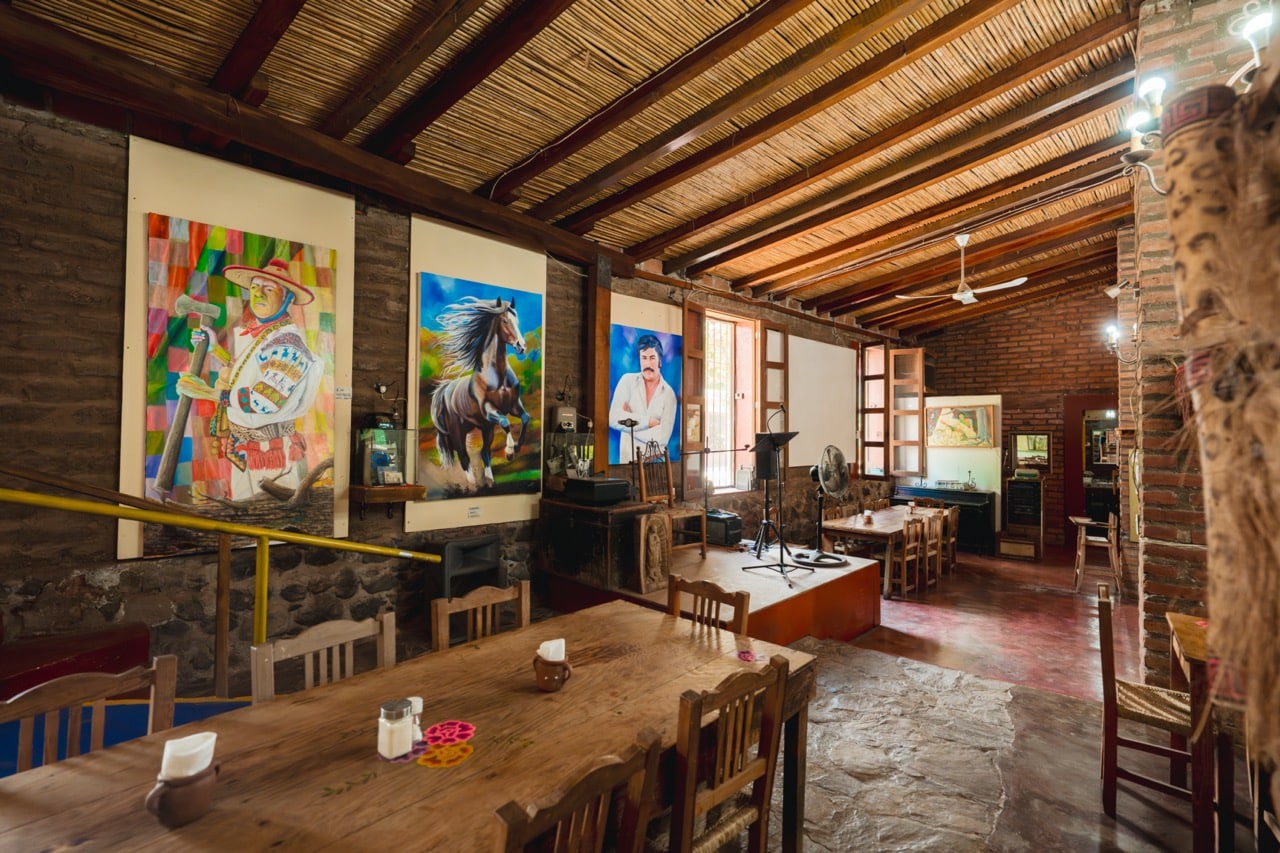
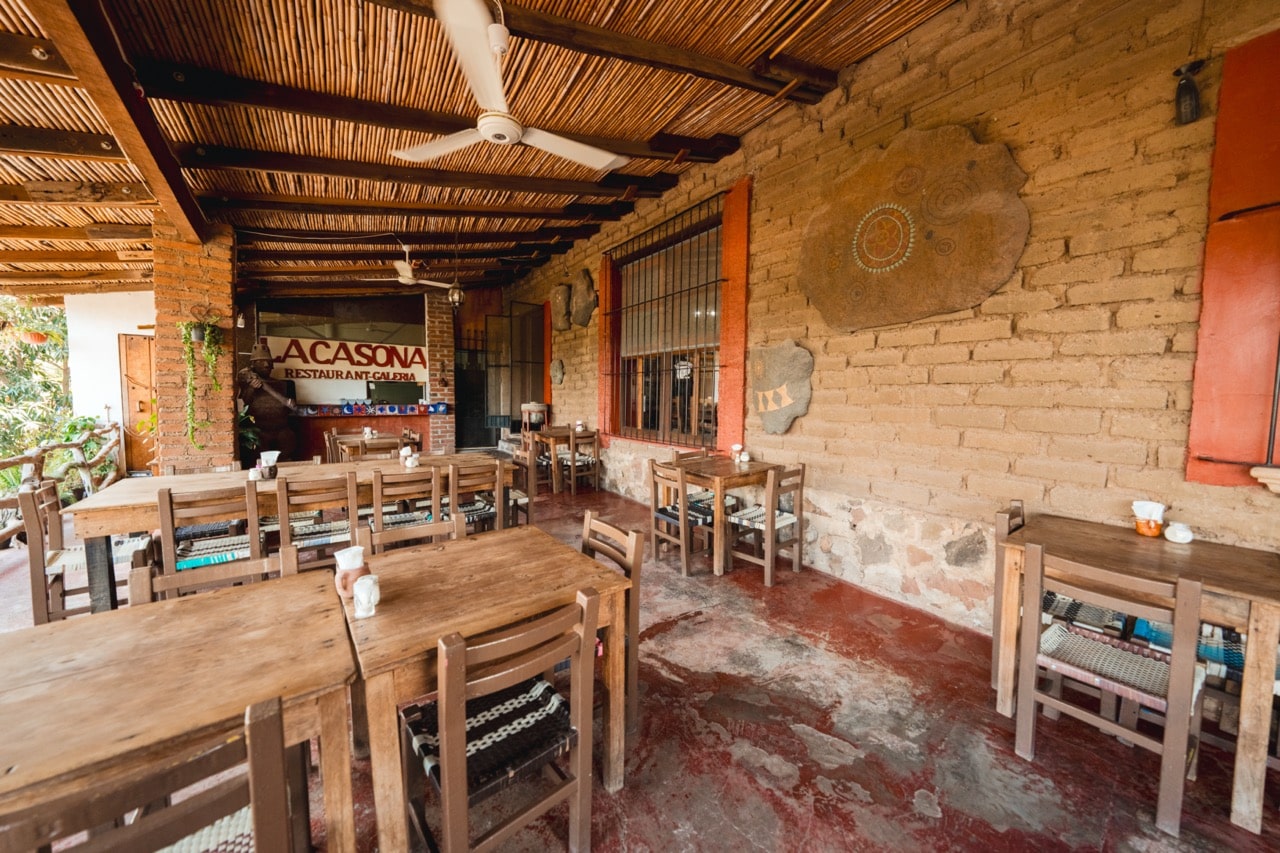
Before the heat asserts itself, when the air still carries a trace of night coolness, make your way to La Casona. Built of stone, adobe, and carrizo, the native river cane, and sheltering wide terraces with views of the natural landscape, this is a restaurant, gallery, and museum in one. The building breathes differently from its neighbors; its walls seem to exhale the accumulated temperature of many decades. Inside, the menu leans into Nayarita identity with a lack of self-consciousness that is itself a form of confidence: carnes sarandeadas, chicharrón de pescado, camarones prepared to taste, jocoque, requesón, and local cheeses. Food that has not been translated for outside consumption, that does not seek approval.
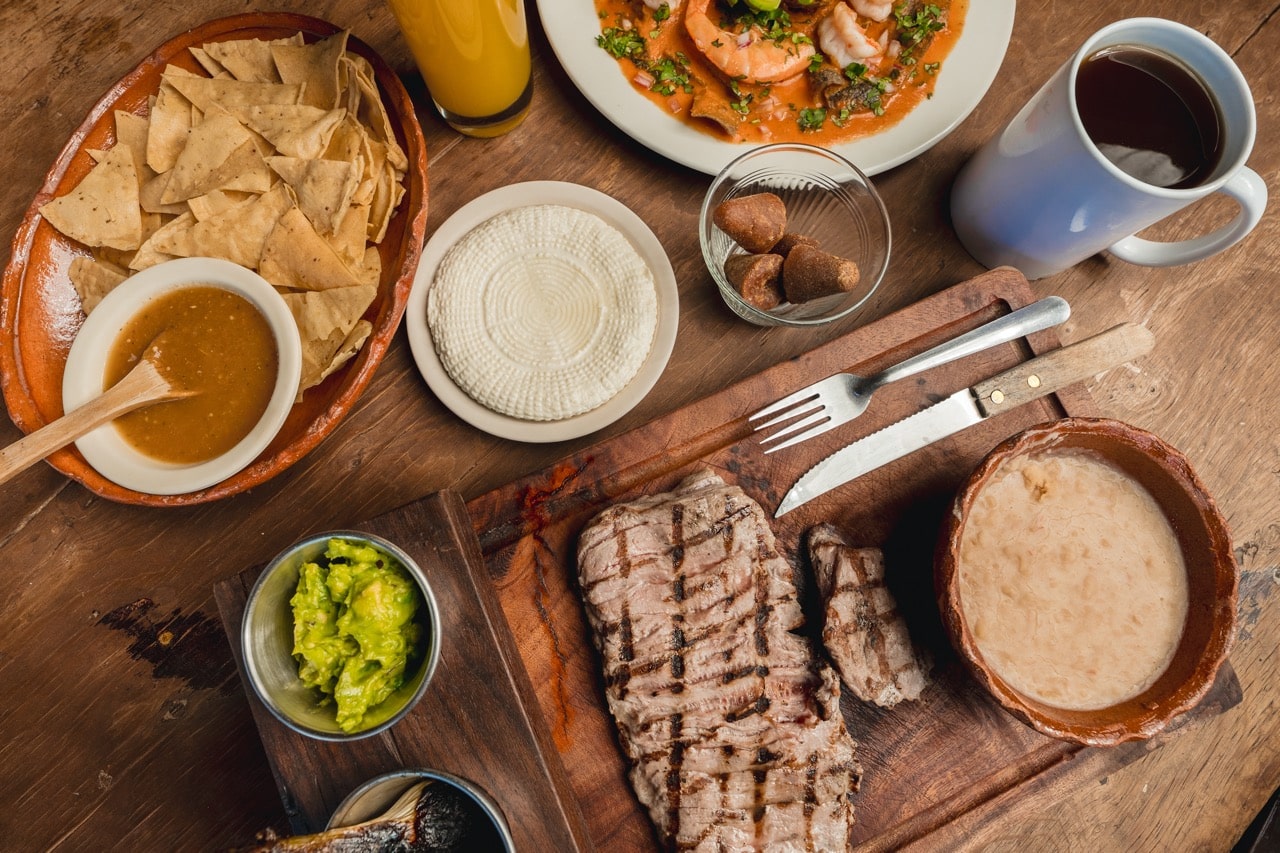
Breakfast here is best taken slowly, over café de olla and whatever the kitchen offers from the morning. The space rewards attention. The works on the walls are not decorative in the usual sense; they ask to be read. And nearby, the only archaeological zone in the state of Nayarit, Los Toriles, preserves one of the few circular temples in all of Mesoamerica, dedicated to Ehécatl, god of the wind, approximately 25 meters in diameter, a structure so singular that locals nicknamed it the “bull ring” for the circular shape of its base. To eat here, with that knowledge close, is to understand that the region’s relationship with aesthetics and ceremony runs very deep indeed.
Calle Revolución Socialista 113 Oriente, Centro, Ixtlán del Río, Nayarit.
Nevería La Quinta Ruiz: Against the Logic of Speed
By midday, the town begins to slow in the way that only old towns know how to slow, not out of laziness, but out of wisdom. This is when you find the Quinta Ruiz, and when the logic of nieve de garrafa begins to make complete sense.
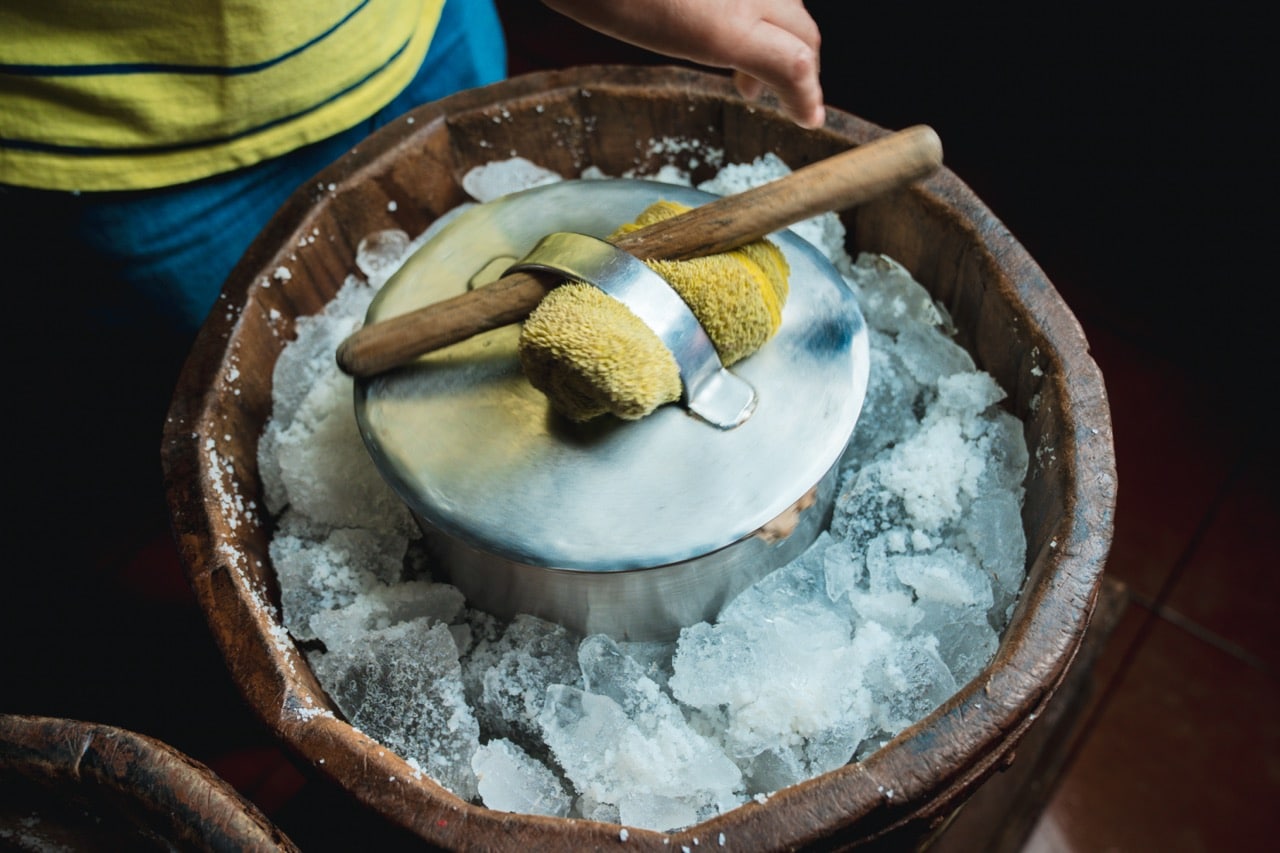
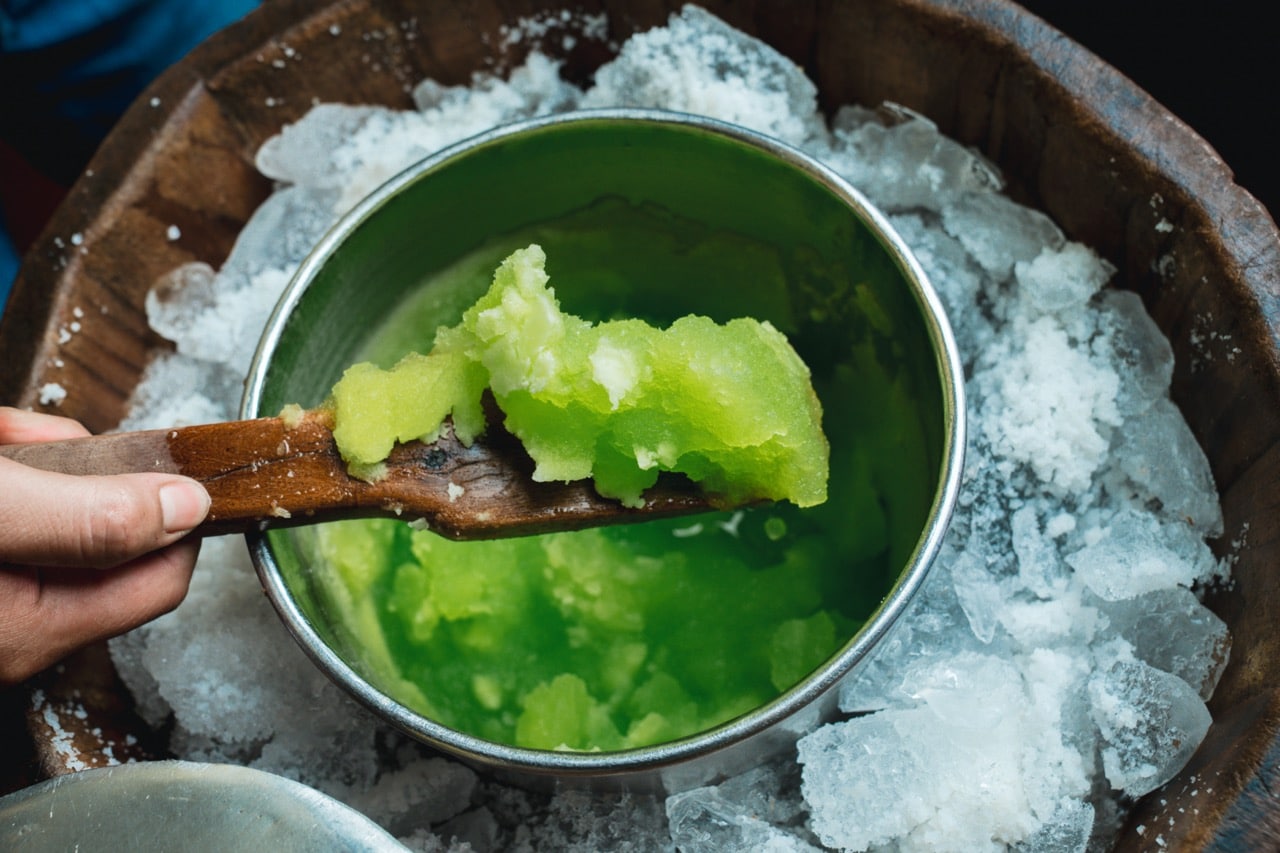
The Nevería Ruiz has been making hand-churned sorbet since 1926. The process has not been updated because it cannot be: a large metal cylinder is submerged in broken ice at the bottom of a wooden barrel, salt is added, and fresh fruit pulp or milk or caramel is beaten in circular movements for up to several hours until the mixture transforms. The result is not ice cream in the industrial sense. It is something more patient, more particular, with a texture that resists the clean artificiality of refrigerated production, airy in a way that seems almost accidental, velvety in a way that is entirely deliberate.
Flavors include vanilla, lime, walnut, coconut, strawberry, mango, and seasonal offerings that change with what the land provides. The pitaya, a local cactus fruit that blooms a vivid fuchsia, is the one to seek if the season allows. There is also leche quemada, scorched milk reduced to a dark, smoky sweetness that lingers on the palate like a fond recollection. Each spoonful is a small manifesto against modern haste, and observing the artisanal churning process is almost as pleasurable as eating the result.
Take it in a cone. Sit on a bench near the plaza. Let the afternoon be what it wants to be.
Portal Juárez 14, Centro, Ixtlán del Río, Nayarit.
Ma Nena: The Grammar of Cacao
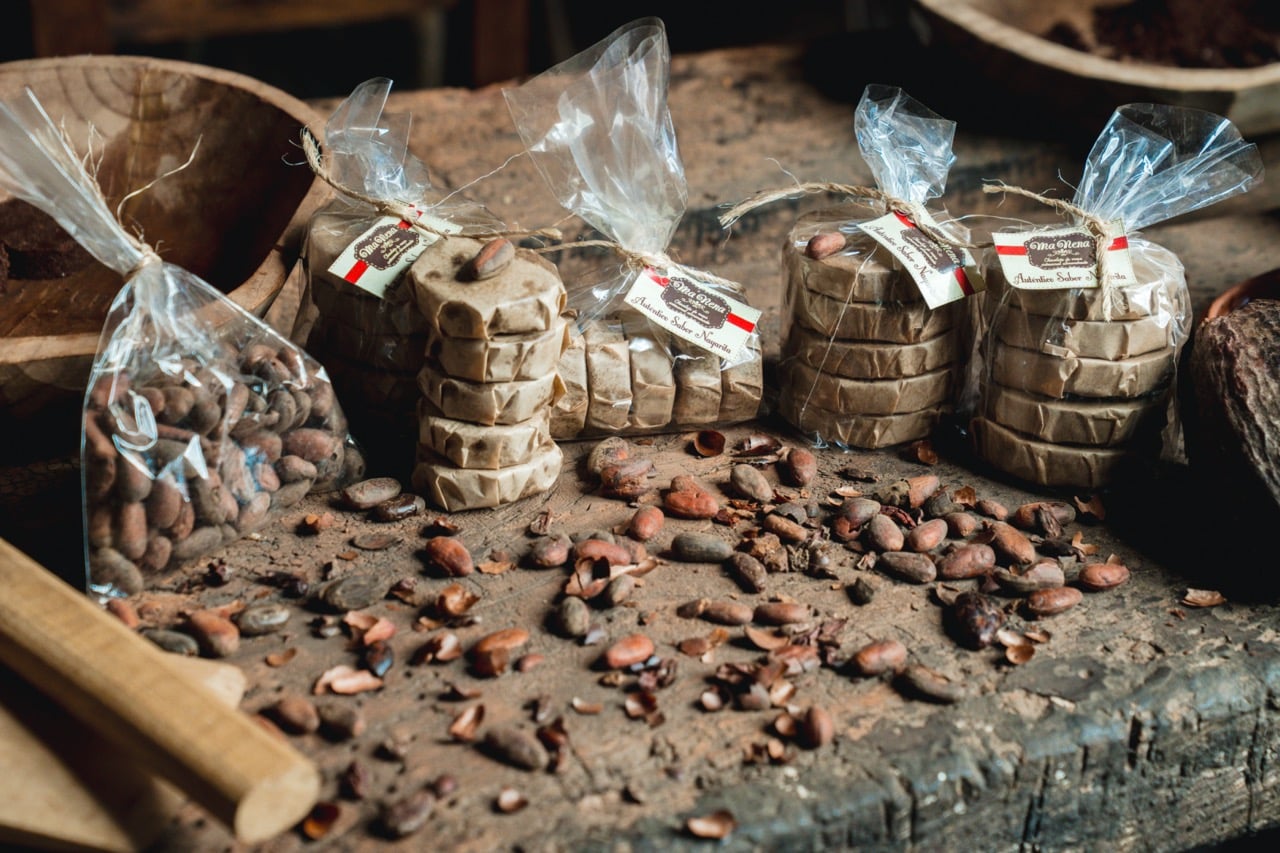
The last stop is, in some respects, the most ancient. The story of Ma Nena begins around 1910, when María Guadalupe Monteón Ron, great-grandmother of the current proprietor, began making chocolate in El Rosario, Nayarit, initially to supply a small shop in the town center. More than a century later, the recipes have not changed in any meaningful way, and the shop remains family-run: Georgina de la Mora, the current owner and chocolatier, receives visitors personally, explaining the quality of the cacao and demonstrating the artisanal process.
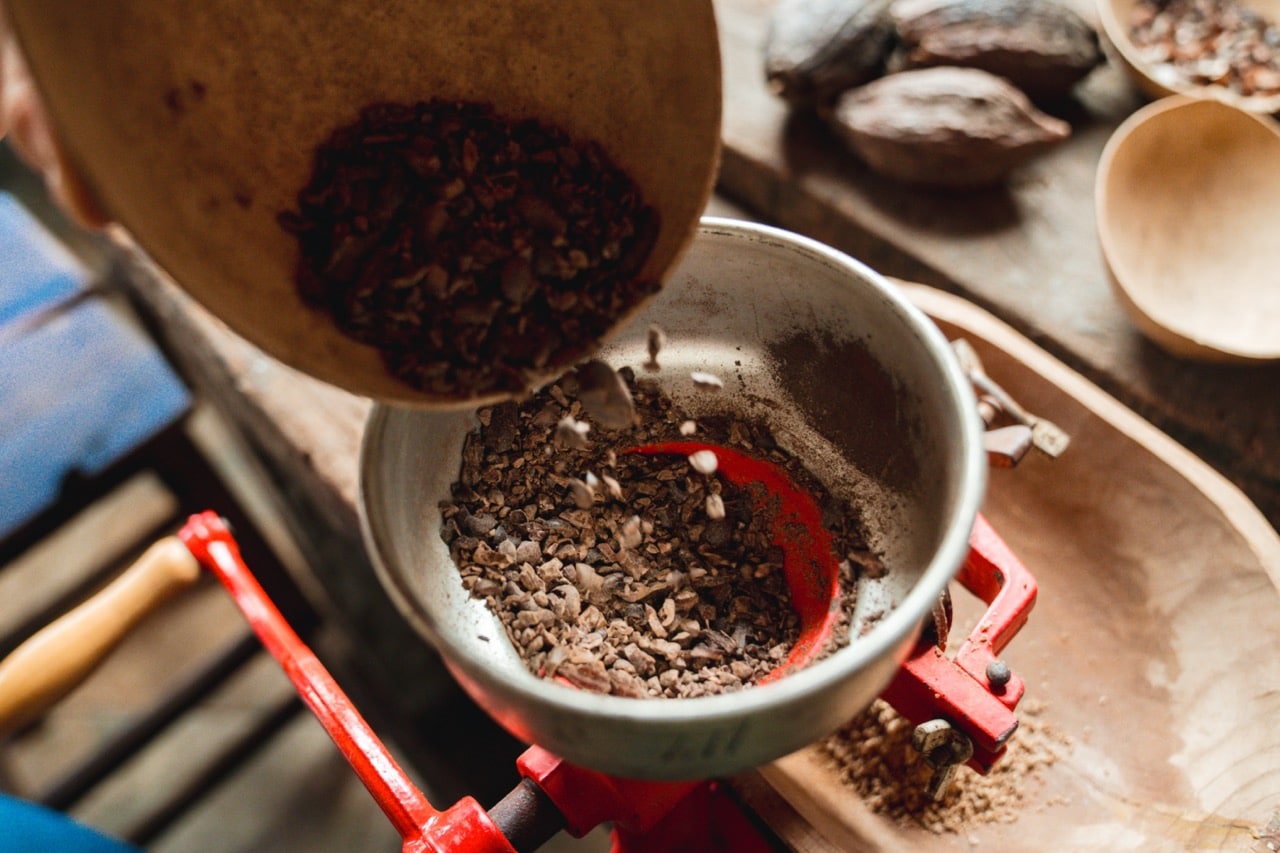
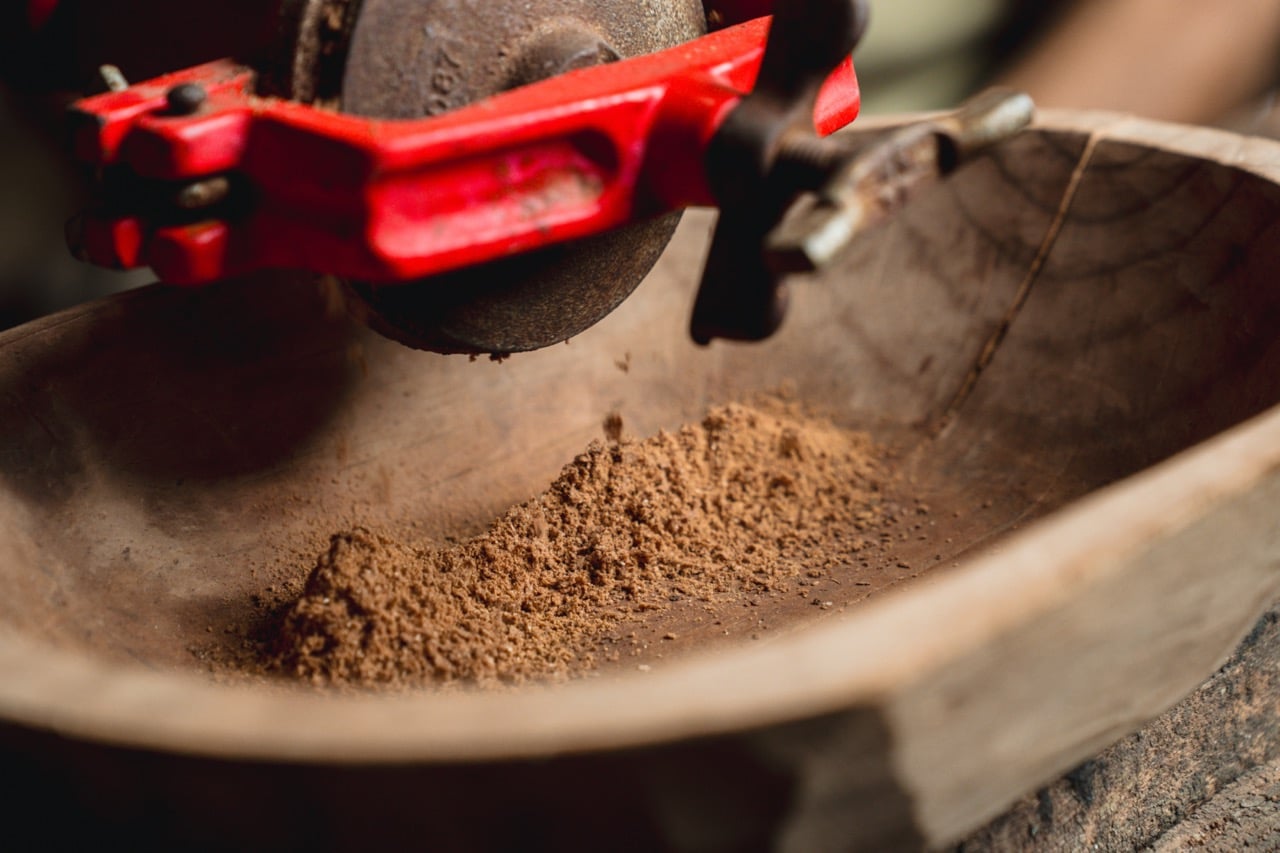
The scent greets you before anything else, toasted cacao carrying notes of cinnamon and something faintly resinous, a smell that belongs to no particular century because it predates the very idea of centuries. The chocolate is made from just four ingredients: cacao, sugar, cinnamon, and almonds, all worked by hand from the toasting of the raw beans through to the shaping of the finished tablet. The result is stone-ground and deliberately granular, with none of the smoothness that modern confectionery has taught us to expect. That granularity is not a flaw. It is the texture of authenticity, the sign that nothing has been lost in translation between the raw material and the finished object.
The tablets come in several forms: natural, sweetened with stevia, with sugar, or with piloncillo. There is also agua de arroz con cacao, a cold drink of rice water and cacao that is entirely refreshing and entirely unfamiliar to anyone who has not had it before. Visitors who wish to go further can participate in a workshop, an experience described as intimate and almost ritual, connecting participants not just to a technical process but to the deeper history of cacao as currency, medicine, and offering in these lands.
What you carry out in your bag, a tablet or two, perhaps a jar of mountain-grown salsa, is less a souvenir than an argument: that some things are simply better when they have been made the same way for a very long time.
Calle Hidalgo 41, Centro, Ixtlán del Río, Nayarit.
The ideal approach to Ixtlán is an early arrival, which allows a long breakfast at La Casona before the archaeological site grows warm, a midday pause at Quinta Ruiz as the sun peaks, and an afternoon at Ma Nena when the light turns copper and the cacao workshop feels, somehow, exactly right. The town is accessible from both Guadalajara and Tepic in roughly an hour and a quarter, close enough to reach without planning, far enough away to feel like a departure from the ordinary world.