



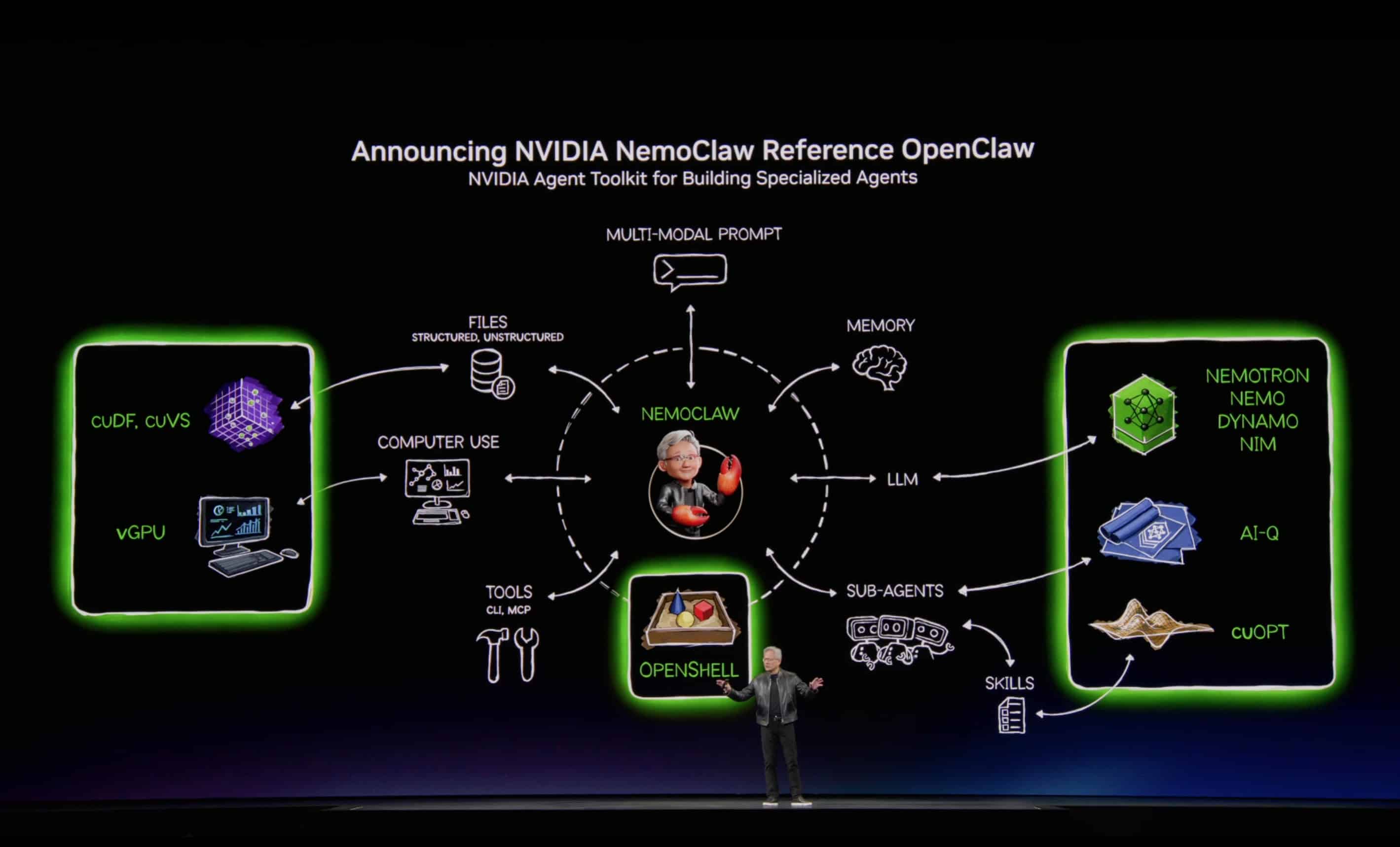
AI agents are getting good enough to actually be useful, and that is precisely when the uncomfortable questions start. If a piece of software can autonomously browse the web, write and run code, manage files, and complete multi-step tasks on your behalf, what is it doing with your data? Where is it sending information? And who is in control when things go sideways?
NVIDIA is addressing those questions directly with NemoClaw, a new software stack built for the OpenClaw agent platform. The goal is to give autonomous AI agents a secure, private foundation to operate from, installable in a single command, and capable of running on everything from a personal RTX-powered laptop to a professional DGX AI supercomputer.
OpenClaw Is the Platform Underneath It All
To understand NemoClaw, it helps to know what OpenClaw is and why it matters. OpenClaw is an open source platform for building and running AI agents, which its community calls claws. It has grown faster than almost any open source project before it, and NVIDIA CEO Jensen Huang has positioned it not as a developer tool but as something more foundational. He described OpenClaw as the operating system for personal AI, putting it in the same category as Mac and Windows in terms of its role in defining how people interact with computing going forward.
That framing is ambitious, but the underlying idea is sound. Just as an operating system provides the environment in which applications run, OpenClaw provides the environment in which AI agents operate, giving them access to tools, the ability to manage context across tasks, and a framework for developing new skills over time. Peter Steinberger, who created OpenClaw, described the vision simply: a world where everyone has their own agents.
The challenge is that powerful, autonomous agents need guardrails. An agent with broad system access and the ability to call external services creates real privacy and security risks if those capabilities are not properly managed. That is the gap NemoClaw is designed to fill.
What NemoClaw Actually Delivers
NemoClaw is built around a newly announced runtime called NVIDIA OpenShell, which creates an isolated sandbox environment for agents to operate inside. The sandbox enforces policy-based controls over what agents can access, what data they can send externally, and how they interact with the broader system. The idea is not to limit what agents can do but to make sure they do it within boundaries the user actually controls.
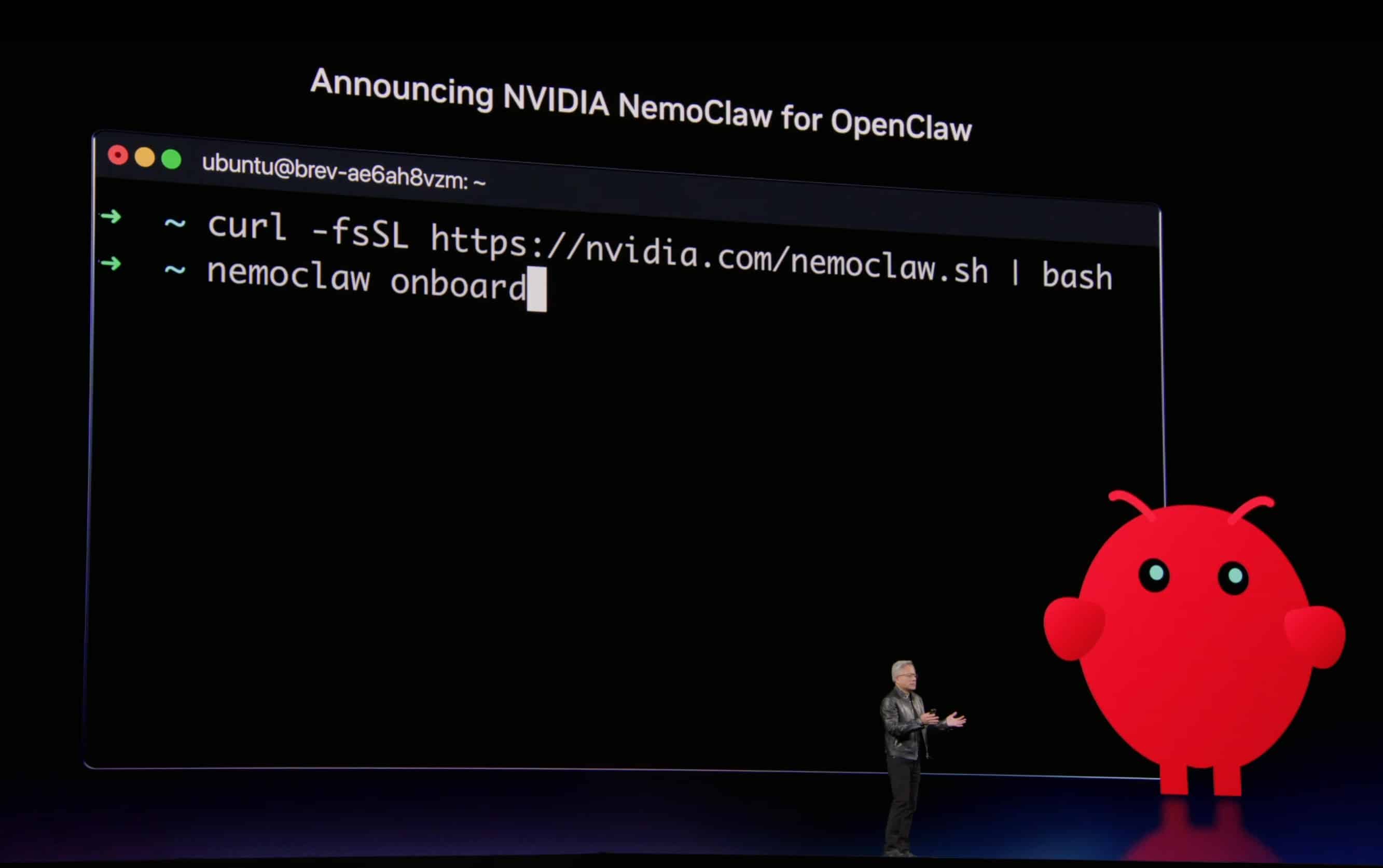
Installation is designed to be frictionless. Using NVIDIA Agent Toolkit software, the entire NemoClaw stack can be deployed with a single command, which sets up OpenShell alongside NVIDIA’s Nemotron open models and all the supporting infrastructure needed to run secure, always-on agents. For a category of software that has historically required significant technical setup to use safely, that simplicity matters.
NemoClaw works with any coding agent and supports both local and cloud-based AI models. On the local side, agents can run Nemotron models directly on the user’s own hardware, which means sensitive data never has to leave the machine. For tasks where a more capable cloud model makes sense and the user is comfortable with that tradeoff, a built-in privacy router manages the handoff, keeping the routing decision explicit and policy-driven rather than something the agent decides on its own.
This flexibility is one of the more practically useful aspects of the design. A developer working on proprietary code can route everything through local models with confidence. Someone researching a less sensitive topic can tap a frontier cloud model for better results. The privacy router makes those tradeoffs transparent and controllable.
Always-On Agents Need a Place to Live
One of the defining characteristics of truly autonomous AI agents is that they do not just respond when prompted. They run in the background, monitoring conditions, completing queued tasks, building new tools, and getting better at their jobs over time. That kind of continuous operation requires dedicated computing resources, not shared CPU cycles competing with whatever else the user has open.
NemoClaw runs on a range of NVIDIA hardware suited to this purpose. GeForce RTX PCs and laptops provide a capable foundation for personal use, giving agents dedicated GPU resources to operate around the clock without degrading the rest of the system. RTX PRO-powered workstations step up the capability for professional users. At the higher end, NVIDIA DGX Station and DGX Spark AI supercomputers provide serious dedicated infrastructure for running large local models and supporting more sophisticated agentic workflows.
The range of supported hardware is significant because it means NemoClaw meets users where they are. Someone with a gaming PC can get started without buying anything new. A professional who needs more power has a clear upgrade path. And organizations that need enterprise-grade local AI infrastructure have options at that level too.
Why This Matters Beyond the Technical Details
The arrival of NemoClaw reflects something important about where AI agents are in their development. The first wave of excitement around agents was largely about capability, what they could do when given enough access and compute. The conversation is now maturing into something more nuanced, focusing on whether agents can be trusted, whether the data they handle stays private, and whether users have genuine control over how they operate.
NVIDIA entering this space with a security and privacy focused stack, built on one of the most widely adopted open source agent platforms, is a meaningful signal. It suggests that the infrastructure layer beneath agents is being taken as seriously as the agents themselves, which is ultimately what will determine how widely this technology gets adopted beyond early enthusiasts.
For anyone who has been curious about AI agents but hesitant about the privacy implications, NemoClaw offers a more concrete answer than most of what has been available so far. Local models, an isolated sandbox, policy-based guardrails, and hardware the user already owns or is already considering add up to a foundation that is much easier to trust than cloud-only agent platforms where the data flow is harder to see and control.
Where to Get It and Where to See It
NemoClaw for OpenClaw is available now through NVIDIA Agent Toolkit software and runs on GeForce RTX PCs and laptops, RTX PRO workstations, DGX Station, and DGX Spark.
For those attending GTC, NVIDIA is running a build-a-claw event in the GTC Park from March 16 through March 19, offering hands-on time to customize and deploy a personal AI assistant using NemoClaw. It runs from 1 to 5 p.m. on Monday and 8 a.m. to 5 p.m. Tuesday through Thursday, and it is the most direct way to see what running a secure, always-on AI agent actually feels like in practice.

