


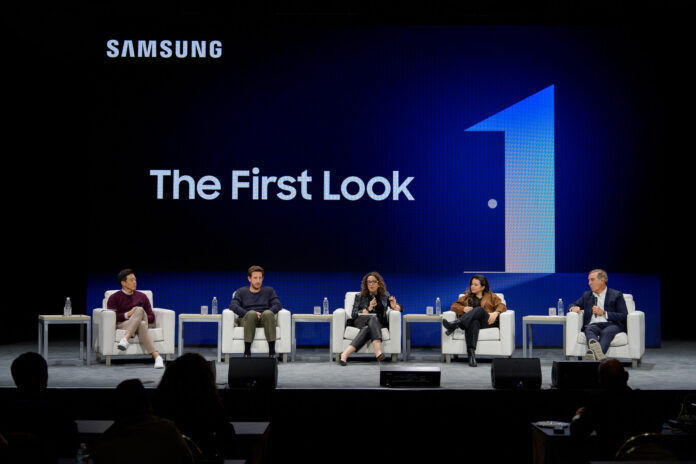

Samsung Electronics Co., Ltd. brought the conversation around AI trust to the forefront at CES 2026, hosting a Tech Forum panel titled “In Tech We Trust? Rethinking Security and Privacy in the AI Age.” Held at The Wynn in Las Vegas, the session gathered global voices from technology, research and ethics to examine a simple but increasingly urgent question. As artificial intelligence becomes more embedded in everyday life, what actually makes people trust it.
The discussion opened with a clear premise. AI is no longer a standalone feature. It is becoming ambient, quietly shaping routines, anticipating needs and operating across phones, TVs and home appliances. As that shift accelerates, trust is emerging as a deciding factor in how people adopt and engage with these technologies.
Making Invisible Intelligence Feel Understandable
Panelists Allie K. Miller, CEO of Open Machine; Amy Webb, CEO of the Future Today Strategy Group; Zack Kass, Global AI Advisor at ZKAI Advisory and former Head of Go To Market at OpenAI; and Shin Baik, AI Platform Center Group Head at Samsung Electronics, agreed that trust is built through behavior users can see and understand. Not marketing promises or abstract assurances, but systems that act consistently and give people a sense of control.
Samsung used the session to outline its trust by design philosophy, focusing on AI that behaves predictably, clearly communicates what it is doing and allows users to stay in charge. Miller emphasized that people want visibility into how AI works in their lives. That includes knowing whether intelligence is running on device or in the cloud, understanding how personal data is protected and being able to tell what features are powered by AI and which are not. According to Miller, when users can see what is happening, confidence follows. From the provider side, that means designing experiences around clarity, security and accountability.
Samsung also highlighted the practical role of on device AI in keeping personal data local whenever possible, while using cloud based intelligence selectively when greater speed or scale is needed. The goal is flexibility that does not force users to trade convenience for privacy.
Security Designed for an AI First World
As intelligence spreads across more connected devices, the panel turned to security and how it must evolve alongside AI. Samsung pointed to its Knox security platform, which protects billions of devices from the chipset level upward, as well as Knox Matrix, a framework that allows devices to authenticate and protect one another across an ecosystem.
Shin Baik explained that trust starts with security that has been proven over time. He noted that Samsung Knox has been deeply embedded into products for more than a decade, protecting sensitive data at every layer. But as AI becomes more interconnected, trust can no longer live on a single device. With Knox Matrix, devices continuously monitor and authenticate one another, so each product helps strengthen the security of the whole system, creating an environment users can rely on without needing to think about it.
What Trust Looks Like in Practice
The conversation broadened to what trust means at a practical level for consumers. Shin Baik stressed that users need visible signals of control rather than opaque systems that feel like black boxes. Samsung also highlighted partnerships with companies like Google and Microsoft as a way to strengthen shared security research, interoperability and protection across platforms.
Miller reinforced the importance of transparency, including clear indicators of where AI models run, how data is used and straightforward labeling that shows what is AI powered. Kass added that while misinformation and misuse are real concerns, technology itself will play a key role in addressing those risks, with countermeasures evolving alongside new challenges.
Webb offered a grounded perspective on how trust influences buying decisions. She suggested that consumers are rarely purchasing products based on trust alone. Instead, convenience often leads the way. When AI meaningfully simplifies daily life and makes experiences easier, people engage. Trust then becomes something that is reinforced through consistent, reliable use over time.
As AI continues to fade into the background, the panel concluded that the technologies most likely to earn lasting trust are those designed with security, transparency and real user choice from the beginning. Not as add ons, but as core elements of how intelligent systems work in everyday life.