



Eureka Park has always been the part of CES where the future looks a little messy. It is loud, crowded, and full of prototypes that are one manufacturing partner away from either becoming a real product or disappearing forever. But CES 2026 made something clear as you moved booth to booth in Hall G at the Venetian. The startups were not just showing clever tricks. Many were building small, specific tools that remove a single stubborn friction point, and those are often the ideas that scale the fastest once they click. CES itself said the show hosted more than 4,100 exhibitors including around 1,200 startups, and Eureka Park is where a big share of those startups make their first serious pitch to investors, partners, and the press.
Part of what made Eureka Park feel different this year was how practical the ambition looked. Instead of another wave of vague “AI for everything” slogans, you saw devices with clear jobs, clear constraints, and clear paths to shipping. Even the most futuristic booths were often anchored in unglamorous realities: battery life, materials science, logistics, safety, and the grind of making hardware easier to use than whatever people are doing today. The show floor is still packed with moonshots, but the best startup ideas at CES 2026 were frequently the ones that felt small enough to be real.
A printer for the creator economy that does not feel industrial
One of the most convincing Eureka Park demos this year was a reminder that creative tools are having a moment again, especially ones that help people make physical goods without outsourcing everything. Anker’s eufyMake E1 UV printer is the kind of machine that used to belong in a factory, and it is now being pitched as something you can keep in a small studio or even a home business. UV printers cure ink with UV light directly onto objects, which means you can print images on materials that would be annoying or impossible with standard paper based workflows. At CES, the pitch was straightforward: bring your blank object, choose your design, and print directly onto phone cases, bottles, coasters, metal sheets, and more. The preorder price was cited at $2,299, and the device has also raised major funding through crowdfunding, which matters because it signals that this is not just a trade show novelty. The more interesting part is that the E1 is not being sold as a one trick gadget. eufyMake positions it as a compact A3 UV flatbed printer that supports multiple print modes and higher detail printing, with claims of up to 1440 DPI and support for textured output that can build up to several millimeters in height for embossed effects. It also leans on practical features like a self cleaning system and camera based positioning, which is exactly the kind of boring reliability that makes a tool usable outside a controlled demo. If the E1 lands the way eufyMake says it will, it is not just a printer, it is a manufacturing shortcut for anyone trying to sell small batch products without taking on industrial complexity.

The quiet rise of wearable microphones and why it matters
A surprising amount of Eureka Park energy this year revolved around a simple behavior change: people want to capture conversations and ideas without opening an app, without holding a phone, and without wearing something that looks like a headset. That is how you end up with tiny recorders disguised as jewelry, pins, and rings. Vocci showed an AI note taking ring that keeps the interface brutally simple, because the only way a wearable like this becomes a habit is if it is faster than doing nothing. The company said the ring can capture notes from up to five meters away and record for up to eight hours continuously, with a charging case to extend battery life. It is expected to cost under $200, with preorders planned and shipping targeted after Q1 2026. This category is easy to dismiss as a privacy nightmare, and it absolutely raises real questions about consent and disclosure. But it also has big potential in the same way that earbuds did. Once hardware becomes small and socially acceptable, it tends to find legitimate workflows quickly. Sales teams want automatic summaries. Clinicians want better recall. People who struggle with memory or attention want a personal prosthetic that does not demand constant interaction. CES 2026 made it obvious that the “microphone you forget you are wearing” is becoming a default form factor, and once the hardware disappears, the real competition becomes transcription quality, local processing, and how well software can turn raw audio into something useful without stressing people out.

Plaud NotePin S is refinement as a product strategy
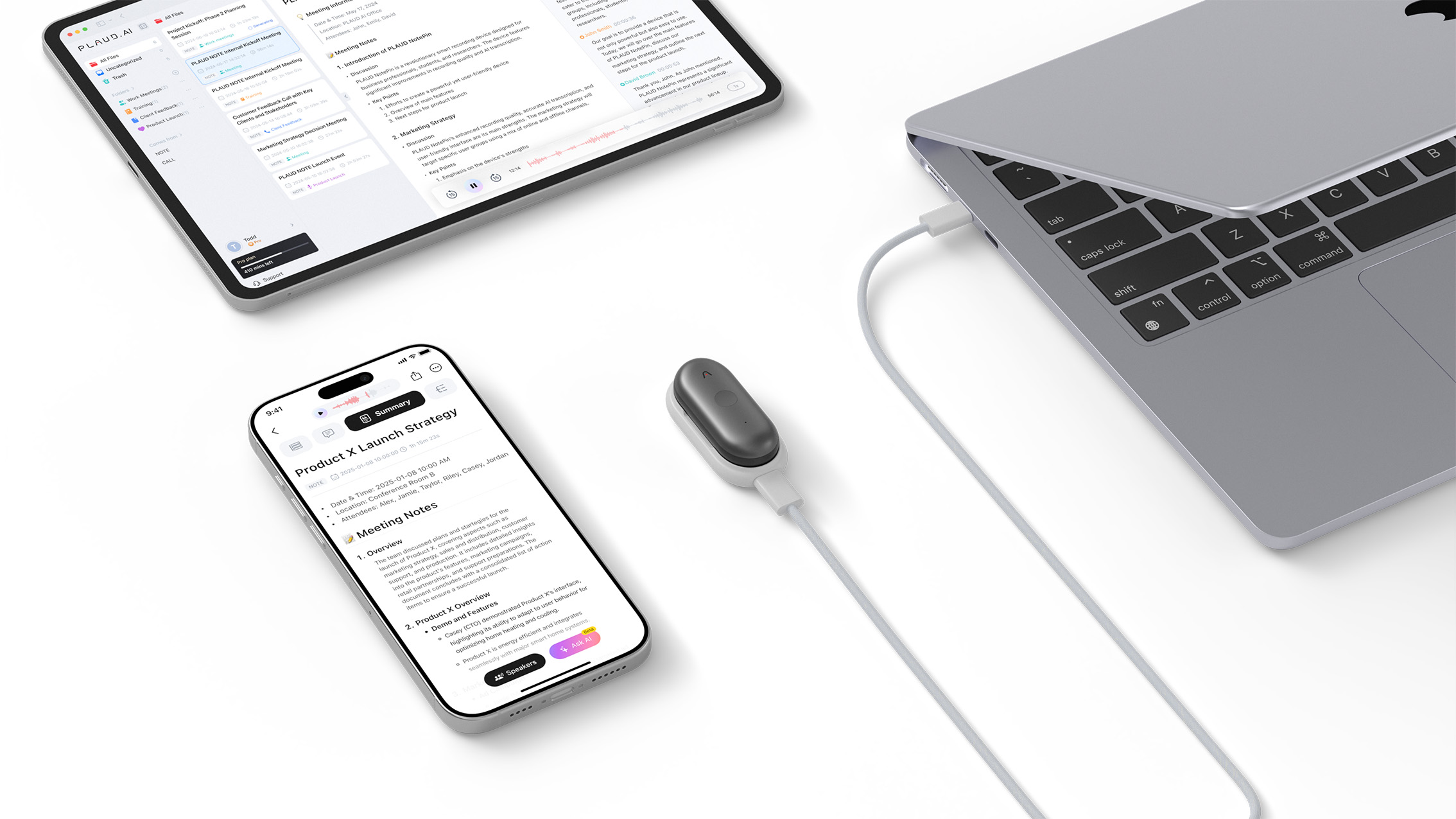
The most believable products in Eureka Park are often not the most novel, they are the ones that show they have been used enough to learn from their own mistakes. Plaud’s NotePin S fits that pattern. It is a small wearable recorder designed to be worn in multiple ways, and the headline change is almost comically simple: it added a physical button. The company moved away from haptic squeeze controls because a tool like this lives or dies on reliability. If the user is not sure whether recording started, the device fails at its core purpose. Plaud priced the NotePin S at $179 and bundled the accessories that were previously sold separately, including a clip, lanyard, wristband, and magnetic pin. The deeper point is that Plaud is trying to turn a gadget into a system. Alongside the hardware, it introduced a desktop app for Mac and PC that can capture audio from online meetings without requiring a meeting bot, and then sync those recordings with its hardware library so a user has one place for conversations that happen in person and on calls. That is how this category becomes sticky. A wearable recorder is useful, but a unified memory pipeline is much harder to replace. It is also a signal that the most serious Eureka Park startups are not just prototyping objects, they are designing the behavior loops that keep people coming back.
A firefighting robot that treats safety like an engineering problem
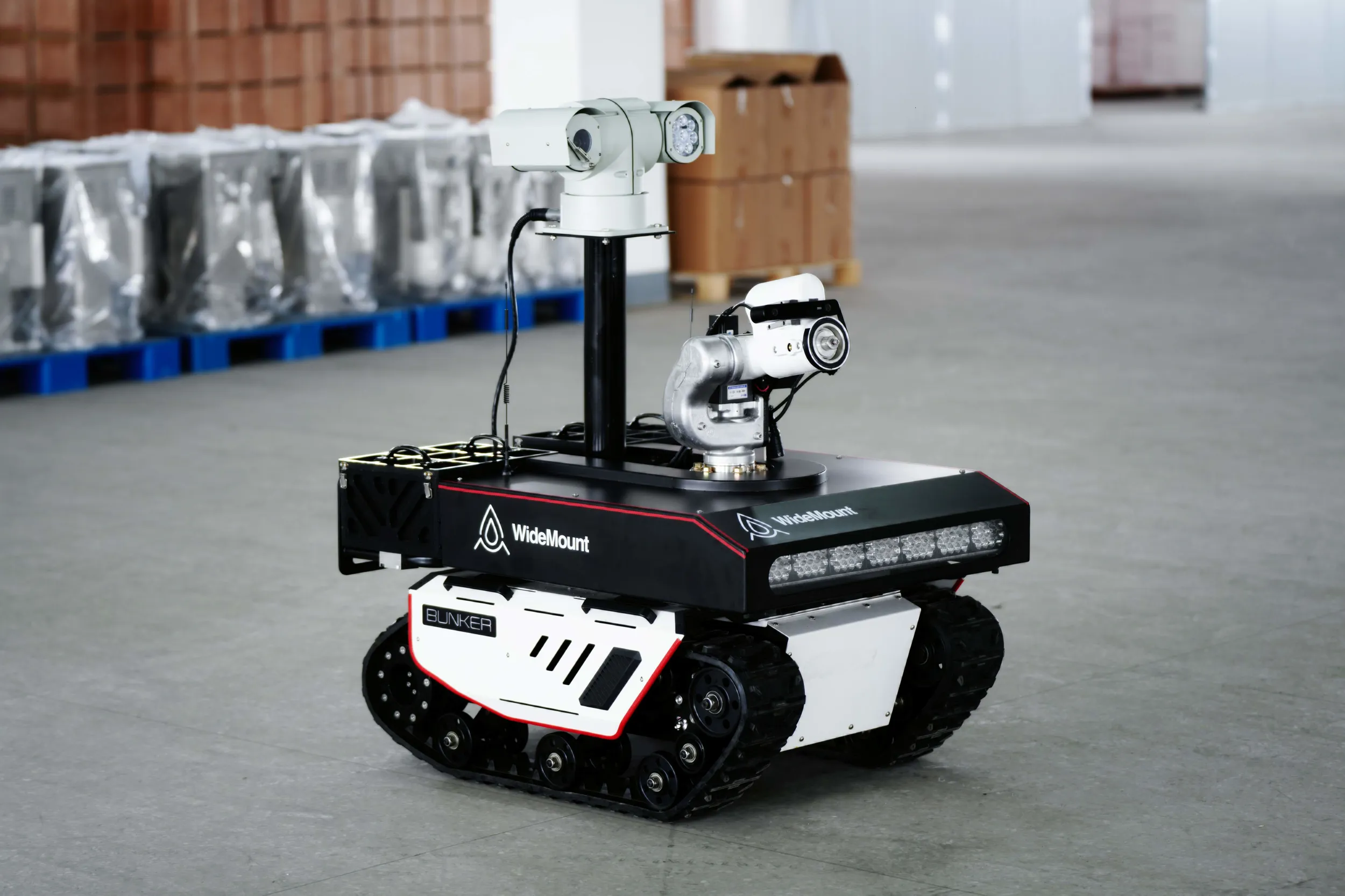
Not every big potential idea in Eureka Park is consumer facing. Some of the most important work happens in the uncomfortable overlap of robotics, infrastructure, and public safety. One of the clearest examples at CES 2026 was Widemount Dynamics Tech’s Smart Firefighting Robot, which won a top innovation award in a safety focused category. The robot is designed for autonomous operations in environments that are dangerous for humans, with the goal of detecting and responding to fire conditions while reducing risk to first responders. The product description emphasizes autonomy and sensing, including mm wave radar and SLAM style navigation approaches that are useful precisely because smoke and low visibility can destroy normal camera based perception. This is the kind of “small idea” that can have massive downstream impact because it slots into existing industrial needs. Warehouses, factories, and power facilities already spend heavily on prevention and emergency response. If a robot can do routine patrols, detect problems early, and operate when it is unsafe for people, it does not need to become a household name to become a meaningful business. Eureka Park is where these companies look scrappy. The real story is that they are building the kind of specialized autonomy that will quietly spread across industries once the economics work.
Climate and logistics startups that aim for unglamorous leverage
Eureka Park is also where climate tech and logistics ideas show up in forms that look almost too technical for a consumer electronics show, but the leverage can be enormous. ZEBOX brought a delegation of startups to exhibit in Eureka Park, and several of them read like answers to questions that supply chains and heavy industry have been asking for years. Aerleum is working on CO2 capture and conversion using a dual function material and a next generation reactor, with a stated goal of producing synthetic fuels such as e methanol. Mapsea, a maritime big data company, describes its platform as optimizing vessel routes and reducing fuel consumption using billions of ocean datapoints, which is exactly the type of optimization that scales if it proves accurate and easy to deploy.
What makes these ideas feel like they belong in a CES startup hall is not that they are flashy, but that they are computational products disguised as industrial services. If you can measure better, model better, and route better, you can save money and emissions without asking the user to change behavior. That is the highest form of product market fit, and it is why some of the most powerful Eureka Park companies are the ones you never hear about until they are suddenly everywhere.
Satellite alerts from the field, no infrastructure required
Another ZEBOX highlighted startup, MountAIn, points at a different kind of leverage: the ability to monitor remote environments and push alerts without relying on local infrastructure. The company describes IBEX as an ultra low power AI system capable of real time monitoring and sending satellite alerts from the field with no infrastructure required. That description matters because it implies a product built for the harsh, boring constraints that kill most connected devices: limited power, limited connectivity, and long deployment windows.
If you take that idea seriously, the applications expand quickly. Remote safety monitoring, environmental sensing, maritime operations, agriculture, and disaster response all share the same problem: you want eyes and intelligence where people and networks are not. Eureka Park is full of sensors every year, but IBEX stands out as an attempt to make the sensor autonomous enough that it does not need a constant backhaul to be useful.
An e paper interface that could change how products communicate
Luchrome, also part of the ZEBOX group, is working on a new form of e paper display meant to change how a product communicates with its user, with the display described as taking on the appearance of a sheet of paper. That sounds modest, but it is actually a big design lever. E paper can be readable in more conditions, consume far less power than traditional displays, and feel calmer than glowing screens. If Luchrome’s approach makes e paper interfaces easier to integrate, cheaper, or more expressive, it could show up everywhere from logistics labels to home appliances to industrial equipment where screens are currently expensive, power hungry, or simply unnecessary.
This is the kind of idea that rarely wins the attention war at CES, but it can win the distribution war over time. Most products do not need a full display. They need a better way to communicate state, warnings, and instructions without becoming another distracting screen in your life.
Why Eureka Park felt like it had more signal this year
CES 2026 had a lot of startups in Hall G, with public figures putting the number in the range of roughly 1,200 to more than 1,400 depending on how you count the global pavilions and adjacent areas. The exact number matters less than what that density creates. Eureka Park compresses the early stage hardware universe into a place where tiny ideas compete directly, and the ones with big potential tend to share the same traits. They choose a narrow problem. They build for real constraints. They obsess over the last ten percent of usability, like adding a button or bundling the accessories people need.
The best part of Eureka Park is that it is still weird, but it is weird in a grounded way. A UV printer that makes manufacturing accessible. A ring that captures conversations without fuss. A wearable recorder that gets out of its own way. A safety robot that can see when humans cannot. A climate reactor that turns a chemistry problem into a systems product. These are not ideas that need to dominate headlines to matter. They just need to ship, iterate, and find the people who have been waiting for exactly that one small fix.
That is what CES 2026 in Eureka Park did best. It made the future feel less like a single blockbuster gadget, and more like a thousand specific tools, each with a shot at becoming indispensable.