



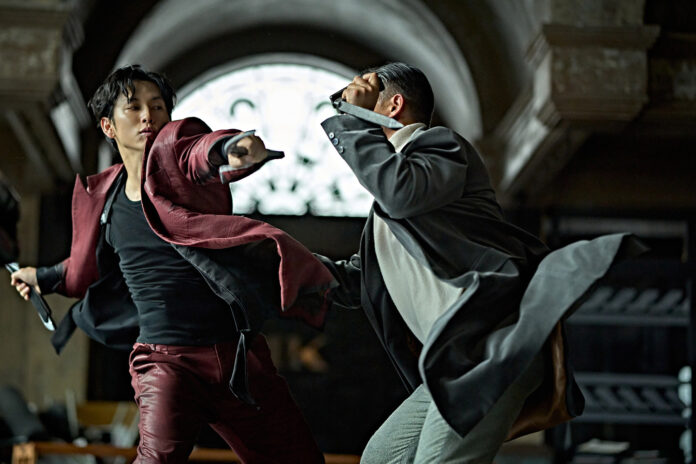
South Korean action cinema has a new icon in Mantis, a Netflix feature that spins out of the Kill Boksoon universe and turns it inside out. Directed by Lee Tae-sung in his feature debut and released worldwide on September 26, 2025, the film seizes the rich assassin mythology of its predecessor and cuts it wide open. At roughly 113 minutes, Mantis is a full-throttle rush of urban neon, dazzling choreography, and sly character games, made with the assured backing of See At Film and distributed globally by Netflix. Co-written with Byun Sung-hyun and Lee Jin-seong, it introduces a cool, graphic-novel aesthetic that instantly marks it apart in the global action landscape.
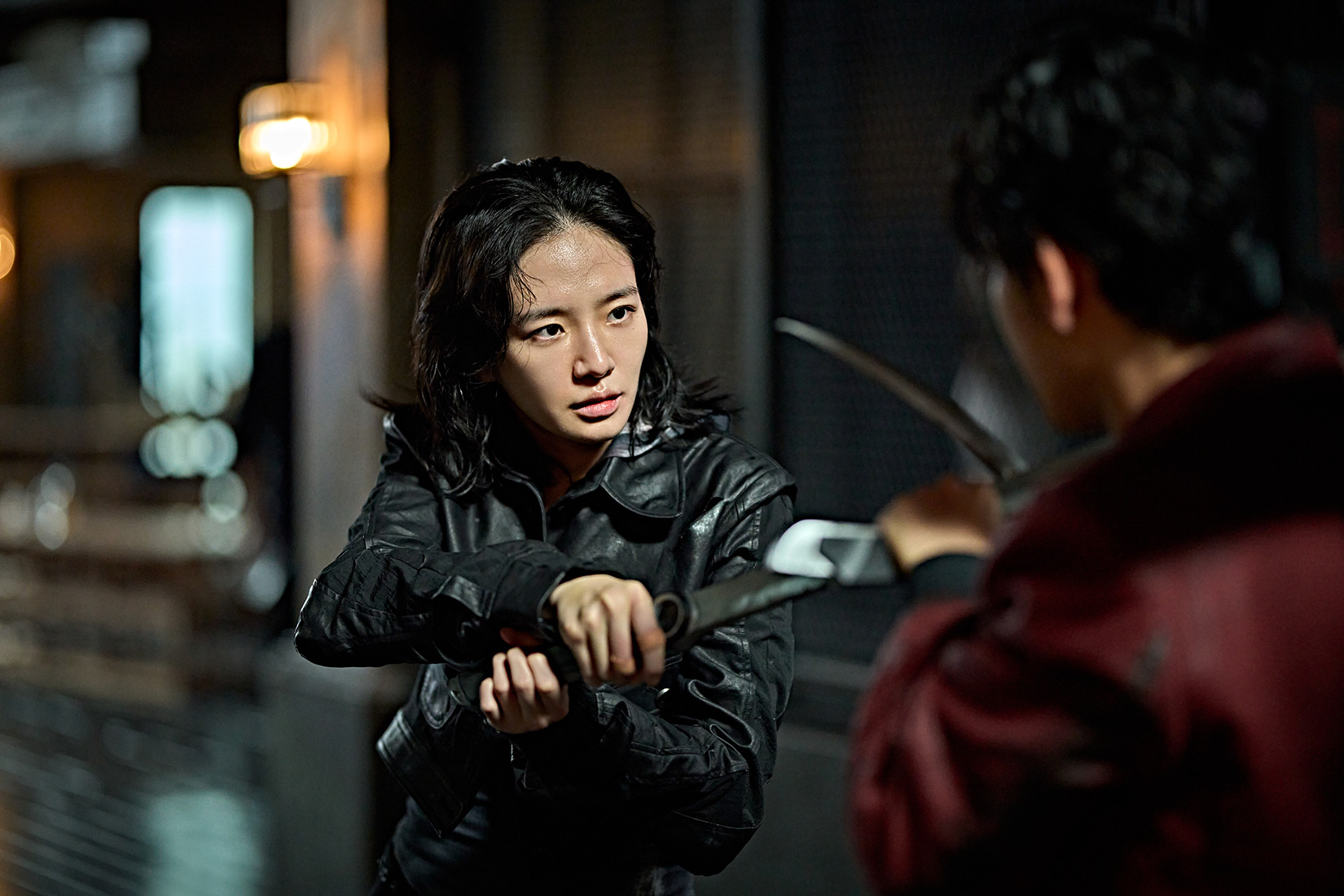
The story begins when elite assassin Han-ul (Im Si-wan), known in the underworld as “Mantis,” returns from vacation to find that Cha Min-kyu, head of the assassin conglomerate MK Enterprise, has died. With MK gone, the once tightly regulated world of contract killing collapses into chaos. Rival outfits, rogue killers, and ambitious freelancers race to poach talent and seize territory, and the market becomes a free-for-all. Han-ul reconnects with Jae-yi (Park Gyu-young), his former training partner who was expelled from MK and carries her own score to settle. As they explore forming their own footing, they are drawn into the larger contest to define the next era of organized assassination. Their uneasy alliance is tested when the legendary retired killer Dok-go (Jo Woo-jin) comes out of the shadows.
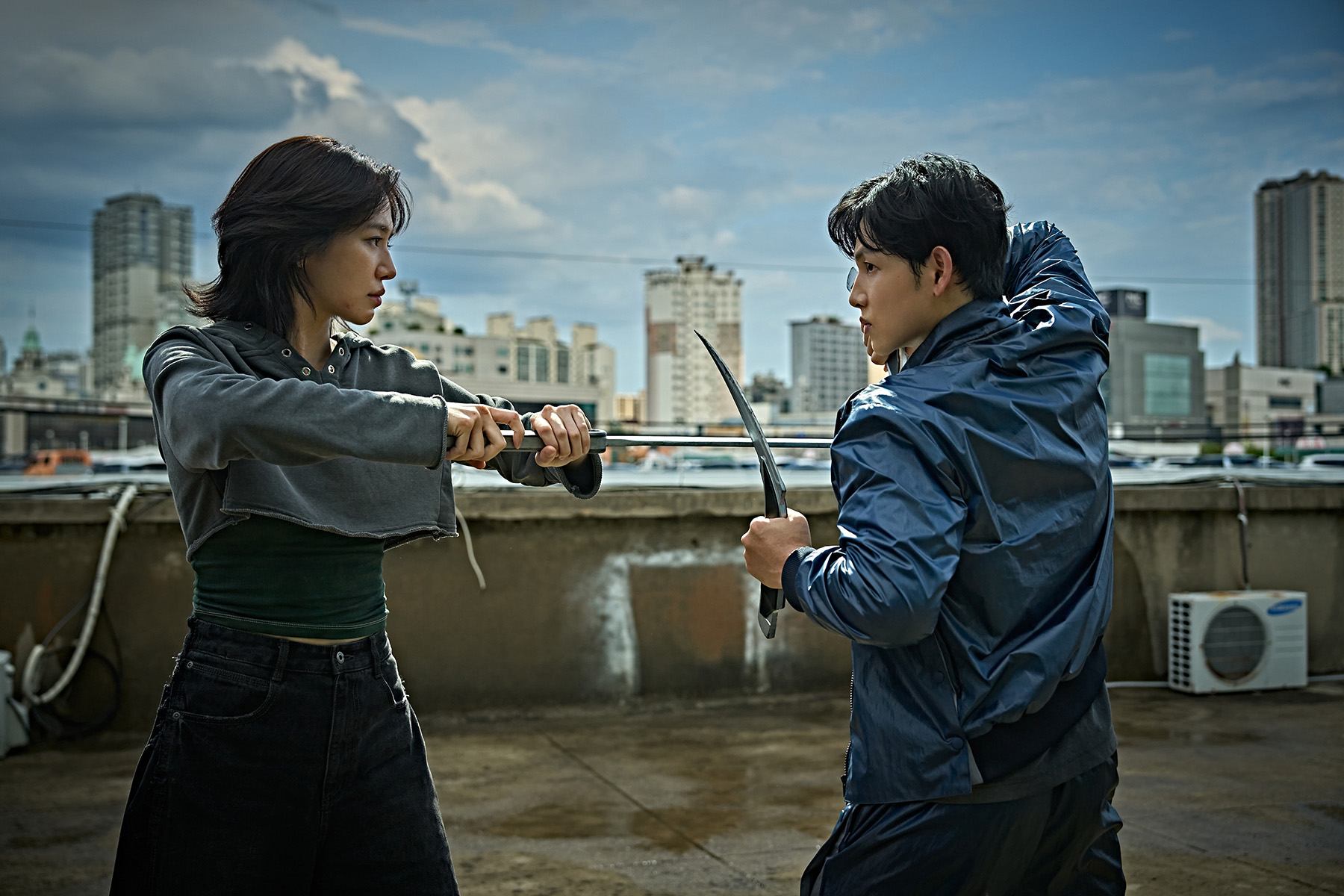
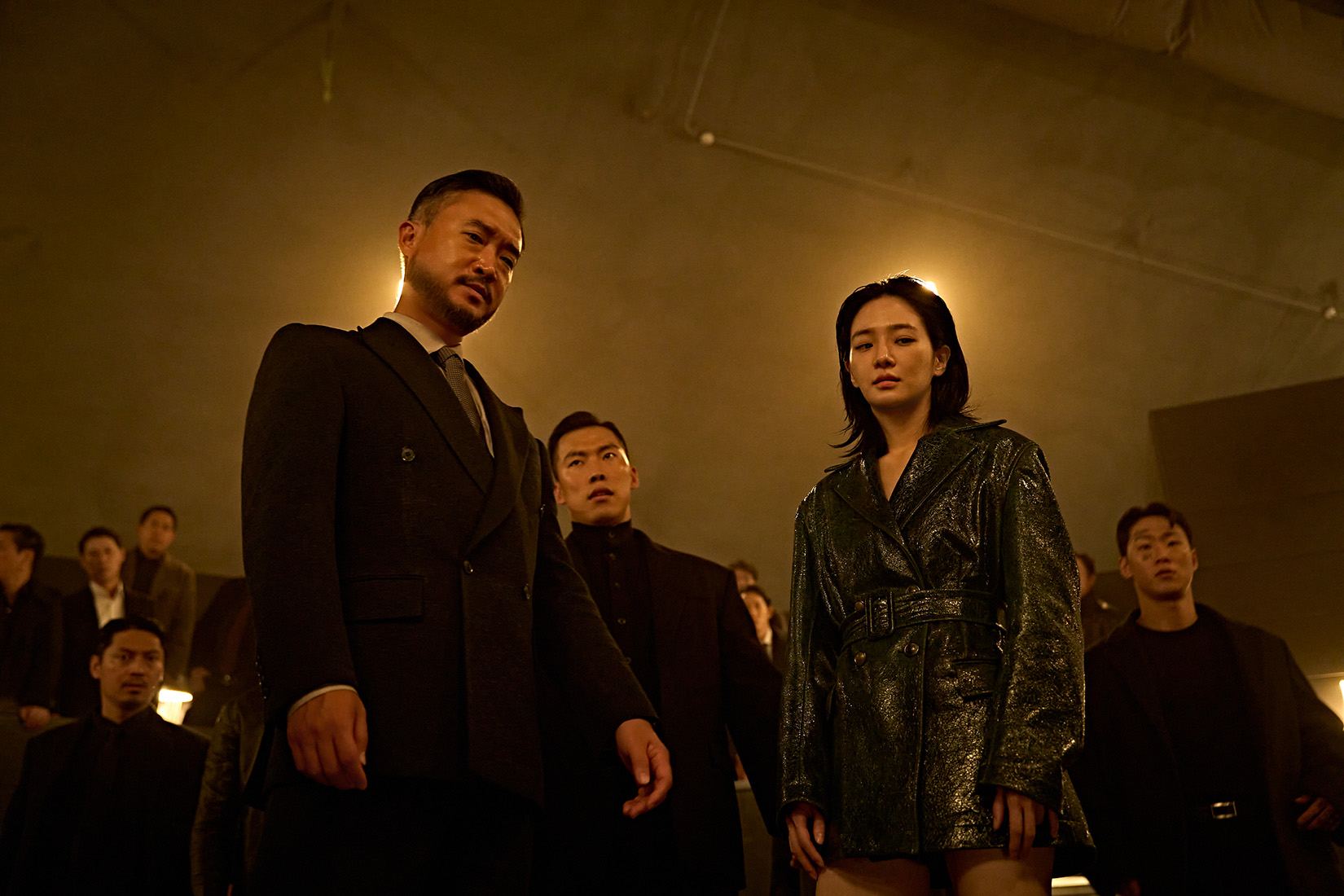
From that point, the film builds a carefully engineered escalation. Early skirmishes in safehouses and neutral zones are as much about probing philosophy as spilling blood. Flashbacks reveal Han-ul and Jae-yi’s shared past and the ideals that now divide them. Offers and betrayals ripple through every encounter, and the three central players—Han-ul, Jae-yi, and Dok-go—gradually emerge as rival claimants to the future of the assassin market. Critics and recaps emphasize how each of them embodies a different answer to the vacuum left by MK: ambition, independence, or a return to brutal hierarchy.
What elevates Mantis far beyond standard action plotting is its cinematic precision. Lee Tae-sung’s camera glides like a second blade, locking onto knife flashes and split-second feints. The fight editing is exceptional: clean, rhythmic, and propulsive, it renders every confrontation a perfectly legible burst of strategy and style. Wide shots let choreography breathe, sudden close-ups punctuate decisive blows, and seamless cutting turns motion into music. From the opening warehouse ambush to the vertiginous rooftop finale, the action is both balletic and brutally grounded, with a kinetic energy that invites comparison to the best of Hong Kong gun-fu and modern Korean noir.

The production design and cinematography heighten this cool, comic-book atmosphere. Rain-slick alleys glow with magenta and cyan; interiors echo with industrial steel and pools of neon. Even quiet scenes carry an electric undercurrent, as if the film itself is poised to strike. These choices resonate with the corporate-killer world that Kill Boksoon introduced but give it a sharper, more contemporary feel. The editing and score reinforce that vibe, sliding between icy pauses and percussive bursts to create tension as taut as a drawn wire.

Characters anchor the spectacle with hidden depth. Han-ul is all cool efficiency and melancholy restraint, a man who wants more than survival but distrusts hierarchy. Jae-yi provides emotional fire and a counterpoint of ambition, her expulsion from MK leaving a scar that shapes every decision. Dok-go, the near-mythic veteran, brings gravitas and a reminder of old-school rules. Their triangle of shifting loyalties and betrayals powers the narrative to a climax that is both logical and startling.

Mantis also expands the mythology of Kill Boksoon in meaningful ways. While it shares the corporate structures, ranking systems, and neutral-ground etiquette of that earlier hit, it is neither sequel nor mere side story. Instead it imagines a world where those structures have collapsed, asking what killers owe each other when no rules remain. This thematic through-line gives the film a philosophical edge, even as it delivers one of the slickest action spectacles of the year.
The result is a striking combination of ruthless storytelling and bravura craft. From its meticulously staged fights and razor-sharp editing to its stylish visual palette and layered character work, Mantis stands as a landmark of contemporary Korean action cinema—an explosive, neon-lit meditation on power, freedom, and the art of the kill.
Discover more from SNAP TASTE
Subscribe to get the latest posts sent to your email.

