



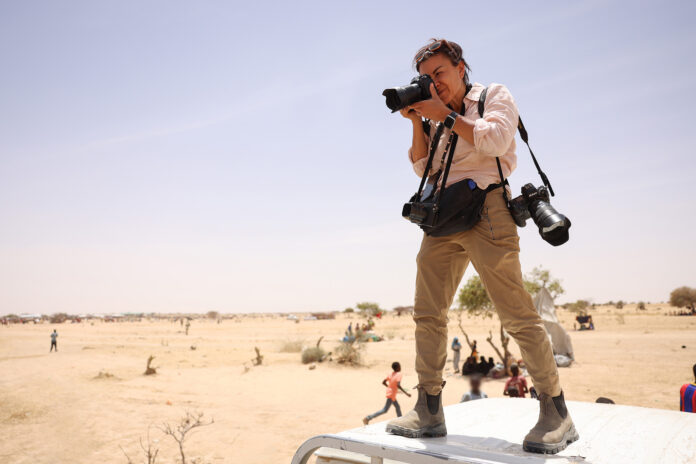
The camera, for Lynsey Addario, is not a shield. It is an instrument of record, a way to measure the distance between what the world says about war and what it actually looks like. For more than two decades, Addario has worked on the front lines of conflict, photographing the aftermath of bombings, the faces of survivors, and the quiet, bureaucratic machinery of death that follows every war. Her images are not meant to shock. They are meant to endure.
A recipient of two Pulitzer Prizes and a MacArthur Fellowship, Addario has reported from Afghanistan, Iraq, Libya, Lebanon, Darfur, South Sudan, Somalia, Syria, Yemen, and Ukraine. She has been kidnapped twice, nearly killed more than once, and yet continues to return to the field. Her persistence is not rooted in recklessness but in conviction. She believes that bearing witness remains one of the last honest acts in a world saturated with noise. Her photographs have shaped how the public understands war and how policymakers justify it.
Now, in Love + War, the new National Geographic Documentary Film from Elizabeth Chai Vasarhelyi and Jimmy Chin, the focus turns on her. The documentary opens with footage of civilians under fire in Novoluhanske, Ukraine, just days before the Russian invasion in 2022. Among the chaos, Addario moves quietly through the wreckage, documenting what will soon become one of the defining images of the war. Yet the film is not about the photograph itself. It is about what it costs to take it, the moral and emotional toll of recording suffering while trying to preserve one’s own humanity.
I had the opportunity to speak with Addario about her life behind the lens, the responsibility of bearing witness, and the personal cost of telling the truth in places where it is most fragile.
Q: Let’s begin at the beginning. What first drew you into some of the hardest places on Earth, and what keeps you there?
Lynsey Addario: I was not initially drawn to war or conflict. The first time I was in a place that was rife with conflict was Afghanistan under the Taliban in 2000. But it wasn’t the conflict that drew me there. It was women’s issues. I was curious about how women were living under the Taliban, about their lack of rights and how they felt. That’s what called me there.
I went back three times before September 11th. When the attacks happened, it was natural for me to return. I was one of the few photographers who had actually worked under the Taliban. That’s when I covered the fall of the regime in 2001.
Q: When you first started, what did “bearing witness” mean to you, and what does it mean now, after so many years of confronting both brutality and resilience?
Addario: It still means the same thing: to go in and document with neutrality, to tell as many sides of a story as I can safely access. But what’s changed is me. I’ve borne witness to so much horror that I carry it with me now.
People often think that the more you cover war, the more jaded you become. For me, it’s the opposite. The older I get, the more emotional I become, because I can’t believe I’m still covering the same things I was twenty-five years ago.
Q: You’ve spent decades turning chaos into story, finding humanity amid destruction. How do you do that?
Addario: I move slowly. I ask questions before I even lift the camera. I explain why I’m there. People can tell when you genuinely care, when you’re not there to take a quick photo and leave.
Trust comes from presence. I go back to places, to people. In Afghanistan, I’ve returned for twenty-three years. In Ukraine, I keep going back. That kind of commitment matters. It shows people that I’m invested, and they open their lives to me because of that.
Q: When photographing suffering or loss, how do you decide what’s respectful to publish? How do you navigate the line between truth-telling and intrusion?
Addario: You read the room. When someone has been killed, there are often family members or comrades nearby. People make it clear when they don’t want a camera there.
If access is granted, I shoot in ways that protect dignity, maybe not showing a face or focusing on another detail. Ultimately, my editors decide what’s published, but my responsibility is to shoot with empathy.
Q: In places where fear and trauma dominate, how do you build relationships that allow genuine storytelling, not just images of war, but of humanity?
Addario: I always explain what story I want to tell. People respond to honesty. They respond to connection. I take time to tell very specific stories, to find a more intimate window onto conflict. That’s how I approach it.
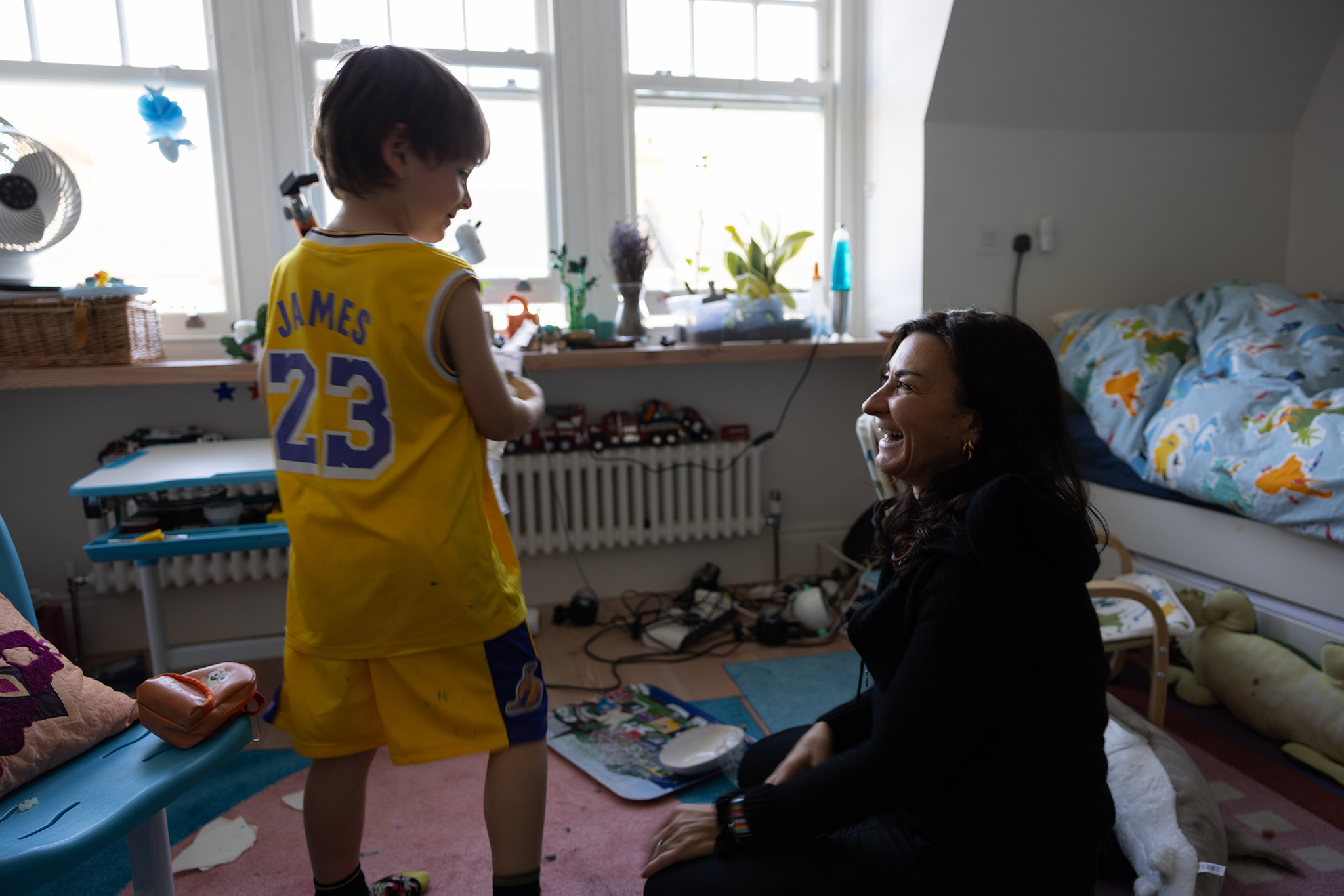
Q: In Love + War, we see the personal cost of your commitment, the emotional tightrope between home and the front lines. You’ve spoken about the tension between your role as a journalist and your role as a mother. How has that duality shaped you?
Addario: I became a mother after I’d already survived close calls, two kidnappings, being thrown from a car, ambushed. I was already pulling back a bit from the front line. But motherhood changed everything.
Now every move I make in a war zone, I calculate. How dangerous is this road? Where’s the incoming fire? What’s the risk? I have to stay alive for my children. Every risk I take has to have a purpose, an image that can’t be made elsewhere. That’s how I balance it.
Q: Is there one photograph that encapsulates your career, a moment that reminds you why you continue despite the danger?
Addario: No, there isn’t one. Every body of work matters for its own reason. I’ve put as much heart into Ukraine as I have into Darfur, Afghanistan, or Iraq. It’s all important.
My goal has always been to show what’s happening, to hold policymakers accountable for their decisions. Every photograph is part of that mission.
Q: Working with directors Chai Vasarhelyi and Jimmy Chin, both known for emotional storytelling, what did they help you reveal about yourself that surprised you?
Addario: I didn’t realize how emotional I was until I saw the film. The response has been overwhelming, standing ovations at every screening.
What surprised me most was how surprised people were that I opened my life so much. But I’ve spent my career asking people to open their lives to me. It felt natural to do the same.
Q: With the flood of digital media and short attention spans, what gives a single image the power to endure, to move people beyond a momentary scroll?
Addario: It’s hard to define. A photograph needs to tell a story, to have a message and a compelling composition. It has to draw you in.
Sometimes I think I’ve made a strong image and it doesn’t resonate. Other times, something quiet moves people deeply. You can’t predict it. I just keep trying to make images that make people feel something real.
Q: Looking ahead, how do you see the role of conflict photography evolving, especially as AI imagery and misinformation challenge our understanding of what’s real?
Addario: It’s more important than ever to keep doing this work. To show that there are real people behind the camera, that we’re out there risking our lives to document truth.
There’s no substitute for that. AI can’t replace human relationships, human courage, or human presence.
Q: After all the danger, grief, and beauty you’ve seen, what keeps your heart open to the next story?
Addario: The human spirit. I’ve seen people in the most devastating situations who still have hope. That keeps me going. It’s my responsibility not to lose that hope.
Love + War, directed by Elizabeth Chai Vasarhelyi and Jimmy Chin, opens not with sentiment but with evidence. The first images show civilians in Novoluhanske, Ukraine, trapped in the machinery of war on February 19, 2022, just days before Russia’s invasion turned the region into a landscape of bloodshed and ruin. From its first frame, the film establishes its purpose. This is not a story about war as spectacle. It is about those who bear witness to it and the cost of that witness.
Among them is Lynsey Addario. Clad in a press vest and helmet, she stands out immediately, her focus unwavering amid the chaos. The filmmakers follow her as she documents what will become one of the most searing images of the invasion: Ukrainian soldiers running toward the bodies of a family killed by Russian mortar fire. The scene is both clinical and devastating, a record of what happens when ordinary life collides with organized violence.
Vasarhelyi and Chin do not glorify her work. They observe it. Their camera follows Addario through the wreckage and then turns toward her private life, where the consequences of her career are written into daily routine. At home in London, with her husband, former Reuters journalist Paul de Bendern, and their two young sons, the rhythm shifts. Here, the film becomes less about the battlefield and more about what happens afterward. Her family describes the difficulty of living between two worlds: one defined by danger, the other by domestic stillness.
The toll is visible. One son grows distant, another regresses. Addario admits that she often feels most at peace not in her living room but in a war zone. “I feel like I’m home,” she says, her words exposing the deep dissonance between the life she documents and the life she returns to. The film does not cast judgment. It presents the facts, letting the viewer decide what kind of cost this work demands.
Her husband speaks openly about the strain of waiting, about the uncertainty that never quite fades. Her mother and sisters recall a quiet childhood in Connecticut, the daughter of two hairdressers who would later find herself in the middle of global crises. Fellow journalists such as New Yorker writer Dexter Filkins reflect on the psychological toll of war reporting, describing colleagues who never truly return, even when they come home. The recognition among them is unspoken but clear: to cover war is to carry it indefinitely.
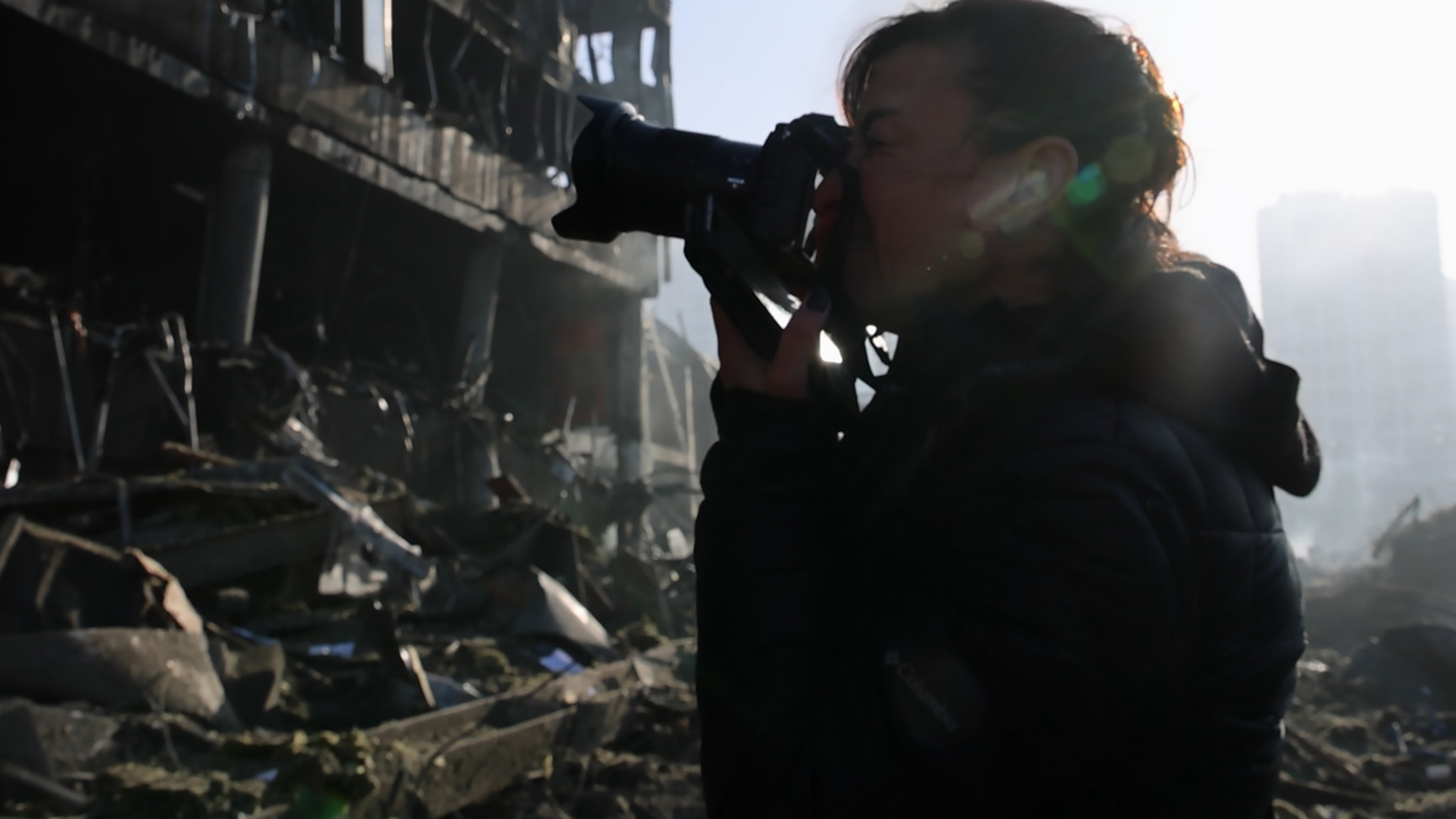
Vasarhelyi and Chin assemble their film with the same discipline that defines Addario’s photography. They rely on evidence rather than embellishment. Footage from Iraq, Afghanistan, and Ukraine blends with interviews and archival material to construct a portrait grounded in observation. The gendered dynamics of the press corps emerge naturally. So does the uneasy humor of journalists in danger and the silence that fills the long hours between bombings.
The film falters briefly when recounting Addario’s capture in Libya, one of the defining traumas of her career. The retelling feels restrained, perhaps too careful. The emotional impact remains at a distance, as if the filmmakers themselves cannot breach the wall between memory and endurance. Yet even this restraint feels honest. Some experiences cannot be dramatized; they exist only in the silence that follows them.
Love + War ultimately becomes more than a biography. It is a document about the burden of witnessing. It examines how repeated exposure to conflict alters the person behind the lens, how the act of recording violence transforms into a lifelong reckoning. Addario’s photographs are not about explosions or armies. They are about aftermath. They show what survives once the noise fades: grief, defiance, and the human instinct to endure.
Vasarhelyi and Chin succeed because they refuse to mythologize their subject. They show her not as a hero, but as a professional driven by necessity. Addario’s commitment to truth is not framed as inspiration but as obligation. Her work demands presence where others turn away, persistence where others retreat.
In its final moments, Love + War is not triumphant. It is precise. It confirms what Addario’s career has long demonstrated: that truth-telling is a discipline built on endurance, and that every image she makes carries a cost. Her photographs remain evidence in the most literal sense. They remind us that accountability begins with those willing to see.
What endures in her work is not the spectacle of war, but the quiet persistence of life in its aftermath. Addario does not chase glory. She records consequence. And in doing so, she upholds the oldest and hardest principle of journalism — to confront the world as it is, and to keep the record straight, no matter the price.
Discover more from SNAP TASTE
Subscribe to get the latest posts sent to your email.

