



The 2025 edition of Web Summit in Lisbon marked a decisive shift in how global leaders think about artificial intelligence. The central challenge is no longer assessing AI’s potential but determining how to operationalize it responsibly, economically, and at scale. This mirrors a broader organizational reality: intelligence—human, artificial, and increasingly distributed across cloud and edge environments—has become the defining infrastructure of modern enterprise performance. Insights across the event’s keynote sessions, masterclasses, and investor panels reinforce a consistent message rooted in management research: technological capability only becomes strategic advantage when paired with governance, human adaptability, and system-level design.

AI Moves from Conceptual Promise to Operational Discipline
One of the clearest signals came from sessions such as The Future of AI and Machine Learning (hosted by Laura Salles), where the conversation centered on practical deployment frameworks: open-source AI-Ops platforms, private fine-tuning environments, modular architectures, and agent frameworks capable of asking “next-best questions.” This reflects a shift documented in organizational theory: high-performing firms convert innovation into repeatable systems, embedding models into workflows with clear accountability and lifecycle management.
Similarly, the day-one reporting theme—“shipping in the next twelve months”—highlighted a new managerial realism. AI is now treated as an operational capability rather than a novelty, pushing leaders toward capability stewardship rather than innovation theater. Studies in technology adoption show that such discipline determines long-term value creation far more than early hype cycles.
Cost Gravity Becomes the Dominant Constraint
Across panels, executives reinforced that the sustainability of AI depends on understanding its economic physics. Rising data-center energy usage, finite GPU supply, unpredictable inference costs, and the heavy burden of data-engineering pipelines are forcing organizations to adopt cost-governance models that resemble financial risk management. Leaders discussed strategies such as model quantization, workload triage, and architecture decomposition—mechanisms aligned with research showing that resource-constrained optimization increases organizational resilience.
Investor sessions underscored this shift. At The Way to Win in AI Today, founders and investors emphasized that foundational model innovation is only the “first innings” of value creation. Future advantage will come from hardware efficiencies, domain-specific primitives, and systems designed to minimize computational waste. Investment patterns confirm this: capital is flowing toward firms demonstrating operational discipline, revenue clarity, and defensible data assets.
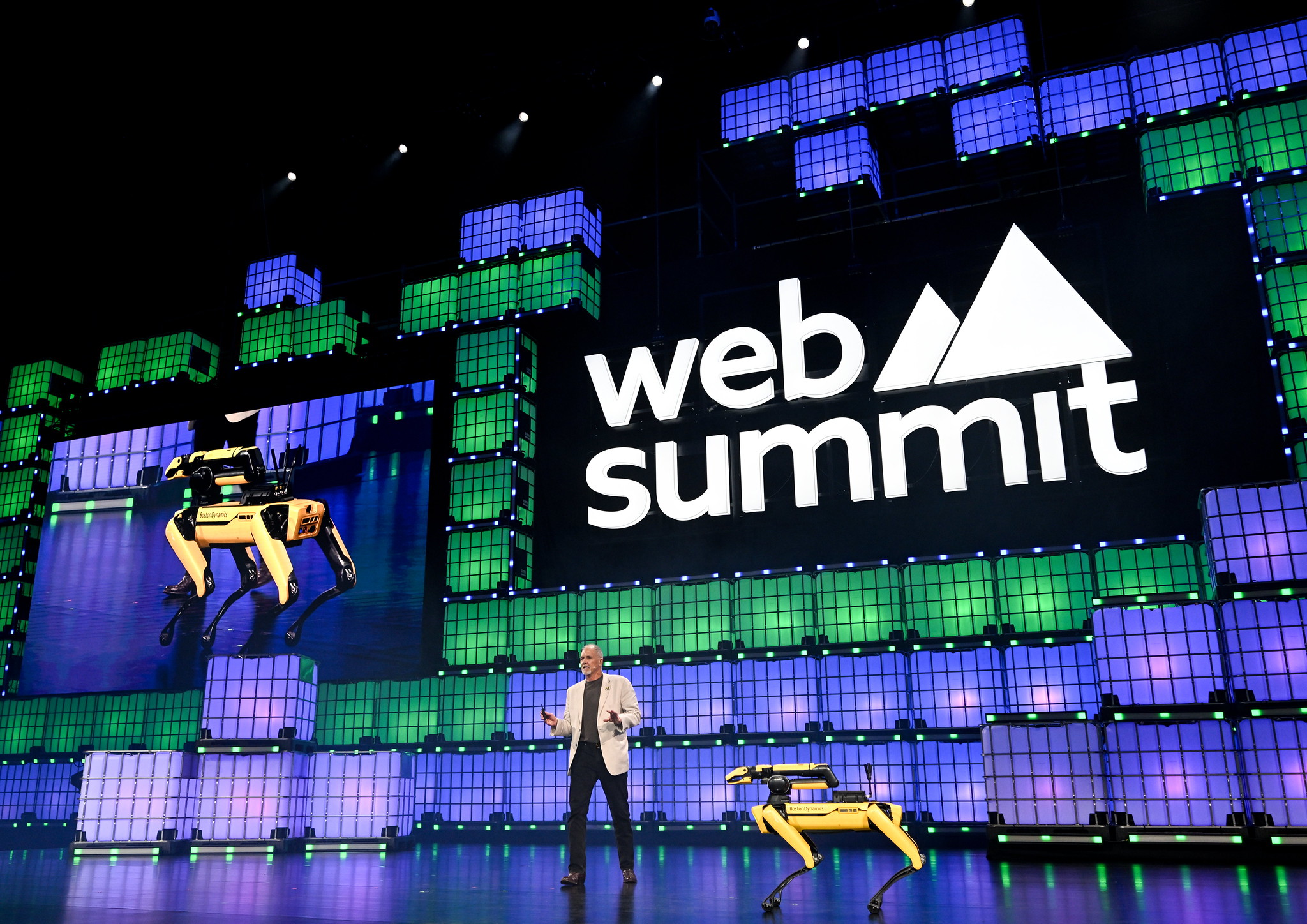
Edge Computing Emerges as a Strategic Infrastructure Paradigm
Nowhere was the convergence of AI and edge computing more clear than in agent-systems masterclasses and startup showcases. Ultralytics presented use cases where devices operate not as passive endpoints but as autonomous agents, performing local perception, planning, and action. This design philosophy reflects research from cyber-physical systems: distributing cognition closer to the environment increases situational awareness, reduces systemic latency, and enhances reliability.
Leaders repeatedly highlighted four forces making edge architectures strategically unavoidable:
- Latency and customer experience – Real-time applications require ultra-low-latency inference that cloud-only architectures cannot consistently deliver.
- Cost containment – Offloading routine inference to local or near-local devices reduces dependence on expensive cloud GPU cycles.
- Data sovereignty and regulatory compliance – Sessions on the Digital Markets Act stressed that privacy, localization, and data provenance obligations increasingly demand on-device or in-region processing.
- Operational resilience – Distributed systems reduce single points of failure, creating self-contained environments capable of maintaining functionality even during network or cloud outages.
Taken together, these dynamics reposition edge computing from technical optimization to organizational resilience strategy.
Governance, Consent and Human–AI Interaction Move to Center Stage
Web Summit 2025 also marked a conceptual maturation in how organizations think about trust and human–AI dynamics. Opening remarks by Christian Reinhardt reframed AI adoption through a psychological lens: mindset, cognitive load, and human resilience are as important as algorithmic performance. This aligns with decades of research in behavioral economics demonstrating that trust, transparency, and perceived agency shape whether individuals engage with new systems effectively.
Sessions emphasized:
- Transparent data provenance
- Consent frameworks for creators and consumers
- Human-in-the-loop decision boundaries
- Model explainability and escalation rules
- Clear organizational ownership of outcomes
The consensus was unequivocal: trust is no longer a moral accessory; it is a competitive asset.

Multimodal and Predictive Intelligence Redefine Decision-Making
Several panels highlighted advances in multimodal models that integrate text, vision, audio, geospatial data, and sensor fusion. These systems are enabling real-time contextual intelligence in sectors such as manufacturing, logistics, energy, healthcare, and mobility. This evolution supports a broader shift from retrospective analysis to anticipatory decision-making, demonstrated in sessions on predictive intelligence frameworks used for forecasting risk, operational bottlenecks, and market behaviors.
The startup ecosystem reinforced this trend. With over 2,700 startups represented, AI-driven products like Granter, the PITCH competition winner, showcased how predictive models can reduce administrative friction—in this case, optimizing the grant-application process. The takeaway for leaders is that AI’s value is increasingly expressed through workflow transformation, not standalone outputs.
A System-Level Strategy for the AI-Edge Era
In synthesizing insights across the event, a clear strategic model emerges:
1. Architect hybrid intelligence systems
Cloud for scale. Edge for immediacy. Humans for judgment.
2. Treat AI as a governance challenge, not just a technical one
Define accountability, provenance, risk management and escalation pathways.
3. Align organizational structures around continuous learning
AI deployment requires multidisciplinary teams, new talent models, and adaptive culture.
4. Build for resilience through distributed architectures
Distributed intelligence mitigates failure modes, regulatory exposure, and cost volatility.
5. Shift from outputs to outcomes
Focus on measurable value: performance lift, risk reduction, or customer experience gains.
Conclusion: The Leadership Imperative
Web Summit 2025 made one conclusion unavoidable: the next era of competitive advantage will not be determined by who possesses the most advanced model, but by who designs the most coherent, resilient, and ethically grounded systems. Leaders must integrate AI, edge computing, governance, and human capability into a unified architecture that converts intelligence into sustained strategic value.
The organizations that thrive will take an approach rooted in deliberate design, disciplined execution, and human-centered leadership—hallmarks of enterprises prepared not just to adopt AI, but to operate it as a long-term strategic asset.